
CNG Special: Factory-Fitted CNG Vs Aftermarket Conversion Kits In 2026
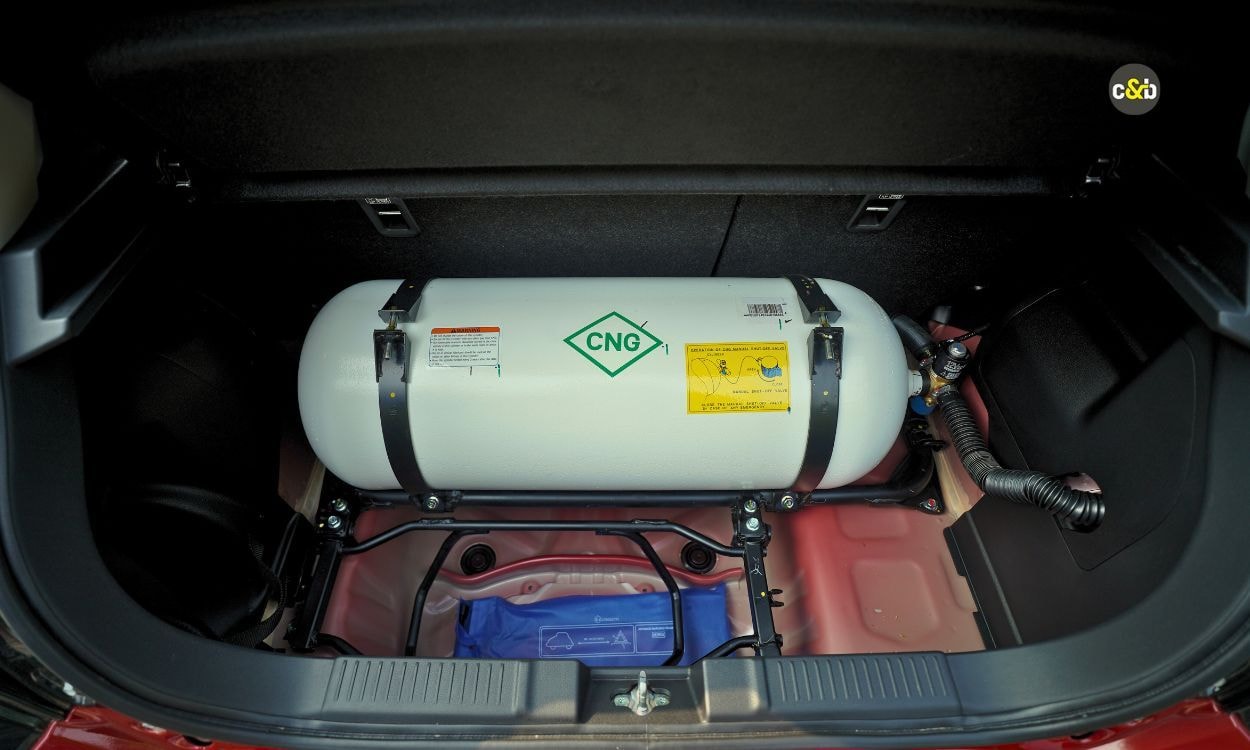
- Factory CNG is approved with the vehicle; aftermarket kits need specific approval.
- Legal conversions require an approved kit and proper RC and insurance updates.
- An aftermarket kit must be approved for your specific car and engine.
The biggest difference is when the CNG system becomes part of the vehicle. With factory-fitted CNG, the manufacturer develops and integrates the CNG system into the vehicle before it reaches the customer. The complete vehicle is then type-approved in its intended configuration.
An aftermarket conversion starts with a petrol vehicle that is already on the road. A compatible CNG kit is installed later by a retrofit workshop, after which the conversion has to meet the applicable approval, safety and registration requirements.
Is Aftermarket CNG Conversion Legal in India in 2026?
Yes, CNG retrofitment is permitted, but it is not a simple case of buying a kit and installing it in any petrol car. CNG retrofitment rules require the kit, vehicle and installation to meet the required approval and safety standards.
- CNG conversion is allowed for eligible petrol and diesel vehicles already on the road. A notified testing agency must approve the kit.
- The approval checks the CNG kit, engine, vehicle and other required components.
- An approved kit for one vehicle or engine range cannot automatically be used on another.
- CNG retrofitment is allowed for BS-VI petrol vehicles below 3.5 tonnes, subject to the required approval and safety standards.
What Makes Factory-Fitted CNG Different?
A factory-fitted CNG car is not simply a petrol car with a CNG cylinder added to it. The engine and fuel system are set up to run on both fuels from the beginning.
- CNG tank: A high-pressure cylinder stores the CNG, usually placed in a dedicated area of the vehicle.
- Fuel lines and valves: These carry CNG from the cylinder to the engine and control its flow safely.
- CNG injectors: They deliver CNG to the engine in the required quantity.
- Engine calibration: The engine control system is calibrated to manage both petrol and CNG operation.
- Fuel switching system: The car can switch between petrol and CNG using its dedicated controls and electronics.
- Safety components: Pressure regulators, shut-off valves and other components are built into the CNG system to control high-pressure gas safely.
Factory-Fitted CNG vs Aftermarket Kit: What Changes for You?
The table highlights that the aftermarket route changes the compliance, installation and documentation responsibilities for the vehicle owner.
| Factor | Factory-Fitted CNG | Aftermarket CNG Conversion |
| When CNG is installed | Before delivery | After the petrol car is already in use |
| Vehicle approval | Vehicle is approved in its CNG configuration | Kit and application require retrofit approval |
| Compatibility | Designed around the vehicle configuration | Must be checked for the specific vehicle |
| Installation | Part of vehicle production | Requires an authorised retrofit installation |
| RC update | CNG is already part of the registered configuration | CNG conversion must be endorsed in the RC |
| Insurance | Covered as the vehicle's original configuration | Insurer must be informed and the kit covered appropriately |
| Existing petrol car | Not applicable | Can be converted if eligible and approved |
| Documentation | Delivered with the vehicle | Additional kit, installation and approval documents are required |
| Risk of poor installation | Lower dependence on a separate retrofit workshop | Depends heavily on kit compatibility and installation quality |
What Documents Do You Need After an Aftermarket CNG Conversion?
The exact process varies by registering authority, but the paperwork is an important part of a legal conversion. For example, Delhi's Transport Department requires documents including the vehicle's original RC, CNG kit and cylinder bills, the kit's type approval certificate, authorisation details for the retrofitter, cylinder certification, approved installation/layout documents and the installation test certificate.
The central vehicle system also provides an alteration/retrofitment process through which the alteration details and supporting documents can be submitted for endorsement. So, after conversion, do not treat the installation invoice as the only document that matters. Keep the approval and installation paperwork safely with the vehicle records.
Do You Have to Inform Your Insurance Company After Installing CNG?
Yes. The insurance side should be updated after an aftermarket CNG conversion. IRDAI's motor insurance guidance specifically says that when a CNG or LPG kit is fitted, the registering authority should be informed so the change can be recorded in the RC. It also says the insurance company should be informed so the kit can be covered through the appropriate policy endorsement and premium.
This matters because the CNG kit becomes an additional value and modification associated with the insured vehicle. Keeping the RC and insurance records aligned avoids an unnecessary documentation problem later.
Which Cars Are Suitable for Aftermarket CNG?
The answer depends on the vehicle's make, model, variant, engine and applicable approval range. ARAI's retrofitment framework makes clear that conversion approval is application-specific rather than a blanket approval for every petrol car.
This becomes especially important with newer petrol engines. A modern engine may have a different fuel system, engine-management strategy and calibration from an older port-injected petrol engine. The fact that a kit can be physically installed does not establish that the conversion is approved or suitable.
Before Installing an Aftermarket CNG Kit
- Check whether an approved kit exists for your exact car and engine.
- Verify that the installer is authorised for the applicable retrofitment.
- Ask for the type approval documentation before paying for the installation.
- Check the cylinder and component certification.
- Make sure the installation follows the approved layout and safety requirements.
- Complete the required RC endorsement.
- Inform your insurer and update the policy.
- Keep the installation certificate, invoices and approval documents.
Does Factory-Fitted CNG Give Better Performance?
Not necessarily. The difference depends on how the CNG system works with the engine, but factory-fitted CNG can offer a more integrated setup.
- Factory-fitted CNG: The engine, CNG system and engine software are designed to work together from the start.
- Aftermarket CNG: Performance depends heavily on the quality of the kit, its calibration and how well it suits the engine.
- Power: CNG can produce different power and acceleration characteristics compared with petrol, so the car may feel different when running on CNG.
- Drivability: A well-matched CNG system should deliver smoother switching and consistent operation, while a poorly calibrated system can affect how the car feels to drive.
- Fuel economy: CNG can reduce running costs, but actual mileage varies with the car, driving conditions and how it is driven.
- Bottom line: Factory-fitted CNG offers a more integrated setup, while aftermarket performance depends more on the specific kit and installation.
Factory-Fitted CNG or Aftermarket Kit: Which Makes More Sense?
If you are buying a new car and the same model is available with an approved factory-fitted CNG configuration, you avoid the separate retrofitment process. The vehicle arrives with CNG already incorporated into its approved configuration.
If you already own a petrol car, an aftermarket conversion can be a practical route to CNG, provided an approved kit is available for that exact vehicle and the installation is completed through the proper process.
The decision therefore depends heavily on where you are starting from.
| Your situation | What to consider |
| Buying a new car | Compare the available factory CNG configuration with the petrol version |
| Already own a petrol car | Check whether an approved retrofit exists before buying a kit |
| Planning to convert an older car | Check vehicle condition, eligibility and retrofit approval first |
| Looking at a cheap universal kit | Avoid assuming physical fitment means legal compatibility |
| Concerned about paperwork | Factory CNG involves less post-purchase retrofit documentation |
| Keeping an aftermarket conversion | Maintain RC, insurance and installation records together |
The Bottom Line
Factory-fitted CNG and aftermarket CNG are not two versions of exactly the same process. The first is built into the vehicle's approved configuration, while the second modifies an existing petrol vehicle and brings additional approval, installation, RC and insurance requirements.
For a new-car buyer, factory-fitted CNG keeps the conversion process out of your hands. For an existing petrol-car owner, an approved aftermarket kit can still be a legitimate route to CNG, provided the kit is approved for the exact vehicle and installed correctly. With CNG, the cheapest quote is not necessarily the simplest conversion. The right kit, the right car and the right paperwork all need to line up.

carandbike is not merely another name in the world of automotive web sites. We bring together the best from the world of both, cars and bikes. New cars, used cars, new bikes, - we endeavour to help you with all of that. Additionally, carandbike also strives to keep its users updated with the latest from the global automotive industry. car price, car reviews, car dealers, new bikes, and everything in between, carandbike is happy to help!
Read all latest news and reviews from car&bike Team →


Related News


Popular Models


Latest Cars


Upcoming Cars


Latest News


 car&bike Team | Oct 7, 20262026 MG Hector Storm Series Launched At Rs 20 LakhThe MG Hector Blackstorm and Snowstorm editions get cosmetic changes and an all-black interior over their standard counterpart.2 mins read
 Janak Sorap | Oct 7, 2026Suzuki V-Strom SX Gets New Black And Grey Colour OptionSuzuki has added a new Glass Sparkle Black and Metallic Matte Fibroin Grey colour option to the V-Strom SX, with prices and mechanicals remaining unchanged.1 min read
 Jafar Rizvi | Oct 7, 2026Triumph Bonneville T40 vs RE Classic 350 vs Honda CB350C: Specifications, Features, Prices ComparedThe Bonneville T40 enters the 350cc retro class with significantly more power and tech than the RE Classic 350 and Honda CB350C, but it also carries a much higher price.5 mins read
 Sarthak Mahajan | Oct 7, 2026Honda Elevate Facelift: In PicturesPrices for the Elevate starts at Rs 11.80 Lakh.3 mins read
 Preetam Bora | Oct 7, 2026Triumph Bonneville T40: 5 Ways It Differs From Other Triumph 400sSignature Triumph Bonneville design, easy-going state of tune of the new engine, new features as well as updated frame set the Bonneville T40 apart.5 mins read
 Janak Sorap | Oct 7, 2026Ducati DesertX V2 Teased For India Launch: Gets New 890cc V2 EngineDucati has teased the new-generation DesertX V2 for India, with the adventure motorcycle scheduled to arrive in the fourth quarter of 2026.1 min read
 Seshan Vijayraghvan | Oct 4, 20262026 Skoda Slavia Facelift Review: Upgrades That Matter And A Better AutomaticThe new Skoda Slavia brings a handful of visual and mechanical changes, most notably a new 8-speed automatic for the volume-selling 1.0-litre TSI variants.5 mins read
 Bilal Firfiray | Oct 3, 2026Kia Sorento Review: Is Bigger Always Better?The Kia Sorento has arrived to our shores at the right time. But does it have what it takes to take the market by a storm?7 mins read
 Abhishek Nigam | Oct 2, 2026MINI Countryman C Review: Has MINI Finally Grown Up Without Losing Its Personality?The new Countryman C is bigger, more practical and packed with technology, but its quirky appeal comes with a few compromises.1 min read
 Preetam Bora | Oct 3, 2026ViaTerra Spencer Riding Jacket Review: The Ideal Jacket For Indian Summers?The ViaTerra Spencer mesh riding jacket makes a strong case as a well-built, street-focussed riding jacket, combining good airflow with Level 2 protection and a snug, secure fit. Is it perfect? Read on.6 mins read
 Janak Sorap | Oct 1, 2026Yamaha YZF-R2 Track Review: New TerritoryYamaha's all-new YZF-R2 brings 200cc performance, lightweight construction and R-series DNA to a new generation of riders, but its true track potential is held back by one crucial component.7 mins read