
Luxury Estate Cars in India: From Audi RS6 Avant to BMW M5 Touring


- BMW M5 Touring is coming to India for the first time in a limited 100 Jahre Nürburgring edition
- India has seen several estate cars from Tata, Maruti Suzuki, Fiat, Opel and more
- SUVs eventually pushed estates into a niche with their higher stance and stronger road presence
BMW has announced that the M5 Touring will come to India for the first time as part of its limited 100 Jahre Nürburgring editions. Pre-orders for the anniversary models opened on October 5, 2026, with the M5 Touring joining the M2 Coupé, M3 Sedan, M4 Coupé, M5 Sedan and BMW M 1000 R in the India-bound collection.
The announcement is significant because the M5 Touring is BMW India's first estate offering. It is also a very different interpretation of the estate from the practical family wagons that appeared in India in earlier decades.

BMW M5 Touring: Key Details
BMW quotes 727hp and 1,000Nm from the M HYBRID powertrain, with a claimed 0-100 kph time of 3.6 seconds and an electric-only WLTP range of up to 67km.
The M5 Touring gets exclusive Nürburgring Green paint, edition-specific graphics and green-and-white interior detailing as part of the limited-run collection celebrating the circuit's centenary in 2027. So, while the M5 Touring is new to India, the estate body style itself is not.
| Detail | BMW M5 Touring |
| Body style | Estate |
| Powertrain | 4.4-litre twin-turbo V8 plug-in hybrid |
| Maximum power | 727hp |
| Peak torque | 1,000Nm |
| Transmission | 8-speed automatic |
| Drive | M xDrive all-wheel drive |
| 0-100kph | 3.6 seconds |
| Electric range | Up to 67km WLTP |
| India version | 100 Jahre Nürburgring Edition |
Estate Cars in India: A History
India's estate-car story stretches much further back than the arrival of luxury brands. Over the years, manufacturers tried several different approaches to make the long-roof body style work, from basic family practicality to outright performance.
| Era | Estate or station wagon | What made it notable |
| 1970s | Premier Padmini Safari | Early locally built station wagon conversion |
| 1970s | Hindustan Ambassador Station Wagon | Extended version of India's iconic sedan |
| 1992-2000 | Tata Estate | Tata's first passenger car and major modern estate attempt |
| Late 1990s/2000s | Maruti Baleno Altura | Maruti's attempt at a more premium estate |
| 2000s | Fiat Siena Weekend | Estate version of the Siena |
| 2004 | Tata Indigo Marina | Mainstream family-oriented estate |
| 2005-2007 | Škoda Octavia Combi | Enthusiast-focused estate with turbo-petrol and diesel options |
| 2015-2018 | Audi RS6 Avant | High-performance luxury estate |
| 2017 | Volvo V90 Cross Country | Luxury estate adapted for SUV-style capability |
| 2018 | Mercedes-Benz E-Class All-Terrain | Raised luxury estate with four-wheel drive |
| 2026 | BMW M5 Touring | BMW's first estate for India |
Also Read: Cars In India With Captain Seats Under Rs 25 Lakh
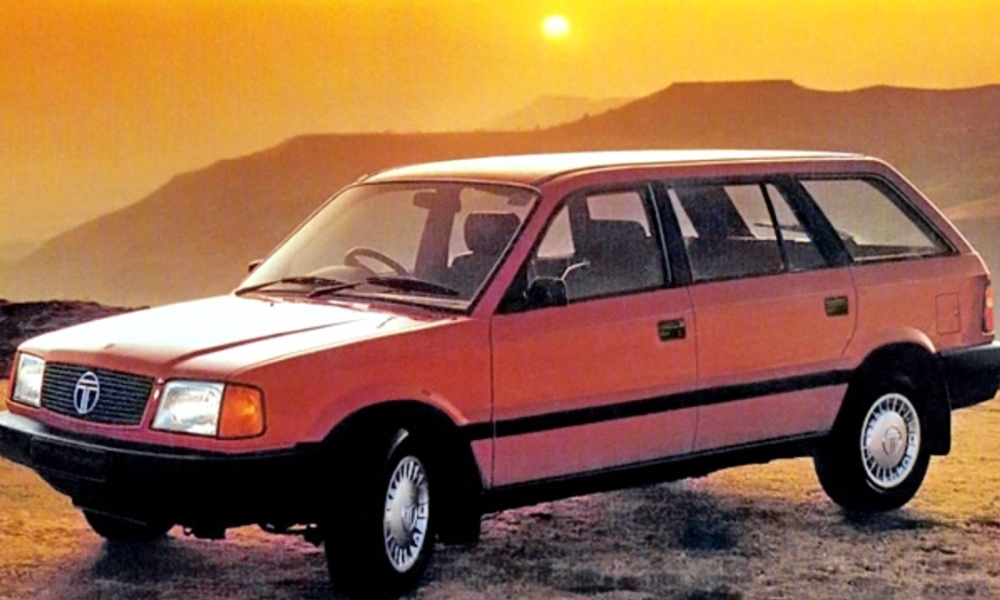
Tata Estate Put a Modern Estate on Indian Roads
The Tata Estate arrived in 1992, making it one of the most important cars in India's station-wagon history. Tata Motors' own timeline records the launch in 1992, shortly after the Tata Sierra and before the Tata Sumo.
It was Tata's first serious passenger-car effort and was designed as an estate rather than simply being a sedan converted into a wagon. The car came with a 1.9-litre diesel engine and features such as power steering, power windows and a tachometer, which were notable for the Indian market at the time.
The Tata Estate remained in production for around eight years, from 1992 to 2000. It offered the space and versatility that would later become central to the estate formula, but it could not create sustained mainstream demand for the body style.
The 1990s and 2000s Brought More Estate Cars
The Tata Estate was not an isolated attempt. Several manufacturers experimented with estates as India's passenger-car market expanded:
- Maruti Suzuki Baleno Altura offered a wagon version of the Baleno.
- Fiat Siena Weekend added estate practicality to the Siena range.
- Tata Indigo Marina targeted buyers looking for a spacious family car.
- Škoda Octavia Combi appealed particularly to enthusiasts looking for performance and practicality in one package.
The estate was not rejected because Indian manufacturers failed to offer enough choices. Instead, several manufacturers tried different price points and positioning, yet the body style remained a niche.

Tata Indigo Marina Tried the Family-Car Approach
Tata returned to the estate format with the Indigo Marina in 2004. The car was positioned as a more spacious and premium version of the Indigo, aiming to combine passenger-car comfort with the additional luggage capacity of an estate.
The Marina was an interesting proposition for Indian families because its long roof and large rear section gave it considerably more practical cargo space than a conventional sedan. Yet by this point, buyers had increasingly attractive alternatives in the form of utility vehicles and SUVs. That shift would become one of the biggest reasons estates struggled to gain a lasting foothold.
Also Read: Safest 7-Seater Family SUVs and MPVs in India with 5-Star Bharat NCAP Ratings

Škoda Octavia Combi Was an Enthusiast's Estate
The Škoda Octavia Combi arrived in India in 2005 and remains one of the most memorable estates for Indian enthusiasts. It was offered in versions including the 1.9 TDI diesel and the 1.8-litre turbo-petrol RS, giving the car a combination of everyday practicality and performance that was unusual for its time.
The Combi was not simply a bigger boot attached to an ordinary family car. It gave buyers a fast, comfortable long-distance car with the ability to carry considerably more luggage, which made it particularly appealing to enthusiasts who valued driving dynamics as much as practicality.
However, the market remained small. The Octavia Combi remained a niche offering and was eventually discontinued from the Indian market.

Audi RS6 Avant Gave the Estate a New Identity
Luxury manufacturers eventually discovered another way to sell an estate in India: make it extraordinarily fast.
Audi launched the RS6 Avant in India in 2015 at Rs. 1.35 crore, positioning it as a high-performance luxury estate rather than a conventional family wagon. Its 4.0-litre twin-turbo V8 produced 552bhp and 71.4kgm of torque, while quattro all-wheel drive helped it achieve a claimed 0-100kph time of 3.9 seconds. The formula was simple but compelling: Supercar performance + estate practicality.
The RS6 Avant therefore appealed to a very different buyer from the Tata Estate or Indigo Marina. Its appeal was not simply that you could carry more luggage. It was that you could do so while driving something capable of extraordinary performance. Audi later introduced the RS6 Avant Performance, priced at Rs. 1.65 crore in 2018, with 605hp and 750Nm.

Volvo V90 Cross Country Took the SUV Route
Volvo approached the problem from the opposite direction. The V90 Cross Country launched in India in 2017 at Rs. 60 lakh, with 210mm of ground clearance, all-wheel drive and an adaptive air suspension system. Its boot offered 560 litres of luggage space, expanding to 1,526 litres with the rear seats folded.
The idea was to retain the comfort, space and road manners of an estate while making it more capable on India's roads.
Volvo V90 Cross Country at a Glance
| Feature | V90 Cross Country |
| Launch price | Rs. 60 lakh |
| Ground clearance | 210mm |
| Boot space | 560 litres |
| Maximum luggage space | 1,526 litres |
| Drive | All-wheel drive |
| Engine | 2.0-litre D5 diesel |
| Power | 235hp |
Volvo effectively acknowledged the elephant in the room, that if Indian buyers wanted SUVs, an estate needed to offer more than a big boot to compete with them.
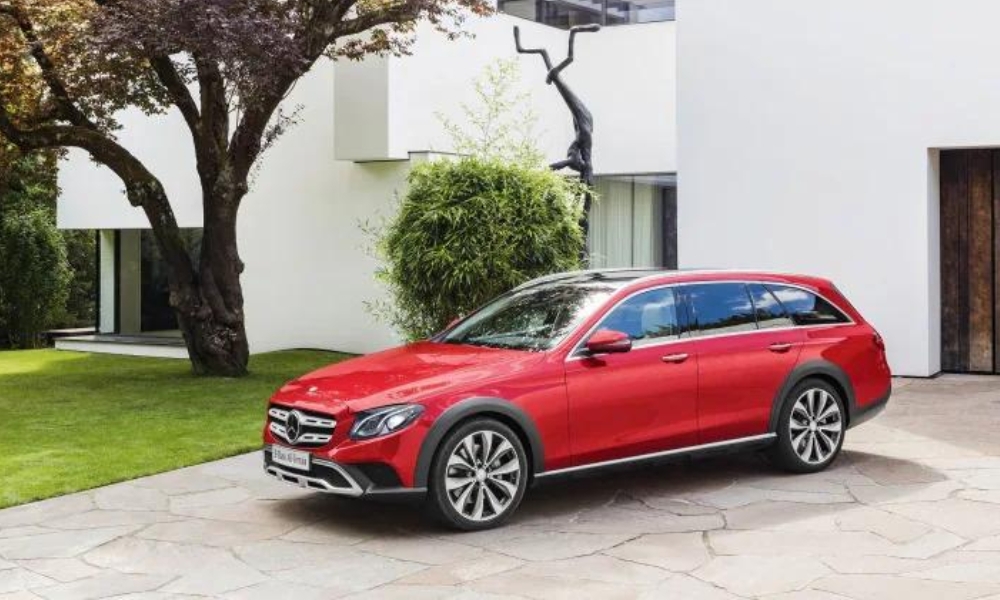
Mercedes-Benz E-Class All-Terrain Followed
Mercedes-Benz took a similar approach with the E-Class All-Terrain, which made its India debut in 2018. It was a raised version of the E-Class estate, with 4MATIC all-wheel drive, 19-inch wheels and an All-Terrain driving mode.
The car had a 640-litre boot, expandable to 1,820 litres with the rear seats folded. Mercedes also gave it air suspension and a more rugged exterior treatment to distinguish it from the regular E-Class.
At launch, Mercedes positioned the E-Class All-Terrain directly against the Volvo V90 Cross Country. The fact that both manufacturers were effectively giving their estates SUV-inspired characteristics says a lot about the Indian market at the time.
Why Did Estate Cars Fail to Become Popular in India?
One major reason estates struggled was that SUVs offered Indian buyers a different mix of practicality, ground clearance, seating position and road presence.
Why SUVs Won Over Estates
- Higher ground clearance: SUVs were better suited to broken roads, large speed breakers and rougher surfaces.
- Higher seating position: Many buyers preferred the commanding view from an SUV.
- Stronger road presence: SUVs increasingly became associated with a more premium and substantial appearance.
- Similar practicality: Compact and midsize SUVs could provide useful luggage space without the long, low estate profile.
- Changing buyer preferences: As SUVs became more mainstream, the traditional estate began to occupy a much smaller space in the market.
Also Read: 10 Cars With Large Boot Space Under Rs. 15 Lakh (400L+): Hector, Verna, Virtus & More
Will the BMW M5 Touring Make Estate Cars Popular in India?
The M5 Touring is unlikely to suddenly make estates a mainstream alternative to SUVs. BMW itself is introducing it as part of an ultra-exclusive 100 Jahre Nürburgring collection, so this is a halo product rather than an attempt to build a large-volume estate business in India.
But its arrival is still significant. India has gone from early station-wagon conversions to the Tata Estate, then through a series of mainstream and enthusiast estates before luxury brands tried performance and SUV-inspired formulas.
BMW's answer is arguably the most extreme one yet. India never stopped making room for practical cars. It just chose SUVs for that job. The M5 Touring now gives the estate a different reason to exist because sometimes the long roof is the fun part.
Related News

Learn more about BMW M5


Popular BMW Models


Latest Cars


Upcoming Cars


Latest News


 car&bike Team | Nov 10, 20263.3 kW Vs 7.2 kW Vs 11 kW EV Chargers: Which Do You Need?Choosing a home EV charger depends on your car, daily driving and home power supply. A 3.3 kW charger works for smaller EVs, while 7.2 kW suits most mid-size electric cars. An 11 kW charger is meant for larger EVs that support three-phase charging.1 min read
 Janak Sorap | Nov 10, 2026India Bike Week 2026 Dates Announced; Festival To Return To Panchgani On December 4-5The two-day motorcycle festival will feature racing events, custom bike showcases, stunt performances, test rides and live music, with rapper Hanumankind among the performers.1 min read
 car&bike Team | Nov 10, 20268 Cars In India For Buyers Living In Narrow Lanes And Tight Apartment Parking Lots: Alto K10, Comet EV, S-Presso & MoreTake a look at eight of the most ideal compact cars in India, built with the intention to effortlessly cut through narrow city streets or slot into tight apartment parking spaces.1 min read
 Sarthak Mahajan | Nov 10, 2026JLR Launches Legal Dispute Against BYD Over Ti7 SUVJLR has dragged BYD into court over its Fang Cheng Bao Ti7 SUV.1 min read
 Janak Sorap | Nov 10, 2026TVS Ntorq 150 Gets New Spectral Green Colour; Exclusive To TFT VariantThe new shade is available exclusively on the scooter’s TFT variant, taking the total number of colour options to four.1 min read
 Janak Sorap | Nov 10, 2026TVS Apache RTR 160 vs Bajaj Pulsar 150 vs Hero Xtreme 160R: Which Bike Fits You?The 150–160cc motorcycle segment offers a good mix of everyday practicality and sporty performance. But should you choose the feature-packed Bajaj Pulsar 150, the performance-oriented TVS Apache RTR 160 or the lightweight Hero Xtreme 160R?1 min read