
Hyundai Bayon SUV Revealed Ahead Of October 26 Launch


- Hyundai Bayon India launch on October 26; deliveries in November.
- Features front parking sensors, 360-degree cameras and 17-inch wheels.
- To be available only with 1.5-litre naturally aspirated petrol engine at launch.
After weeks of teasing everyone endlessly and relentlessly, Hyundai India has finally revealed first pictures of its newest SUV, the Hyundai Bayon. Shaped to slot in right between the Venue and Creta in the company's portfolio, the Bayon will be launched in India on October 26, and the first pictures (finally) give us a clearer idea of what the Bayon is aiming to do differently. Hyundai has promised deliveries of the Bayon will begin in the festive season, and we expect customers to receive the Bayon starting November.
Also Read: Best Cars for Tall Drivers: Mahindra XUV 3XO, Wagon R, Hyundai Creta, Tata Nexon & More
Hyundai Bayon: Design and dimensions
Unlike the more upright and boxy Venue, the Bayon appears more hunkered down yet muscular. At over 4,200 mm in length, the Bayon is notably longer than the Venue, but not quite as long as the Creta, and will instead be akin to the Volkswagen Taigun and Skoda Kushaq in terms of size.

The face is typically Hyundai, with slim LED daytime running lights appearing to be the ‘eyes’, with the twin LED projector headlights housed beneath them. The front bumper incorporates a bull bar/fang-shaped silver element, and also visible in these pictures are front as well as side parking sensors.
In profile, the Bayon's powerful wheel arches grab attention, with Hyundai opting to put 17-inch alloys (shod in 215-section tyres) on the Bayon, one size bigger than you get on the Venue. The glasshouse may remind some of the Gen 1 Creta's, and at the back, the tail-lights mirror the shape of the LED DRLs up front.

Hyundai Bayon: Interior and features
Hyundai unveiled the new-gen i20 hatchback in Brazil a few months ago, and if you've seen the interior on the new i20, the Bayon's cabin will look familiar. The dashboard layout and design, the placement of controls, even the door pads and inner door handles are a carbon copy of the new i20's.

The steering wheel – featuring Morse code instead of the Hyundai logo – is the same as on the Venue, but here, the interior colour scheme appears to be ivory and black. There are two screens – a touchscreen and a digital driver's display – measuring 12.3 inches each. Beneath the touchscreen is a stack of physical controls, but the AC controls appear to be touch-activated.
Also visible are two USB-C ports, wireless phone charging and a smattering of buttons around the gear lever to activate auto hold, front seat ventilation and the parking cameras. A panoramic sunroof is expected to be on the features list as well, and the Bayon is expected to offer a little more rear seat space than the Venue can with its sub-4-metre footprint.

Hyundai says the Bayon will also feature a ‘Generative AI’ voice assistant powered by Perplexity, Bluelink connected car features, a multi-language interface and up to 19 controllers that enable over-the-air updates.
Hyundai Bayon: Engine and gearbox options
For now, the Hyundai Bayon will be available only with a single engine option – a 1.5-litre, naturally-aspirated petrol engine developing a peak 113.4 bhp and 144 Nm of torque.
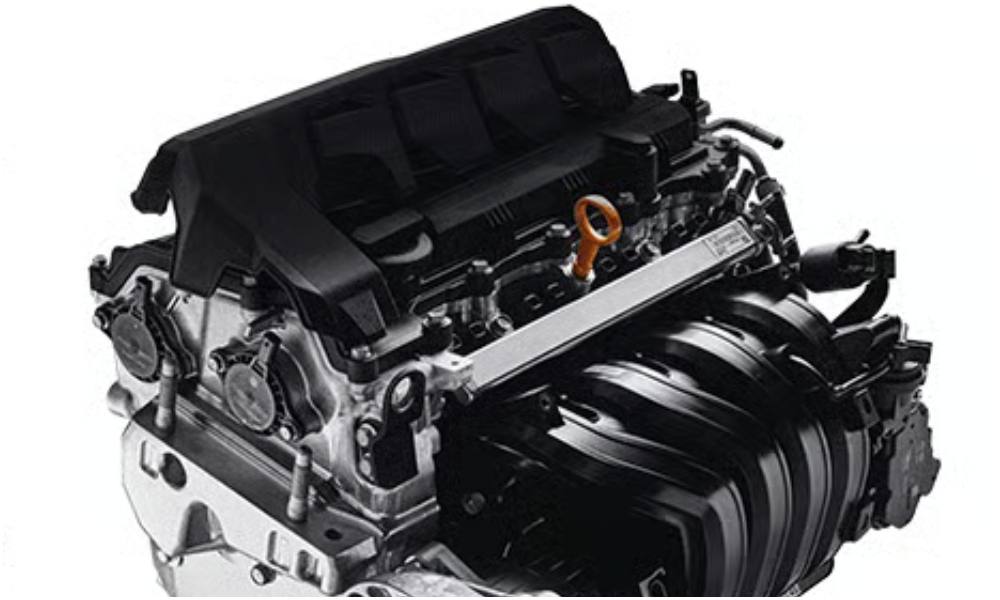
Transmission choices include a six-speed manual and a continuously variable transmission (CVT) automatic. This exact combination is also available in other Hyundai cars such as the Creta and the Verna. There is no mention of a turbo-petrol, or a diesel, or even a CNG option for the Bayon at this time.
Hyundai Bayon: Expected price
The Bayon is likely to thread the gap that exists between the Venue 1.2 (Rs 8 to 11.2 lakh) and the Creta 1.5 (Rs 11 to 19 lakh), with prices expected to be in the range of Rs 9.5 lakh to Rs 14 lakh (all prices, ex-showroom).
Related News

Learn more about Hyundai Bayon

Popular Hyundai Models


Latest Cars


Upcoming Cars


Latest News


 car&bike Team | Nov 10, 20263.3 kW Vs 7.2 kW Vs 11 kW EV Chargers: Which Do You Need?Choosing a home EV charger depends on your car, daily driving and home power supply. A 3.3 kW charger works for smaller EVs, while 7.2 kW suits most mid-size electric cars. An 11 kW charger is meant for larger EVs that support three-phase charging.1 min read
 Janak Sorap | Nov 10, 2026India Bike Week 2026 Dates Announced; Festival To Return To Panchgani On December 4-5The two-day motorcycle festival will feature racing events, custom bike showcases, stunt performances, test rides and live music, with rapper Hanumankind among the performers.1 min read
 car&bike Team | Nov 10, 20268 Cars In India For Buyers Living In Narrow Lanes And Tight Apartment Parking Lots: Alto K10, Comet EV, S-Presso & MoreTake a look at eight of the most ideal compact cars in India, built with the intention to effortlessly cut through narrow city streets or slot into tight apartment parking spaces.1 min read
 Sarthak Mahajan | Nov 10, 2026JLR Launches Legal Dispute Against BYD Over Ti7 SUVJLR has dragged BYD into court over its Fang Cheng Bao Ti7 SUV.1 min read
 Janak Sorap | Nov 10, 2026TVS Ntorq 150 Gets New Spectral Green Colour; Exclusive To TFT VariantThe new shade is available exclusively on the scooter’s TFT variant, taking the total number of colour options to four.1 min read
 Janak Sorap | Nov 10, 2026TVS Apache RTR 160 vs Bajaj Pulsar 150 vs Hero Xtreme 160R: Which Bike Fits You?The 150–160cc motorcycle segment offers a good mix of everyday practicality and sporty performance. But should you choose the feature-packed Bajaj Pulsar 150, the performance-oriented TVS Apache RTR 160 or the lightweight Hero Xtreme 160R?1 min read