logo
New Delhi

Expert Review on Tata Punch EV

  • Expert Rating
    c&b icon8.3/10
  • Safety
    8.8
    Comfort
    7.8
    Styling
    8
    Merit / USP
    8.3
    Significance
    8.5
    Value for Money
    8.6

car&bike Expert Take

“The Tata Punch EV has matured a lot with higher-density battery packs and a much-needed BaaS pricing structure. It offers real-world punchiness and comfortable ride quality; while certain navigation glitches remain annoying, this electric runabout is still a sorted and feature-rich proposition.”

When Tata Motors introduced the Punch EV's 2026 facelift, it proved once again how the Indian brand often remains serious with its portfolio of vehicles. The most remarkable and recent shift this SUV went through is its aggressive pricing strategy, as a new Battery-as-a-Service (BaaS) structure now slashes the initial acquisition cost. It means instead of paying full upfront, Tata allows you to pay a battery rental fee per kilometre driven.
Under the skin, the older 25 kWh and 35 kWh batteries have been replaced by denser 30 kWh and 40 kWh packs. The updated 6-in-1 EV drive unit is also lighter and noticeably more efficient, ironing out some earlier issues. It is now undoubtedly a genuine daily driver that feels remarkably well-appointed for its size.
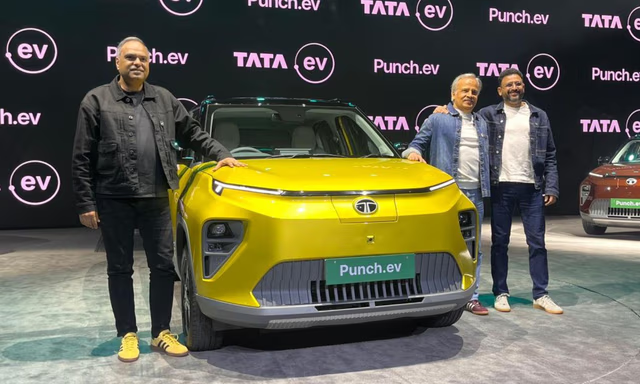
The car&bike team has often checked out this vehicle's capabilities over the years. For instance, Bilal Firfiray did a real-world test of the latest facelift to check whether it meets buyer expectations, and he also talked in detail about the car’s launch. We have compiled his opinions from those pieces into this review as well to give you a clear picture of Punch EV.

This updated EV replaces the old powertrain with a more heavily integrated module. It neatly bundles most of the moving parts, along with lowering the kerb weight and simplifying the wiring. The 40 kWh Long Range model makes roughly 127 bhp, and that is some serious grunt for a car this size; you get a surge of power right off the line. The sprint to 100 kmph takes less than nine seconds.

Engine Specifications

Engine Power Torque Transmission Drivetrain 
30 kWh Battery Pack87 bhp154 NmSingle-speed automaticFront-wheel drive
40 kWh Battery Pack127 bhp154 NmSingle-speed automaticFront-wheel drive

Driving Experience: Real World

This electric SUV does not feel sluggish at all. It feels genuinely peppy, and its power delivery is strictly linear.

City Driving

Around town, navigating traffic is effortless, as you rarely need to work the car too much, and it is always just effortlessly quick off the mark.
Bilal observes in this situation,
“The output is around 120 hp. It truly feels like every bit of that power is available.”
Meanwhile, the steering feels light enough for tight parking spots, but also has enough weight not to feel completely dead off-centre. As for the regenerative braking system, it manages to keep range consistent in city crawls without being overly jerky.

Highway Driving

Out on the open road, the Punch EV gets more comfortable. Unlike older EVs that struggle at higher speeds, the 40 kWh model remains tractable. Overtaking long trucks is fuss-free, and while we felt wind noise at triple-digit speeds, the cabin stays relatively free of motor whine.

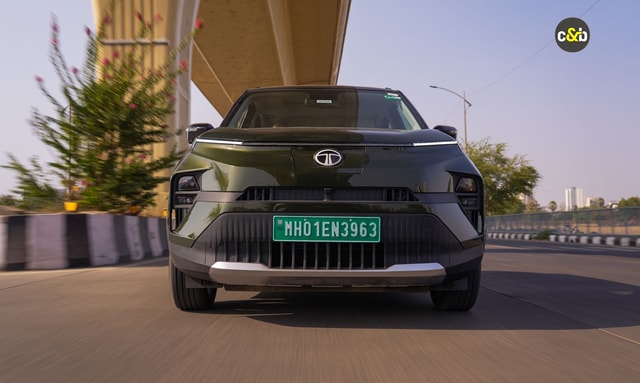
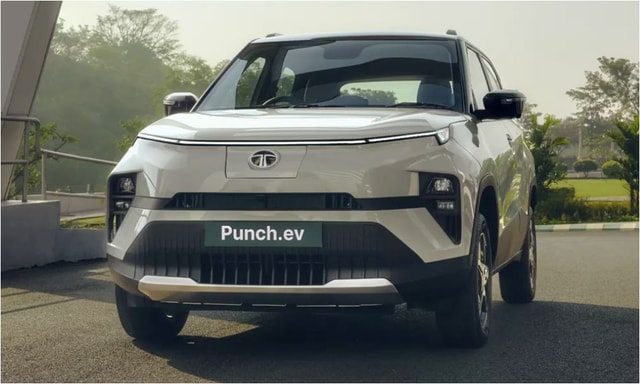
Visually, the facelift has tidied up the front end considerably from before. While it drops the signature connected LED bar, the new design also feels noticeably tougher, as Tata has clearly drawn inspiration from its larger siblings. The heavy bumper jutting out gives it a distinctly masculine stance, and with 195 mm of ground clearance, it naturally looks the part of a proper crossover. The proportions are tight; no element looks wallowy or overly bulky, and the updated paint options add a bit of much-needed showroom appeal.

Dimensions Comparison

Dimension Tata Punch EVTata Nexon EVTata Tiago EV
Length 3,880 mm3,995 mm3,769 mm
Width 1742 mm1802 mm1677 mm
Height 1622 mm1625 mm1536 mm
Wheelbase 2445 mm2498 mm2400 mm

We noticed that the Tata Punch EV's design actually feels cohesive.

Front Profile

  • The redesigned bumper now extends further outward to give the car a more prominent profile.
  • Vertical slats are placed intelligently to reinforce the 'SUV' credentials.
  • The front-facing 360-degree camera is neatly tucked into the new bumper.

Side Profile

  • The high ground clearance is immediately obvious from the side.
  • It uses sensible 16-inch wheels on the higher trims, ones that fill the arches nicely.
  • The glasshouse is massive, making the interior feel properly airy.

Rear Profile

  • At the back, you will notice the revised tail lamps the most.
  • The tailgate is upright and clean, as is seen in most Tata models.
  • The load lip is kept sensibly low for easier luggage loading and unloading.

Step inside, and the cabin feels surprisingly upmarket. Tata has done a commendable job improving the fit and finish.

Cabin Layout and Quality

The dashboard is cleanly laid out, retaining the familiar dual-screen setup of a sharp digital driver’s display and a central touchscreen. The new twin-spoke steering wheel looks fantastic, and other touchpoints are generally good. You do find some scratchy plastics lower down in the cabin, but the rest of the upper dashboard feels adequately padded. We need to mention the revised window switches and split door locks; they are some welcome ergonomic updates.

Seating Comfort

All the seats inside the vehicle offer a good balance of support and cushioning.

Front Row

The front squab is generous. You get to sit high up and relish a commanding view of the road. Side bolstering holds you firmly in place when you hustle through corners, and ventilated front seats are also available on the top-spec trims, which is an absolute lifesaver during our sweltering summers.

Second Row

This row benefits from a flat floor and ample legroom, along with proper headroom, too. Its most practical features are the centre armrest, the reclining-angle backseats, and the fast-charging USB ports. However, the car missed out on rear AC vents.

Features That Improve Daily Use

  • The 10.25-inch touchscreen is snappy and responsive.
  • The twin-spoke steering wheel integrates nicely.
  • The updated split door lock system improves daily usability.

But Bilal points out one thing,
“The vents start emitting heat sometimes, while the display stubbornly insists it's still at your cool, set temperature.”

Tata is actively trying to undercut its rivals and bring EVs to the masses. The standard ex-showroom price starts at Rs. 9.69 lakh for the Punch EV's base 30 kWh variant. That is a remarkably strong value proposition. However, the real steal is the Battery-as-a-Service (BaaS) route. Under BaaS, the entry point plummets to just Rs. 6.49 lakh. You then pay a nominal running cost of Rs. 2.6 per kilometre for the battery rental, which makes long-term ownership significantly more pocket-friendly.

Ex-Showroom Prices (India)

Variant Standard Ex-Showroom Price BaaS Price
Smart (30 kWh)Rs. 9.69 LakhRs. 6.49 Lakh
Smart Plus (30 kWh)Rs. 10.29 LakhN/A
Smart Plus (40 kWh)Rs. 10.89 LakhN/A
Adventure (40 kWh)Rs. 11.59 LakhN/A
Empowered (40 kWh)Rs. 12.29 LakhN/A
Empowered Plus S (40 kWh)Rs. 12.59 - Rs. 14.44 LakhN/A

Note: Expect the BaaS prices for the higher teams following the similar strategy to the Smart variant, i.e., around Rs. 3 lakh less than that of the traditional price.

Range anxiety is the biggest hurdle for EV buyers. Tata claims an ARAI-certified figure of around 460 km for the Punch EV's 40 kWh battery, but in reality, expect between 333-353 km on a C75 real-world cycle. The smaller 30 kWh pack delivers roughly 270 km. These figures are more than adequate for pottering around town. However, if you push hard, the range drops quickly.

Observed Range During Testing

Battery Pack

30 kWh (Medium Range)

40 kWh (Long Range)

ARAI Claimed Range

375 km

460 km

Real-World City Range

250 - 270 km

320 - 340 km

Real-World Highway Range

220 - 240 km

280 - 300 km

Bilal notices,

“While the first 80% depletes linearly, the final 20% drops off a cliff.”

Thankfully, the DC fast charging rate has been bumped up to 65 kW so that it can replenish the car up to 135 km of range in a brisk 15-minute stop.

Tata does not cut corners when it comes to crash safety, so you can expect the Punch EV's underlying platform to be fundamentally sorted, starting with its five-star Bharat NCAP safety rating.

Passive Safety and Crash Protection

The car packs six airbags as standard across the entire range. The shell feels rigid, and the doors shut with a reassuring thud. All rear seats feature standard ISOFIX child-seat mounting points, giving families tremendous peace of mind. The battery packs carry an IP67 rating, protecting them from deep water wading during monsoons. Tata also offers a lifetime warranty on the 40 kWh battery pack, which is a massive bonus in this segment.

Active Safety and Stability Systems

The kit list includes electronic stability control and hill-hold assist as standard. Braking hardware comprises disc brakes on higher models, and these brakes bite hard and feel progressive. A 360-degree camera system is cleanly integrated into the front bumper, which genuinely helps squeeze the car into tight parking spots. The Android Auto navigation, meanwhile, tends to lose itself at slow speeds sometimes, confusing your location entirely.

Safety Verdict

Overall, the SUV completely ticks most boxes for safety. The structural integrity is excellent, and its active safety nets intervene smoothly without feeling overly intrusive.

Tata has packed its compact electric vehicle with an impressive kit list. The cabin maintains a modern digital aesthetic, relying on a comprehensive suite of displays.

Infotainment and Interface

  • Higher trims feature a 10.25-inch Harman touchscreen system, which supports wireless Apple CarPlay and Android Auto.
  • A 10.25-inch digital driver’s display provides crisp graphics, sitting perfectly behind a new twin-spoke steering wheel.
  • The overall interface is largely quick and intuitive to use.
  • However, as we already mentioned, navigation bugs can surface.

Bilal notes,
“At slow speeds, the Android Auto navigation seemed lost. It would show my car 500 meters away in the middle of a lake.”

Cabin Convenience and Practical Features

  • A 360-degree camera integrates beautifully into the redesigned front bumper.
  • The ventilated front seats keep you cool in heavy traffic.
  • A wireless phone charger is smartly tucked away in the console.
  • Auto-dimming inside mirrors and automatic climate control add premium touches.
  • The window and door lock toggles use a new split system rather than a single unit.
  • Unfortunately, the cabin could have benefited more from dedicated rear AC vents.

Despite having a large battery pack, practicality is uncompromised in this EV. The boot offers 366 litres of space, and its load lip is quite manageable; we found loading heavy suitcases a fuss-free affair. The rear seats also fold down to accommodate larger items, but they do not fold completely flat. Still, it provides ample stowage for airport runs or weekend getaways, and you can easily squeeze in a few soft bags alongside a medium hard case. For a car of this footprint, the cargo area is genuinely well thought out.

The Tata Punch EV's real magic lies beneath its skin, as its suspension tuning is wonderfully sorted out for Indian driving conditions.

City Driving

In slow traffic, the EV feels nippy and easy to hustle. The power delivery is linear, giving you a punchy surge when needed. The suspension, meanwhile, irons out bumps and ruts effortlessly, preventing the cabin from suffering harsh thuds over broken tarmac. As for the steering, it stays light at low speeds.
Bilal appreciates,
“The suspension setup is so mature that I now expect every other car to handle speed breakers and bad roads with the same grace.”

Highway Driving

Out on the open road, the chassis feels planted. It remains sure-footed even when cruising at triple-digit speeds, and the car also manages body roll surprisingly well through sweeping bends. It never feels wallowy or unsettled over mid-corner bumps, but we caution against pushing it too hard. The brakes, meanwhile, have progressive stopping power, hauling the entire kerb weight down with absolute confidence.

Buyers can choose from many distinct trims, as the lineup has some exciting options like Smart, Smart Plus, Adventure, Empowered, and Empowered Plus S, etc.

Variant Battery & PowertrainKey FeaturesBest Suited For
Smart 30 kWh, 87 bhpSix airbags, LED DRLs, hill-hold assistBuyers on a strict budget
Smart Plus30 kWh, 80.46 bhp /
40 kWh, 127 bhp
10.25-inch infotainment, steering controlsUrban commuters needing tech
Adventure 40 kWh, 127 bhpCornering lights, cruise controlHighway drivers wanting range
Empowered 40 kWh, 127 bhp16-inch alloy wheels, connected taillightsBuyers wanting premium aesthetics
Empowered Plus S40 kWh, 127 bhp360-degree camera, sunroofTech-obsessed luxury buyers

The Essentials That You Don’t Get

  • Dedicated rear AC vents
  • Level 2 ADAS features
  • Split-folding rear seats
  • Cupholders for the second-row passengers

With five variants from Tata in retail (six, if you consider the Smart Plus has both 30 kWh and 40 kWh), choosing one depends on what you expect from the car the most.

Best for Strict City Commutes: Smart Plus 30 kWh

The 30 kWh Smart Plus trim does the job here. You get the 87 bhp motor and 250 km real-world range, which works well for city-only commutes. 

Best for Highway Runs and Weekend Trips: Adventure 40 kWh

We strongly recommend stepping up to the 40 kWh Adventure trim here. You get the punchy 127 bhp motor and a solid 300 km real-world range, and it will keep range anxiety away without stretching your wallet too far.

Best for the Tech-Obsessed Buyer: Empowered Plus S 40 kWh

If you want every available bell and whistle of the Punch EV, the Empowered Plus S is the answer. It brings ventilated seats and a 360-degree camera to the fore, and its interior feels like a properly upmarket cabin.

The entry-level electric segment is heating up quickly, with rivals offering different combinations of range, tech, and cabin space in the Indian market right now.
Undoubtedly, the Tata Punch EV’s most aggressive rivals are the Citroen eC3, the MG Comet EV, and also its own sibling, the Tata Tiago EV. Notably, the Punch EV has a much larger battery pack than any of these other offerings.

Model 

Battery Capacity

Claimed Range

Ex-Showroom Price Range

Tata Punch EV

30 kWh / 40 kWh

275 - 350 km

Rs. 9.69 – Rs. 14.44 Lakh

Citroen eC3

29.2 kWh

320 km

Rs. 12.90 – Rs. 13.41 Lakh

Tata Tiago EV

19.2 kWh / 24 kWh

250 - 315 km

Rs. 7.99 – Rs. 11.14 Lakh

MG Comet EV

17.3 kWh

230 km

Rs. 7.50 – Rs. 9.97 Lakh

Which Electric Vehicle Should You Choose?

  • Choose the Tata Punch EV for sorted ride dynamics, generous boot space, and a high driving position.
  • Choose the Citroen eC3 if you want an exceptionally plush ride quality over poorly maintained roads.
  • Choose the Tata Tiago EV if you need a nimble runabout with a highly pocket-friendly price tag.
  • Choose the MG Comet EV for its incredibly tight turning circle and quirky tech appeal.

Pros

  • Brisk acceleration and punchy mid-range performance
  • Mature suspension irons out bumps beautifully
  • Generous 366-litre boot space
  • Top-spec variants are heavily feature-rich

Cons

  • Noticeable lack of dedicated rear AC vents
  • Range drops aggressively in the last 20 per cent
  • Android Auto navigation can be glitchy at low speeds
  • Rear seat shoulder room feels a touch too cramped

Verdict

The facelifted Tata Punch EV does not let its internal combustion sibling enjoy market space in peace. It feels like a thoroughly engineered product, with the inclusion of the new battery architecture making it a much more competent vehicle. It has genuine grunt for you when you put your foot down on the accelerator, and the sorted suspension tuning is no doubt the absolute highlight of the driving experience, being able to handle broken tarmac with shocking grace.

But this car also has a few flaws. The sudden drop in battery percentage near the end of its charge will keep your range anxiety high, while no rear AC vents feels like a missed opportunity. Yet, these few niggles rarely overshadow the overall package the Tata Punch EV has to offer, both for first-time buyers and veteran EV owners alike.

Bilal sums up the experience perfectly,

“It’s sweet, compact, and packed with almost every feature you’d find in its bigger sibling.”

Tata Punch EV Price List (Variant Wise)

Tata Punch EV Ex-Showroom price ranges from ₹ 9.69 to 12.59 Lakh. Tata offers Punch EV in 6 variants. The top variant of Punch EV is Empowered Plus S and the base variant is Smart 30kWh.

Variants
*Ex-Showroom Price
Electric, 355 Km/Full Charge, Automatic
Starts at
₹ 9.69 Lakh
Electric, 355 Km/Full Charge, Automatic
Starts at
₹ 10.29 Lakh
Electric, 468 Km/Full Charge, Automatic
Starts at
₹ 10.89 Lakh
Electric, 468 Km/Full Charge, Automatic
Starts at
₹ 11.59 Lakh
Electric, 468 Km/Full Charge, Automatic
Starts at
₹ 12.29 Lakh
Electric, 468 Km/Full Charge, Automatic
Starts at
₹ 12.59 Lakh

Similar Global NCAP Crash Test

Latest News On Punch EV