Maruti Suzuki Baleno
Maruti Suzuki Baleno is a 5-seater Hatchback available at a starting price of Rs. 6.1 Lakh. The car is available in 11 variants, with 1 engine and 2 transmission option. Additionally, Baleno offers a Ground Clearance measurement of 170 mm and a Boot capacity of 318 liters. You can choose from 7 colors for the Baleno. The mileage of the Baleno varies from 22.4 KM/L depending on the model....


*Actual Insurance price may vary.


Latest Updates on Maruti Suzuki Baleno
2026 Maruti Suzuki Baleno Facelift Launched At Rs 6.10 Lakh
Maruti Baleno Facelift Spied Testing; Previews Design Updates
Maruti Suzuki Baleno Bags 4 Stars At Bharat NCAP Crash Test
Maruti Suzuki Launches New Baleno Regal Edition For The Festive Season
Maruti Suzuki Swift Was The Best-Selling Car In FY2020-21; Here Are The Top 10
What's New on Maruti Suzuki Baleno?
An overview of the Maruti Suzuki Baleno
- The Maruti Suzuki Baleno is a premium hatchback with a lot of modern features.
- This car has been built with the brand’s ‘Dare to go Glam’ philosophy in mind.
- It can now be personalised with exclusive packages such as the Elegrande and Novo-Spirit collections.
- Maruti Suzuki offers the Baleno in seven colour options, including a new colour named Enigmatic Teal.
How does the Maruti Suzuki Baleno perform?
- The Baleno is powered by an advanced Z12E engine with an idle start-stop setup.
- Its petrol engine option generates a power output of 81.8bhp and 112.4Nm of torque.
- This car’s S-CNG counterpart produces 68.8bhp and 101.8Nm of torque.
- Transmission options include a five-speed manual and an Auto Gear Shift (AGS) automatic.
What are the Maruti Suzuki Baleno’s design features?
- The Baleno has newly introduced a NEXWave grille that gives the car a wide stance.
- Its fascia features three-dimensional patterns with horizontal chrome slats.
- This car’s sculpted front bumper comes with a fresh lower grille design.
- Additionally, the car’s NEXTre LED DRLs are a new distinct signature as well.
What are the Maruti Suzuki Baleno’s exterior features?
- The Baleno measures 3990mm in length, 1745mm in width, and 1530mm in height.
- Its side profiles feature a new chrome accent fender garnish for added style.
- Entry models get 15-inch steel wheels while top-spec models come equipped with 16-inch alloy wheels.
- This car’s roof has been fitted with a shark fin antenna.
What are the Maruti Suzuki Baleno’s interior features?
- The Baleno’s cabin gets a plush dual-tone interior design with dark piano black inserts.
- Its front seats feature ventilated functions and soft leatherette upholstery.
- This car gets a SmartPlay Pro+ touchscreen and a head-up display (HUD) as well.
What is the Maruti Suzuki Baleno’s pricing range?
- The Baleno’s ex-showroom price starts at Rs. 6.09 lakhs depending on the location.
- Buyers can contact their nearest and authorised Maruti Suzuki dealership for the latest prices and related information.
What is the Maruti Suzuki Baleno’s mileage range?
- The Baleno’s petrol option (manual) delivers a claimed mileage of 23.80kmpl.
- Its other petrol option (AGS) delivers a claimed mileage of 24.77kmpl.
- This car’s S-CNG option delivers a fuel efficiency of 33.61km/kg.
- Maruti Suzuki has claimed that the Baleno’s mileage has improved up to 9.8 per cent over the previous generation model.
What are the Maruti Suzuki Baleno’s safety features?
- The Baleno now features Level 2 ADAS with eight advanced radar and camera functions.
- ADAS features include Advanced Emergency Braking, Lane Keep Assist, and Adaptive Cruise Control.
- Standard safety equipment includes six airbags, Hill Hold Control, and the Electronic Stability Program.
- This car also comes with a tyre pressure monitoring system (TPMS) and three-point seat belts.
How does the Maruti Suzuki Baleno handle?
- The Baleno’s front suspension features a MacPherson strut and coil spring system.
- Its rear suspension uses a torsion beam-type setup with coil springs.
- This car’s electronic driving aids assist in maintaining stability during highway cruising.
What are the Maruti Suzuki Baleno’s tech features?
- The Baleno’s 9.0-inch SmartPlay Pro+ screen supports wireless Apple CarPlay and Android Auto.
- Maruti Suzuki offers the Baleno with a premium audio system engineered by Clarion.
- It comes with a Qi-certified wireless phone charger with active cooling.
- Additionally, Suzuki Connect telematics brings over 40 connected vehicle functions.
How large is the Maruti Suzuki Baleno’s boot space?
- The official boot space figure of the Baleno is yet to be confirmed.
Who competes with the Maruti Suzuki Baleno?
- The Maruti Suzuki Baleno competes with other cars such as the Toyota Glanza and Tata Altroz.
Baleno Safety Ratings

Maruti Suzuki Baleno Price List (Variant Wise)
Maruti Suzuki Baleno Ex-Showroom price ranges from ₹ 6.1 to 9.99 Lakh. Maruti Suzuki offers Baleno in 11 variants. The top variant of Baleno is Alpha (O) AMT and the base variant is Sigma.
Maruti Suzuki Baleno Colours
Maruti Suzuki Baleno is available in 7 different colors namely Bluish Black, Enigmatic Teal Green, Opulent Red, Splendid Silver, Arctic White, Grandeur Grey & NEXA Blue.


Baleno Image Gallery
Browse through a collection of 20 high-quality images showcasing both the exterior and interior of the Maruti Suzuki Baleno


Expert Review on Maruti Suzuki Baleno
- Expert Rating
 8.2/10
 - Safety8.75Comfort8.5Styling7.5Merit / USP8.25Significance9Value for Money7.75
car&bike Expert Take
“With the introduction of the fuel-frugal three-cylinder Z-Series engine, segment-first Level 2 ADAS on the top trim and standard six airbags, the Maruti Suzuki Baleno has become more of a dependable, stress-free premium hatchback than before.”
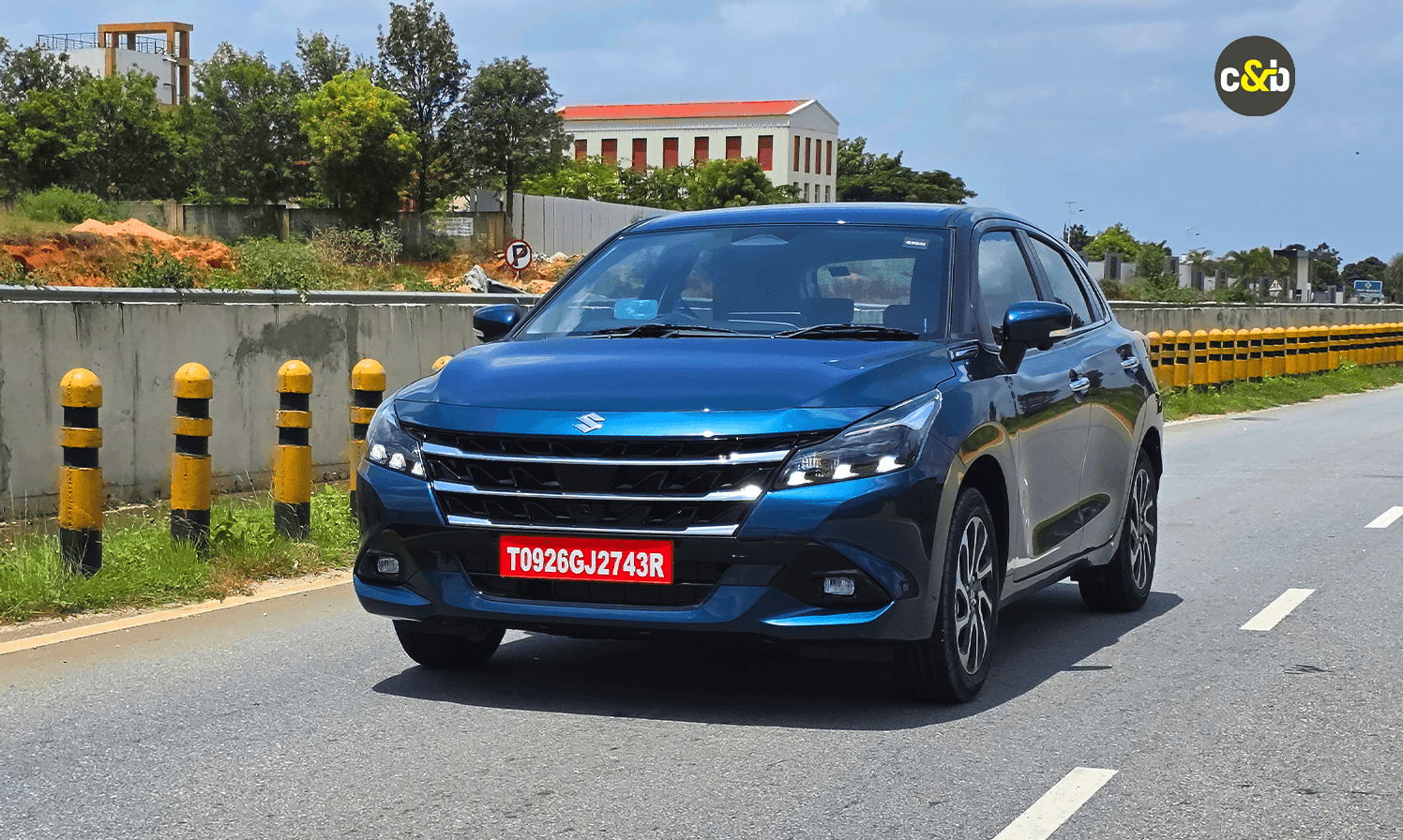
Since arriving in 2015 through the Nexa retail network, the Maruti Suzuki Baleno has built a dedicated following by balancing cabin space, low maintenance expenses and strong resale value. While past updates brought refreshed styling and enhanced dashboard connectivity, the September 2026 edition has offered some mechanical and safety changes.
Under the bonnet, Maruti Suzuki has introduced its modern 1.2-Litre three-cylinder Z-Series petrol engine, one that delivers higher fuel economy in city traffic. Just as notably, the brand has democratised active and passive safety. Six airbags now protect occupants across all its variants, while the newly introduced Alpha (O) trim adds a full Level 2 ADAS suite; a rarity in this price bracket.
Shams Raza Naqvi did a real-world review of the facelift soon after it launched in India. He had this to say,
“Some may miss the old engine, but the new setup will find a lot more followers who are value-conscious.”
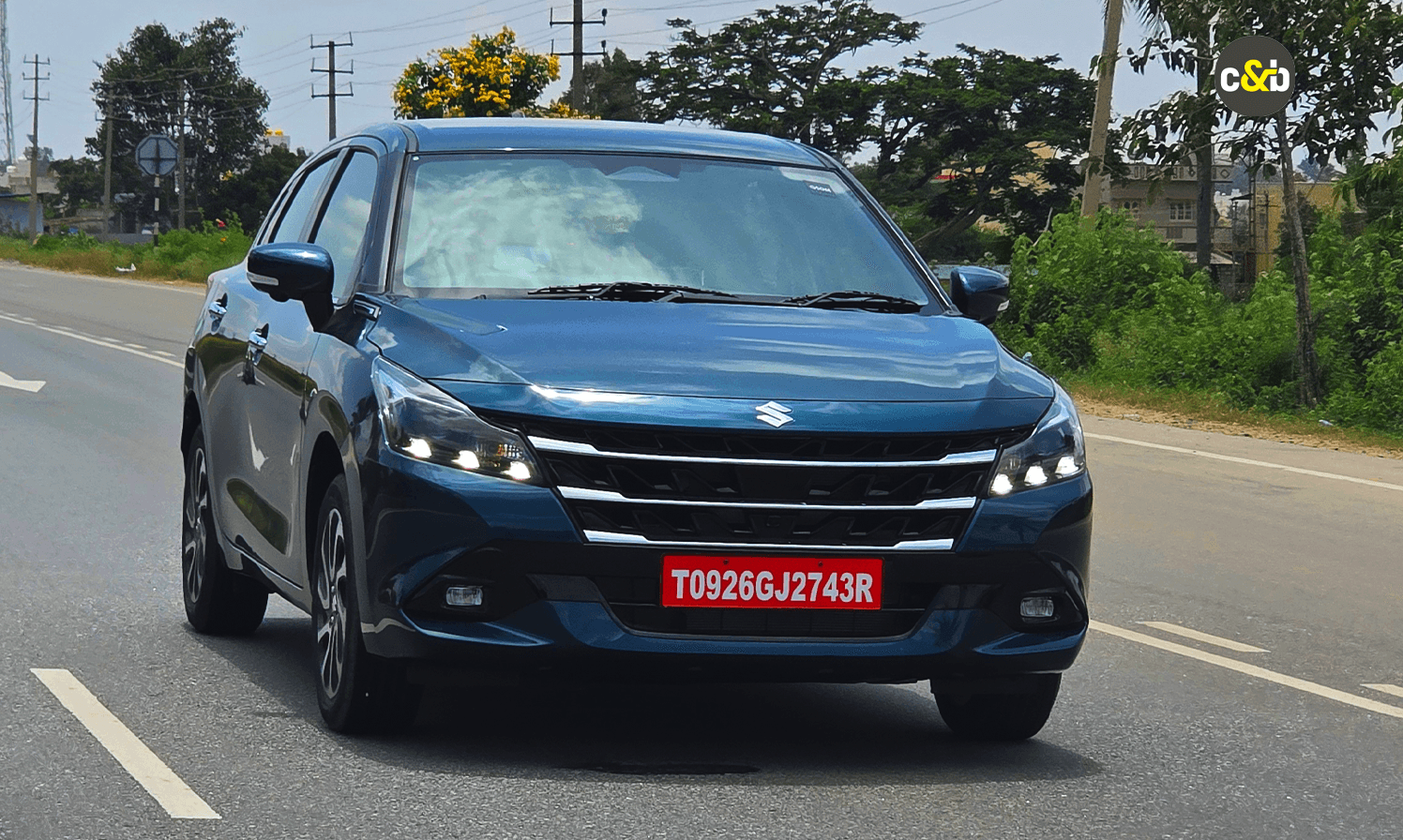
Instead of the outgoing 4-cylinder engine, buyers can now choose between a standard 3-cylinder petrol setup and a factory-fitted CNG kit.
Engine Specifications
| Engine | Power | Torque | Transmission | Drivetrain |
| 1.2-Litre Petrol 3-cylinder | 82 bhp | 112.4 Nm | Five-speed Manual / Five-speed AMT | Front-Wheel Drive |
| 1.2-Litre Petrol + CNG (CNG Mode) | 69 bhp | 101.8 Nm | Five-speed Manual | Front-Wheel Drive |
Key Takeaways
- A standard idle start-stop system cuts off the motor at traffic junctions.
- The petrol variants offer a choice between a five-speed manual and a five-speed AMT.
- The naturally aspirated 1.2-litre engine switches from the older four-cylinder K-Series layout.
City Driving
- The Baleno moves conveniently here, with the manual’s clutch action staying light.
- The five-speed AMT helps you navigate dense traffic without sudden surges.
- Upshifts occur smoothly when driven under moderate throttle.
- But you do encounter the typical AMT hesitation if you suddenly downshift.
Highway Driving
- Out on the highway, it settles into a calm rhythm between 80 kmph and 100 kmph.
- The engine cruises comfortably around 2,500 rpm in fifth gear.
- High-speed overtakes require some planning because maximum torque arrives at 4,500 rpm.
- Push the motor past 4,000 rpm, and a distinct three-cylinder thrum becomes audible.
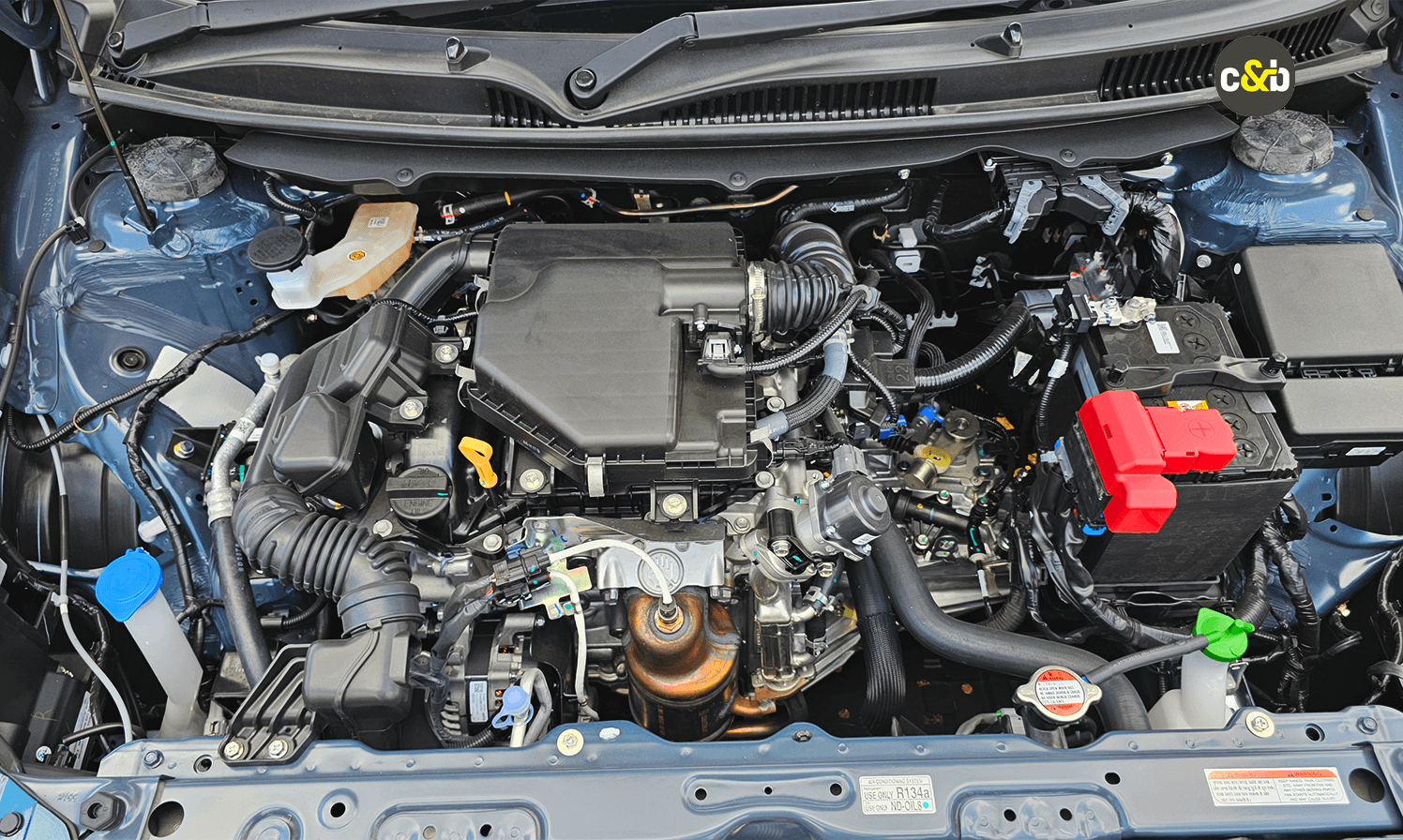
There aren’t many cosmetic tweaks from the Baleno facelift, but it does get a sharper face now with rectangular fog lamps and a new shark-fin antenna. Some critics even say that the front looks like a razor blade.
Shams notes the same,
"There’s hardly any change when it comes to the design of the headlamps, DRLs, tail lamps and even alloy wheels."
Dimensions Comparison
| Dimension | Maruti Suzuki Baleno | Hyundai i20 | Tata Altroz |
| Length | 3,990 mm | 3,995 mm | 3,990 mm |
| Width | 1,745 mm | 1,775 mm | 1,755 mm |
| Height | 1,530 mm | 1,505 mm | 1,523 mm |
| Wheelbase | 2,520 mm | 2,580 mm | 2,501 mm |
| Ground Clearance | 170 mm | 170 mm | 165 mm |
Key Takeaways
- The 1,745 mm overall width provides sufficient shoulder space across both rows.
- The unladen height of 1,530 mm ensures decent headroom throughout the cabin.
Build Quality & Materials
Maruti Suzuki has strengthened the vehicle’s underlying Heartect platform with extra high-tensile steel members around the passenger cabin cell. The doors shut with a more reassuring sound than older generations, and the panel gaps along the bonnet, wings, and tailgate appear uniform. Inside, the cabin combines hard-wearing dark plastics with softer, padded leatherette inserts on the dashboard and door pads on the Alpha variants.
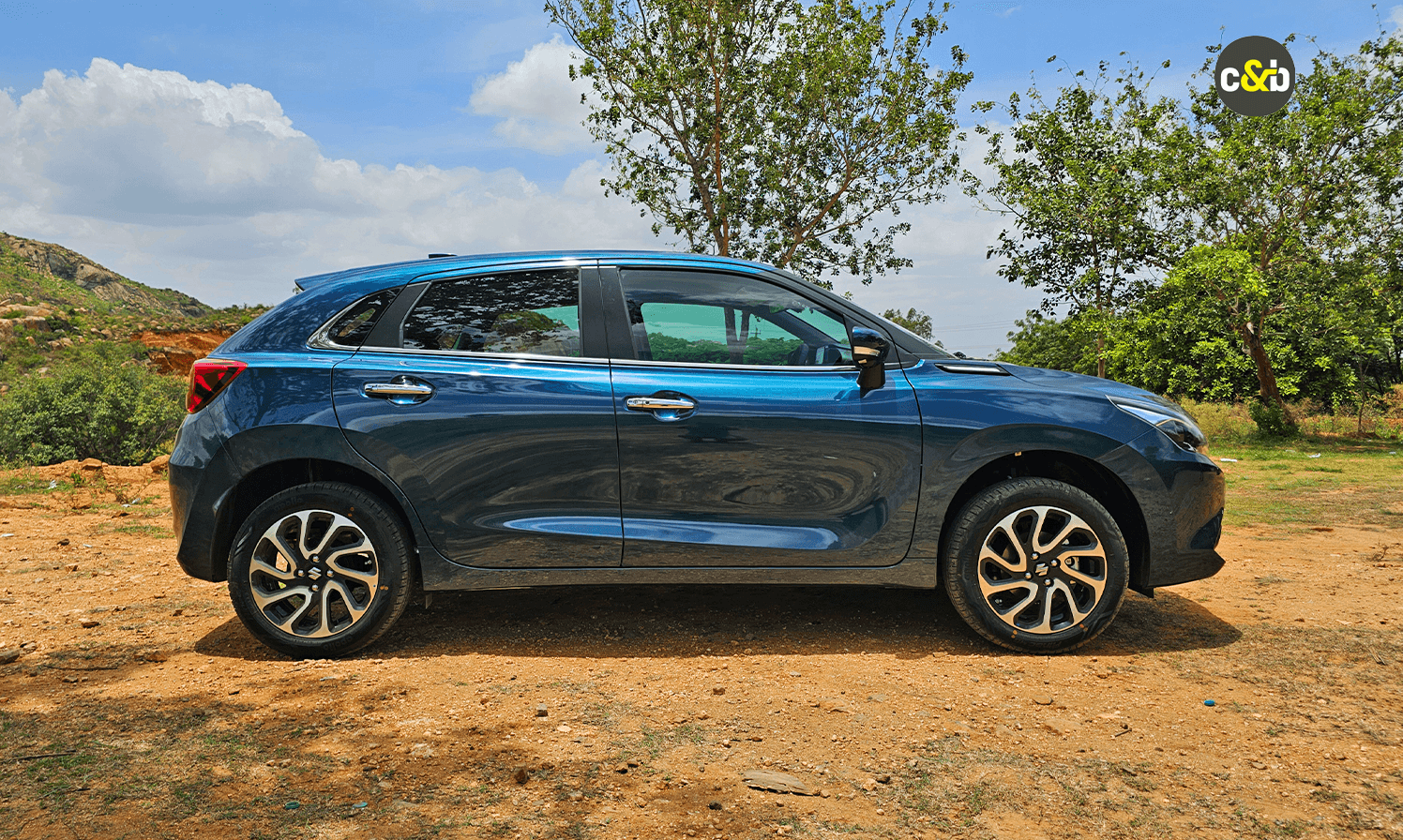
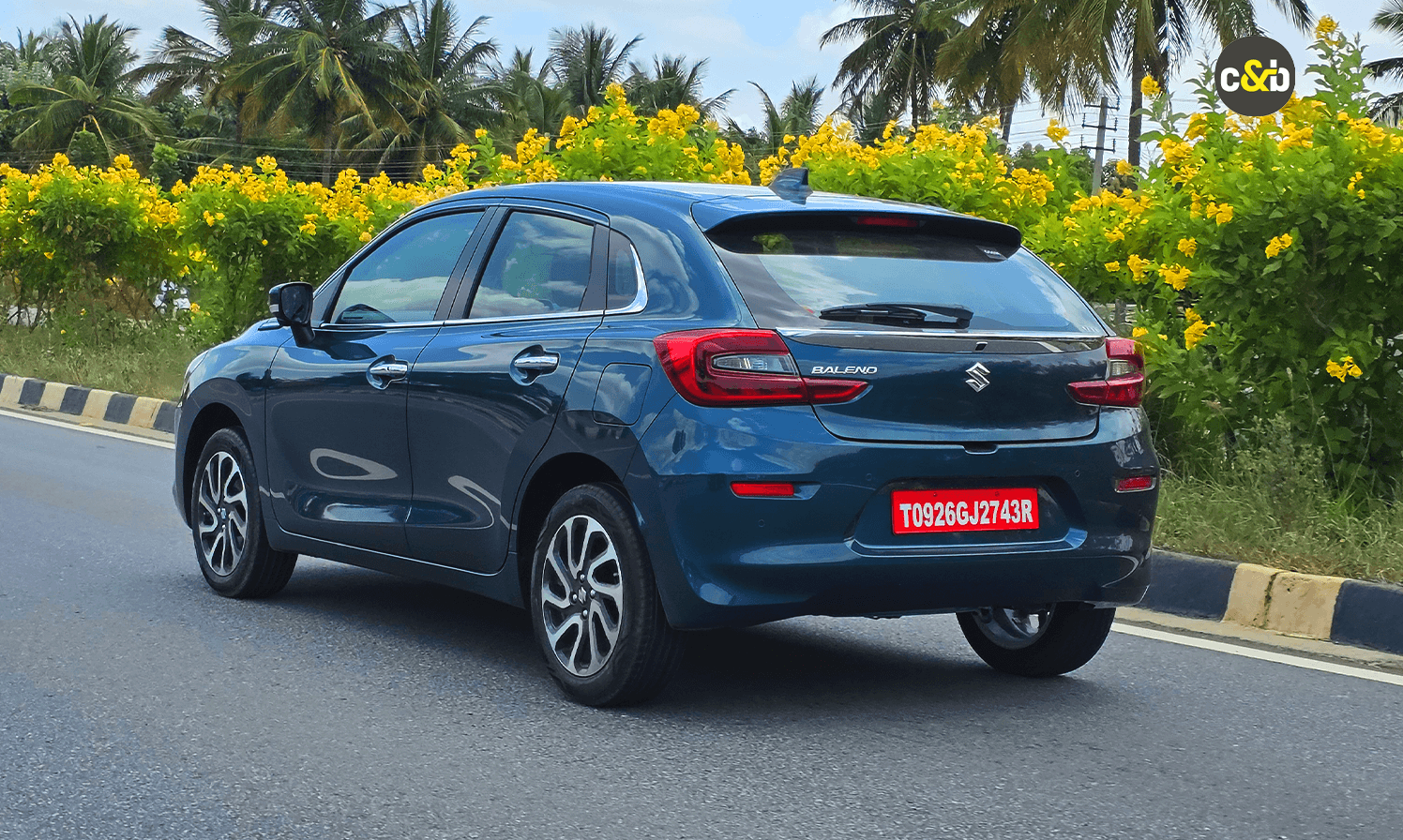
The Baleno continues with its subtle chrome highlights and modern lighting signatures.
Front Profile
- The front fascia gets a wide NEXWave grille finished with subtle chrome detailing.
- Higher trims have LED projector headlamps with signature three-block NEXTre LED DRLs.
- Entry trims such as the Sigma and Delta keep the halogen projector headlamps.
Side Profile
- A gentle wave-like character line runs from the front bonnet edge to the tail lamps.
- Zeta, Alpha, and Alpha (O) models ride on 16-inch alloy wheels.
- Base Sigma and Delta variants use 15-inch steel wheels.
- There are chrome window beltline garnishes and UV-cut glass on the Alpha trims.
Rear Profile
- The tailgate carries wide, two-piece NEXA signature LED combination tail lamps.
- A chrome boot lid strip sits below the rear glass, tying both tail lamps together.
- A roof spoiler with a high-mounted stop lamp comes standard.
- The rear bumper sits high, sporting neat vertical reflectors.
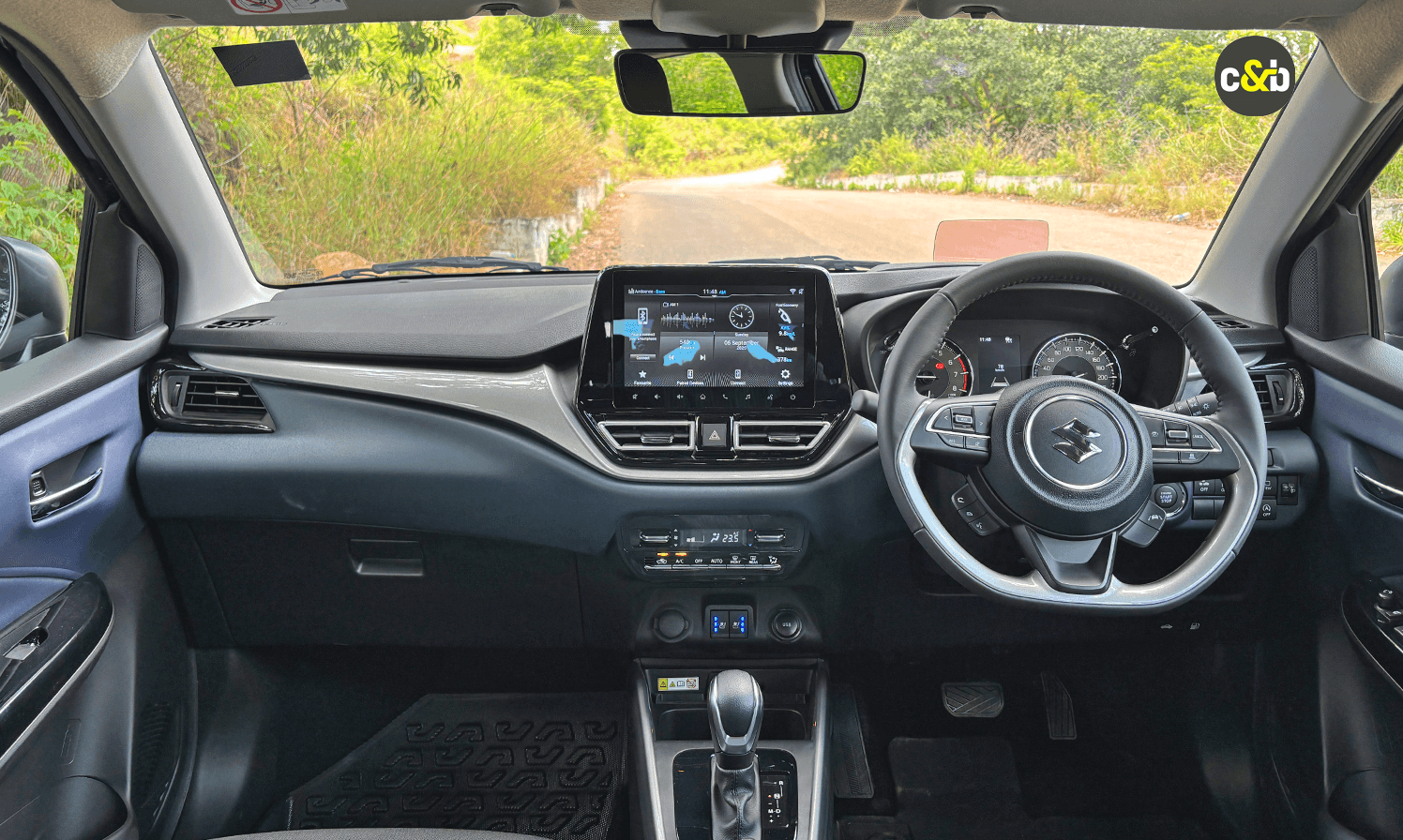
Inside, the Baleno places its primary screens and physical buttons right where the driver naturally reaches for them.
Cabin Layout and Quality
- The multi-layered dashboard uses a combination of black and dark navy blue plastic panels.
- You get a nine-inch touchscreen that sits at eye level on the top variants.
- Maruti has kept physical toggle switches and buttons for the automatic climate control.
Seating Comfort
Front Row
- The front bucket seats offer wide squabs and reassuring side bolstering.
- Driver seat height adjustment is standard from the Zeta variant upwards.
- The top-tier Alpha and Alpha (O) variants feature front ventilated seats.
- There is also a sliding front centre armrest for elbow support.
Second Row
- Rear passengers benefit from generous legroom.
- A third passenger can fit on short journeys thanks to the relatively low central tunnel floor.
- Rear AC vents and twin fast-charging USB ports are available.
- All rear occupants get adjustable headrests and proper three-point seat belts.
Features That Improve Daily Use
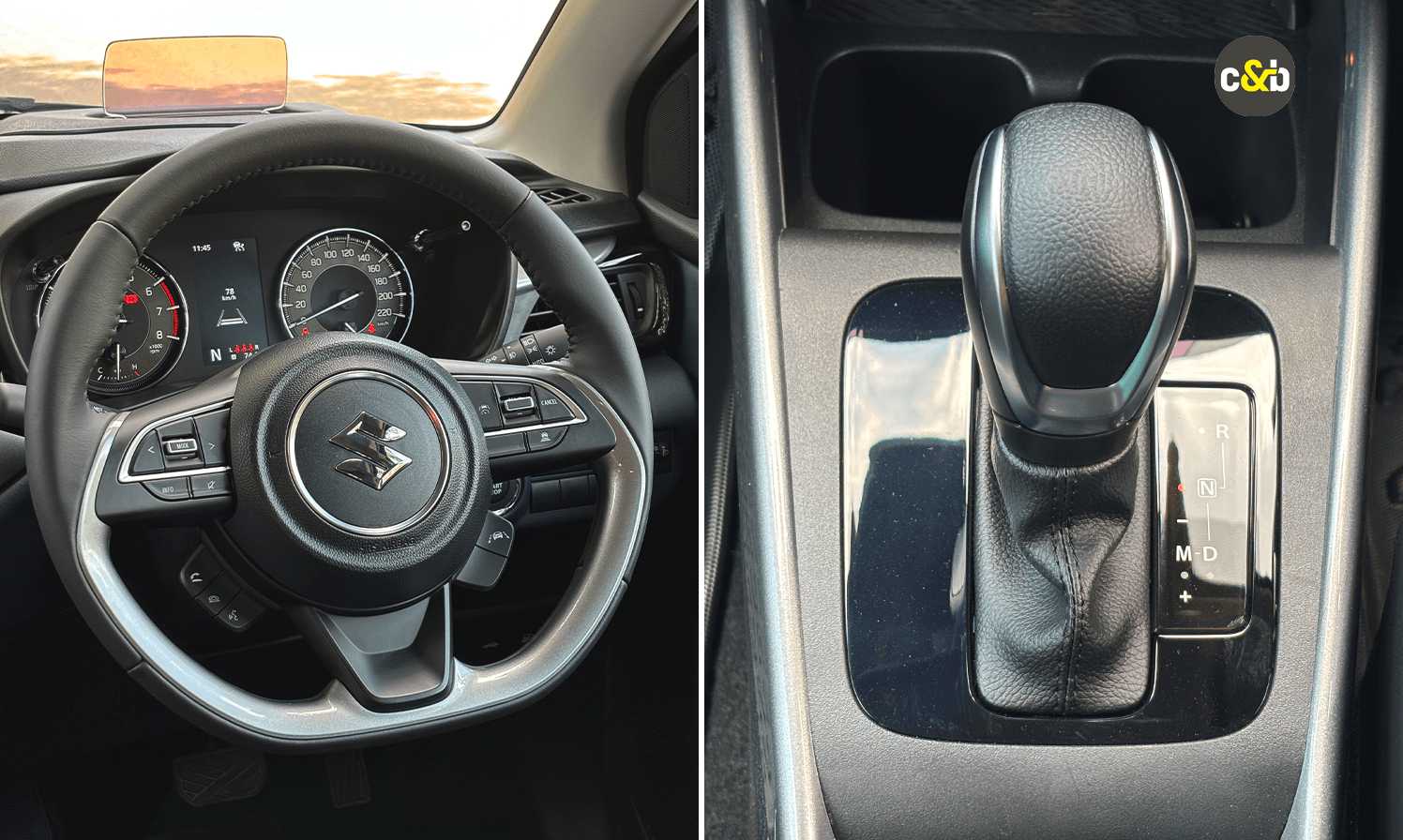
- Head-Up Display on Alpha trims
- Nine-inch SmartPlay Pro+ touchscreen infotainment
- Wireless smartphone charging dock
- Auto-dimming inside rearview mirror
- Tilt and telescopic steering adjustment
But Shams points out one thing,
“The Baleno still does not get a sunroof, which is a bit odd considering the Dzire, which is not considered premium, comes with one.”
Maruti Suzuki launched the updated 2026 Baleno with an aggressive opening price tag. The entry-level Sigma petrol manual variant starts at Rs. 6.10 lakh (ex-showroom). The brand hasn’t announced the prices for the other variants yet.
Variant | Powertrain | Ex-Showroom Price |
Sigma | 1.2-Litre Petrol (Five-speed Manual) | Rs. 6.10 Lakh |
Delta | 1.2-Litre Petrol (Five-speed Manual / AMT) / CNG (Five-speed Manual) | Rs.7 Lakh Onwards |
Zeta | 1.2-Litre Petrol (Five-speed Manual / AMT) / CNG (Five-speed Manual) | Rs.8 Lakh Onwards |
Alpha | 1.2-Litre Petrol (Five-speed Manual / AMT) | Rs.9.10 Lakh Onwards |
Alpha (O) | 1.2-Litre Petrol (Five-speed Manual / AMT) | Rs.9.50 Lakh Onwards |
Petrol variants of this car draw fuel from a 37-litre tank, while the S-CNG models package a 55-litre water-equivalent gas cylinder alongside the petrol tank.
| Engine & Powertrain | ARAI Claimed Mileage | User-Reported City Mileage | User-Reported Highway Mileage |
| 1.2-Litre Petrol (Five-speed Manual) | 23.80 kmpl | 16 - 18 kmpl | 21 - 23 kmpl |
| 1.2-Litre Petrol (Five-speed AMT) | 24.77 kmpl | 17 - 19 kmpl | 22 - 24 kmpl |
| 1.2-Litre Petrol + CNG (Five-speed Manual) | 33.61 km/kg | 24 - 26 km/kg | 29 - 31 km/kg |
Under Bharat NCAP, the Baleno had earlier scored a 4-star adult safety rating and a 3-star child safety rating.
Passive Safety and Crash Protection
- Maruti Suzuki now fits six airbags as standard across all variants.
- All five seats receive three-point seatbelts with pre-tensioners up front.
- There are ISOFIX child-seat anchorages on the second row’s seats.
Active Safety and Stability Systems
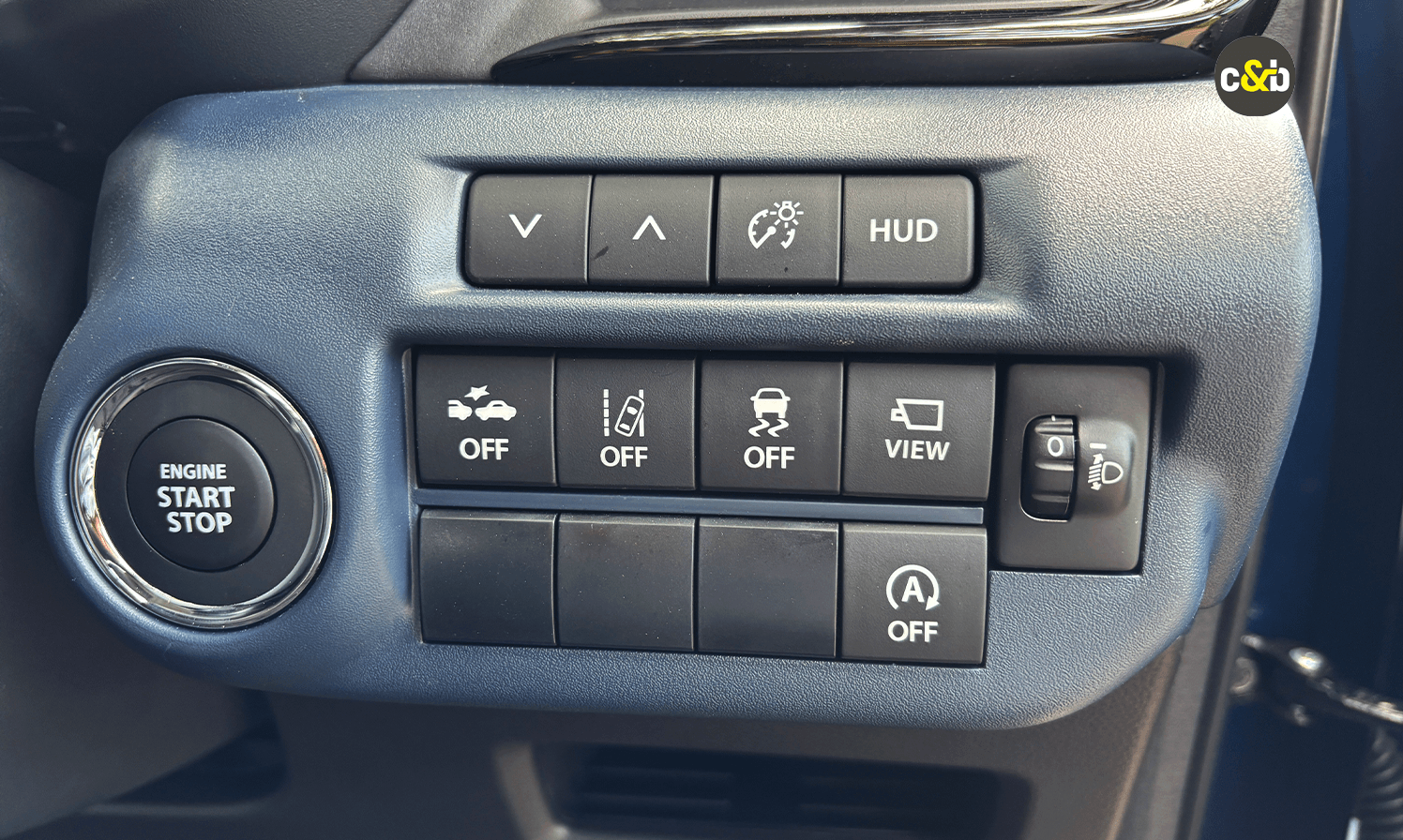
- Electronic Stability Program (ESP) with hill-hold assist is standard across every trim.
- A Tyre Pressure Monitoring System (TPMS) joins the feature list from the Delta trim.
- Alpha and Alpha (O) models pack a 360-degree surround-view camera.
- The Alpha (O) now gets Level 2 ADAS, which includes Advanced Emergency Braking.
- Other features available are Lane Keep Assist, Lane Departure Warning, etc.
The vehicle’s cabin ditches cluttered switchgear in favour of responsive touch displays.
Infotainment and Interface
- The nine-inch SmartPlay Pro+ infotainment is standard on Zeta, Alpha, and Alpha (O).
- The seven-inch SmartPlay Pro is given to the mid-tier Delta trim.
- You get wireless Apple CarPlay and Android Auto.
- Alpha and Alpha (O) trims receive a six-speaker Clarion audio setup.
- Zeta models make do with an Arkamys-tuned system.
Cabin Convenience and Practical Features
- Front Ventilated Seats are on the Alpha and Alpha (O).
- The charging pad in the front console has an active cooling vent.
- Zeta and above trims feature the Suzuki Connect suite.
- You get rear AC vents and dual fast-charging USB ports.
The petrol Baleno offers 318 litres of luggage capacity. The loading floor is deep, easily taking in two medium travel suitcases alongside a couple of soft duffel bags. Every variant from the base Sigma upward has 60:40 split-folding rear seats, allowing you to drop the seatbacks to accommodate extra airport luggage quickly. For buyers wanting the S-CNG model, note that it has a 55-litre water-equivalent cylinder, which eats up roughly half the usable luggage depth.
The Baleno’s suspension setup absorbs uneven Indian road surfaces quite conveniently.
Shams says,
"The steering wheel also feels quite balanced as it feels neither too light nor too heavy and adapts nicely both for city and highway."
City Driving
- The low-speed ride quality remains supple across potholes and large speed breakers.
- It has a compact turning radius of just 4.85 metres, allowing you to make sharp U-turns.
- The electric power steering feels featherlight, taking the physical effort out of city jams.
Highway Driving
- The hatchback holds a predictable, steady line at 100 kmph.
- Its wide footprint and low roofline keep wind buffeting well in check.
- But noticeable body roll creeps in around fast corners.
- High-speed braking is progressive and safe.
Maruti Suzuki sells the Baleno in India across five trim levels.
Variant | Engine Options | Key Additions | Best Suited For |
Sigma | 1.2-Litre Petrol (Five-speed Manual) | Six airbags, ESP, keyless entry, all-four power windows, 60:40 split seats, 15-inch steel wheels | Strict budget buyers who want core mechanicals and basic safety |
Delta | 1.2-Litre Petrol (Manual/AMT) / CNG (Manual) | Seven-inch touchscreen, TPMS, rear AC vents, fast-charging USB ports, steering-mounted controls | Commuters looking at daily convenience and an automatic or CNG choice on a budget |
Zeta | 1.2-Litre Petrol (Manual/AMT) / CNG (Manual) | Nine-inch screen, 16-inch alloy wheels, rear camera, push-button start, cooled wireless charger | Value-conscious buyers wanting high-end tech without paying top-tier prices |
Alpha | 1.2-Litre Petrol (Manual/AMT) | 360-degree camera, Head-Up Display, front ventilated seats, Clarion audio, precision-cut alloys | Buyers in need of a luxurious, fully loaded cabin for hot summer driving |
Alpha (O) | 1.2-Litre Petrol (Manual/AMT) | Level 2 ADAS suite (AEB, Lane Keep Assist, Adaptive Cruise Control), leatherette seats | Tech-focused buyers who want segment-leading active driver aids |
The Essentials That You Don’t Get
- An electric sunroof
- Rear disc brakes
- A diesel or turbo-petrol powertrain
This decision depends largely on your daily commute patterns and how much advanced tech you want in your vehicle.
Best on a Budget: Delta MT
If you are upgrading from an entry-level commuter and want to keep showroom costs low, skip the bare-bones Sigma and go for the Delta. It adds tech like the seven-inch touchscreen, steering-mounted controls, rear AC vents, and tyre pressure monitoring.
Best Value Overall: Zeta MT / AMT
The Zeta offers the large nine-inch SmartPlay Pro+ screen, stylish 16-inch alloy wheels, push-button start, a cooled wireless charging dock and a rear parking camera. It has the complete premium hatchback experience while keeping your purchase price reasonable.
Best for Tech and Safety: Alpha (O)
For buyers who frequently navigate multi-lane ring roads and long bypass drives, the Alpha (O) can be considered. You get Level 2 ADAS alongside front ventilated seats from this one.
The Baleno competes in India’s closely fought premium hatchback space, facing established names like the Hyundai i20, Tata Altroz and the Toyota Glanza.
| Model | Powertrains | Key Value Proposition | Ex-Showroom Price |
| Maruti Suzuki Baleno | 1.2-Litre Petrol / 1.2-Litre CNG | Level 2 ADAS, standard six airbags, high fuel economy | Rs. 6.10 Lakh - TBA |
| Hyundai i20 | 1.2-Litre Petrol | European-feeling interior, electric sunroof, smooth IVT | Rs. 6.00 - 10.63 Lakh |
| Tata Altroz | 1.2-Litre Petrol / 1.2-Litre Turbo / 1.5-Litre Diesel / CNG | Five-star crash safety pedigree, solid highway stability | Rs. 6.00 - 10.90 Lakh |
| Toyota Glanza | 1.2-Litre Petrol / 1.2-Litre CNG | Identical mechanicals to Baleno, longer warranty | Rs. 6.73 - 9.99 Lakh |
Which Premium Hatchback Should You Choose?
- Choose the Maruti Suzuki Baleno if you want relatively high real-world fuel economy, segment-first Level 2 ADAS and the country's widest service network.
- Choose the Hyundai i20 if you’d rather have a sportier European cabin design, an electric sunroof and a CVT automatic transmission.
- Choose the Tata Altroz if you want proven body integrity, high-speed stability or the long-distance pulling power of a diesel motor.
- Choose the Toyota Glanza if you want the Baleno's mechanical reliability backed by Toyota's ownership packages.
car&bike Expert Take
“The Maruti Suzuki Baleno is ideal for buyers who are looking for a fuel-efficient, spacious and low-maintenance hatchback. It is not directed towards enthusiasts seeking turbo performance and sharp handling. Its greatest strength is providing comfort and high-end features in a package that is easy to drive and economical to own.”
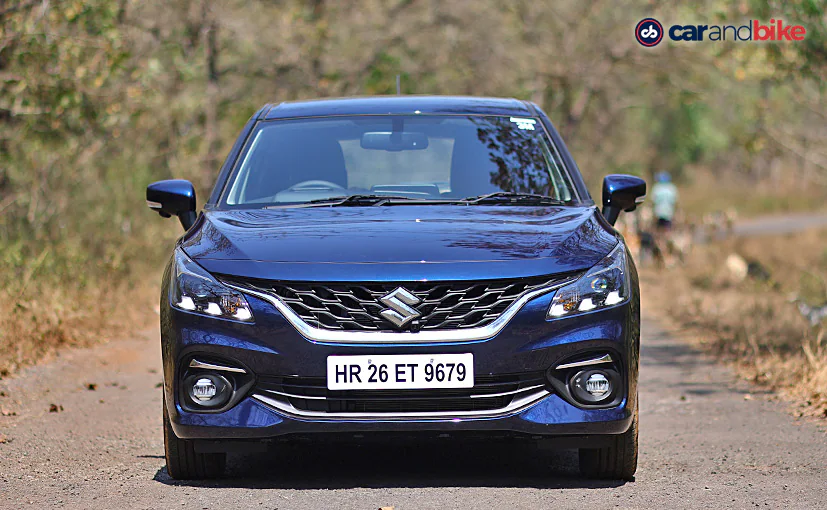
Maruti Suzuki Baleno Overview
The Maruti Suzuki Baleno was introduced in the premium hatchback segment in 2015 and soon became one of the strongest nameplates of the brand under the Nexa retail channel. The second-generation model, which came out in 2022, was positioned as a major update rather than an outright reinvention. It brought new styling, a redesigned cabin, and newer technology, but retained the familiar 1.2-litre petrol engine.
This review is based on the road tests conducted by Shams Raza Naqvi for car&bike, who tested both the five-speed manual and the AMT variants when the 2022 model was launched. Additional insights have been collated from the Maruti Suzuki Baleno vs Toyota Glanza vs Hyundai i20 video, which Sameer Contractor spearheaded.
Built on Maruti Suzuki's revised HEARTECT platform, the Baleno gained almost 55-60 kg over its predecessor as a result of revisions in its structure and suspension. The focus shifted towards improving ride quality, adding safety features, and improving perceived premium appeal. Positioned between mass-market hatchbacks such as the Swift and more expensive turbo-driven rivals such as the Hyundai i20, the Baleno aims to appeal to buyers who are less concerned about outright performance but more about refinement, efficiency, and day-to-day usability.
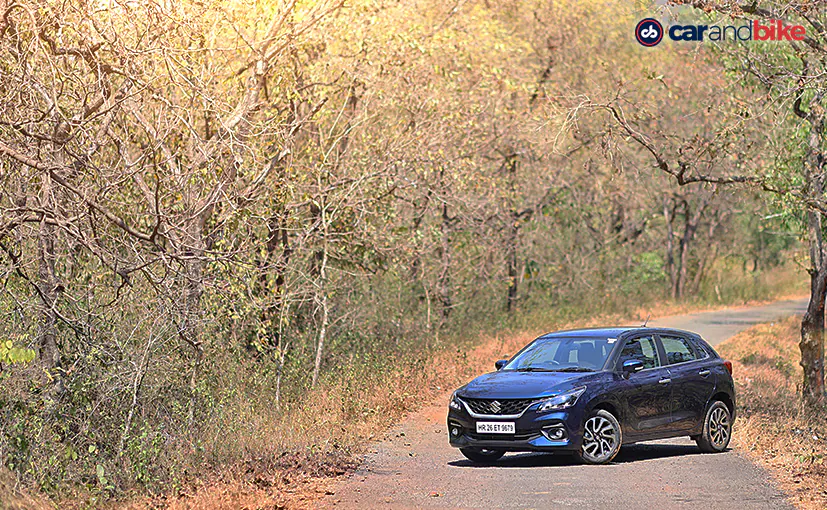
Maruti Suzuki Baleno Performance
The Baleno is offered with the single 1.2-litre Dual Jet, Dual VVT naturally aspirated petrol engine. There is no turbocharged option, and diesel has been discontinued.
Engine Specifications
| Engine | Power | Torque | Transmission Options |
| 1.2-litre Dual Jet Petrol | 88 bhp | 113 Nm | Five-speed manual / Five-speed AMT |
| 1.2-litre Petrol + CNG | 76 bhp | 98.5 Nm | Five-speed manual |
Driving Experience: Real World
We found that the Baleno is most comfortable in relaxed driving conditions. It is not designed to be sporty, but is dependable and refined in everyday use.
Shams notes:
"The strong mid-range is very evident, but the car has clearly been tuned for fuel efficiency."
City Driving
In city traffic, the Baleno stays light and responsive. The engine develops speed gradually, and the clutch action in the manual variant is light and has short travel. This makes stop-and-start traffic less tiring. Gear shifts are easy, and even the engine is quiet at moderate revs. The AMT variant replaces the previously used CVT. While it is improving claimed fuel efficiency and cost, it is not as seamless as a CVT or DCT. There is a slight lag when the gears are changing, especially when the throttle is quick.
Shams observed:
"The AMT is not as excited as the CVT, but the goal is to provide convenience at a more cost-effective price."
Highway Driving
On highways, the Baleno speeds confidently up to 80kmph. Beyond that, the rate of acceleration becomes gradual. Overtakes at higher speeds involve planning, especially in the AMT variant. That said, the engine is never strained under normal cruising conditions. At constant speeds between 80 and 100 kmph, the level of refinement is good, and wind and engine noise are reasonably controlled for the segment.
Sameer Contractor (on a comparative drive) stated that even though the Baleno has improved ride comfort over its predecessor,
“It is not tuned to be a sporting performance hatch. The steering is light and does not provide strong feedback at higher speeds.”
CNG Option
The factory-fitted CNG version is available in a five-speed manual gearbox. While power output decreases in CNG mode, it remains usable for driving in the city. Highway operation is more relaxed, and overtaking demands patience. The trade-off is compensated with a claimed efficiency of over 30 km/kg.
Transmission: Manual vs AMT
- The five-speed manual is the more engaging one. Gear throws are short, and the clutch is easily modulated. It is suitable for drivers who would like to have more control over performance.
- The five-speed AMT branded as AGS is about efficiency and affordability. It is better for convenience in traffic, but it lacks the smoothness of a conventional automatic.
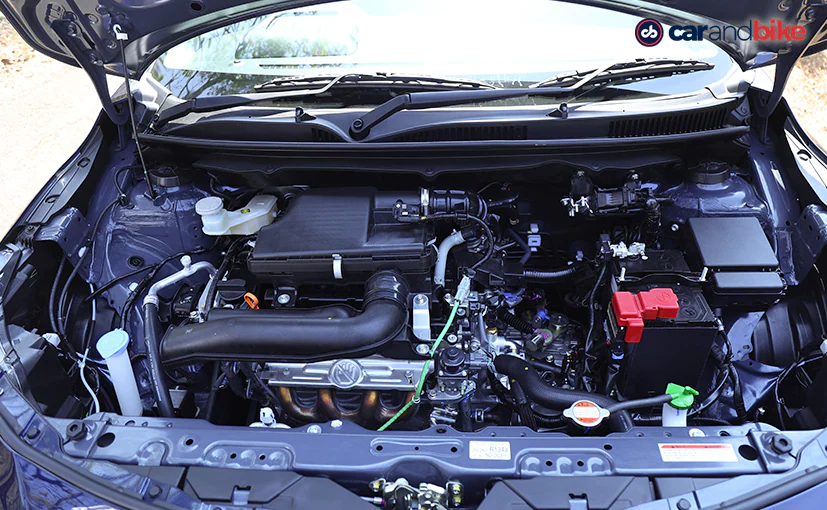
For buyers who are upgrading from smaller hatchbacks or older AMTs, it will be familiar and not too difficult to adapt to.
Maruti Suzuki Baleno Design
Shams Raza Naqvi summed it up during his review:
“This Baleno is more like an evolution than a whole generational shift. A lot has changed, but it still clearly resembles a Baleno.”
Built around Maruti Suzuki's "Crafted Futurism" design language, the new Baleno brought in a redesigned bonnet, bumpers, and lighting elements. While the overall proportions are still recognisable, the surfacing is more sculpted and the stance seems to be wider than before.
Hyundai i20 vs Maruti Suzuki Baleno vs Tata Altroz Dimensions
| Dimension | Maruti Suzuki Baleno | Hyundai i20 | Tata Altroz |
| Length | 3,990 mm | 3,995 mm | 3,990 mm |
| Width | 1,745 mm | 1,775 mm | 1,755 mm |
| Height | 1,500 mm | 1,505 mm | 1,523 mm |
| Wheelbase | 2,520 mm | 2,580 mm | 2,501 mm |
| Ground Clearance | 170 mm | 170 mm | 165 mm |
Compared to the other rivals in its segment, such as the Hyundai i20 and the Tata Altroz, the Baleno prefers to be subtle rather than aggressive in terms of styling. It is less sharply edged than the i20 and less dramatic than the Altroz, but its balanced design has broad appeal. The Baleno is virtually the same length as its rivals but slightly narrower. The Hyundai i20 has the longest wheelbase, and this is an advantage for rear legroom, but the Baleno provides a balance between compact urban dimensions and interior space efficiency. It is easy to manoeuvre in crowded city conditions without feeling cramped inside due to its size.
Maruti Suzuki Baleno Exterior
The exterior update of the Baleno was about chiseling out the identity of the vehicle and not the form factor.
Front Profile
The bonnet now has stronger creases that come together towards a wider grille. Maruti calls this grille pattern "NEXWave," and it is flanked by sleek headlamps that extend into the fenders. The bumper is more sculpted than it had been, and subtle chrome detailing is used to connect the headlamps visually with each other, adding width to the car's stance. On higher trims, Baleno has LED projector headlamps with signature tri-LED DRLs, and lower variants have halogen projector units.
Shams noted during the unveil:
“The actual magic is on the face of the vehicle. The new projector headlamps and DRLs make it very easy to identify this as the new Baleno.”
Side Profile
From the side, the silhouette is largely carried forward, but the design of the alloy wheel has been updated. Higher versions receive 16-inch dual-tone alloys, and lower trims roll on steel wheels encased in covers. The proportions are typical of a premium range hatchback: short overhangs, a gentle tapering roof, and a balanced glass area.
Sameer observed that while the Baleno has become “bolder and more muscular,”
“It still lacks the visual aggression of the i20. That said, the more neutral styling is in its favour for buyers looking for an understated design.”
Rear Profile
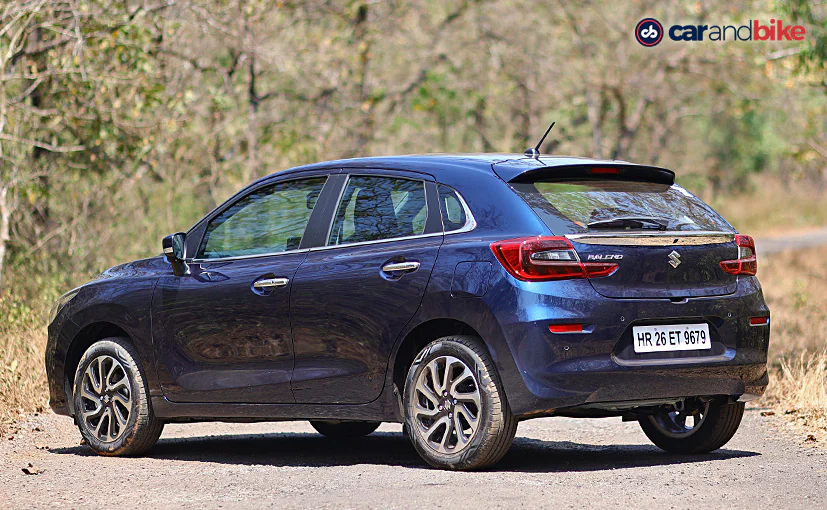
At the back, the L-shaped LED tail lamps are the highlight. These together are extended into the tailgate and give an opening to a wider visual stance. A chrome strip connects the lamps, reminiscent of the design approach at the front. The rear bumper is cleaner than it used to be, and although there is a strong chrome element, it does not seem excessive. The hatch is still practical with a wide-opening tailgate, and maintains the true Baleno's functional character.
Maruti Suzuki Baleno Interior
Step inside the Maruti Suzuki Baleno and you immediately feel the change in the cabin towards a more premium and tech-focused one.
- Unlike the upright and airy feel of a tall-boy hatch, the Baleno is lower, wider, and the dashboard swivels around the driver a little.
- The black and blue theme (or black with silver accents, depending on variant) makes it have a sporty yet mature appeal.
- The cabin does not feel claustrophobic. In fact, thanks to the broad dashboard design and decent glass area, it feels appropriately spacious for a premium hatchback.
Shams pointed out,
“You see a big difference when you compare this cabin to the previous version. The effort obviously is to make it look and feel more premium.”
Cabin Layout and Quality
The centrepiece of the Baleno's dashboard is the nine-inch SmartPlay Pro+ touchscreen (on higher variants), neatly incorporated into the layered dash design. Lower trims get a seven-inch system. The AC vents are horizontally aligned, and the climate control panel is intuitively positioned under the screen.
The upper dashboard plastics are smoother, and switchgear feedback is tactile. That said, harder plastics are still used in the lower sections to keep the cost down. Panel gaps are uniform, and overall fit and finish are commendable for the segment. The flat-bottom steering wheel and semi-digital instrument cluster contribute to the modern feel.
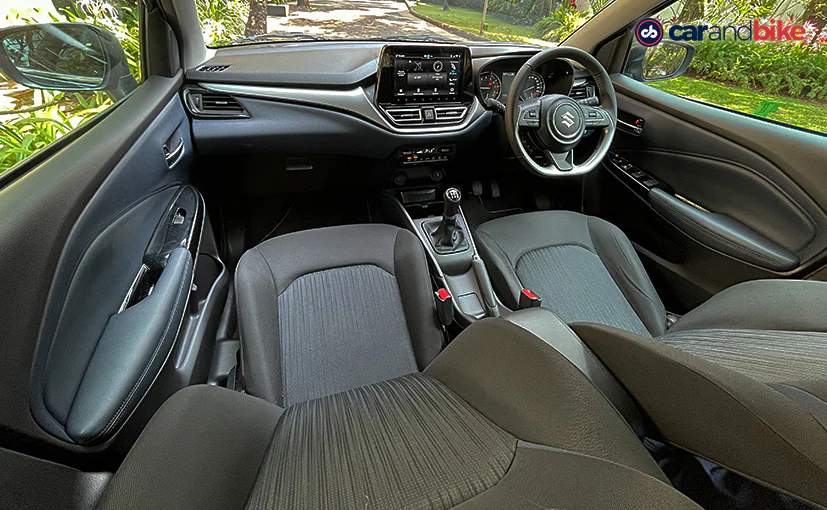
Seating Comfort
Front Row
The Baleno provides a neutral seating height that makes ingress and egress easy without having to crouch. Higher variants receive a height-adjustable driver seat and tilt-and-telescopic steering adjustment to enable most drivers to find a comfortable driving position. Seat cushioning is balanced, not too soft and not too firm. Under-thigh support is sufficient, and long drives are not tiring. However, the bolstering is mild, so enthusiastic cornering is not its forte.
Shams added,
“The seats are something that I've always liked. They're comfortable and that continues here as well.”
Second Row
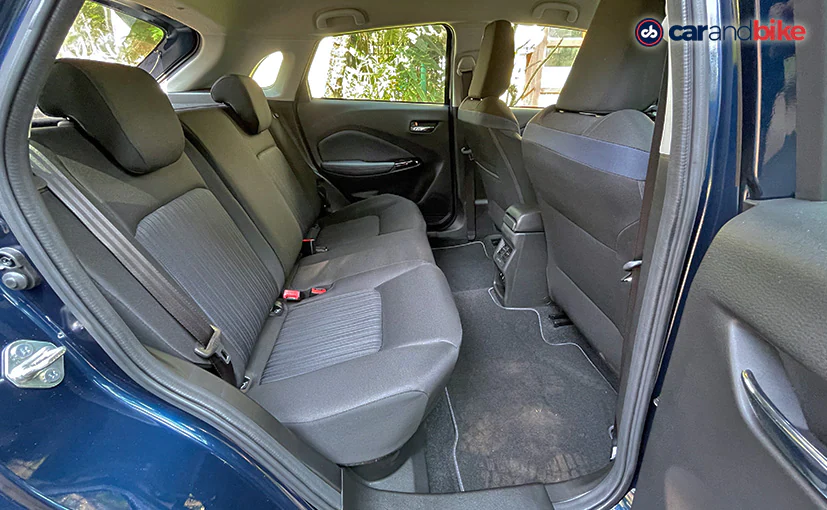
Leg and knee room are generous for the segment, and two six-footers can sit back-to-back without discomfort. Shoulder room is ample for three average-sized adults to sit, although the middle passenger's experience is compromised by a slightly protruding seatback and lap belt instead of a three-point seatbelt.
Shams summarised,
“Quite happy with the amount of space I get in the second row. Knee room is decent, head room is good, nothing to complain about.”
Maruti Suzuki Baleno Pricing
The Maruti Suzuki Baleno is positioned as a value-driven premium hatchback under the Nexa retail channel. It undercuts some feature-loaded rivals, yet it manages a reasonable balance of comfort and technology. At this price, the Baleno is in direct competition with the Hyundai i20 and Tata Altroz, and offers great value, particularly in the mid-spec Zeta variant.
Baleno Ex-Showroom Prices (India)
| Variant | Engine & Transmission | Ex-Showroom Price (Approx.) |
| Sigma | 1.2-Litre Petrol MT | Rs. 5.99 Lakh |
| Delta | 1.2-Litre Petrol MT / AMT | Rs. 6.80 – Rs. 7.30 Lakh |
| Delta CNG | 1.2-Litre CNG MT | Rs. 7.70 Lakh |
| Zeta | 1.2-Litre Petrol MT / AMT | Rs. 7.70 – Rs. 8.20 Lakh |
| Zeta CNG | 1.2-Litre CNG MT | Rs. 8.60 Lakh |
| Alpha | 1.2-Litre Petrol MT | Rs. 8.60 Lakh |
| Alpha AMT | 1.2-Litre Petrol AMT | Rs. 9.10 Lakh |
Note: Prices are subject to change and vary by state.
Maruti Suzuki Baleno Mileage
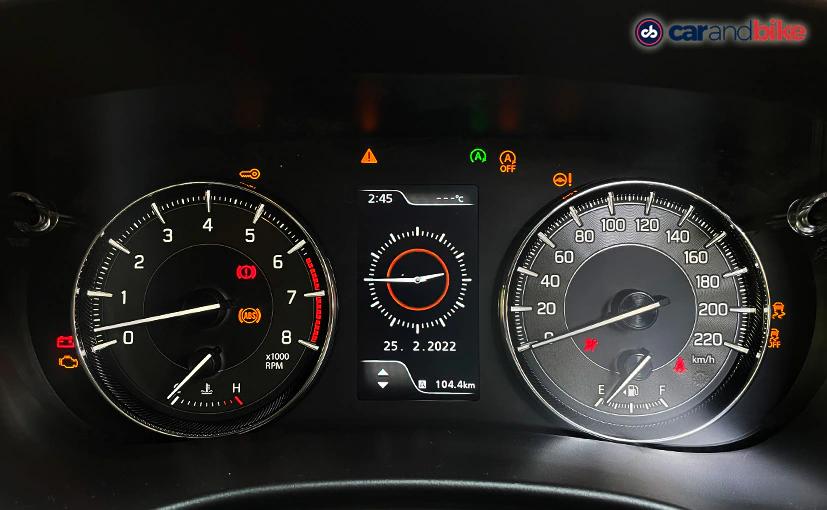
Fuel efficiency is still one of the Baleno's best-selling points. The 1.2 litre Dual Jet petrol engine with idle start-stop technology ensures competitive numbers in both city and highway conditions.
Observed Fuel Efficiency During Testing
During our evaluation, we found the manual gearbox extracts better efficiencies in real-world conditions when driven in a relaxed manner, while the AMT prioritises convenience over downright responsiveness. For buyers who are more concerned about running costs, the CNG variant is exceptionally efficient at the expense of boot space.
| Engine & Transmission | ARAI-Claimed Mileage | City Mileage (Real-World) | Highway Mileage (Real-World) |
| 1.2-Litre Petrol Manual | 22.35 kmpl | 14–16 kmpl | 18–20 kmpl |
| 1.2-Litre Petrol AMT | 22.94 kmpl | 15–17 kmpl | 18–20 kmpl |
| 1.2-Litre CNG Manual | 30.61 km/kg | 24–28 km/kg | 30 km/kg |
Shams pointed out during his drive:
“The fuel efficiency of more than 22 kilometres per litre is fabulous, given the added weight and updated suspension.”
Maruti Suzuki Baleno Safety
Unlike the previous generations that were often criticised, the present India-spec Baleno now comes better equipped and structurally improved.
Passive Safety and Crash Protection
All variants of the Baleno now have six airbags as standard. This includes dual front, side, and curtain airbags to provide better coverage in the event of frontal and side impacts. ISOFIX child seat mounts are also the norm, which gives peace of mind to families with young children.
The India-spec Baleno was recently tested under Bharat NCAP norms and received a four-star safety rating. This rating is a significant upgrade from the older Global NCAP-tested version sold in Latin markets, which had scored poorly with only two airbags. This distinction is important as the Indian model now has improved structural reinforcements and better safety equipment.
Shams emphasised the shift in focus:
“There's a big push towards safety on the new Baleno and it's great to see. Six airbags, a head-up display and a 360-degree camera really take the package a step further.”
Structurally, the car is more solid than its predecessor. Doors close with more weight, and panel integrity seems to be improved. While rivals such as the Tata Altroz still have a reputation for tank-like build quality, the Baleno is no longer lagging far behind.
Active Safety and Stability Systems
- Baleno now comes with Electronic Stability Program (ESP) as standard across variants. This system is useful to keep the car under control in sudden swerves or slippery road conditions.
- Hill Hold Assist is available on the AMT variants, preventing the car from rolling back on inclines. Anti-lock Braking System (ABS) with Electronic Brakeforce Distribution (EBD) is standard, along with brake assist.
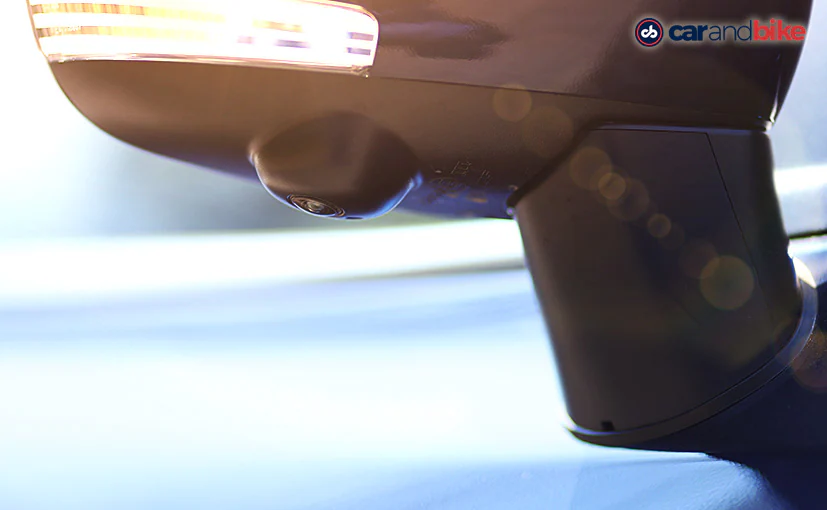
- Higher versions include a rear-view camera, and the highest Alpha trim comes with a 360-degree camera system that is very useful in tight parking spots and crowded city lanes.
Maruti Suzuki Baleno Technology and Features
Instead of saturating buyers with gimmicks, Baleno concentrates on practical, usable tech to improve everyday driving.
Infotainment and Interface
The highlight of the cabin is the nine-inch SmartPlay Pro+ HD touchscreen (on higher trims). It has a modern, widget-like interface and supports wireless Android Auto and Apple CarPlay. The system is responsive, and the graphics are sharp with minimal lag. The infotainment system also includes Suzuki Connect, which provides more than 40 connected car features, including geofencing, remote vehicle status, SOS alerts, and telematics. The embedded SIM is used to enable real-time tracking and remote access functionality.
In his tech evaluation, Shams observed:
“The new interface is very responsive and intuitive to use. It's definitely one of the best screens implemented by Maruti Suzuki in this segment.”
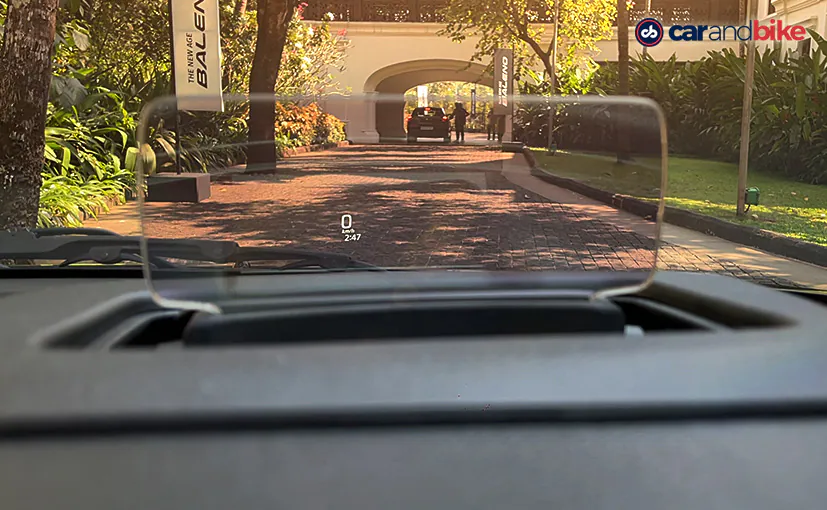
The Baleno also features a 5.5-inch heads-up display (HUD), a segment-first feature when it was introduced. It shows speed, gear position, fuel efficiency, and other important data directly in the driver's line of sight and reduces distraction. An Arkamys-tuned six-speaker sound system provides balanced audio output. Not audiophile-grade, but for daily commuting, the vocals are crystal, and the bass is decent.
Cabin Convenience and Practical Tech
Automatic climate control is standard in all the variants, and rear AC vents provide comfort to the back-seat passengers. Push-button start, key-less entry, cruise control (on higher trims), auto-dimming IRVM, and electrically adjustable ORVMs add convenience.
The instrument cluster is a combination of analogue dials and a digital multi-information display, which provides fuel efficiency, range, and trip information in real-time. It may not be a fully digital display like some rivals, but it is clear and functional. There is no sunroof or wireless charging pad, which some competitors have. However, the presence of the HUD, 360-degree camera, and connected car tech helps balance the scales.
Maruti Suzuki Baleno Boot Space
The Baleno has 318 litres of boot capacity in the standard petrol versions. The boot is wide and usable with a slightly high loading lip, which can make picking up some heavier luggage more effort-intensive. The rear seats split in 60:40 (on higher variants), giving you the option to carry longer items, whilst still being able to seat two passengers at the back.
In real-world terms, the 318-litre space can easily accommodate:
- One large suitcase
- One medium suitcase
- Two soft travel bags
- Additional small items on the sides
However, the CNG variant suffers a serious loss of usable boot space because of the 55-litre water equivalent CNG cylinder mounted inside the boot. In such a configuration, space is limited to small bags or daily-use items.
Shams noted during his review:
“What is impressive about the Baleno is its luggage space of 318 litres, which allows you to fit in a decent number of bags here.”
Maruti Suzuki Baleno Ride and Handling
Built on Maruti Suzuki's lightweight HEARTECT platform, the Baleno brings comfort, efficiency, and daily usability.
City Driving
During testing, we found the steering to be light at low speeds, making tight parking manoeuvres and U-turns a breeze. The compact footprint and good outward visibility of the hatchback also make it more city-friendly. The suspension setup is tuned for comfort and not sportiness. Over potholes, speed breakers, and uneven patches, the Baleno takes most of the imperfections without sending harsh jolts into the cabin.
Shams noted during the drive:
“The suspension has improved considerably. Over bad roads, there is no disturbance in the cabin, and that's a big step forward for the Baleno.”
Highway Driving
On highways, the Baleno keeps up a good composure up to normal cruising speeds of 80-100 kmph. The chassis is more stable than before, with the slight weight gain in the new generation, as well as adjusted suspension tuning. However, the steering is light even at higher speeds. While this makes lane changes simple, it doesn't provide the kind of feedback that enthusiastic drivers expect. Compared to rivals such as the Hyundai i20, the Baleno is more comfortable than sporty.
Acceleration is fast up to about 80 kmph, after which progress is more gradual. The naturally aspirated engine lacks the punch of a turbocharged competitor, but it is pretty smooth and relaxed when driving on the highway at constant speeds. Body roll occurs, but it feels well-controlled for a family hatchback.
Maruti Suzuki Baleno Variants
Maruti Suzuki offers the Baleno in four main trims: Sigma, Delta, Zeta, and Alpha. Petrol manual and AMT options are available, while CNG is available in select mid variants.
The following is how the lineup is structured:
| Variant | Engine & Gearbox Options | Key Additions | Best Suited For |
| Sigma | 1.2-litre Petrol (MT) | Six airbags, ESP, auto AC, power windows, LED tail lamps, basic MID | Budget buyers who want safety essentials |
| Delta | 1.2-litre Petrol (MT / AMT), CNG (MT) | Seven-inch touchscreen, wired Android Auto & Apple CarPlay, steering-mounted controls, electrically adjustable ORVMs | Value-focused urban buyers |
| Zeta | 1.2-litre Petrol (MT / AMT), CNG (MT) | LED projector headlamps, push-button start, cruise control, rear AC vents, wireless Android Auto & Apple CarPlay, six-speaker audio | Buyers wanting a balanced package |
| Alpha | 1.2-litre Petrol (MT / AMT) | Nine-inch SmartPlay Pro+, 360-degree camera, heads-up display, Arkamys sound system, auto-dimming IRVM, UV-cut glass | Feature-focused premium buyers |
The Essentials That You Don’t Get
Despite the fact that the Baleno is well-equipped, it still misses out on a few segment features:
- No sunroof
- No turbo-petrol engine option
- No CVT or DCT automatic (AMT only)
- No fully digital instrument cluster
- No wireless charging pad
Which Maruti Suzuki Baleno Should You Buy? Our Recommendations
With many available trims and fuel options, the ideal Baleno depends on how you intend to use it.
Best for Budget & Daily Use: Delta
The Delta variant brings the essentials. You get the touchscreen infotainment system, steering controls, and basic features without stretching the budget. For city-focused users, this trim makes the most financial sense.
Best Value Overall: Zeta
The Zeta variant has the most complete feeling. It adds LED headlamps, cruise control, rear AC vents, push-button start, and connected car tech. It provides the best experience most buyers expect from a Nexa product without having to jump to the top spec price.
Best for Maximum Features: Alpha
If you want the full tech showcase, including the 9-inch SmartPlay Pro+, 360-degree camera, and heads-up display, the Alpha is the one to choose.
Best for High Running Users: Delta or Zeta CNG
For buyers who cover long distances every day, the CNG variants provide excellent running cost savings at the cost of slightly lower power output and reduced boot space
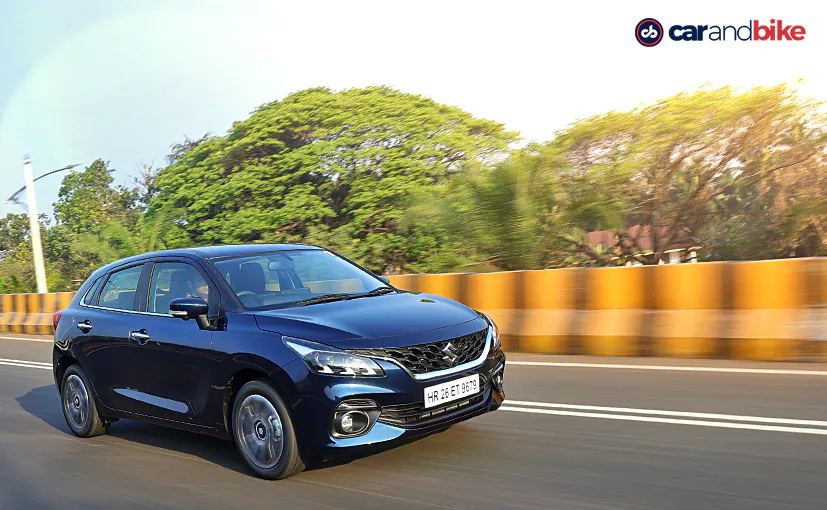
Maruti Suzuki Baleno Competitors
While Baleno tops in sales and fuel efficiency, its rivals have stronger engines, sharper styling, or better driving dynamics to counter it. Its main rivals are the Hyundai i20, Tata Altroz, and its Toyota twin, the Toyota Glanza. The Hyundai i20 positions itself as the most feature-rich and driver-focused, with turbo-petrol versions and a DCT gearbox. The Tata Altroz is about safety and build quality, with the support of its proven Global NCAP performance. Meanwhile, the Toyota Glanza is identical mechanically to the Baleno, but has a longer standard warranty and a different brand positioning.
Here’s how they stack up:
| Model | Engine Options | Mileage (ARAI) | Key Value Proposition | Ex-Showroom Price Range |
| Maruti Suzuki Baleno | 1.2-Litre Petrol (MT / AMT), CNG | 22.35 – 22.94 kmpl / 30.61 km/kg | Segment-first HUD & 360 camera, strong efficiency | Rs. 5.99 – Rs. 9.10 Lakh |
| Hyundai i20 | 1.2-Litre Petrol, 1.0 Turbo Petrol | 16 – 20 kmpl | Turbo performance, DCT option, sunroof | Rs. 6.98 – Rs. 11.47 Lakh |
| Tata Altroz | 1.2-Litre Petrol, 1.2-Litre Turbo, 1.5-Litre Diesel, CNG | 19 – 23 kmpl / 26+ km/kg | Strong build, multiple powertrains | Rs. 5.99 – Rs. 10.99 Lakh |
| Toyota Glanza | 1.2-Litre Petrol (MT / AMT), CNG | 22.35 – 22.94 kmpl | Longer warranty, Toyota badge value | Rs. 6.86 – Rs. 9.99 Lakh |
Which Premium Hatchback Should You Choose?
- Choose the Maruti Suzuki Baleno if you want a balanced family hatchback with excellent fuel efficiency, refined petrol performance, and modern features.
- Choose the Hyundai i20 if driving engagement, turbocharged performance, and depth of features (including a sunroof and digital cluster) are more important.
- Choose the Tata Altroz if safety credentials, structural strength, and multiple engine options, including diesel, are your priority.
- Choose the Toyota Glanza if you prefer the longer warranty coverage of Toyota and the brand perception.
Pros
- New Z-Series 1.2-litre three-cylinder petrol engine offers strong low-end tractability for optimum city driving.
- The claimed fuel economy figures are up to 24.77 kmpl on the automatic, and 23.80 kmpl on manual version.
- Its Level 2 ADAS gives you active safety functions like autonomous braking, lane keep assist, and more.
- New features include front seat ventilation, wireless charging pad with active cooling and a newly tuned Clarion sound system with a responsive 9-inch SmartPlay Pro+ touchscreen.
- Continues to feature the heads-up display (HUD) and 360-degree camera.
- Its competitive starting price keeps it accessible.
Cons
- The drop of about 6 bhp is only obvious while making higher-speed highway overtakes, which requires more downshifting than you would like.
- Its front-end design looks bulkier than before.
- Front ventilated seat operation is noticeably noisy at the higher fan setting.
- The AMT gearbox still pauses prominently under aggressive throttle inputs.
- Continues to miss out on a sunroof.
Verdict
The 2026 Maruti Suzuki Baleno continues to be the brand’s premium hatchback offering by focusing on tech and daily comfort upgrades. What’s new is the Level 2 ADAS, ventilated front seats, active wireless phone cooling, and the efficient 1.2-litre Z-Series engine.
Shams Raza Naqvi pointed out in his review, "Some may miss the old engine but the new setup will find a lot more followers who are value conscious. This only means one thing. With all the new and old ingredients the Baleno has all in it to continue on the path to success in the times to come."
What does not work in its favour is the dull top-end highway performance and the AMT gearbox still lacks the smoothness of a traditional auto/CVT. Having said that, the Baleno is tough to beat when it comes to everyday practicality, low running costs, and value for money.
Maruti Suzuki Baleno Mileage
Maruti Suzuki Baleno mileage is 22 KM/L as per ARAI The Manual Petrol engine has a mileage of 22.4 KM/L. The AMT Petrol engine has a mileage of 22.4 KM/L. The Manual Petrol+CNG engine has a mileage of 22.4 KM/L. ...
| Fuel Type | Transmission | Mileage | City Mileage | Highway Mileage |
|---|---|---|---|---|
| Petrol | Manual | 22.4 KM/L | 19 KM/L | 22 KM/L |
| Petrol | AMT | 22.4 KM/L | 19 KM/L | 22 KM/L |
| Petrol+CNG | Manual | 22.4 KM/L | 19 KM/L | 22 KM/L |


Maruti Suzuki Baleno EMI Calculator
Read User Reviews of Baleno
View All Baleno User Reviews (82)- 3.7User RatingsTap to Rate :
- 543%421%315%26%116%
- Do You Own This Maruti Suzuki Baleno ?share your experience about Maruti Suzuki BalenoWIN ₹500Write a review and stand a chance to win ₹500. Contest ends 30 Sept.
- A Fabulous hatch4.0Alpha Petrol [2020-2026](Petrol)PerformanceMileageComfortCost of OwnershipValue for MoneySafetyStylingSales SupportAn undisputed hatchback leader of the country, Baleno does everything with exemplary finesse and smoothness. The 1.2 L petrol motor is an absolute gem and feels more lively with even the most gentle throttle inputs. The efficiency hovers atleast around the 15 and 20 kmpl mark in city and highways respectively. Space and comfort are also top notch for a hatch. Ride and handling are worth mentioning especially if you compare it with the 1st gen model. The only miss I feel is of a sunroof and rear armrest at least as an option, which would make this a complete overall package which is impossible to beat.By SaurabhPosted on: Jun 19, 2026 06:24 PM20
- Balenooo Big on style and easy on the wallet5.0Sigma Petrol [2020-2026](Petrol)PerformanceMileageComfortCost of OwnershipValue for MoneySafetyStylingSales SupportFour months and 5,500 km with my Baleno, and it's been a delight. Sleek LED DRLs and sharp styling turn heads, while the cabin feels a class above. The 1.2L DualJet engine is buttery smooth in city traffic and relaxed on highways. SmartPlay touchscreen is lag-free, and the light steering makes parking effortless. Mileage is the real hero — 16-17 km/l in city, 21-22 km/l on highway runs. Boot space could be bigger, but that's my only gripe. Comfort, features, and fuel efficiency in one package — the Baleno nails the premium hatchback formula. Zero regrets!By SharathPosted on: Jun 11, 2026 03:23 PM10
- Another Averrage se thoda upper k car3.0Zeta Petrol [2020-2026](Petrol)Baleno ka fuel efficiency accha hai, lekin suspension thoda stiff lagta hai on rough roads. Ride quality could be a bit smoother for bumpy roads. interiors bhi kaafi accha feel karte hain, lekin engine performance highway pe thoda lacking lagta hai. City driving ke liye best hai, lekin highway overtakes mein thoda effort lagta hai.By Sapna JafnaPosted on: Oct 04, 2024 12:09 PM00
- Overall Good Car4.0Delta CNG [2020-2026](Petrol+CNG)Maruti Baleno ka driving experience generally smooth hai, but rear suspension thoda stiff lagta hai. Comfort level improve ho sakta hai, especially on uneven roads. Baleno ka overall package accha hai, lekin build quality thodi aur solid ho sakti thi. Kuch interior plastics thode flimsy lagte hain.By Karan MehraPosted on: Sep 25, 2024 02:35 PM00
- A Perfect Blend of Comfort, Style, and Performance5.0Delta CNG [2020-2026](Petrol+CNG)Maruti Baleno is a highly comfortable and spacious hatchback that excels in offering a smooth and effortless driving experience. Whether you’re navigating through busy city streets or cruising on highways, the Baleno provides a seamless ride, making it an ideal choice for both types of driving. One of its standout features is the impressive mileage, ensuring that you get great fuel efficiency without compromising on performance. The design of the Baleno is sleek and stylish, giving it a modern and appealing look that turns heads on the road. Inside, the car boasts a premium feel with well-crafted interiors, making every journey comfortable and enjoyable. The Baleno is packed with advanced features, ensuring that you have all the modern conveniences at your fingertips. From its smooth driving dynamics to its excellent fuel economy, the Maruti Baleno is a well-rounded car that offers both style and practicality. It’s truly a versatile hatchback that stands out in its segment, providing the perfect combination of comfort, performance, and value for money.By Tejas WankhedePosted on: Sep 20, 2024 01:31 PM00
Quick Compare with Maruti Suzuki Baleno Competitors
 Maruti Suzuki Baleno 6.1 - 9.99 Lakh |  Tata Altroz 6.3 - 10.77 Lakh |  Maruti Suzuki Swift 5.84 - 8.74 Lakh |  Hyundai Elite i20 6 - 10.63 Lakh |  Toyota Glanza 6.73 - 9.99 Lakh |  Hyundai i20 N Line 9.27 - 11.74 Lakh |
|---|---|---|---|---|---|
Ex-Showroom Price ₹ 6.1 - 9.99 Lakh | ₹ 6.3 - 10.77 Lakh | ₹ 5.84 - 8.74 Lakh | ₹ 6 - 10.63 Lakh | ₹ 6.73 - 9.99 Lakh | ₹ 9.27 - 11.74 Lakh |
C&B Expert Rating 8.2 | 8.8 | 8.0 | 8.2 | 7.7 | 7.9 |
Engine CC 1197 cc | 1199 CC | 1197 CC | 1197 CC | 1197 CC | 998 CC |
Transmission Manual, AMT | Manual | Manual | Manual | Manual | Manual |
Mileage 22 KM/L | 19 - 25.11 KM/L | 20.4 - 30 KM/L | 19.65 - 20.35 KM/L | 22.35 - 22.94 KM/L | 20.25 KM/L |
Fuel Type Petrol, Petrol+CNG | Diesel, Petrol, CNG | Petrol, CNG | Petrol | Petrol, CNG | Petrol |
Seating Capacity 5 Seater | 5 Seater | 5 Seater | 5 Seater | 5 Seater | 5 Seater |
Fuel Tank Capacity 37.0 L | 37.0 L | 37.0 L | 37.0 L | 37.0 L | 37.0 L |
No of Variants 11 | 27 | 13 | 17 | 9 | 8 |
Detailed Comparision - |
Maruti Suzuki Baleno Price in Top Cities
Download Brochure

Maruti Suzuki Baleno Specifications
Specifications
Features
Maruti Suzuki Baleno Latest News & Reviews
 Sarthak Mahajan | Sep 5, 20262026 Maruti Suzuki Baleno Facelift Launched At Rs 6.10 LakhGets first-in-segment Level 2 ADAS and a new Z-Series 1.2-litre three-cylinder engine.2 mins read
 Jaiveer Mehra | Apr 20, 2026Maruti Baleno Facelift Spied Testing; Previews Design UpdatesChanges to the Baleno include a revised fascia with a new look grille and redesigned bumpers; changes to the cabin are likely to be minor.1 min read
 Seshan Vijayraghvan | Jun 11, 2025Maruti Suzuki Baleno Bags 4 Stars At Bharat NCAP Crash TestBharat NCAP tested two variants of the Baleno - one equipped with six airbags and one equipped with dual airbags.2 mins read
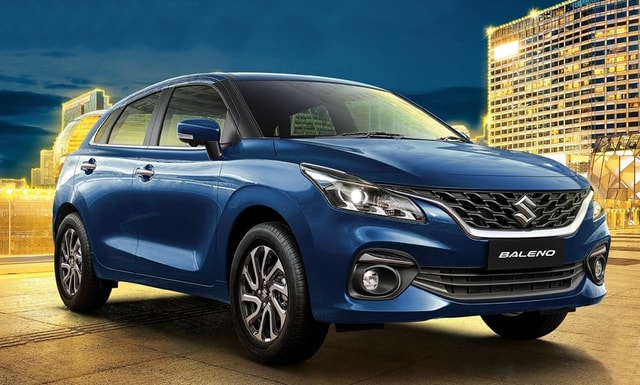 car&bike Team | Oct 15, 2024Maruti Suzuki Launches New Baleno Regal Edition For The Festive SeasonThe new special edition version is essentially a range of accessory kits, which will be offered with all variants of the Maruti Suzuki Baleno, including the automatic and CNG trims1 min read
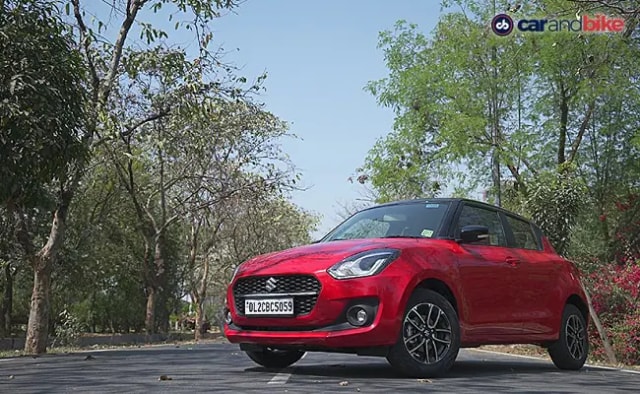 Charanpreet Singh | Oct 5, 2023Maruti Suzuki Swift Was The Best-Selling Car In FY2020-21; Here Are The Top 10In the previous fiscal, the top five most sold cars came from Maruti Suzuki's stable. The Indo-Japanese carmaker sold 1.72 lakh units of the Swift in the last fiscal followed by the Maruti Baleno with 1.63 lakh units.2 mins read
 Shams Raza Naqvi | Sep 8, 20262026 Maruti Suzuki Baleno Review: Heart Matters, Or Does It?The updated Maruti Suzuki Baleno is here and it gets some significant changes some of which have got the opinion divided. We drive it.7 mins read
 Shams Raza Naqvi | Mar 2, 20222022 Maruti Suzuki Baleno Review: Manual & Automatic DrivenMore than 6 years after the Maruti Suzuki Baleno was first launched in the country, country's largest carmaker has launched the new generation of the premium hatchback in market. We drive its manual and Automatic variants.1 min read
 Siddharth Vinayak Patankar | Feb 20, 2019Exclusive: Maruti Suzuki Baleno Facelift ReviewHow do the changes add up? And how does the Baleno now compare to the updated Hyundai i20 and Honda Jazz?1 min read
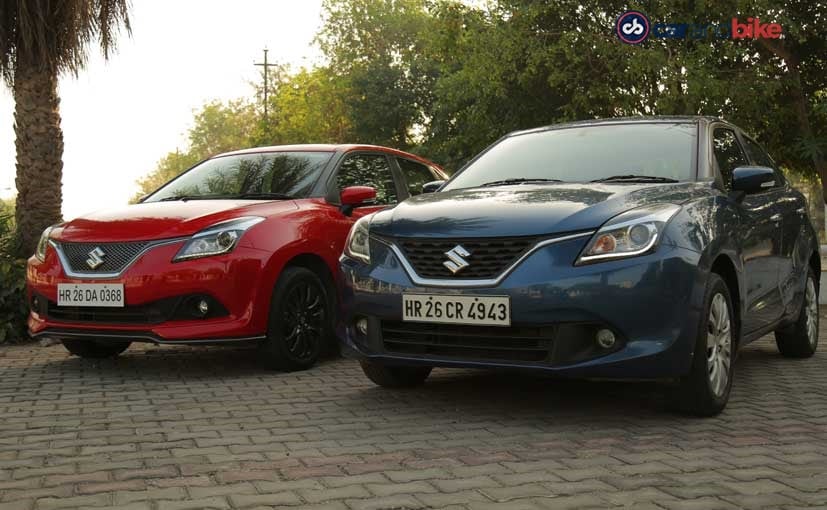 Siddharth Vinayak Patankar | Apr 6, 2017Maruti Suzuki Baleno RS ReviewWe also bring you a comparison with the regular petrol Baleno Alpha to see what more you get from the RS variant.1 min read
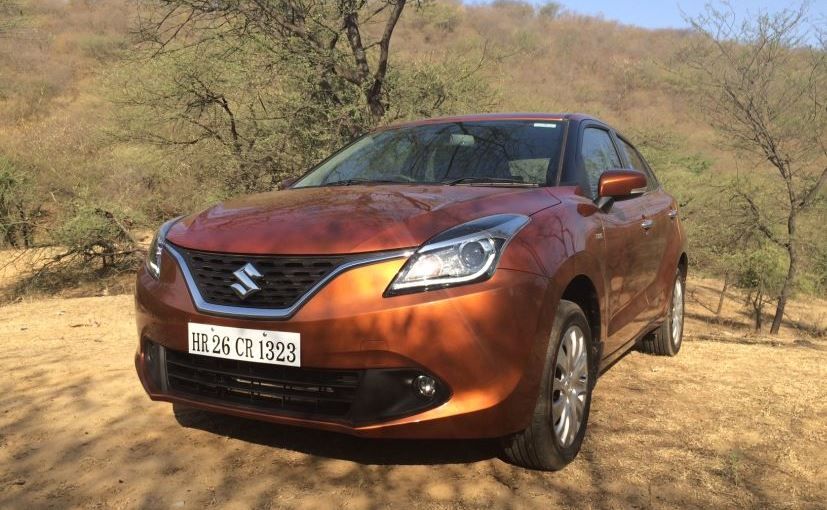 Siddharth Vinayak Patankar | Dec 8, 2015Maruti Suzuki Baleno ReviewThe Maruti Suzuki Baleno has been launched with three drivetrains: 1.2 VVT petrol manual & CVT and 1.3 DDiS diesel manual. I have now driven all three cars and will tell you all there is to know.1 min read
Used Maruti Suzuki Baleno Cars
- 2016 Maruti Suzuki BalenoZeta CVT Petrol BS IVNew DelhiDL10
 1st Owner
 Petrol
 45,367 Kms
 Automatic
₹ 3.69 LakhEMI Starts at₹ 8,249 /Month - 2016 Maruti Suzuki BalenoDelta CVT Petrol BS IVNew DelhiDL2C
- 1st Owner
- Petrol
- 90,461 Kms
- Automatic
₹ 3.43 LakhEMI Starts at₹ 7,677 /Month - 2023 Maruti Suzuki BalenoZeta AGS Petrol [2020-2026]New DelhiDL10
- 1st Owner
- Petrol
- 15,646 Kms
- AMT
₹ 7.01 LakhEMI Starts at₹ 15,690 /Month - 2018 Maruti Suzuki BalenoDelta Petrol [2020-2026]New DelhiHR26
- 1st Owner
- Petrol
- 61,161 Kms
- Manual
₹ 4.15 LakhEMI Starts at₹ 9,295 /Month


Used Maruti Suzuki Cars
- 2016 Maruti Suzuki CelerioVXINew DelhiDL3C
- 1st Owner
- Petrol
- 73,010 Kms
- Manual
₹ 2.64 LakhEMI Starts at₹ 5,910 /Month - 2023 Maruti Suzuki Wagon RVXI 1.0New DelhiHR26
- 1st Owner
- Petrol
- 57,307 Kms
- Manual
₹ 4.23 LakhEMI Starts at₹ 9,469 /Month - 2021 Maruti Suzuki IgnisZeta Petrol BS IVNew DelhiDL8C
- 2nd Owner
- Petrol
- 75,351 Kms
- Manual
₹ 3.82 LakhEMI Starts at₹ 8,536 /Month - 2016 Maruti Suzuki SwiftVXI (O)New DelhiDL2C
- 2nd Owner
- Petrol
- 52,470 Kms
- Manual
₹ 3.11 LakhEMI Starts at₹ 6,955 /Month - 2023 Maruti Suzuki CiazZeta Automatic PetrolNew DelhiUP14
- 1st Owner
- Petrol
- 65,679 Kms
- Automatic
₹ 7.95 LakhEMI Starts at₹ 17,805 /Month - 2021 Maruti Suzuki S-CrossAlpha AT PetrolNew DelhiDL3C
- 1st Owner
- Petrol
- 74,037 Kms
- Automatic
₹ 7.41 LakhEMI Starts at₹ 16,586 /Month - 2025 Maruti Suzuki IgnisZeta Petrol BS IVNew DelhiDL4C
- 1st Owner
- Petrol
- 14,489 Kms
- Manual
₹ 6.04 LakhEMI Starts at₹ 13,525 /Month - 2023 Maruti Suzuki Alto K10LXINew DelhiHR26
- 1st Owner
- Petrol
- 21,976 Kms
- Manual
₹ 3.22 LakhEMI Starts at₹ 7,204 /Month - 2021 Maruti Suzuki Vitara BrezzaVXINew DelhiDL10
- 1st Owner
- Petrol
- 27,025 Kms
- Manual
₹ 6.16 LakhEMI Starts at₹ 13,786 /Month


Sell Your Car On C&B
Quick, Easy and Maximum Price – Share Car Details, get Price in 5 Minutes, Schedule Home Inspection & Sell in 1 Day

Explore Popular Maruti Suzuki Cars
 Maruti Suzuki Fronx+14 Variants
- Petrol+1 More
- Manual, Automat…
- 2028.51 KM/L
Ex-Showroom₹ 6.85 - 11.98 LEMI Starts at₹ 14,217 Maruti Suzuki Ertiga+9 Variants
- Petrol+1 More
- Manual, Automat…
- 19.0126 KM/L
Ex-Showroom₹ 8.9 - 13.04 LEMI Starts at₹ 18,475 Maruti Suzuki Eeco+4 Variants
- Petrol
- Manual
- 19.7126 KM/L
Ex-Showroom₹ 5.28 - 6.46 LEMI Starts at₹ 10,969 Maruti Suzuki Alto K10+10 Variants
- Petrol+1 More
- Manual
- 27 KM/L
Ex-Showroom₹ 3.7 - 5.45 LEMI Starts at₹ 7,679 Maruti Suzuki Swift+13 Variants
- Petrol+1 More
- Manual, AMT
- 20.43 KM/L
Ex-Showroom₹ 5.84 - 8.74 LEMI Starts at₹ 12,121
Maruti Suzuki Baleno Alternatives
 Tata Altroz+27 Variants
- Diesel+2 More
- Manual
- 1925.11 KM/L
Ex-Showroom₹ 6.3 - 10.77 LEMI Starts at₹ 13,078- Maruti Suzuki Swift+13 Variants
- Petrol+1 More
- Manual
- 20.43 KM/L
Ex-Showroom₹ 5.84 - 8.74 LEMI Starts at₹ 12,121 
 Toyota Glanza+9 Variants
- Petrol+1 More
- Manual
- 22.3522 KM/L
Ex-Showroom₹ 6.73 - 9.99 LEMI Starts at₹ 13,970
Upcoming Maruti Suzuki Cars
 Maruti Suzuki Wagon R Electric
- Electric
 Hatchback
Expected Price₹ 8.5 - 10 L EVExpected Launch : May 27, 2027
Maruti Suzuki Baleno FAQs
Any Questions? Ask the Expert
Latest Videos on Baleno
 2026 Maruti Suzuki Baleno Review: Ready For A Give & Take| 07:56 mins read4126 views
 Maruti Baleno facelift: 3 cylinder engine, ventilated seats, L2 ADAS | Starts @ ₹6.10L | First Look| 05:08 mins read26802 views
 New-Gen Maruti Suzuki Baleno vs Toyota Glanza vs Hyundai i20 | Battle Of The Premium Hatchbacks| 10:17 mins read83755 views
 Fuel Price Hike | Nissan Magnite 50,000 Production | Maruti Suzuki Baleno 50,000 Bookings| 02:48 mins read2383 views
 Tech Check: Maruti Suzuki Baleno 2022| 06:54 mins read22800 views