Volkswagen Virtus
Volkswagen Virtus is a 5-seater Sedan available at a starting price of Rs. 10.71 Lakh. The car is available in 17 variants, with 3 engine and 3 transmission option. Additionally, Virtus offers a Ground Clearance measurement of 179 mm and a Boot capacity of 521 liters. You can choose from 6 colors for the Virtus. The mileage of the Virtus varies from 20.8 - 19.6 KM/L depending on the model....


*Actual Insurance price may vary.


Latest Updates on Volkswagen Virtus
Festivals Of India With Volkswagen: Year-end Magic in Goa with a Virtus
Volkswagen Virtus Reaches 50,000 Unit Sales Milestone; 17,000 Units Sold So Far In 2024
Volkswagen Virtus GT Line, GT Plus Sport Launched In India; Prices Start At Rs 14.07 Lakh
Volkswagen Virtus Pips Hyundai Verna As Best-Selling Compact Sedan In First 7 Months Of 2024
Volkswagen Virtus GT Plus Sport Revealed; To Be Launched In September
What's New on Volkswagen Virtus?
Introduction
- The Volkswagen Virtus is a mid-size sedan targeting buyers seeking a spacious family sedan loaded with features.
- It is based on the carmaker’s MQB-A0-IN platform and primarily offered with turbo-petrol TSI engines.
- A positive highlight of the Virtus is its five-star Global NCAP rating for adult and child occupant protection.
- Customers can choose from two engine and transmission options.

Volkswagen Virtus – Exterior
- Up front, the Virtus gets a chrome-lined grille with a VW emblem and sleek LED headlamps and DRLs.
- Other exterior elements include a smooth sculpted bonnet, a front bumper with black air dam, and chrome accents on window beltline and door handles.
- Additional features comprise ORVMs with turn indicators, high-mounted stop lamp, rain-sensing wipers, and shark-fin antenna.
- At the rear, we see LED tail lamps and a contoured bumper on entry models.
- On the other hand, the high-spec GT variant gets an integrated boot lid spoiler lip, and GT badging.
- The side profile highlights dual shoulder lines and 179mm ground clearance.
- Furthermore, entry variants feature 15-inch wheels, while the higher-spec variants sport 16-inch alloys in black.

Volkswagen Virtus – Interior
- Inside, the Virtus features a dual-tone dashboard with premium soft-touch materials, glossy black decor, and ambient lighting.
- It includes a two-spoke multifunction steering wheel, contoured ventilated front seats with height adjustment for driver.
- On the other hand, higher-spec models get leatherette upholstery with contrast stitching.

- Then, tech highlights comprise a 10-inch touchscreen with wireless Android Auto and Apple CarPlay.
- Other tech features are an eight-inch digital cluster, wireless phone charging, and eight speakers.
- Furthermore, its comfort amenities include automatic climate control with rear vents, and a cooled glovebox.
- While, other convenience features include keyless entry, cruise control, 60:40 split-folding rear seats, and a sunroof.

Volkswagen Virtus – Powertrain
- The Virtus is available in two engine options.
- A 1.0-litre TSI three-cylinder petrol engine, producing 114bhp and 178Nm of torque.
- Then, a 1.5-litre TSI EVO four-cylinder petrol engine producing 148bhp and 250Nm of torque.
- Transmission options for the 1.0 TSI include a six-speed manual and a six-speed automatic.
- On the other hand, the 1.5 TSI comes mated to a six-speed manual or seven-speed DSG.

Virtus Safety Ratings

Volkswagen Virtus Price List (Variant Wise)
Volkswagen Virtus Ex-Showroom price ranges from ₹ 10.71 to 19.2 Lakh. Volkswagen offers Virtus in 17 variants. The top variant of Virtus is Anniversary Edition and the base variant is Comfortline 1.0 TSI MT.
Volkswagen Virtus Colours
Volkswagen Virtus is available in 6 different colors namely Reflex Silver, Rising Blue Metallic, Curcuma Yellow, Wild Cherry Red, Candy White & Carbon Steel Grey.


Virtus Image Gallery
Browse through a collection of 29 high-quality images showcasing both the exterior and interior of the Volkswagen Virtus
Expert Review on Volkswagen Virtus
- Expert Rating
 8.3/10
 - Safety8Comfort9Styling9Merit / USP8.75Significance8Value for Money7
car&bike Expert Take
“The Volkswagen Virtus is one of the few sedans remaining in India that really prioritises driving feel first. It provides strong turbo-petrol performance, high-speed stability and a planted feel. It may not pursue feature gimmicks or headline fuel economy, but for buyers who enjoy being behind the wheel, the Virtus stands out as a proper driver's sedan.”

The Volkswagen Virtus replaced the Vento in 2022 and was a new chapter for Volkswagen India. Built on the MQB-A0-IN platform, which is a heavily localised version of a global architecture, the Virtus was developed keeping in mind Indian road conditions, while retaining Volkswagen's European driving DNA. It is in direct competition with the Hyundai Verna, Honda City, and its platform sibling, the Skoda Slavia.
This review is based on a number of road tests, comprising drives by Pratik Rakshit (1.0-Litre TSI AT and 1.5-Litre TSI DSG) as seen in our YouTube video. Comparative reviews are added by Shams Raza Naqvi, Jaiveer Mehra, and Yash Sunil, and an ownership-style review by Bilal Firfiray in the GT Sport Plus trim 2,000 km review.
Unlike rivals that focus heavily on rear seat comfort or feature count, the Virtus makes itself clear: it is a driver-first sedan. With two turbo-petrol engines, 179 mm ground clearance, and a class-leading 521-litre boot, it attempts to combine enthusiasm with practicality.

The Virtus comes with two turbocharged petrol engines. There is no diesel or hybrid option.
Engine Specifications
| Engine | Power | Torque | Transmission Options |
|---|---|---|---|
| 1.0-litre TSI (three-cylinder turbo) | 114 bhp | 178 Nm | Six-speed Manual / Six-speed Torque Converter AT |
| 1.5-litre TSI EVO (four-cylinder turbo) | 148 bhp | 250 Nm | Seven-speed DSG |
Driving Experience: Real World
The character of Virtus changes quite a lot depending on the engine you choose. Nonetheless, we found that even though it is a driver’s sedan, it stays comfortable. For a closer look, you can even check out Sham’s blog on the Virtus, where he highlighted his experience on the ride quality and comfort on a trip to Jaipur with his daughter. Now let’s go for the real driving experience.
City Driving
1.0-litre TSI
Despite being a three-cylinder unit, we found that the NVH levels are well controlled. Torque starts to increase from about 1,750 rpm and remains strong through about 4,500 rpm, which makes city driving a breeze. You are rarely inclined to push it hard in traffic. The six-speed torque converter automatic is smooth and predictable. It does not feel sporty but is well-suited to urban commuting.
Pratik Rakshit drove the automatic variant and noted that:
“The engine works at the optimum 1,800-1,900 rpm, and that's where the car feels really engaging.”
1.5-litre TSI
If the 1.0 is satisfactory, the 1.5 is enthusiastic. With 250 Nm available from 1,600 rpm, the Virtus is quick even in the city. The seven-speed DSG is responsive and shifts quickly, especially when driven briskly. However, as Bilal found, the DSG can feel slightly jerky in slow-moving traffic and part throttle inputs. It's something that you can adapt to, but you can feel it.
Bilal Firfiray spent over 2,000 km with the car. He described the engine as:
“A cracker of an engine that delivers power right from the bottom of the rev range all the way to the top.”
Highway Driving
1.0-litre TSI
On highways, the 1.0 TSI cruises comfortably at triple-digit speeds. At 100 kmph, the engine is running at about 2,000 rpm and is relaxed. Overtakes beyond 100 kmph require a downshift, especially in the manual, but the automatic makes it easier with a firm throttle input.
Shams Raza Naqvi, during a drive to compare, said that,
“The 1.0, despite being competent on the highways, does not give the overt feeling of sporty, it is more tuned to deliver linearly rather than punch.”
1.5-litre TSI
This is where the Virtus really justifies its reputation.
Pratik Rakshit experienced its claimed sub-nine seconds 0-100 kmph sprint and commented on how confidently it picks up speed. The combination of strong mid-range torque and fast shifting DSG makes overtaking an effortless task. Bilal also mentioned that the car “holds highway speeds effortlessly,” often forcing you to watch the speedometer. The stability at high speeds is one of Virtus’s strongest characteristics: it has a planted and composed feel, something that both Shams and Bilal had a consistent appreciation for throughout reviews.
Transmissions
- Six-speed Manual (1.0-litre TSI): Provides neat shifts, progressive clutch action, and engagement. Ideal for the enthusiast who wants more control.
- Six-speed Torque Converter (1.0-litre TSI): This one is smooth and easy-going. Best suited for buyers who are more interested in convenience than sportiness.
- Seven-speed DSG (1.5-litre TSI): It is fast, responsive, and performance-oriented. Paddle shifters help to add involvement. Slight hesitation at crawling speeds is the only real compromise.
The Volkswagen Virtus is not based on gimmicks such as connected LED light bars or over-styled bumpers. Instead, it follows Volkswagen's clean, European design philosophy of sharp lines, balanced proportions, and a confident stance. Built on the MQB-A0-IN platform, the Virtus is the longest and one of the widest cars in its segment. Its proportions are classic three-box sedan: long bonnet, short overhangs, and a neatly integrated boot.
Shams Raza Naqvi summed up the Virtus perfectly while driving it for the first time:
“In a sea of SUVs, this is one of the best-looking sedans you can buy right now.”
| Dimension | Volkswagen Virtus | Hyundai Verna | Honda City |
|---|---|---|---|
| Length | 4,561 mm | 4,535 mm | 4,574 mm |
| Width | 1,752 mm | 1,765 mm | 1,748 mm |
| Height | 1,507 mm | 1,475 mm | 1,489 mm |
| Wheelbase | 2,651 mm | 2,670 mm | 2,600 mm |
| Ground Clearance | 179 mm | 165 mm | 165 mm |
Compared to rivals such as the Hyundai Verna and the Honda City, the Virtus is more understated. The Verna is bold and futuristic. The City remains conservative and elegant. The Virtus sits right in between by being sporty without being loud. Its 179mm ground clearance also means it's a little taller than rivals. Bilal Firfiray noted that this gives it SUV-like confidence over bad roads, but in terms of appearance, some may find it looks a little “lifted” out at the back.

The Virtus design is not about drama. It's about proportions and presence.
Front Profile
The front end of it is clean and sharp. A single-slat chrome surrounding connects sleek LED headlamps. L-shaped LED DRLs add identity but never appear to be over-designed. GT variants add blacked-out features and red GT badging and are therefore much more sporty in appearance. The lower bumper has wide air dams, giving the sedan a planted look.
Pratik Rakshit mentioned on his drive:
“The single slat grille, LED headlamps and L-shaped DRLs come together quite nicely. It even reminds you of the Jetta.”
Side Profile
From the side, the Virtus appears to be properly proportioned. There is a strong shoulder line from the headlamp to the taillamp. The roofline is gently sloping and retains the classic sedan silhouette. Shams pointed out how the black roof and black ORVMs make the GT look more aggressive, while the standard versions look more premium and mature.
Both engines sit on 16-inch alloys:
- Chrome variants get dual-tone wheels
- GT variants get black alloys with red brake callipers
Rear Profile
The design in the back is simple and effective. Wrap-around LED tail lamps, a subtle boot lip spoiler (more prominent on GT), and bold "Virtus" lettering across the boot give it width. Bilal said how the design looks "Euro-spec Jetta inspired", and that's not a bad comparison. It's 'clean', balanced, and it's likely to age well. There are no excessive chrome strips and fake diffusers. Just a simple sedan design done right.

There is an impression on stepping inside the Virtus: neat and structured. The layout of the dashboard is horizontal and driver-centred. Based on the variant, you obtain either:
- An all-black theme with red accents (Sport/GT variants)
- A dual-tone black-beige layout (Chrome variants)
Shams observed during his review:
“The cabin is very spacious and the materials used are of a premium quality, especially in the top-spec trims.”
Cabin Layout and Quality
The centrepiece is a 10.1-inch touchscreen (higher variants), neatly built into the dash. Below it is a touch-based climate control panel. The digital instrument cluster of eight inches supplements the setup with a red or blue theme, depending on the variant. Material quality is a mixed bag, as the upper dashboard feels solid, the steering wheel leatherette feels premium, while the lower sections use hard plastics. Fit and finish, however, is usually Volkswagen, where you can expect tight panel gaps and a solid feel. Bilal did call out some elements, such as the stalks and AC controls, as being a little dated or less premium at this price point.
Seating Comfort
Front Row
One of the strongest points of the Virtus is the driving position. You get a height-adjustable driver seat, tilt and telescopic steering with an adjustable front armrest. The seating position is sporty and a little low, which is something that enthusiasts will appreciate. Seat cushioning brings a good balance between firm and comfortable. Side bolstering is supportive without being restrictive.
Bilal described it as:
“A proper driver’s seat setup. It is like a car designed to be driven, not just chauffeured.”
Second Row
The rear seat experience is good, but not segment-leading. Legroom is generous. Two six-footers will be able to sit back-to-back comfortably. Headroom is fine, though taller passengers may find it slightly tight because of the sloping roof. There's a centre armrest, rear AC vents, and two Type-C charging ports. The Virtus is best used as a comfortable four-seater. The middle passenger has to deal with a noticeable central tunnel.
However, Bilal clearly pointed out:
“If you want to be chauffeured around, go for the Honda City. This one is made for those who like to be in the driver's seat.”

The Volkswagen Virtus is a premium C-segment sedan. It does not intend to be the cheapest choice in the segment. Instead, Volkswagen justifies its pricing with turbocharged performance, solid build quality, and driving dynamics. It competes against the Hyundai Verna, Honda City, and Skoda Slavia, all of which have different strengths, from hybrid efficiency to feature-heavy cabins.
Virtus Ex-Showroom Prices (India)
Variant | Engine & Transmission | Ex-Showroom Price (Approx.) |
|---|---|---|
Comfortline | 1.0-Litre TSI MT | Rs. 10.50 Lakh |
Highline | 1.0-Litre TSI MT | Rs. 13.46 Lakh |
Highline Plus | 1.0-Litre TSI MT | Rs. 13.86 Lakh |
GT Line | 1.0-Litre TSI MT | Rs. 14.10 Lakh |
Highline AT | 1.0-Litre TSI AT | Rs. 14.66 Lakh |
Highline Plus AT | 1.0-Litre TSI AT | Rs. 14.91 Lakh |
GT Line AT | 1.0-Litre TSI AT | Rs. 15.00 Lakh |
Topline ES | 1.0-Litre TSI MT | Rs. 15.11 Lakh |
Topline AT ES | 1.0-Litre TSI AT | Rs. 16.30 Lakh |
GT Plus DSG ES | 1.5-Litre TSI DSG | Rs. 18.80 Lakh |
GT Plus Sport DSG | 1.5-Litre TSI DSG | Rs. 19.00 Lakh |
Note: Prices are approximate and vary by state.
Fuel efficiency in the Virtus is respectable but not segment-leading. Performance is a priority, especially in the 1.5 TSI.
Claimed vs Real-World Mileage
Engine & Transmission | ARAI Claimed | City (Real World) | Highway (Real World) |
|---|---|---|---|
1.0 TSI Manual | 19.40 kmpl | 9–12 kmpl | 17–19 kmpl |
1.0 TSI Automatic | 18.12 kmpl | 9–11 kmpl | 17–19 kmpl |
1.5 TSI DSG | 19.62 kmpl | 9–11 kmpl | 17–19 kmpl |
During his extended 2,000 km drive, Bilal Firfiray achieved an overall average of about 13 kmpl with a 60-70% highway mix in the 1.5 TSI DSG. He candidly noted:
“It is fast and responsive but that does not mean that it has miraculous fuel efficiency.”
In the real world, both engines deliver similar figures, largely in part to the fact that turbo-petrol engines tend to use more fuel in dense stop-go conditions. The 1.5 TSI has cylinder deactivation technology for use during steady cruising, so that it can turn off two cylinders under low load. Compared to its rivals, such as the naturally aspirated Honda City or hybrid cars, the Virtus does not win the mileage war outright. But for a car with close to 150 horsepower, highway efficiency of around 18-19 kmpl is respectable.
The India-spec Virtus secured a five-star rating in Global NCAP crash tests, underlining the importance given to crash protection by the brand. All variants come equipped with six airbags as standard, including front, side, and curtain units. This guarantees that even entry-level buyers get comprehensive passive protection. Electronic Stability Control (ESC) is also standard, which plays a critical role during emergency manoeuvres. In situations where lane changing is abrupt or if the road becomes slippery, ESC has the ability to selectively brake individual wheels to help maintain direction stability.
Shams Raza Naqvi emphasised during his review:
“Safety is paramount for Volkswagen and the Virtus comes with more than 40 safety features including six airbags and multi-collision brakes.”
Multi-Collision Braking is also an important inclusion. In the event of an initial crash, this system automatically applies the brakes in order to minimise the risk of secondary impacts. ISOFIX child seat mounts are available to suit families that have small children, and hill hold (in automatic variants) prevents vehicular backwards movements on sloping areas. While rivals such as the Hyundai Verna and Honda City Hybrid have ADAS features such as adaptive cruise control and lane keep assist, the Virtus does not. However, it makes up for this with its rigid body structure, predictable braking performance, and high-speed composure.
Bilal, after much highway driving, said
“The Virtus feels planted and confidence-inspiring at triple-digit speeds, which is a testament not just to the tuning of the suspension, but structural integrity also.
Instead of overwhelming buyers with gimmicks, the Volkswagen Virtus is focused on clean interfaces, solid ergonomics, and features that genuinely enhance long-distance driving.
Infotainment and Interface
Depending on the variant, the Virtus receives either an eight-inch or a 10-inch touchscreen infotainment system. The interface is crisp, logically designed, and supports wireless Android Auto and Apple CarPlay (higher trims only). The graphics are crisp, and transitions are fluid, not flashy.
Bilal Firfiray noted during the review:
“The screen is slick, the response time is good and Volkswagen has kept the layout clean rather than cluttered.”
Higher variants also get a fully digital instrument cluster. It is customisable so that drivers can give priority to navigation, trip data, or performance metrics. The GT Plus variants include a subwoofer in addition to the eight-speaker sound system, which gives the sound significantly deeper bass than standard trims. Wireless charging, multiple USB Type-C ports, and connected car features through Volkswagen Connect round off the tech package. The connected suite enables remote vehicle status and location tracking and driving data analysis via a smartphone app.
Cabin Convenience and Practical Tech
Automatic climate control is standard for most trims, and rear AC vents keep backseat occupants comfortable on long highway drives. Ventilated front seats, which are available only on the higher variants, make a tangible difference in Indian summers. The electric sunroof contributes to the feeling of space, especially for rear passengers. Push-button start, keyless entry, cruise control, and rain-sensing wipers are found on upper trims, making the car feel properly equipped for its price bracket. Unlike some of its rivals that rely heavily on touch-based controls, the Virtus has physical knobs and buttons for climate functions.
The Virtus has a generous 521 litres of boot capacity, which is one of the largest in the mid-size sedan segment.
In real-world terms, we found that the space is large enough to fit in:
- Two large suitcases
- One medium suitcase
- Multiple soft travel bags
- Additional small items along the side
The boot opening is wide, and the loading lip is lower for a sedan, so it is easier to load heavier luggage. The rear seats also split 60:40, so that longer items can be carried. Bilal said during testing that the luggage capacity makes the Virtus especially suitable for highway travel and family road trips. Unlike compact sedans that sacrifice practicality, the Virtus is genuinely usable for inter-city drives.
Built on Volkswagen's MQB-A0-IN platform, the Virtus brings the right balance between comfort and composure that few sedans in this segment achieve.
City Driving
In urban conditions, the steering is light enough to be manoeuvred easily despite the size of the car. Visibility is not a problem, and potholes and broken patches are absorbed by the suspension without it being overly soft. The 1.0-litre TSI version is agile in traffic with its good low-end torque. The clutch in the manual is light, and the automatic gearbox (torque converter) changes smoothly at low speeds. The 1.5 litre TSI, especially with the DSG gearbox, is more responsive. However, even this variant is civil in traffic rather than aggressive.
Bilal observed:
“It does not feel daunting in the city. For a sedan of this size it's pretty easy to drive every day.”
Highway Driving
At speeds between 80 and 120 kmph, the car has a planted feel and is confidence-inspiring. The steering gets heavier, providing better feedback than many rivals. High-speed stability is a particular forte, especially in the 1.5-litre TSI variant. We also experienced that the body roll is well controlled, and lane changes felt secure. Even during rapid changes in direction, the chassis remains composed. The 1.0-litre has good progression, but the 1.5-litre TSI with DSG has good mid-range punch, making overtakes a breeze.
Bilal summed it up clearly:
“On the highway, the Virtus feels that it belongs to a segment above. The stability at triple-digit speeds is really impressive.”
Volkswagen offers the Virtus in two lines, broadly speaking, the Dynamic Line and GT Line, with the engines 1.0 TSI and 1.5 TSI. The 1.0 TSI Highline brings good value, and the 1.5 TSI GT Plus is the obvious choice for those who prioritise performance and highway driving. Here is the way in which the range is structured:
| Variant | Engine & Gearbox Options | Key Additions | Best Suited For |
|---|---|---|---|
| Comfortline | 1.0 TSI MT | Six airbags, ESC, LED headlamps, 8-inch infotainment | Safety-focused entry buyers |
| Highline | 1.0 TSI MT / AT | 10-inch screen, digital cluster, cruise control, wireless connectivity | Balanced urban users |
| GT Line | 1.0 TSI AT | Sporty cosmetic elements, blacked-out detailing | Buyers wanting subtle sportiness |
| GT Plus | 1.5 TSI MT / DSG | Ventilated seats, sunroof, digital cockpit, larger infotainment, performance engine | Enthusiast-leaning premium buyers |
The Essentials That You Don’t Get
Despite being well-equipped, the Virtus lacks a few features that some rivals have:
- No ADAS suite
- No 360-degree camera
- No rear seat ventilation
- No powered driver seat
With two engine options and multiple trims, the right Volkswagen Virtus depends very much on how you drive and what you value more: efficiency, features, or outright performance.
- Best for Balanced Everyday Use: 1.0 TSI HighlineThe 1.0 TSI Highline is in the sweet spot of the range. You get the bigger touchscreen, digital cockpit, cruise control, wireless connectivity, and good safety package without stretching into GT pricing. The 1.0 TSI engine provides sufficient punch for everyday driving and the occasional highway cruise while being efficient and easy to handle.
- Best for Driving Enthusiasts: 1.5 TSI GT Plus (DSG)If performance is what matters, then the 1.5 TSI GT Plus is the obvious choice. The 150 bhp turbo-petrol engine and DSG gearbox change the nature of the car. Mid-range acceleration is powerful, overtaking is easy, and highway cruising is relaxed. You also get ventilated seats, a sunroof, and the full tech package.
- Best for Budget-Conscious Buyers: 1.0 TSI Comfortline The Comfortline has the core strengths, including six airbags, ESC, LED headlamps, and solid build quality without the added tech extras. It is ideal for buyers who are more interested in safety and structural strength than features.
The Virtus is a car that competes in the mid-size sedan segment, where buyers usually compare it to the Hyundai Verna, Honda City, and Skoda Slavia. The Hyundai Verna markets itself as the most feature-rich and futuristic one, even offering ADAS in higher variants. The Honda City continues to focus on comfort, refinement, and rear-seat space. The Skoda Slavia shares the same platform and engines as the Virtus, but is a little more understated in European styling. Here’s how they stack up:
| Model | Engine Options | Mileage (ARAI) | Key Value Proposition | Ex-Showroom Price Range |
|---|---|---|---|---|
| Volkswagen Virtus | 1.0-Litre TSI / 1.5-Litre TSI | 18 – 19.6 kmpl | Five-star safety, strong highway stability | Rs. 11.56 – Rs. 19.40 lakh |
| Hyundai Verna | 1.5-Litre NA / 1.5-Litre Turbo | 18.6 – 20.6 kmpl | ADAS tech, feature-rich cabin | Rs. 11.00 – Rs. 17.42 lakh |
| Honda City | 1.5-Litre NA Petrol | 17.8 kmpl | ADAS,Refined engine, rear seat comfort | Rs. 11.71 – Rs. 16.19 lakh |
| Skoda Slavia | 1.0-Litre TSI / 1.5-Litre TSI | 18 – 19.4 kmpl | Similar powertrains, subtle styling | Rs. 11.63 – Rs. 18.83 lakh |

- Choose Volkswagen Virtus if you prefer structural safety, high-speed stability, and strong turbo-petrol performance.
- Choose the Hyundai Verna if advanced driver assistance systems and a feature-heavy cabin are more important to you.
- Choose the Honda City if comfort, refinement, and brand reliability are your top priorities.
- Choose the Skoda Slavia if you want understated styling with similar mechanical strengths to the Virtus.
Pros
- Strong turbo-petrol engine options, especially the 1.5-Litre TSI
- Five-star Global NCAP safety rating
- Excellent high-speed stability and composure
- Spacious 521-litre boot
- Solid build quality and planted highway manners
Cons
- No ADAS features
- No 360-degree camera
- The DSG gearbox can feel sensitive in heavy traffic
- Comfort is slightly firmer than that of the Honda City
- Higher variants can get expensive
Verdict
The Volkswagen Virtus is one of the most driver-focused sedans in the segment. It does not follow every trend or overload buyers with gimmicks. Instead, it provides structural safety, turbocharged performance, and true highway confidence.
As Bilal Firfiray summed up during the drive,
“The Virtus is like a proper sedan, it stays stable, is confidence-inspiring and built for the long run.”
If your priority is the number of features and ADS technologies, the Verna may tempt you. If rear seat comfort is the number one priority, the City is still strong. But if you appreciate stability at triple-digit speeds, solid crash protection, and turbo performance, then the Virtus is still making a strong case in the Indian car market.
Volkswagen Virtus Mileage
Volkswagen Virtus mileage is 19 to 20 KM/L as per ARAI The Manual Petrol engine has a mileage of 20.8 KM/L. The Automatic Petrol engine has a mileage of 19.6 KM/L. The DCT Petrol engine has a mileage of 19.6 KM/L. ...
| Fuel Type | Transmission | Mileage | City Mileage | Highway Mileage |
|---|---|---|---|---|
| Petrol | Manual | 20.8 KM/L | 17 KM/L | 21 KM/L |
| Petrol | Automatic | 19.6 KM/L | 16 KM/L | 21 KM/L |
| Petrol | DCT | 19.6 KM/L | 16 KM/L | 19.4 KM/L |


Volkswagen Virtus EMI Calculator
Read User Reviews of Virtus
View All Virtus User Reviews (1)- 5.0User RatingsTap to Rate :
- 5100%40%30%20%10%
- Do You Own This Volkswagen Virtus ?share your experience about Volkswagen VirtusWIN ₹500Write a review and stand a chance to win ₹500. Contest ends 31 Oct.
- Love the boot space5.01.5L GT DSG(Petrol)Volkswagen Virtus offers a refined driving experience with smooth engine performance and a well-built cabin. The boot space is generous, and the suspension handles road imperfections well. Safety features like airbags are a big plus, and it’s an overall comfortable car for city and highway drives. Though the fuel efficiency is decent, it’s not class-leading.By Ramkeshav GPosted on: Sep 23, 2024 06:11 PM10
Quick Compare with Volkswagen Virtus Competitors
 Volkswagen Virtus 10.71 - 19.2 Lakh |  Hyundai Verna 10.99 - 15.23 Lakh |  Skoda Slavia 10 - 15 Lakh |  Honda City 12 - 15.55 Lakh |  Honda City Hybrid eHEV 12 Lakh |  Maruti Suzuki Ciaz 9.09 - 11.89 Lakh |
|---|---|---|---|---|---|
Ex-Showroom Price ₹ 10.71 - 19.2 Lakh | ₹ 10.99 - 15.23 Lakh | ₹ 10 - 15 Lakh | ₹ 12 - 15.55 Lakh | ₹ 12 Lakh | ₹ 9.09 - 11.89 Lakh |
C&B Expert Rating 8.3 | 8.5 | 8.3 | 8.2 | 8.2 | 7.0 |
Engine CC 1498,999 cc | 1497 CC | 999 CC | 1498 CC | 1498 CC | 1462 CC |
Transmission Manual, Automatic, DCT | Manual | Manual | Manual | Automatic | Manual |
Mileage 19 - 20 KM/L | 18.6 - 20.6 KM/L | 18.73 - 20.32 KM/L | 17.8 - 18.4 KM/L | 27.13 KM/L | 20.04 - 20.65 KM/L |
Fuel Type Petrol | Petrol | Petrol | Petrol | Hybrid | Petrol |
Seating Capacity 5 Seater | 5 Seater | 5 Seater | 5 Seater | 5 Seater | 5 Seater |
Fuel Tank Capacity 45.0 L | 45.0 L | 45.0 L | 40.0 L | 40.0 L | 43.0 L |
No of Variants 17 | 13 | 6 | 14 | 1 | 9 |
Detailed Comparision - |
Volkswagen Virtus Price in Top Cities
| New Delhi | ₹ 11.14 Lakh |
| Mumbai | ₹ 12.37 Lakh |
| Bangalore | ₹ 12.91 Lakh |
| Hyderabad | ₹ 12.59 Lakh |
| Chennai | ₹ 12.69 Lakh |
| Kolkata | ₹ 11.23 Lakh |
| Pune | ₹ 12.37 Lakh |
| Mysore | ₹ 12.90 Lakh |
| Chandigarh | ₹ 11.80 Lakh |
| Ahmedabad | ₹ 11.73 Lakh |
| Lucknow | ₹ 11.94 Lakh |
| Allahabad | ₹ 11.72 Lakh |
| Agra | ₹ 11.94 Lakh |
| Jaipur | ₹ 11.94 Lakh |
| Nagpur | ₹ 12.37 Lakh |
| Bhubaneswar | ₹ 12.15 Lakh |
Download Brochure

Volkswagen Virtus Specifications 22
Specifications
Features
Volkswagen Virtus Latest News & Reviews
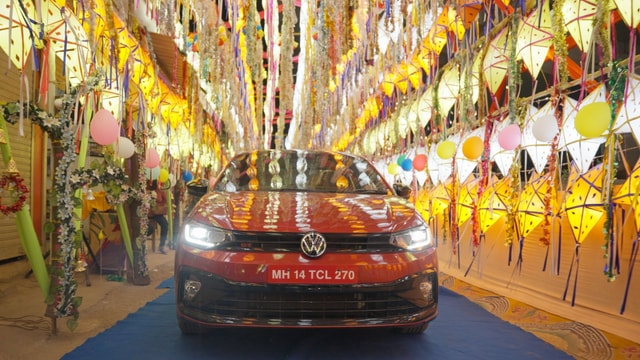 Bilal Firfiray | Feb 27, 2025Festivals Of India With Volkswagen: Year-end Magic in Goa with a VirtusFor the third episode of the Festivals of India series, we took a Volkswagen Virtus to India’s party capital Goa to usher in the New Year after an authentic Christmas celebration5 mins read
 Bilal Firfiray | Oct 21, 2024Volkswagen Virtus Reaches 50,000 Unit Sales Milestone; 17,000 Units Sold So Far In 2024With an average of around 1,785 units sold each month, Virtus took 28 months to achieve the 50,000-unit sale milestone in the domestic market.2 mins read
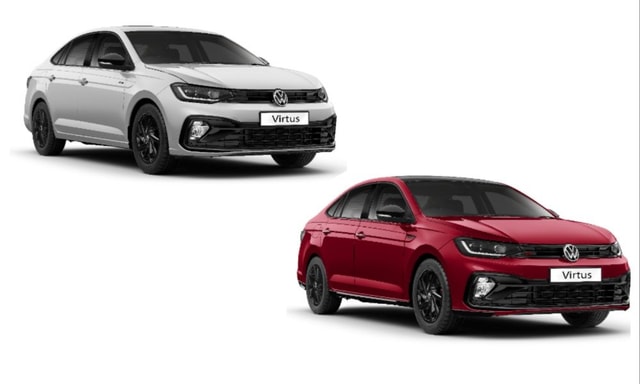 Jafar Rizvi | Oct 3, 2024Volkswagen Virtus GT Line, GT Plus Sport Launched In India; Prices Start At Rs 14.07 LakhPrices for the Volkswagen GT Plus Sport start at Rs 17.84 lakh (ex-showroom).3 mins read
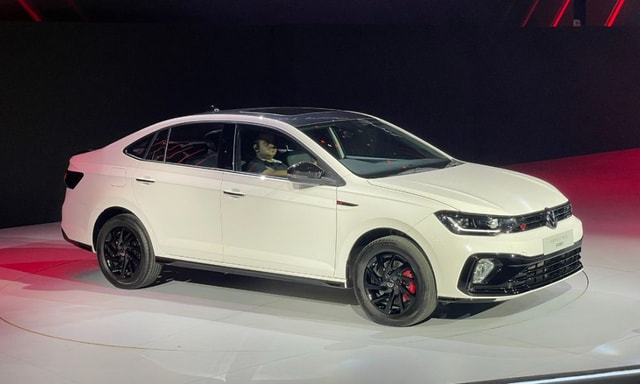 car&bike Team | Aug 14, 2024Volkswagen Virtus Pips Hyundai Verna As Best-Selling Compact Sedan In First 7 Months Of 2024The Virtus was the sole sedan in the segment that has posted a growth in sales in 2024 compared to last year.1 min read
 Jafar Rizvi | Mar 22, 2024Volkswagen Virtus GT Plus Sport Revealed; To Be Launched In SeptemberVolkswagen India showcased the Virtus GT Plus Sport concept at its 2024 annual brand conference.2 mins read
Used Volkswagen Virtus Cars
 2022 Volkswagen VirtusHighline 1.0 TSI ATNew DelhiHR26
 1st Owner
 Petrol
 32,612 Kms
 Automatic
₹ 10.28 LakhEMI Starts at₹ 23,019 /Month- 2024 Volkswagen VirtusTopline 1.0 TSI ATNew DelhiHR26
- 1st Owner
- Petrol
- 50,810 Kms
- Automatic
₹ 12.08 LakhEMI Starts at₹ 27,062 /Month  2023 Volkswagen VirtusTopline 1.0 TSI MTNew DelhiDL14
- 1st Owner
- Petrol
- 33,790 Kms
- Manual
₹ 9.57 LakhEMI Starts at₹ 21,414 /Month- 2024 Volkswagen VirtusHighline 1.0 TSI ATNew DelhiHR98
- 1st Owner
- Petrol
- 12,032 Kms
- Automatic
₹ 11.13 LakhEMI Starts at₹ 24,922 /Month - 2023 Volkswagen VirtusTopline 1.0 TSI MTNew DelhiHR26
- 1st Owner
- Petrol
- 52,302 Kms
- Manual
₹ 9.87 LakhEMI Starts at₹ 22,098 /Month


Used Volkswagen Cars
- 2019 Volkswagen Vento1.2 L TSI Highline Petrol AT BS IVNew DelhiDL8C
- 1st Owner
- Petrol
- 43,559 Kms
- Automatic
₹ 6.20 LakhEMI Starts at₹ 13,873 /Month - 2024 Volkswagen Taigun1.0 TSI Highline MTNew DelhiDL8C
- 1st Owner
- Petrol
- 29,698 Kms
- Manual
₹ 10.28 LakhEMI Starts at₹ 21,737 /Month - 2022 Volkswagen Taigun1.0 TSI Highline MTNew DelhiDL05
- 1st Owner
- Petrol
- 71,524 Kms
- Manual
₹ 7.55 LakhEMI Starts at₹ 15,964 /Month - 2021 Volkswagen Taigun1.0 TSI Highline MTNew DelhiHR51
- 1st Owner
- Petrol
- 66,773 Kms
- Manual
₹ 7.03 LakhEMI Starts at₹ 14,869 /Month - 2019 Volkswagen Polo1.0 L MPI Comfortline Petrol BS IVNew DelhiDL10
- 1st Owner
- Petrol
- 1,03,147 Kms
- Manual
₹ 3.99 LakhEMI Starts at₹ 8,934 /Month - 2015 Volkswagen Polo GTTSINew DelhiDL3C
- 1st Owner
- Petrol
- 54,400 Kms
- Automatic
₹ 3.53 LakhEMI Starts at₹ 7,913 /Month - 2016 Volkswagen Polo GTTSINew DelhiDL08
- 1st Owner
- Petrol
- 80,459 Kms
- Automatic
₹ 3.80 LakhEMI Starts at₹ 8,498 /Month - 2021 Volkswagen Taigun1.5 TSI GT Line Plus DSGNew DelhiDL10
- 1st Owner
- Petrol
- 57,611 Kms
- Automatic
₹ 9.98 LakhEMI Starts at₹ 21,090 /Month - 2022 Volkswagen Taigun1.0 TSI Highline ATNew DelhiHR98
- 1st Owner
- Petrol
- 31,355 Kms
- Automatic
₹ 8.66 LakhEMI Starts at₹ 18,315 /Month - 2015 Volkswagen Polo1.2 Trendline PetrolNew DelhiUP16
- 3rd Owner
- Petrol
- 54,653 Kms
- Manual
₹ 2.61 LakhEMI Starts at₹ 5,836 /Month




Sell Your Car On C&B
Quick, Easy and Maximum Price – Share Car Details, get Price in 5 Minutes, Schedule Home Inspection & Sell in 1 Day

Explore Popular Volkswagen Cars
 Volkswagen Taigun+11 Variants
 Petrol
 Manual, Automat…
 18.4619 KM/L
Ex-Showroom₹ 11 - 19.3 LEMI Starts at₹ 22,832


Volkswagen Virtus Alternatives


 Maruti Suzuki Ciaz+9 Variants
- Petrol
- Manual
- 20.042 KM/L
Ex-Showroom₹ 9.09 - 11.89 LEMI Starts at₹ 18,869
Upcoming Volkswagen Cars


Volkswagen Virtus FAQs
Any Questions? Ask the Expert
Latest Videos on Virtus
 Special Feature | Weekend With Volkswagen Virtus | Flying High| 04:35 mins read151368 views
 Volkswagen Virtus 1.0 TSI Manual Review| 06:53 mins read7989 views
 Volkswagen Virtus vs Skoda Slavia vs Honda City e: HEV Comparison Review| 11:19 mins read89237 views
 Volkswagen Virtus Review| 12:48 mins read103591 views
 First Look Volkswagen Virtus Sedan| 05:12 mins read7935 views