
Simple Tips To Take Care Of Your Automatic Gearbox

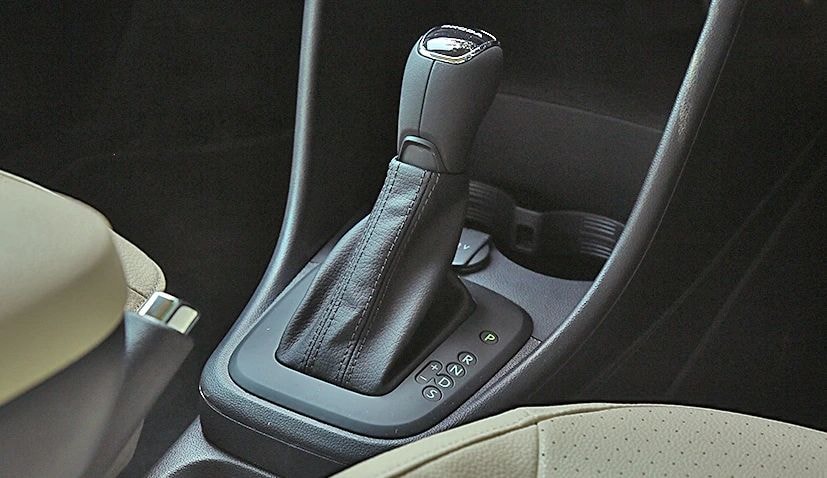
- We list out few ways to take care of your car with an automatic gearbox
- automatic gearboxes have a different mechanism than manual gearboxes
- Most automatic cars offer the option of shifting gears manually too
Any automatic car isn't a mere manual car without a clutch pedal. The systems and mechanisms which are responsible for the automated shifting of gears in the transmission operate differently when compared to a manual transmission. Let us learn in detail about the different types of automatic gearbox in India and how to take care of them.
Torque Converter:
A torque converter-based automatic transmission is the most reliable and serviceable of the lot. A torque converter is nothing but a hydraulic fluid filled turbine drum assembly which, as its name suggests, converts and multiplies torque generated by the engine. It also serves the purpose of a clutch found in the manual transmission. i.e., it isolates the connection between the engine flywheel and the drivetrain during braking. Since a torque converter is the oldest form of automatic gearbox, it is the simplest in construction and thus, easy to maintain. It must be noted that torque converters are prone to higher torque loss as compared to other automatic gearboxes. This demands that the gearbox must be driven carefully uphill. Most torque converters are provided with manual gear override just for the purpose of driving uphill. A torque converter gearbox does not require any different driving style to maintain the life of the gearbox apart from the changes in driving habits when switching from manual to automatic.
Photo Credit: pixabay.com
Continuously Variable Transmission (CVT):
Unlike other automatic transmission systems which have limited gear ratios through which the system shifts for optimum speed and torque, the CVT unit comes with transmission pulleys and a belt for power transmission. This system provides the user with unlimited gear ratios while driving and makes sure that optimum torque is available at all times. It must be noted that CVTs fail at high torque inputs and hence cannot be seen in bigger engine vehicles. Since a CVT system does not have actual gears like other transmissions, the gearbox oil for CVTs is different than the others. While the purpose of other transmission fluids is to stay on the surface of gears to keep it lubricated, the transmission fluid in a CVT collects metal debris on the pulley surface to avoid slippage of the belt. Since CVTs have no actual gears meshing, a car with CVT transmission lacks towing capabilities and hence must not be used for pulling heavy loads.
Photo Credit: learnmech.com
Dual Clutch Transmission (DCT):
As its name suggests, a dual clutch transmission comprises of two clutches with alternate gear trains attached to each clutch, thus, while one clutch takes care of the engagement of odd numbered gear ratios, viz. 1st, 3rd, 5th gears, the other clutch engages even numbered gear ratios. Though the presence of two clutches does make the DCT a fastest shifting gearbox even when compared to the manual transmission, it also adds to the complexity of the gearbox. This complexity of mechanism results in higher cost of manufacturing, cost of repair and also high failure rate. This requires users to modify their driving style a little bit as compared to the above-mentioned transmissions to care for their DCTs. A DCT operates by switching between the two clutches which are engaged to their respective gear ratios. Thus, when a car with DCT is standing still in traffic for over a minute, it is advisable to put your car in neutral to avoid clutch wear and transmission maintenance. Care must also be taken that you do not shift the car to parking gear when halting for short intervals since the constant switching between park and drive will lead to increased clutch wear.
Photo Credit: en.wikipedia.org
Automated Manual Transmission (AMT):
An AMT is a result of technological advancement in the conventional manual gearbox. The work of a clutch pedal and gear shifter is done by electro-hydraulic components controlled by a dedicated controller. This shows that the AMT has some characteristics like manual transmission in combination with certain limitations from the hydraulics and electronics. Unlike all of the automatic transmissions mentioned above, the AMT does not have a dedicated parking gear on its shifter. Someone switching to AMT from any other automatic transmission need to make sure they have engaged parking brake after shifting the car into neutral when parking the vehicle. An AMT unit does have considerable torque loss and hence needs to downshift its gears and maintain the engine speed in powerband when climbing uphill. Likewise, one must also take care to not shift their car into neutral when going downhill since it renders engine braking almost useless.
Related News


Latest Cars


Upcoming Cars


Latest News


 Jaiveer Mehra | Aug 19, 2026Volvo EX90 India Launch On October 12Volvo’s all-electric flagship will go up against the likes of the BMW iX and Mercedes-Benz EQS.3 mins read
 Sarthak Mahajan | Aug 19, 2026Skoda Slavia Facelift Prestige Vs Monte Carlo: Differences ExplainedThe 2027 Skoda Slavia facelift was unveiled on August 18, 2026. Prices are yet to be revealed.1 min read
 car&bike Team | Aug 19, 2026BMW 7 Series, i7 Facelift India Launch On September 11Bookings for the luxury sedan opened earlier this month.1 min read
 Jafar Rizvi | Aug 19, 2026Fifth-Gen Hyundai Tucson SUV RevealedThe new SUV is larger than before and gets a completely new identity.1 min read
 Abhishek Nigam | Aug 19, 2026New Bajaj Pulsar 125 and 150 To Launch On August 24New platform, sharper styling and premium features headline the biggest update yet for Bajaj’s popular Pulsar range1 min read
 Sarthak Mahajan | Aug 18, 20262027 Skoda Slavia Facelift: Top 5 ChangesGets first-in-segment rear-seat massager, 360-degree cameras and much more.3 mins read
 Seshan Vijayraghvan | Aug 19, 20262026 BMW X1 Long-Wheelbase Review: Is This The X1 To Buy?Along with the extra rear legroom, the new BMW X1 LWB offers more features, more safety tech, and a more powerful petrol engine. But do these updates actually make it a better SUV?1 min read
 Janak Sorap | Aug 17, 2026Bajaj Pulsar N160 SS First Ride Review: The Most Tech-Loaded Pulsar Yet?The Bajaj Pulsar N160 SS brings more power, new-age electronics and sharper styling to the familiar 160cc Pulsar formula.5 mins read
 Jaiveer Mehra | Aug 16, 2026Honda Amaze CVT Long Term First Report: 1800 Km InThe Amaze is the first sedan to join our long term feet in a year, and while on paper it lacks some of the features offered in its rivals, there’s plenty of promise in the package.1 min read
 Preetam Bora | Aug 12, 2026Royal Enfield Himalayan 440 Custom Review: Beating RE to the PunchDelhi-based custom motorcycle shop TNT Motorcycles introduces packages to convert existing Himalayan 411 adventure bikes to Himalayan 440. Is it worth the expense?8 mins read
 Seshan Vijayraghvan | Aug 11, 20262026 Nissan Tekton 700 km Review: Can It Conquer The Himalayas?We drove the newly launched Nissan Tekton from Chandigarh all the way up to Leh, covering over 700 km with the new SUV. From exploring the Tekton’s capabilities in the Himalayas to setting an India Book Record, here’s how the trip unfolded.8 mins read