
Auto Industry Help Reduce Water Consumption With Innovative Solutions

- Ashok Leyland has constructed 17 artificial rainwater harvesting ponds.
- Renault-Nissan is conserving a daily 50,000 litres of water in Chennai.
- In FY22, Tata Motors conserved a total of 9.24 lakh m3 of water,
The automobile industry is a key sponsor of any country's GDP, and offering sustainability-driven solutions is crucial, especially during difficult times. It is imperative for automakers to offer holistic, and sustainable solutions in all aspects, right from the time an idea for a new product is conceptualised till the product is out for public use. Water plays an important role here as more than 40,000 gallons of water goes into producing a single vehicle, and hence, the industry actively engages in various conservation practices to balance it out. In India, major automakers, as well as top ancillary units have switched to waterless solutions, reused processed water, and restrained usage of water for various applications.
Also Read: Nissan Introduces Waterless Car Washing Solution In India
carandbike.com reached out to a few players in the Indian automotive sector to understand steps taken at various levels of operations. These would include precautionary steps taken at the brand's manufacturing plant, offices, dealerships, etc, to preserve water.
Renault Nissan Automotive India Private Limited (RNAIPL) plant in Oragadam, Chennai, conserves a daily 50,000 litres of water from its sewage treatment plant by using a decanter facility recently installed on its premises. The facility, which separates water from sewage waste, is mitigating water wastage and reducing water demand for RNAIPL's industrial operations. Cumulatively, plant initiatives have enabled RNAIPL to conserve an estimated 5.76 lakh kilo litres of rainwater and 87 per cent of water saved.
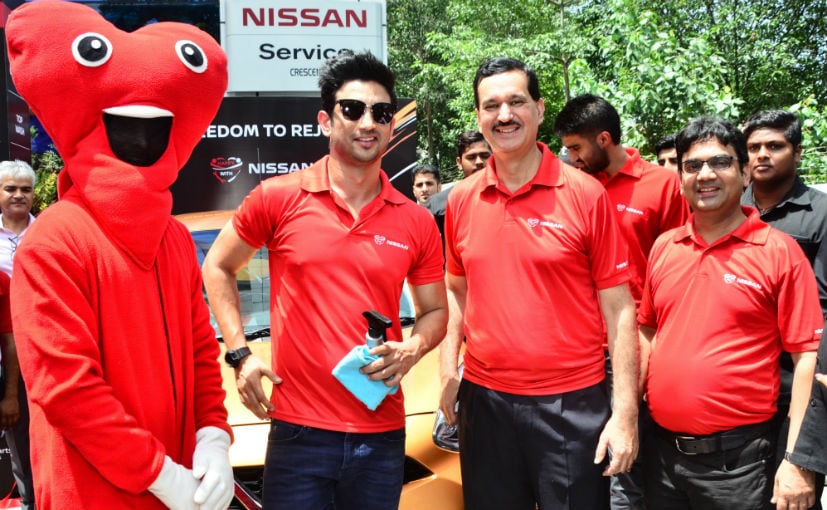
Nissan India kicked off the eco-friendly car wash program in 2016.
On the other hand, Nissan customers helped reduce car wash water consumption by 45 per cent, by opting for the company's advanced foam car wash technique instead of a traditional car wash. The foam wash initiative, a long-run initiative started by Nissan in 2014, has been provided across Nissan service centres nationwide.
In FY22, Tata Motors conserved a total of 9.24 lakh m3 of water through recycling effluent and rainwater harvesting, which is 19.7 per cent of total water consumption. The automaker's plants located in Pantnagar, and Lucknow are examples of water stewardship as both plants recycle treated effluent for reuse. These plants have also spread awareness among village communities and recharged more than they consumed in the entire year through scientifically designed groundwater recharge structures within and outside the plant premises. Projects were undertaken throughout the year to reduce fresh-water abstraction by maximising recycling and minimising leakages.
Also Read: Toyota's ECO Car Wash Service Saves 95 Per Cent Water
The country's largest carmaker, Maruti Suzuki India Limited achieves significant water savings at its workshops by adapting the dry wash initiative. The company saved over 1,000 million litres of water over the last few years, by using a dry wash system at Maruti Suzuki workshops to wash more than 10 million vehicles since 2016. In 2019, Maruti helped save maximum water to the tune of 160 million litres in major cities such as Bengaluru, Delhi, Hyderabad, Pune, Nagpur, and Chennai.

The top six cities - Bengaluru, Delhi, Hyderabad, Pune, Nagpur, and Chennai - helped save maximum water of 160 million litres.
TVS Motor Company has a dedicated dashboard for accurate accounting of withdrawal and consumption of water at the Hosur manufacturing plant. This IoT system helps identify abnormalities in water consumption and ensures corrective actions are implemented immediately. S Devarajan, Senior Vice President, Advanced Manufacturing, TVS Motor Company said, “At TVS Motor, rainwater harvesting is done through direct collection and reuse, percolation ponds, contour trenches, stormwater drain with recharge pits, and earth check dams. Today, the total quantity of rainwater recharged into an aquifer at the company's Hosur manufacturing plant exceeds the total groundwater withdrawal in the one-rainfall year, which has led the company to achieve a 21 per cent reduction in specific water consumption during 2020-21.”
Also Read: Mercedes-Benz India Launches Waterless Cleaning Solution
At Mercedes-Benz India, employees practice sustainability by integrating green practicing into their day-to-day life. The employees also play a pivotal role in preserving the ecological balance of plant premises which house 125 species of plants and animals. The company also practices zero discharge of wastewater to public drain, while maintaining the ecological balance of its plant premises which houses 125 species of plants and animals.
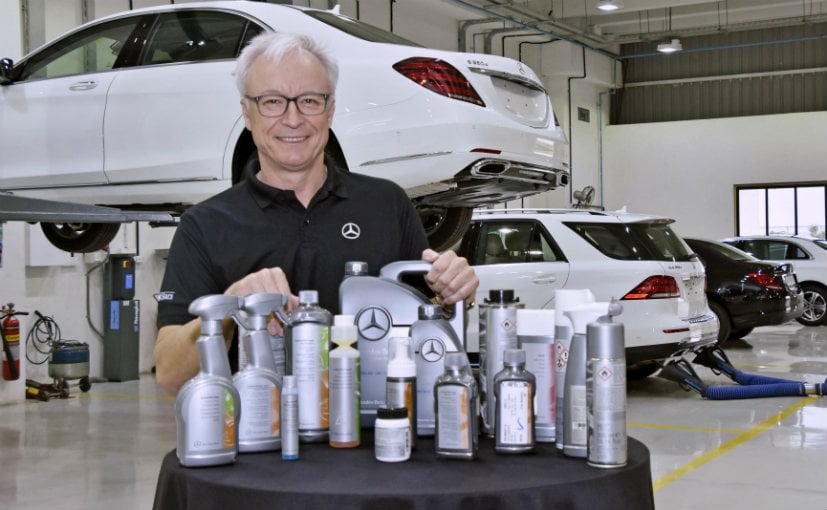
Along with the waterless cleaning solution, Mercedes also launched a slew of car care products.
Ashok Leyland, the second-largest manufacturer of commercial vehicles in India, has implemented several water conservation measures to maintain the ecological balance. Balachander N V, Chief Sustainability Officer, and President - CSR, Communication and Corporate Affairs said, “All Ashok Leyland plants feature low flow water systems and harvest rainwater. Also, wastewater is recycled to keep it out of landfills. Ashok Leyland is, now, a net water-positive company. The solar plant uses robotic cleaning technology for the cleaning of solar modules. Ashok Leyland has also taken up lake and river restoration projects in Hosur, Pantnagar, Alwar, and Bhandara. Madhakondapalli Lake's restoration resulted in a 30,000 KL increase in water storage.” The company has also constructed 17 artificial rainwater harvesting ponds with a combined capacity of 2.54 lakh kilolitres.”
Also Read: Maruti Suzuki Saved 656 Million Litres Of Water In 2018-19
Hyundai's Save Water Campaign encourages customers to opt for “Dry Wash” for their cars at Hyundai Service Centres, and each wash saves about 120 litres of water. Hyundai donates the water saved by the customers through the dry wash to drought-affected areas. In 2018, the company reached the milestone of planting one million trees inside the plant premises to maintain a zero-discharge policy. Hyundai also follows rainwater harvesting, and the Chennai plant has six ponds with a total capacity of 3.35 lakh tonnes.

Ashok Leyland has constructed 17 artificial rainwater harvesting ponds with a combined capacity of 2.54 lakh kilolitres.
Leading tyre manufacturer, JK Tyre has the lowest raw water use per kg of tyre manufactured in the world. With 55 per cent of its power requirement is met from renewable sources, and its carbon footprint is moderated by more than 50 per cent over time. It also claims to be one of the world's greenest tyre companies, especially for its lower carbon footprint, declining raw water consumption per unit of production, greenhouse gas emissions, and power consumption. In its “Sustainability Targets 2030”, the company announced that it would increase the share of harvested rainwater in the overall annual use of water by 2-5 per cent every year over the next 10 years.
Related News



Latest Cars


Upcoming Cars


Latest News


 car&bike Team | Oct 20, 2026Hyundai Bayon Rear Seat, Panoramic Sunroof Revealed In New ImageWith over 200 mm of added length, the Bayon is likely to offer better rear seat space than the smaller and more affordable Venue subcompact SUV.1 min read
 car&bike Team | Oct 20, 2026Hero Xtreme 250R Gets Frequency Selective Damping (FSD): What is It?The 2027 Hero Xtreme 250R boasts of segment-first Frequency Selective Damping, or FSD. What is FSD, and how does it work? Here’s a quick explainer.1 min read
 Sarthak Mahajan | Oct 20, 2026Renault Duster Hybrid vs Maruti Suzuki Grand Vitara Hybrid vs Toyota Urban Cruiser Hyryder Hybrid: Specifications ComparedThe Renault Duster Hybrid claims a fuel efficiency of 29km/l, the highest among the three SUVs.5 mins read
 car&bike Team | Oct 20, 2026Updated Hero Xtreme 250R: What’s New?The Hero Xtreme 250R gets a thorough update with a price tag of Rs. 1.98 lakh (Ex-showroom). Here’s a look at all the updates.1 min read
 car&bike Team | Oct 20, 2026Axor Agera Full-Face Helmet LaunchedPriced under Rs. 10,000, the new helmet features an aerodynamic spoiler, integrated rear exhaust vent and a range of safety-focused features.1 min read
 car&bike Team | Oct 19, 20262027 Kawasaki Z1100 Launched In India At Rs 12.79 LakhThe new flagship naturally aspirated Supernaked motorcycle gets a 1,099cc inline-four engine, a six-axis IMU and a comprehensive suite of electronic rider aids.1 min read