
German Car Giants And Asian Battery Kings: A Match Made In Hungary

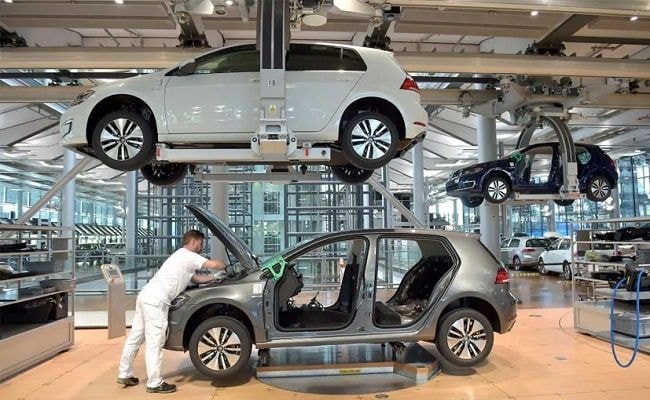
German automakers and Asian battery suppliers are getting together in Hungary in a multi-billion-dollar marriage of convenience to drive their electric ambitions.
The companies are flocking to central Europe, where Viktor Orban's government is defying Western wariness of China and offering generous benefits to host foreign operations and stake Hungary's claim as a global centre for electric vehicles (EVs).
Investment in the Hungarian auto industry is being dominated by three countries - Germany, a champion carmaker, plus China and South Korea, EV battery leaders way ahead of European rivals.
Companies from those three countries have accounted for 29 out of the 31 cash subsidies handed out by Hungary for major investments in its auto and battery sector over the past decade, according to a Reuters analysis of government data that shows the scale of German, Chinese and Korean convergence there.
"Cathodes, anodes, separators, assembly lines, the full battery supply chain is here," said Dirk Woelfer of the German-Hungarian Chamber of Commerce in Budapest. "This is a foot in the door to Europe."
Recipients of such subsidies included the likes of German automakers BMW and Mercedes-Benz, and battery makers such as China's BYD and Korean rival Samsung SDI. The median subsidy level has been 15% of investment.
In total, Hungary has received over 14 billion euros ($15 billion) in foreign direct investment into its battery sector alone in the past six years, according to government figures.
Major investments are broadly classed as those worth over 5-10 million euros, varying with factors such as jobs created.
State incentives and the opportunity for automakers and battery suppliers to work next door to each other is proving a strong pull, according to interviews with about 20 industry players and consultants in Germany, Hungary, China and South Korea.
China's CATL, the world's No. 1 EV battery maker, and Korean battery giants SK Innovation and Samsung SDI, all told Reuters that the planned proximity to German carmakers was a key factor in their decisions to invest in Hungary, as well as being able to source separators and other components there.
CATL is investing $7.6 billion to build Europe's largest battery plant in Hungary. This plant and the $2.1 billion BMW factory will both be sited in the city of Debrecen, which is attracting an ecosystem of suppliers, ranging from makers of brakes and battery cathodes to industrial machinery.
Mercedes-Benz is converting its factory in Kecskemet to produce electric cars, while Volkswagen's Audi is making cars and electric motors in Gyor.
Such big business could present a boon for Prime Minister Orban's government as the country faces its toughest economic environment in more than a decade, with inflation running above 20%, the economy slowing and EU funds in limbo.
Yet the Hungarian EVs project also faces stiff obstacles, according to many of the industry insiders.
One key concern is the huge demands that massive battery plants will place on the electricity grid, which needs to shift away from fossil fuels towards renewables to meet the net-zero emissions targets of much of the auto industry, the people said.
A lack of specialised workers in Hungary to work in battery cell manufacturing could also drag on capacity, they added.
HIPA, the Hungarian Foreign Ministry agency responsible for attracting investments in areas ranging from batteries and cars to logistics, did not respond to Reuters queries about the EV industry.
'CHINA'S MADE GOOD STEPS'
Hungary's welcome to Asian battery makers might jar with concerns expressed by Brussels and Berlin about the perils of Europe becoming too dependent on China and other foreign powers, particularly in technologies central to the green transition.
Still, for now, the need to ramp up EV output leaves the European auto industry little choice but to source from Asian players, said Csaba Kilian of Hungary's automotive association.
"I absolutely agree that European manufacturers should have their own sources ... but it's a competition, and China has made good steps," he added. "There is a learning curve."
Europe should have a EV battery manufacturing capacity of 1,200 gigawatt hours (GWh) by 2031 if current plans come to fruition, outstripping expected demand of 875 GWh, Benchmark Mineral Intelligence (BMI) estimates. But of that 1,200 GWh, 44% will be provided by Asian companies with factories in Europe, ahead of homegrown firms on 43% and U.S. pioneer Tesla with 13%, according to a Reuters calculation based on BMI data.
The prospects for developing a battery sector in Germany have been set back by record energy there as a result of the loss of Russian gas, according to autos consultants at Boston Consulting Group and Berylls Strategy Advisors.
Hungary offers a comparatively stable energy system bolstered by nuclear energy, as well as high subsidies and Europe's lowest corporate tax rate of 9%.
The entire battery supply chain has come to the country, said Ilka von Dalwigk, policy manager at the European Battery Alliance, launched by the European Union in 2017 to kick-start a homegrown industry.
"Everything is located there. When we look at the forecast for 2025 and 2030, it looks like it will have one of the largest production capacities in Europe," she added.
"It might very well be that Hungary is in fact the next big battery production cluster in Europe."
Asked about concerns about reliance on Asia for technology, an EU official said the bloc - which must approve member state subsidies to investors - had a system in place to cooperate and exchange information on investments from non-EU countries that may affect security.
The European Commission is currently in talks with Hungary over the size of the subsidy the country will offer to CATL for building the Debrecen plant, the official added.
'SENDING THE WRONG SIGNAL'
For some Western companies, setting up shop in Hungary is a tough decision.
German autos supplier Schaeffler said it was on the verge of setting up its primary electric motor plant in Hungary rather than Germany in August because of the appeal of Hungary's incentives, but decided on Germany for fear of sending "the wrong signal" to Germans who fear a loss of jobs to overseas.
Other industry players expressed a range of concerns over potential pitfalls for the burgeoning Hungarian auto industry as factories ramped up, including the power grid issue.
Batteries, in particular, are highly energy-intensive parts of EVs to produce, requiring high amounts of power for the drying the materials and machine operation.
Hungary's sources of energy in 2021 comprised 80% fossil fuels, 14.5% nuclear and 3.6% solar, according to a Reuters calculation of data from the BP Statistical Review of World Energy.
The mix spells trouble for carmakers who will soon need to showcase carbon-free credentials across their supply chains under new German and European legislation.
Hungarian Foreign Minister Peter Szijjarto met senior executives from BMW and auto suppliers including Schaeffler and Knorr-Bremse in Munich last month, ahead of the German carmaker announcing it was beefing up its investment in the country.
Topics discussed included plans to improve logistics infrastructure in Hungary and increasing the amount of renewables energy used for the power grid, according to one of the companies that attended.
When BMW first announced its plan to build its Debrecen plant, in 2018, the government committed to spending around 135 billion forints on improving local infrastructure, according to calculations by the German-Hungarian Chamber of Commerce.
On the battery side, CATL told Reuters it was considering developing solar power with local partners in Hungary.
Despite the risks, Alexander Timmer, a partner at Munich-based consultants Berylls Strategy Advisors who has worked on several autos and battery projects in Hungary, said the country presented an appealing package.
"The combination of cost advantages, state subsidies, and closeness to automakers' plants makes Hungary increasingly attractive to battery producers, he added.
($1 = 397.54 forints; $1 = 0.9483 euros)
(Reporting by Victoria Waldersee in Berlin, Gergely Szakacs in Budapest; Additional reporting by Heekyong Yang, Zhang Yan; Editing by Pravin Char)
Related News


Latest Cars


Upcoming Cars


Latest News


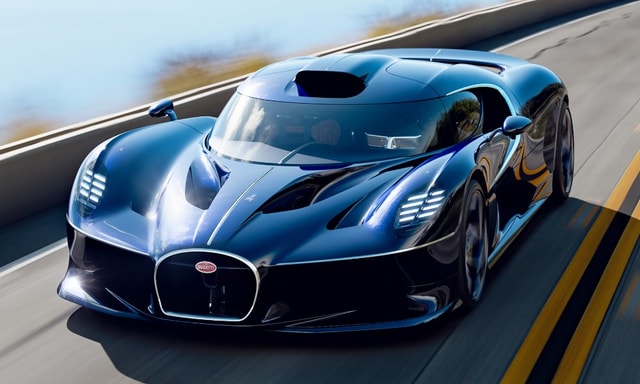 car&bike Team | Aug 8, 2026Bugatti Destrier Revealed As One-Off Bolide-Based Hypercar With 1,578 BhpBugatti has revealed the Destrier, a one-off based on the Bolide but with a completely different design brief.3 mins read
 car&bike Team | Aug 8, 2026KTM 160 Duke, RC 160 Prices Hiked By Up To Rs 15,000KTM India has revised the prices of its entry-level motorcycles, with both the 160 Duke and RC 160 getting more expensive.1 min read
 car&bike Team | Aug 8, 2026MG Majestor SUV Prices Hiked By Rs 1.50 LakhAfter the hike, prices for the Majestor now start at Rs 42.49 lakh (ex-showroom) for both 4x2 variants.2 mins read
 car&bike Team | Aug 7, 20262026 Ducati Monster India Launch On August 10; Gets New 890cc EngineDucati is set to launch the 2026 Monster in India on August 10, bringing an updated design, new engine and revised electronics package to the premium streetfighter segment.1 min read
 car&bike Team | Aug 7, 2026New Bajaj Pulsar 150 Spotted Ahead Of LaunchThe updates point to one of the biggest overhauls the nameplate has received in years.2 mins read
 Jaiveer Mehra | Aug 7, 2026FADA Sales July 2026: Auto Sales Up By Over 25 Per Cent; Passenger Vehicle, Two-Wheelers Report Best-Ever Numbers For The MonthFADA reported sales across all segments stood at a new high for July - a first-ever.1 min read
 Bilal Firfiray | Aug 1, 2026Toyota Hilux Review: The InvincibleMarking it as the ninth generation, the Hilux comes with a major cosmetic overhaul. But is it still relevant enough for the current times or is it getting too long in the tooth?5 mins read
 Bilal Firfiray | Jul 30, 2026Kia Syros EV Review: Best EV To Buy Under Rs 20 Lakh?The Kia Syros EV comes into the game with a modern design, spacious cabin, strong performance, decent range and an aggressive pricing. But could it become the new benchmark under Rs 20 lakh?5 mins read
 Jaiveer Mehra | Jul 27, 20262026 Maruti Suzuki Brezza Facelift Review: Bestseller Joins The Turbo ClubWhile Maruti’s facelifts have always tended to bring subtle updates over the outgoing models, the latest Brezza brings some heavy updates under the skin, including a new 6-speed manual gearbox and, for the first time, a turbocharged petrol engine option.1 min read
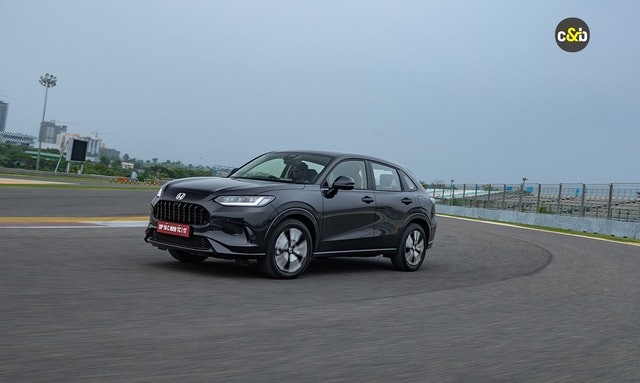 Bilal Firfiray | Jul 24, 2026Honda ZR-V Review: Who Is It For?Honda has brought the new ZR-V to India as their current flagship offering. It’s a CBU, it’s a hybrid, and it’s here for a limited few. Who is it for though?1 min read
 Girish Karkera | Jul 29, 2026Mercedes-AMG E53 4MATIC+ PHEV First Drive Review: Just What The Doctor OrderedThere are luxury cars and there are high-performance cars. But what if you want both for the price of one? Mercedes-Benz has a recommendation that promises to tread a fine line between the two – the second generation E53 with a twist.7 mins read