
How Do F1 Teams Work?

They say soccer and cricket are team sports. But, if you consider the planning and teamwork that goes into prepping the racer and vehicle for each race, you'll understand why F1 fanatics deem it as team sports.
Each F1 team includes complex structures and several departments. The number of employees in a small and large group ranges between 200 to 1,200. This article will give you insights into how these F1 teams work and several roles and departments in them!

Photo Credit: wallpapercave.com
F1 Team Structure
The two racers and their vehicles are not all that represents an F1 team. Every team includes hundreds of employees divided across different departments. These departments work in sync to ensure that every leg of the process is smooth and well-planned.
Depending on the budget, the number of team members can significantly vary. For instance, Ferrari has a dynamic team structure since it designs and manufactures the components.
In smaller-sized teams, one person might be responsible for several tasks. The resources are limited, so people in small groups have to perform multiple tasks simultaneously.

Photo Credit: wallpapercave.com
Roles & Responsibilities in F1 Teams
- These are some of the key departments and roles in an F1 team. Let's dive into the details!
- Team Principal: As the name suggests, they are the director/head of the team. In the case of teams owned by auto manufacturers, they put their top employees in this position.
- Managers: Managers partake in supervising different departments. Large teams typically have more than one manager, and such groups have complicated structures.
- Assistants: Assistants are responsible for organizing the events, calendars, and procedures. This department consists of secretaries, personal assistants, and receptionists.
- Race Engineers: Race engineers manage races and communicate with the drivers. There are several types of engineers – reliability, stability, electronics, data, systems, track.
- Designers: Designers look after the overall design of the car and individual components.
- Aerodynamicists: Aerodynamicists are aeronautical engineers who ensure speed and drag efficiency of the car. To perform this, these employees use the wind tunnel to inspect the vehicle.
- R&D Engineers: These engineers take the responsibility of planning, research, development, and introducing improvements and innovations to the car designs.
- Production: The production team manufactures and develops different car parts. However, smaller F1 units usually outsource these tasks.
- Race Mechanics: You can spot the race mechanics in every Grand Prix. These people are responsible for repairing and replacing the car's parts during the breaks.
Team Members on the Grid
You might be wondering what team members on the grid are responsible for and what they do. Mechanics equip the grid trolleys to get the garage to the location. Also, the racers take a quick isolation lap to identify any gaps or issues. Fifty minutes before the race starts, the mechanics occupy the grid, whereas the engineers get ready on the pit wall.
The car arrives at the grid after the isolation lap at approximately 35 mins before the race. Meanwhile, the mechanics inject the vehicle and equip them with carbon wheel boards. There are also last-minute inspections and checks.
When it's just 12 minutes down to the race, the driver occupies the car, and mechanics adjust the tires.

Photo Credit: wallpapercave.com
Formula 1 teams have a complicated structure and operations. Motorsports require immense team coordination, which makes it all the more admirable!


Latest News


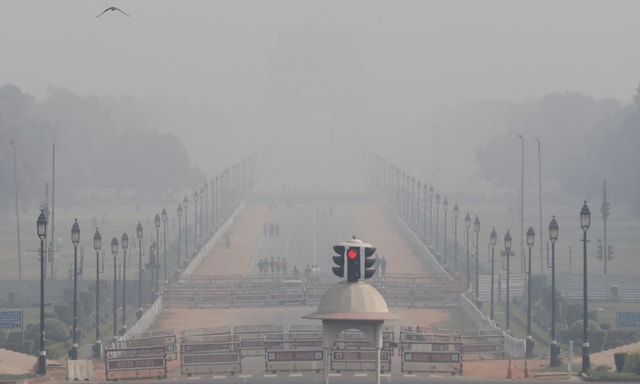 Sarthak Mahajan | Oct 21, 2026Delhi Government To Restrict Non-BS6 Vehicles From November 1The measures also include doubled parking charges, staggered office timings and 50% work-from-home arrangements as part of the winter pollution control strategy.1 min read
 Sarthak Mahajan | Oct 21, 2026Hyundai Bayon Safety Features Revealed: To Get Level 2 ADASHyundai Bayon gets Level 2 ADAS with 23 functions, six airbags as standard and a body structure made using 69% advanced multi-grade high-strength steel.3 mins read
 car&bike Team | Oct 21, 2026Bajaj Pulsar N250SS Launched At Rs 1.59 LakhThe updated motorcycle gets a slight bump in output and gains more features.2 mins read
 Janak Sorap | Oct 21, 2026TVS Ntorq 150 Spotted In New Dark Green Colour Ahead Of LaunchThe TVS Ntorq 150 has been spotted at a dealership in a new dark green colour, hinting at an upcoming colour addition to the performance scooter’s range.1 min read
 car&bike Team | Oct 20, 2026Hyundai Bayon Rear Seat, Panoramic Sunroof Revealed In New ImageWith over 200 mm of added length, the Bayon is likely to offer better rear seat space than the smaller and more affordable Venue subcompact SUV.1 min read
 car&bike Team | Oct 20, 2026Hero Xtreme 250R Gets Frequency Selective Damping (FSD): What is It?The 2027 Hero Xtreme 250R boasts of segment-first Frequency Selective Damping, or FSD. What is FSD, and how does it work? Here’s a quick explainer.1 min read