
Why Does Regenerative Braking In EVs Stop At 100% Battery Charge?

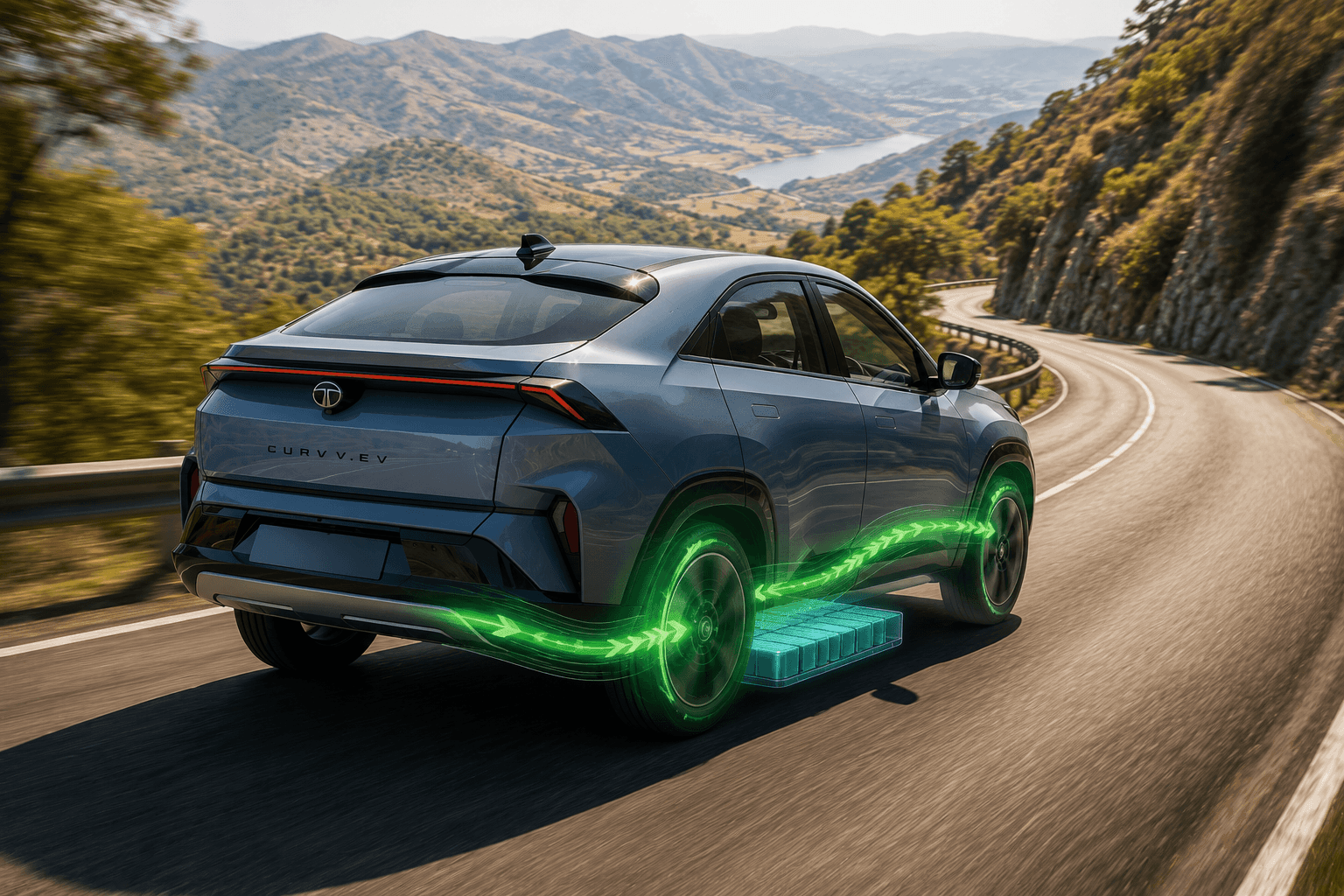
- Regenerative braking turns your electric motor into a generator
- When your battery is at 100 per cent, it cannot accept any more current
- The car’s Battery Management System (BMS) automatically turns off or reduces regen
If you have driven a high-end electric car for even a week, a particular habit might become second nature: one-pedal driving. With this feature, in daily city traffic, you do not need to engage the mechanical brake pedal a lot. Whenever you lift your right foot off the accelerator, the car slows down conveniently on its own.
Then comes a morning after you leave your car plugged in overnight. You get into the driver’s seat and start your morning commute, but the moment you lift off the accelerator before the first speed breaker or red light, nothing happens. Instead of slowing down, the car coasts freely like a petrol car slipped into neutral. Regardless, it’s not a mechanical fault. Here’s why regenerative braking stops working when your battery is full, and how to drive around it safely.
Also Read: LFP vs NMC Batteries: Which EV Battery Is Better For Indian Conditions?

How Does Regenerative Braking Work?
In a petrol or diesel car, pressing the brake pedal pushes rough brake pads against spinning metal discs. That friction creates immense heat, which disappears into the air. Every time you slow down in a fossil-fuel car, you waste some amount of energy.
An electric car attempts to recoup some of that energy. An electric motor acts like a two-way device:
- When you press the accelerator pedal, the battery sends electrical power into the motor, which spins the wheels forward.
- When you lift off the accelerator or press the brake pedal gently, the process runs in reverse. The spinning road wheels turn the motor.
- Because of this, the motor becomes an electrical generator. It captures the car’s rolling momentum, converts it back into electricity, and pushes those electrons straight back into the battery pack.
This process is what creates physical drag on the wheels. And that magnetic drag is what slows your car down. You get free stopping power and recover a bit of driving range at the same time.
Also Read: Kia Carens Clavis EV vs Mahindra XEV 9S: Which 3-Row Electric Car Should You Buy?
Why Regenerative Braking Stops Working at 100% Battery
Think of your electric car’s battery pack as a simple water bucket, and think of regenerative braking as a garden hose. When your bucket is half empty, you can point the hose into it and turn on the tap without thinking twice. The water flows right in. But if you keep pumping water into a bucket after it is already 100 per cent full, it spills over the edges and floods your floor.
A lithium-ion battery behaves in a very similar way:
- When the battery is at 40, 60 or 80 per cent state of charge, there is plenty of room inside the battery cells to take in incoming electrical energy.
- When the battery hits 100 per cent, the cells are already holding all the electrical energy they can physically store.
- If the motor tried to push 20 to 50 kW of fresh electricity into a full battery during hard slowing down, the voltage would spike dangerously. That spike could overheat the battery cells, degrade their lifespan or cause a short circuit.
To stop this from happening, every electric vehicle comes with a computer called the Battery Management System (BMS). The second it sees that the cells are at 100 per cent, it tells the motor inverter to throttle or stop pushing current back into the pack. Without a place to dump that generated electricity, the motor cannot act as a generator. And without that magnetic drag, regenerative braking stops working.
Note: Loss of regenerative braking also happens at low ambient battery pack temperatures (typically below 10°C to 15°C). To prevent lithium plating, the BMS shuts off this feature.

How Loss of Regenerative Braking Affects Drivers
When you commute in heavy traffic with features like one-pedal or i-Pedal, your brain gets used to the car slowing down the moment you lift your foot. You learn to time your stops without touching the physical brake pedal at all.
But when you start driving with a 100 per cent battery, since that deceleration disappears, the car feels unexpectedly fast, loose and heavy. And since EVs weigh considerably more than petrol cars given the extra heft of their battery packs, an EV in full coast mode rolls much further than you might expect.
You will find this alarming if you live in a hilly area or are visiting a hill station like Mussoorie, Ooty or Lonavala. Once you fully charge your car at a hotel at the top of a mountain and head downhill, there is zero engine braking to help you slow down. The entire job of controlling the heavy SUV’s speed falls onto your physical friction brakes, which can heat up quickly if used non-stop.
How Car Manufacturers Deal With The 100% Cut-Off
Carmakers are well aware that changing brake feel confuses drivers. So, engineers have developed a few unique ways over the years to make this transition less jarring:
- Blended Braking: In modern EVs, the brake pedal is brake-by-wire. When you press the pedal at 100 per cent charge, the car silently applies the hydraulic disc brakes to match the deceleration you usually get from regen. As the battery depletes and regen wakes back up, the car then switches from physical brakes back to motor braking under foot pressure.
- Hidden Software Buffers: Some brands build a safety cushion into the battery pack. When your dashboard displays 100 per cent, the battery might actually be sitting at 95 per cent usable capacity. That leftover five per cent buffer gives the motor a small pocket to dump regen energy into during your first few kilometres.
- Dashboard Warning Icons: Most cars show a small greyed-out symbol or an alert on the digital instrument cluster, warning you that regenerative braking is temporarily not available until the battery drops below 95 or 90 per cent.
How to Handle the Situation as an EV Owner
To keep your morning drives predictable, here are some practical tips you can keep in mind:
- Do Not Charge To 100% Every Day (If You Drive An NMC Battery): Unless you are setting off on a long highway trip, set your daily charge limit to 80 or 90 per cent. This not only preserves your battery health over the years, but it also keeps full regenerative braking available.
- Be Ready On The Brake Pedal For The First 5 Kilometres: If you own an LFP-battery car (like a Tata Tiago EV or MG Windsor EV) and charge to 100 per cent to balance the cells, expect the car to coast freely for your first 5 to 10 kilometres. Keep your foot ready over the brake pedal until the battery drops to around 96 per cent.
- Avoid Charging To 100% At The Top Of A Hill: If you are staying at an uphill destination, unplug your car around 85 or 90 per cent. That leaves an empty buffer for the long descent, letting the hill recharge your battery for free without overheating your brake pads.
The next time your EV glides forward a little too eagerly on a full charge, you will know that the car is simply protecting its own heart. Give it a few kilometres of regular driving, let the battery breathe, and that familiar, comforting one-pedal braking will return right on cue.
Related News

Latest Cars


Upcoming Cars


Latest News


 car&bike Team | Nov 12, 2026Hyundai Creta vs Maruti Suzuki Grand Vitara vs Toyota Urban Cruiser Hyryder: Which Compact SUV Fits You?The Hyundai Creta, Maruti Suzuki Grand Vitara and Toyota Urban Cruiser Hyryder are among the popular choices in the compact SUV space. But which one fits your bill?10 mins read
 car&bike Team | Nov 12, 2026Kia To Invest USD 2 Billion For Second Andhra Pradesh Manufacturing FacilityThe brand’s annual production capacity from this plant is rated at 2 lakh units.1 min read
 car&bike Team | Nov 12, 2026Why Does Regenerative Braking In EVs Stop At 100% Battery Charge?We have explained why your electric car suddenly glides freely instead of slowing down when driven with a completely full battery pack.1 min read
 car&bike Team | Nov 12, 2026BYD's Denza D9 MPV, Z9 GT Shooting Brake India Launch Tomorrow: What To Expect?BYD’s luxury brand Denza will enter India with two very different electric offerings: the D9 luxury MPV and the 1,140 bhp Z9 GT Shooting Brake.3 mins read
 car&bike Team | Nov 12, 2026Does Hardwiring A Dashcam Void Your Car Warranty?Take a look at whether hardwiring a dashcam really affects your factory warranty and how you can install one safely in India.6 mins read
 car&bike Team | Nov 11, 2026RTI vs Zero Depreciation: Which Car Insurance Cover Pays More?Return to Invoice (RTI) covers the gap between your car's current IDV (Insured Declared Value) and the original invoice value in case of theft or total loss. Zero Depreciation reduces deductions on replaced parts during accident repairs.1 min read