
Blog: Cross-Country Motorcycle Ride in Peak Summer? You Must Be Joking!

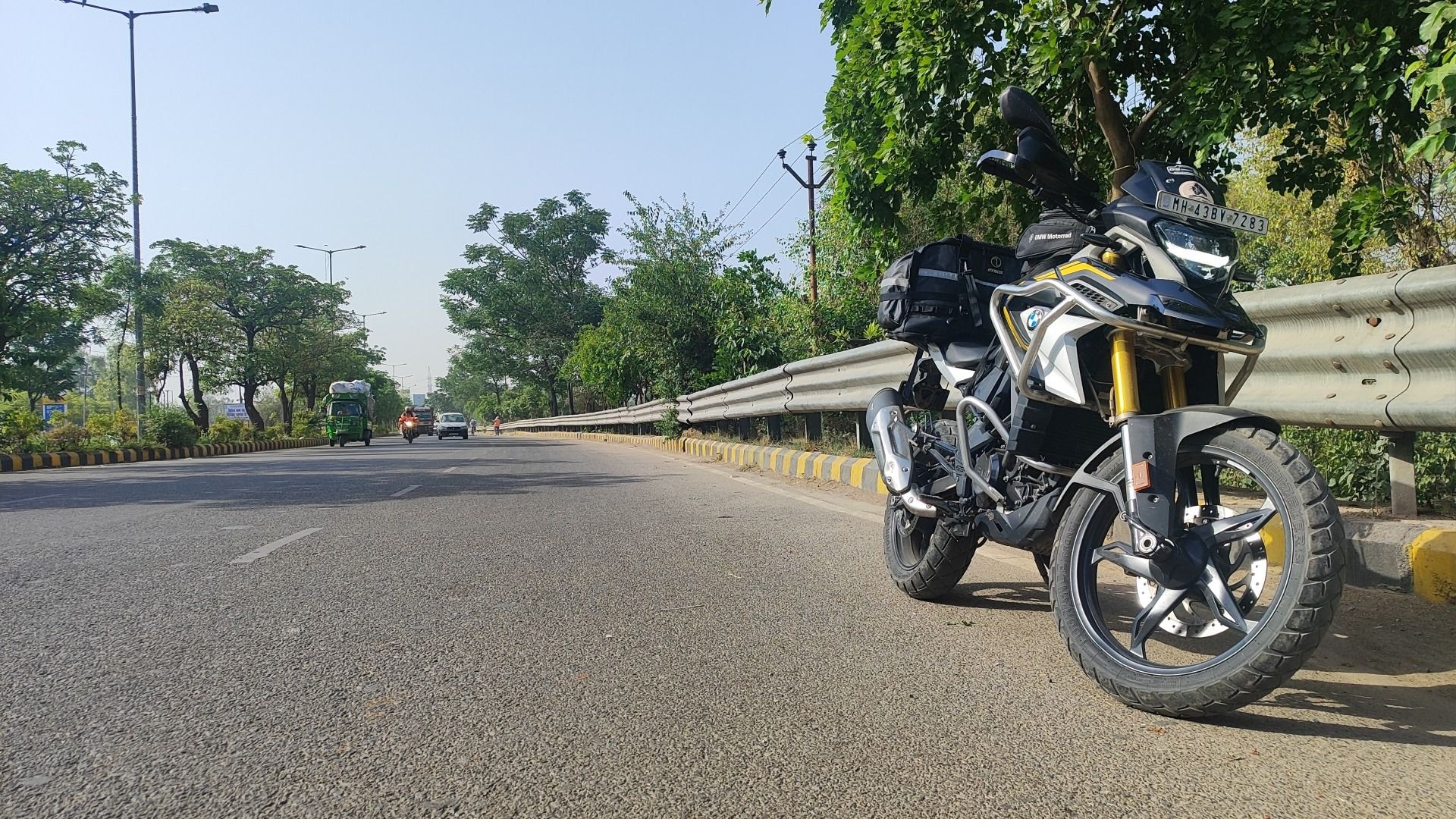
- A motorcycle ride from Mumbai to Ghaziabad in May 2024
- The choice of motorcycle is a BMW G 310 GS
- • Here’s how he did it, in peak summer. Will you dare to?
By: Aashish Bhardwaj
With the Indian Premier League (IPL) cricket season just having gotten over recently, the summer heat this year seems to be hitting half century after half century every day, creating new temperature records across the country. Yes, this year’s been a particularly blistering summer, with unprecedented high temperatures across the country, with one weather station in Delhi even recording over 52 degrees centigrade, and all this in May! Incidentally, this is also the time when many motorcycle enthusiasts head north to the high Himalayas, in search of adventure and colder riding weather.
Also Read: Chasing Snowfall With The Mahindra Scorpio-N
The BMW G 310 GS proved to be an able companion in the cross-country trek in the searing heat of summer.
For me though, the ride in May wasn’t one heading for higher altitudes and cooler climate. I just wrapped up a solo motorcycle ride from Mumbai to Ghaziabad (Delhi-NCR), covering over 1,450 km on an entry-level adventure touring motorcycle - the BMW G 310 GS. Why do it? The idea was to figure out what it takes to survive the extreme heat on a cross-country motorcycle ride with temperatures exceeding 47 degrees centigrade. Read on to find out how to plan, prepare and ride in extreme heat without getting hit by severe heatstroke.
Also Read: A Road Trip To Namdapha National Park In Arunachal Pradesh
The overall health of the motorcycle, including decent tyre condition is important for solo riders embarking on such a trip.
Absolute Essentials
For me, the most critical part of any ride preparation is a thorough check of the condition of the motorcycle. Particularly for solo travelers, it is of utmost importance to ensure a fully fit and healthy motorcycle with absolutely no compromises. As you may guess, the most ignored part of vehicle health is usually the tyres. Tyre tread depth should be above the replacement marker and riding in extreme heat would require optimum tyre pressure, usually a PSI less than the prescribed tyre pressure by the OEM. I also got the chain cleaning and lubing done a day before the start of ride and got new brake pads installed for more confident stopping power. All things in order, I was all set for the ride.
The rider’s physical health is as important as the motorcycle’s health and special attention needs to be paid toward any chronic aches or health condition that has the potential to create problems on the road. For any persistent or chronic health issue, it’s advisable to consult a physician before one embarks on a physically demanding journey like this.
In terms of rider safety and comfort, it’s essential to get summer friendly protective gear including an armoured mesh jacket & riding pants, aerated gloves and summer riding boots. Investing in high quality safety gear should be a priority before you set your eyes on the latest action camera available in the market. In addition to a balaclava, dark shades or a dark helmet visor, seat cushioning and a cooling vest can go a long way making the ride less straining.
Day 1 involved a riding distance of 640 km from Mumbai to Ujjain.
On Day 1, I rode from Mumbai to Ujjain, covering a distance of around 640 km. It took me 14 hours to reach Ujjain from Mumbai while being on the saddle for over 12 hours. Past experience taught me not to wear inner clothing having thick seams getting sandwiched between the body skin and the seat. Continuous abrasion can lead to rashes resulting in pain and discomfort, spoiling the remaining ride.
A roadtrip in summer shouldn’t be imagined without a compulsory hydration pack. It’s a life saver when temperatures go soaring beyond 45 degrees centigrade. The ability to quench thirst without getting off the bike helps save time and eliminates excuses for not drinking water every hour or so. On a personal note, it helps me stick to my decade-old pledge of not buying plastic bottled water.
A tailbag-tank bag combination offers enough luggage space for a solo rider.
What Should You Pack
There’s one mantra I follow for a stress-free trip; and that is to travel light. A tailbag-tankbag combination is what I usually have depending upon for my packing requirements. For riding with a pillion or longer travels, saddle bags would surely be a good addition. It’s also a good idea to carry some extra luggage mounting straps and bungee cords as back up in case of a rare emergency snap.
Extra luggage cords, and bungee nets should be carried for emergencies.
Hot temperature results in device heating and faster battery draining, hence its always advisable to always start with all devices fully charged and carrying a spare battery bank. At one occasion while passing through Madhya Pradesh, my phone shut off due to overheating. It’s a good idea to always keep all electronics with proper heat insulation to avoid damage. E.g. I realised that a leather sleeve for a laptop works well on days when the heat is extreme.
Carrying a spare key is a great idea. But always secure it, and possibly inside your luggage.
Considering variance in air pressure gauge at different fuel stations, it is also advisable to carry your own tyre pressure gauge and a modular air compressor as well, together with a puncture repair kit just in case a need arises. Carrying the spare ignition key for long journeys is important, but even more important is to pack it in travel luggage rather than hooking it on to the same key chain as your main key, just in case you are wondering. An extra pair of spectacles doesn’t occupy much space, but it’s a life saver again in case of accidentally damaging your glasses or losing your primary set of glasses. Riding with blurred vision can be catastrophic.
Oral Rehydrating Solution (ORS) sachets are necessary for anyone venturing out for long days in the saddle during summer. For riders, it’s also advisable to pack in some simple over-the-counter medicines that are known to be safe and effective for simple ailments encountered occasionally.
Diet Is The Key
On Day 1 itself, I realised the intensity of heat wave when temperatures soared above 40 degrees centigrade even before 10 am in the morning, much to my surprise. It was a tough day ahead lined with exhaustion, fatigue and likely frequent dehydration caused by constant warm air penetrating through the riding gear. Heavy perspiration under such conditions results in loss of body fluids and essential salts. And thus, my daily diet during riding days are always marked with plenty of fluids – an ORS mix in the hydration bag is the most important intake for me. Drinks that provide instant energy like lemonade, coconut water and sweet lime juice are great choices for beating the heat. Butter milk, lassi and plain drinking water are some other options. I also strictly stay away from sugary carbonated drinks on rides.
A fruit knife and plastic cutlery kit is a great addition to help have a quick snack on the road.
In terms of food, seasonal fruits like musk melon, water melon, cucumber, banana, papaya are safe bets. You can always find a fruit knife and plastic cutlery kit in my tank bag on such rides. My day meals comprise of simple freshly cooked non-spicy food. Riders should avoid overeating at all cost (eat when hungry) and avoid fried snacks, spicy food and non-vegetarian dishes as it takes a longer time to digest and may sometimes lead to indigestion.
Wear a good quality helmet, possibly with a dark visor to help against the extreme glare of the summer sun!
Essential Tips
It’s extremely important to have at least 7-8 hours of a good night’s sleep before the start of your journey every day. I finish packing the previous night as it helps me get on the saddle early and therefore cover more distance before the sun becomes unbearable. In extreme weather like the Indian summer, it’s advisable to plan your trip in a manner that the targeted everyday distance covered reduces with every passing day, meaning maximum distance on day one and least distance covered on the last day of the ride. If days are not rationed, then you may also divide it into equal short bursts of travel only during morning or evening hours.
Try and get a good night's sleep and have an early start to cover some distance before the mid-day heat sets in.
Starting early means you’ll face less traffic and favourable weather will let you easily cover at least 200-250km by 10 am which is when the temperature starts rising quickly. Thereafter, a planned long halt around 12pm will not only prevent you from harsh sun but also allow you time to check emails, attend to calls and most importantly, give you time for route planning and search for possible stay options for the night halt.
An important point here is to choose a place that offers you visibility of your bike while you enjoy your afternoon meal. Loading and unloading your luggage at every halt isn’t a feasible option as you would agree.
Over the last two and a half days of riding, I spent one afternoon lazing around on a traditional jute cot at a Punjabi dhaba some place after Dhule. Though it was very hot, a power nap and a couple of glasses of butter milk made me feel refreshed for the next leg of the ride. On the afternoon of the second day’s ride, I took a long four-hour halt at an air-conditioned restaurant of a luxury resort near Guna on the way to Gwalior.
Frequent halts every couple of hours is a great stress-buster and also helps the ride fight fatigue, as well as rehydrate and get some nutrition in.
Another important tip is frequent short halts after every few hours of continuous riding. It will ensure you don’t exhaust yourself out and are able to cover a longer distance. Halts should be used essentially to relax your body by simple stretching exercises, and hydrating it with essential nutrients that can help you ward off the heat while riding. The motorcycle also gets respite from the constant grind, and if anything is looking off, it can get noticed and addressed well in time.
Some folks advise night riding during summers to avoid sweltering heat during the day. I personally advise against it unless and until there’s 100 per cent surety of well laid tarmac and proper road illumination all throughout the planned route. Last but not the least, don’t forget to stay connected with your family and keep them updated on your movement on a regular basis. Make it a point to update them about every halt and your health particularly important for solo riders. Lastly, take it easy, and don’t be in a hurry to set new personal records of how much distance you can cover in a day. Take your time, halt and if needed, take an overnight break to rest and recuperate if you feel exhaustion setting in.
Latest Cars


Upcoming Cars


Latest News


 Sarthak Mahajan | Aug 11, 2026PM E-Drive EV Subsidy Extended To March 2028; Incentive For E2Ws Cut To Rs 5,000Even with the extension, incentives for electric two-wheelers have been reduced to Rs 5,000 per vehicle.1 min read
 Jafar Rizvi | Aug 11, 2026Hero Splendor Off-Road Crossover Design Patented In IndiaTwo new design patents filed by the brand show motorcycles based on the commuter, with one appearing to draw heavily from the old Passion Pro TR's off-road-inspired styling.1 min read
 Sarthak Mahajan | Aug 11, 2026General Motors Pulls The Plug On Chevrolet In ChinaGeneral Motors’ Chevrolet brand exits the Chinese market after 21 years of operations.1 min read
 car&bike Team | Aug 11, 2026Ethanol Blended Diesel Does Not Meet Existing Diesel Flash Point Safety StandardsMinister of State for Petroleum and Natural Gas Suresh Gopi told Parliament that the blending of ethanol in diesel reduced the fuel’s flash point to below that of standard diesel.1 min read
 Sarthak Mahajan | Aug 11, 2026New Mahindra BE 6 Sporteq Variant Teased Ahead Of Aug 15 DebutMahindra Electric Origin SUV family will grow soon with the arrival of a new variant of the BE 6, named the BE 6 Sporteq.2 mins read
 Sarthak Mahajan | Aug 10, 2026Top 5 Major Feature Updates On The New Mahindra Scorpio-NMahindra recently launched the updated Scorpio-N. Here are the top five features to look out for.1 min read
 Seshan Vijayraghvan | Aug 11, 20262026 Nissan Tekton 700 km Review: Can It Conquer The Himalayas?We drove the newly launched Nissan Tekton from Chandigarh all the way up to Leh, covering over 700 km with the new SUV. From exploring the Tekton’s capabilities in the Himalayas to setting an India Book Record, here’s how the trip unfolded.1 min read
 Preetam Bora | Aug 11, 20262026 Aprilia Tuono 457 Special Edition First Ride Review: Should You Buy It?The 2026 Aprilia Tuono 457 delivers an engaging, everyday riding experience with strong performance. At its price point, the Tuono 457 is a brilliant motorcycle, but not quite the complete package. Why is that, and should you still buy it? Read on.8 mins read
 Bilal Firfiray | Aug 1, 2026Toyota Hilux Review: The InvincibleMarking it as the ninth generation, the Hilux comes with a major cosmetic overhaul. But is it still relevant enough for the current times or is it getting too long in the tooth?5 mins read
 Bilal Firfiray | Jul 30, 2026Kia Syros EV Review: Best EV To Buy Under Rs 20 Lakh?The Kia Syros EV comes into the game with a modern design, spacious cabin, strong performance, decent range and an aggressive pricing. But could it become the new benchmark under Rs 20 lakh?5 mins read
 Jaiveer Mehra | Jul 27, 20262026 Maruti Suzuki Brezza Facelift Review: Bestseller Joins The Turbo ClubWhile Maruti’s facelifts have always tended to bring subtle updates over the outgoing models, the latest Brezza brings some heavy updates under the skin, including a new 6-speed manual gearbox and, for the first time, a turbocharged petrol engine option.1 min read