
European Union To Toughen Emissions Test For Hybrid Cars - Report

The European Union plans to toughen its method for measuring carbon dioxide emissions from plug-in hybrid cars, two sources familiar with the matter said, after criticism that current tests, yield results up to four times below real-world emissions. The new methodology could mean some carmakers, who in 2021 sold almost as many plug-in hybrids in Europe as they did battery-electric vehicles (BEVs), would need to sell more BEVs to meet EU emissions targets and avoid sizeable fines. The revised test is likely to be enforced from around 2025, the sources said.
Data from fuel consumption meters - which under EU law must be built into new cars from 2021 - will be incorporated into the test, they said. This will show a more realistic picture of how much hybrid cars still rely on their internal combustion engine over the electric battery.
"The utility factor will be changed," Petr Dolejsi, sustainable transport director of the European Automobile Manufacturers Association (ACEA) told Reuters, referring to the average estimate of how far a hybrid drives in electric mode.

Data from fuel consumption meters - which under EU law must be built into new cars from 2021 - will be incorporated into the test.
"We are starting to collect the data from the vehicles...it is an ongoing process."
A European Commission official said an amendment to its Euro 6 pollutant emission implementing rules revising the testing approach - called the Worldwide Light Vehicles Testing Procedure (WLTP) - to determine utility factors based on real-life data from fuel consumption meters was under discussion, but they were not able to give further details.
The amendment would next be discussed by the Motor Vehicle Working Group, consisting of stakeholders from industry, the government, and consumer associations, on Feb. 9, the official said, with a decision expected this year.
Changing the test to better reflect real-world emissions backs the growing consensus among environmental groups and regulators that plug-in hybrids are not as green as once thought and should not be treated equally to battery-electric vehicles when designing policy to encourage electrification.
REALITY VERSUS THEORY
Carmakers, still recovering their image after the 2015 Dieselgate scandal in which some used illegal software to cheat emissions tests, often release the results of their emissions tests at the start of the year. The official figures are not published by the European Commission until later.
Volkswagen, Mercedes-Benz, BMW, and Renault have said that they met their 2021 targets, bolstered by record electric vehicle sales.
Under the WLTP test implemented last year, carmakers pay inspectors to oversee them run a standardised test for all their vehicle types - from internal combustion engine to hybrid to battery-electric. This is done in their labs to come up with a figure for average carbon dioxide emissions per kilometre.

The ICCT studies used actual emissions data from over 100,000 plug-in hybrids from sources like company car databases or consumer fuel-tracking websites.
Targets for 2021 were around 95g CO2/km, varying slightly as each carmaker's target is adjusted depending on the average weight of their vehicles.
The WLTP testing process was designed based on actual data about how and where people tend to drive, from the distance and speed to road type - a significant improvement to the previous test which was based exclusively on theoretical models.
But studies by environmental think-tanks such as the International Council for Clean Transportation (ICCT) show that even the WLTP test is far from reality, particularly for hybrid cars, which rely on the combustion engine about twice as much as test results show.
The ICCT studies used actual emissions data from over 100,000 plug-in hybrids from sources like company car databases or consumer fuel-tracking websites.
Reasons for the ICCT outcome include the fact that plug-in hybrids are charged less often and have a shorter all-electric range than the test assumes. The real-world deviation is even higher for company cars, likely because drivers have less of an incentive to charge the vehicle - a cheaper option than refueling - if they are not themselves paying the price.
While the EU had voted to make it mandatory for carmakers to build fuel consumption meters into their cars from 2021, it was not yet clear whether this data would be incorporated into the emissions tests.
"Emissions have still been falling every year, and that's a real success," Peter Mock, Europe managing director of the ICCT, said. "But the big problem is the hybrids - that's what's deceptive."
Related News
Latest Cars


Upcoming Cars


Latest News


 Jafar Rizvi | Jul 24, 20262026 Maruti Brezza Facelift: Variants, Features, Engine Options ExplainedThe 2026 Maruti Suzuki Brezza is offered in four trim levels: LXi, VXi, ZXi and ZXi+ and with two engine options.5 mins read
 Jafar Rizvi | Jul 24, 20262026 Maruti Brezza Facelift Launches With Three Major FirstsThe 2026 Maruti Suzuki Brezza has arrived, and along with carrying a five-star Bharat NCAP rating, the model brings three firsts for both the Brezza and, in one case, Maruti itself.2 mins read
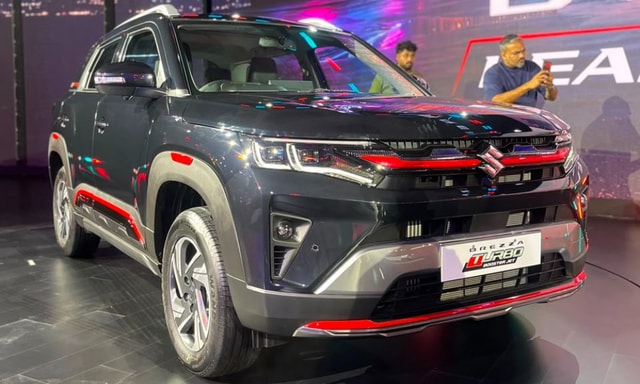 Jaiveer Mehra | Jul 24, 20262026 Maruti Suzuki Brezza Facelift Launched; Price Starts At Rs 7.40 LakhUpdated Brezza arrives with a new turbo-petrol engine option and a new 6-speed manual gearbox aside from new features.2 mins read
 car&bike Team | Jul 24, 20262026 Maruti Brezza Facelift Launch Highlights: Price, Specifications, Details, ImagesMaruti will launch the 2026 Brezza today. Stay tuned to this space to get all the details firsthand.0 mins read
 Jafar Rizvi | Jul 24, 2026Honda XR 300L, XR 300 Rally Unveiled In IndiaBoth motorcycles are made in India and will launch before the end of FY20272 mins read
 Janak Sorap | Jul 24, 2026Honda Unveils QC3 Electric Scooter; Claims 145 km IDC RangeHonda has expanded its electric scooter portfolio in India with the launch-ready QC3, positioned above the QC1 and Activa-e.1 min read
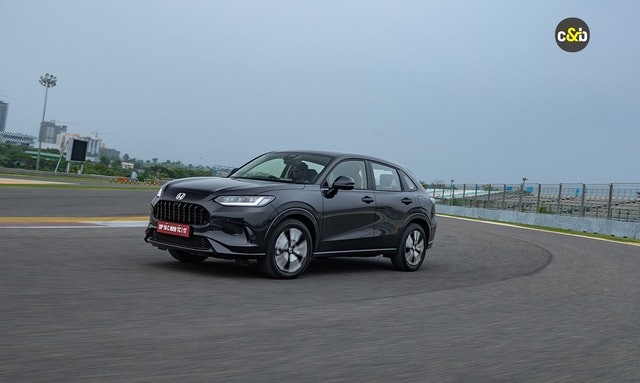 Bilal Firfiray | Jul 24, 2026Honda ZR-V Review: Who Is It For?Honda has brought the new ZR-V to India as their current flagship offering. It’s a CBU, it’s a hybrid, and it’s here for a limited few. Who is it for though?1 min read
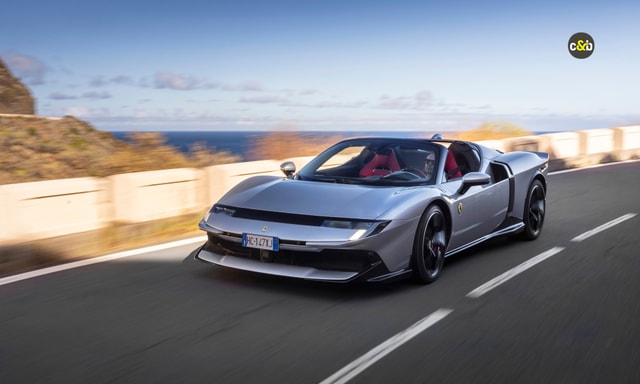 Shams Raza Naqvi | Jul 15, 2026Ferrari 849 Testarossa Spider Driven: Rs. 11.25 Crore Meets 1,000 bhpWe got behind the wheel of the most powerful convertible from Ferrari. What makes the 849 Testarossa Spider Special? We tell you.1 min read
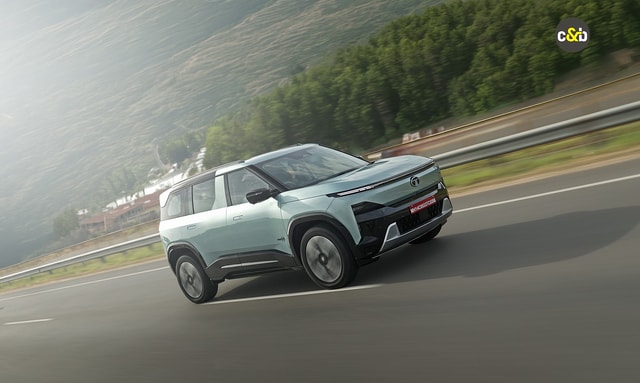 Bilal Firfiray | Jul 12, 2026Tata Sierra EV Review: Reborn In The Electric AgeThe Tata Sierra EV isn’t drastically different from its ICE counterpart when it comes to design. But being the seventh electric offering from the Indian brand, it has gotten a few things right, and very few things wrong. But is it a compelling package to buy?5 mins read
 Jafar Rizvi | Jul 13, 2026TVS Orbiter Long-Term Review (Report 1): Settling In Takes TimeFirst impressions weren't the strongest, but the Orbiter has made a mark in its first month in the car&bike garage.5 mins read
 Seshan Vijayraghvan | Jul 7, 2026Tata Altroz Petrol DCA Long-Term Review: Intercity & Highway Driving ReportWe tested the Tata Altroz Petro DCA’s highway manners, intercity performance, and real-world fuel efficiency.1 min read