
No GST On Petrol, Diesel In Near Future As Centre, States Not In Favour


Petrol and diesel will not come under the purview of Goods and Services Tax (GST) in the immediate future as neither the Central government nor any of the states is in favour on fears of heavy revenue loss, a top source said today. When the one-nation-one-tax regime of GST was implemented in July last year, five petro-products - petrol, diesel, crude oil, natural gas, and aviation turbine fuel (ATF) were kept out of its purview for the time being.
Though there have been talks in the industry and by some ministers, including by Oil Minister Dharmendra Pradhan and Road Transport Minister Nitin Gadkari, for the need to bring them under GST at the earliest to deal with volatility in prices, there is no immediate plans on the anvil to do so, the source, who wished not to be named, said.
The Union finance ministry, he said, has not mooted any proposal to bring petrol and diesel or even natural gas under GST but took up the issue at the last GST Council meeting on August 4 based on media reports.
"All states were opposed to the idea," he said.
If the two fuels are put under GST, the Centre will have to let go Rs 20,000 crore input tax credit it currently pockets by keeping petrol, diesel, natural gas, jet fuel and crude oil out of the GST regime. States, on the other hand, want to keep a revenue tool in their hand to meet any contingency like the floods in Kerala, he said.
The Centre currently levies a total of Rs 19.48 per litre of excise duty on petrol and Rs 15.33 per litre on diesel. On top of this, states levy Value Added Tax (VAT) - the lowest being in Andaman and Nicobar Islands where a 6 per cent sales tax is charged on both the fuel.
Mumbai has the highest VAT of 39.12 per cent on petrol, while Telangana levies highest VAT of 26 per cent on diesel. Delhi charges a VAT of 27 per cent on petrol and 17.24 per cent on diesel.
The total tax incidence on petrol comes to 45-50 per cent and on diesel, it is 35-40 per cent.
Under GST, the total incidence of taxation on a particular good or a service has been kept at the same level as the sum total of central and state levies existing pre-July 1, 2017. This was done by fitting them into one of the four GST tax slabs of 5, 12, 18 and 28 per cent.
For petrol and diesel, the total incidence of present taxation is already beyond the peak rate and if the tax rate was to be kept at just 28 per cent it will result in a big loss of revenue to both centre and states.
The source said there was no case for GST on CNG in near future as its sale is restricted in a few cities.
GST has been spoken of as a panacea for high fuel prices but there seems to be no consensus on bringing petro-products under the new regime in immediate future, he said.
After hitting an all-time high of Rs 78.43 a litre for petrol and Rs 69.31 for diesel on May 29, rates have marginally fallen during the subsequent days on softening in international oil prices and rupee strengthening against the US dollar. Petrol costs Rs 77.49 a litre and diesel Rs 69.04 in Delhi.
More importantly, GST being an ad valorem levy -- charged as a percentage on ex-factory price --- would have a cascading impact on retail prices whenever refinery gate prices are increased because of a rise benchmark international oil prices. The inverse would also be true.
The source justified high excise duty on the fuel saying the earning from the same is used to pay for unpaid oil subsidy bill left by the previous UPA government as well as fund developmental needs. The Central government had raised excise duty on petrol by Rs 11.77 a litre and that on diesel by 13.47 a litre in nine installments between November 2014 and January 2016 to shore up finances as global oil prices fell, but then cut the tax just once in October last year by Rs 2 a litre.
This led to its excise collections from petro goods more than doubling in last four years - from Rs 99,184 crore in 2014-15 to Rs 2,29,019 crore in 2017-18. States saw their VAT revenue from petro goods rise from Rs 1,37,157 crore in 2014-15 to Rs 1,84,091 crore in 2017-18. GST subsumed more than a dozen central and state levies like excise duty, service tax and VAT when it was implemented on July 1, 2017.
However, its implementation on five petro products - petrol, diesel, natural gas, crude oil and ATF was deferred. This resulted in the industry losing on revenue as they were not able to offset GST tax they paid on input from those paid on the sale of products like petrol, diesel and ATF.
(This story has not been edited by NDTV staff and is auto-generated from a syndicated feed.)
Latest Cars


Upcoming Cars


Latest News


 car&bike Team | Jul 25, 2026Jeep Meridian 85th Anniversary Edition Launched At Rs 36.05 LakhLimited to 85 units, the special edition gets cosmetic changes and also features the CARA AI voice assistant.1 min read
 car&bike Team | Jul 25, 2026River Indie Electric Scooter Crosses 50,000 Units Production MilestoneThe milestone comes less than three years after the first unit rolled out of the company's Hoskote manufacturing facility.2 mins read
 car&bike Team | Jul 25, 20262026 Maruti Brezza Facelift Fuel Efficiency Figures RevealedThe updated model returns up to 26.90 km/kg in CNG guise, while the newly introduced turbo-petrol delivers a claimed 20.47 kmpl.2 mins read
 Jafar Rizvi | Jul 25, 2026Honda ZR-V Hybrid SUV Launched In India At Rs 47.99 LakhThe ZR-V is Honda’s first hybrid SUV for India and arrives as a CBU.1 min read
 Jafar Rizvi | Jul 24, 20262026 Maruti Brezza Facelift: Variants, Features, Engine Options ExplainedThe 2026 Maruti Suzuki Brezza is offered in four trim levels: LXi, VXi, ZXi and ZXi+ and with two engine options.5 mins read
 Jafar Rizvi | Jul 24, 20262026 Maruti Brezza Facelift Launches With Three Major FirstsThe 2026 Maruti Suzuki Brezza has arrived, and along with carrying a five-star Bharat NCAP rating, the model brings three firsts for both the Brezza and, in one case, Maruti itself.2 mins read
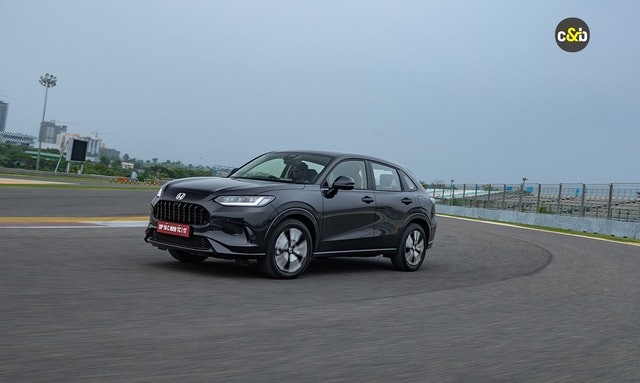 Bilal Firfiray | Jul 24, 2026Honda ZR-V Review: Who Is It For?Honda has brought the new ZR-V to India as their current flagship offering. It’s a CBU, it’s a hybrid, and it’s here for a limited few. Who is it for though?1 min read
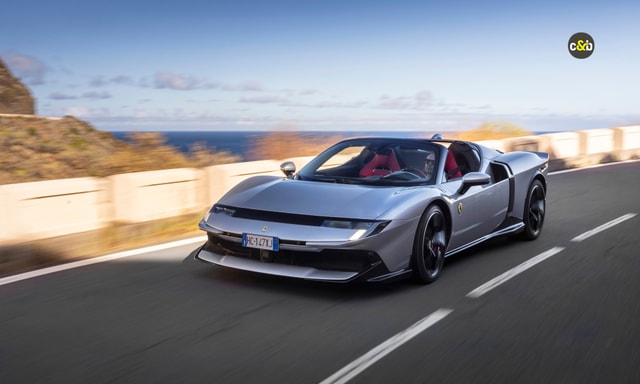 Shams Raza Naqvi | Jul 15, 2026Ferrari 849 Testarossa Spider Driven: Rs. 11.25 Crore Meets 1,000 bhpWe got behind the wheel of the most powerful convertible from Ferrari. What makes the 849 Testarossa Spider Special? We tell you.1 min read
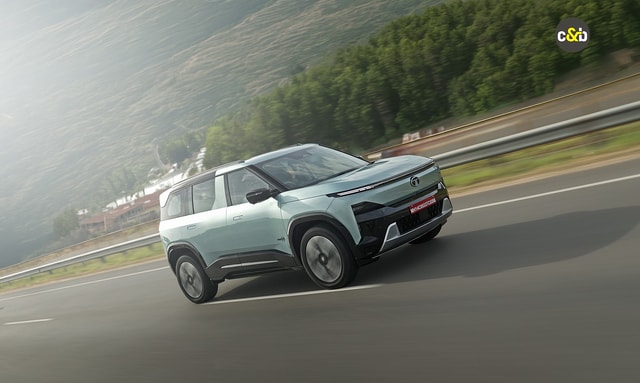 Bilal Firfiray | Jul 12, 2026Tata Sierra EV Review: Reborn In The Electric AgeThe Tata Sierra EV isn’t drastically different from its ICE counterpart when it comes to design. But being the seventh electric offering from the Indian brand, it has gotten a few things right, and very few things wrong. But is it a compelling package to buy?5 mins read
 Jafar Rizvi | Jul 13, 2026TVS Orbiter Long-Term Review (Report 1): Settling In Takes TimeFirst impressions weren't the strongest, but the Orbiter has made a mark in its first month in the car&bike garage.5 mins read
 Seshan Vijayraghvan | Jul 7, 2026Tata Altroz Petrol DCA Long-Term Review: Intercity & Highway Driving ReportWe tested the Tata Altroz Petro DCA’s highway manners, intercity performance, and real-world fuel efficiency.1 min read