
Volkswagen Virtus vs Skoda Slavia vs Honda City e: HEV Comparison Review: Compact Sedan Shootout


The compact sedan space has time and again held its own despite the shifting preference for SUVs. The Honda City is hands down the undisputed king here, but the re-entry of the Europeans rekindles the battle for supremacy. Both the Skoda Slavia and Volkswagen Virtus add a breath of fresh air to this highly challenging segment that has been dominated by the most rounded mid-size sedan for over two decades. All three-look stylish, are practical, and come loaded to the brim with the latest features, but the million-dollar question is whether it makes sense to buy a sedan when SUVs are the trending flavour?
Design
All three cars look spectacular in the latest versions. The Virtus has the whole Jetta vibe going on for it, and we are glad that the car preserves the VW charm gracefully. The Slavia pays homage to the Octavia with crystalline elements along with the butterfly grille at the front.
All three have a distinctive face that sets them apart.
The sloping roofline, curves along the boot lid, and the C-shaped LED tail lamps all sync together distinctively. And what can we say about the City, it has the most quintessential three-box design. In its hybrid version, the car doesn’t get too many visual changes over the standard version, but the RS-inspired elements add a whole new character to the car. City also benefits from LED set-up for both its headlamps & fog lamps while the other two profit from a projector set-up.
The sloping roofline curved along the boot lid is a characteristic styling of a three-box design.
However, all three cars sit on 16-inch wheels with a unique design for the alloys. Looks are subjective, and with all due respect, no matter how much we harp about which one is the better-looking car, it ultimately boils down to your taste and preference.
All three cars sit on 16-inch wheels with a unique design for the alloys.
Dimension
There’s not much to separate these cars in the way they all look, but it’s clearer on paper. Let us explain. The Virtus is the longest in the segment, scaling 12 mm and 20 mm more than the City and Slavia respectively. In terms of width and height, the Slavia is at par with the Virtus, as both get an edge over the City. The City even loses out on wheelbase, by a healthy 51 mm, but we will get to the practical part of these numbers soon. What binds them though is the fact that all three cars look much more premium, almost as luxurious as the cars from a segment above.
All three look much more premium, almost as luxurious as the cars from a segment above.
Tech & Interior
Inside, it’s the intricate details that separate the three. The Virtus has the most attractive cabin in the segment. The gloss black dash and the contrasting colours for the seats are tastefully done. The air vents look plain but have a precise throw. The Slavia’s cabin has much more flair than its sibling. The dashboard looks identical to the Virtus’ with the gloss black theme but feels plush. The bronze band across the cabin is a pleasant touch and so are the circular air vents.
All three feature a premium cabin with upmarket materials, and a dual-tone treatment on the dashboard.
Both cars get a ventilation feature for front seats, but VW gets a special mention for placing both switches on the driver’s side of the gearbox. Even the door lock switch is within reach on the Virtus. Our Slavia and Virtus test units get the larger 10.1-inch touchscreen, but with the global crunch in components, Skoda has swapped this unit for a much smaller 8-inch screen, which is disheartening because the initial buyers got the larger unit. The digital instrument cluster is identical with ample information presented in different themes.
The Honda City e: HEV (L) has the most comfortable seats followed by the Volkswagen Virtus and Skoda Slavia.
Moving to the cabin of the City e: HEV. To begin with, there’s not much to point out here because it carries the same layout as the standard version. The black & beige theme is soothing, while the plastics are of slightly superior quality compared to the Europeans. The cabin is even simpler than the other two and in fact, works in its favour. Soft touch materials are abundant in the City, while the Slavia and Virtus miss out on it altogether.
The instrument cluster on all three features a plethora of information.
The 8-inch unit is basic in comparison. We would’ve loved a digital instrument cluster in the City but have to do with an analog speedometer. The information displayed though is bright and clear, and the layout is slightly tweaked to accommodate data from the hybrid powertrain.
All three cars come with a sunroof as a standard fitment.
Practicality
It is time to put the aspect about dimensions we spoke about earlier to test. Although the Europeans are superior in almost every area, the City benefits from marginally better legroom and knee room for the front passengers. It even offers a wider squab for comfortable seating.
The rear seat space on the Honda City (bottom right) is much superior compared to the other two.
While headroom & shoulder room is identical for all cars, the City has cosier seats with its bench set-up for the rear passengers and can easily fit three adults. The other two can best accommodate two adults and a child in the middle seat. In terms of comfort though, all three get well-cushioned seats, ideal for long-distance journeys. Ingress/egress is quite smooth in all three cars, although the City benefits from higher positioned seats.
The Honda City e: HEV (bottom right) has the smallest boot in the segment courtesy battery pack located at the rear axle.
The Virtus and the Slavia get an advantage over the City with a superior boot space of 521-litre compared to the 306-litre in the latter. Remember the bench seat set-up in the City we spoke about a few moments back, well that haunts the car as both the Europeans can expand its storage space to 1,050-litre with a 60:40 split while the City can’t.
Engine & Gearbox
If you crave performance, then both Slavia and Virtus come with two turbocharged petrol engine options. If fuel efficiency is what you desire, then nothing comes close to the Honda City. The introduction of the e: HEV version only adds to the dominance and builds on the cult status of the City. And while most compare on displacement, we chose to pit the best-selling versions of the Slavia and the Virtus with the most fuel-efficient version of the City. And so, our test vehicles are Skoda Slavia 1.0 TSI and Virtus 1.0 TSI up against Honda City e: HEV.
Both the Europeans chosen for this comparison are the smaller yet powerful turbocharged petrol engines, while the City is the latest e: HEV hybrid version.
All three feature automatic transmissions in this compact sedan shootout.
Ride & Handling
There’s very little to separate the three when it comes to the ride quality. The Virtus, Slavia, and the City offer an extremely comfortable ride absorbing potholes effortlessly. The suspension is tuned on the firmer side in all three cars, but the City is a bit harsher than the two. It softens up on highways though.
The VW Virtus has the most pliant ride and sticks to the ground comfortably while on tight corners.
Both Slavia and Virtus offer a much-relaxed ride, but the Virtus has better damping so NVH levels are a tad bit better than the Slavia.
Both the cars are confident around corners as well. The slick gearbox has precise shifts, almost like a mind-reader. The City has a much more relaxed drive with a fair bit of performance. It’s no slouch mind you, but don’t expect the urgency from the standard i-VTEC as the hybrid motor takes time to gain momentum for quick overtakes.
The Honda City e: HEV is tuned for comfort so cornering is not the best.
Fuel Efficiency
The City e: HEV makes up with high returns on fuel. During my time with all three cars, the Slavia and Virtus returned a real-time average between 11-12 kmpl, while the Honda City e: HEV returned a healthy 19 kmpl. As impressive as it sounds, the Honda City e: HEV has long-term benefits if visiting a fuel station is not your ideal way of passing time.
Safety Features
There’s little to doubt who has an advantage here. The Honda City e: HEV is the only car in the segment to offer a full set of ADAS functionalities. There are flaws here of course but not in the ability of the City. It needs clear markings on the roads for the Lane Keep Assist to work but the rest are like clockwork. Having that extra layer of safety surely helps. Brakes are even slightly better on the City, but the Slavia and Virtus are right up there. 6-airbags are standard across all three, along with the usual set of passive safety features.
The VW Virtus has better damping so NVH levels are a tad bit better than the Slavia and the City e: HEV.
Prices & Variants
In terms of price, all three cars fall in the same range. The top-spec versions of the Virtus and the Slavia are the most value for money while even the base version of the City is adequately specced. But the hybrid version of the City is far superior in the long run because of its low cost of ownership and of course less frequent visits to the fuel pump. However, once the car goes on the road, the price shoots above the Rs. 20 lakh mark which forces you to think twice before purchasing it. But if you eventually do, then the Honda City e: HEV is by far the most cost-effective in the segment.
We got the lowest fuel efficiency figure from Skoda Salvia.
Verdict
To conclude, the Skoda Slavia and the Volkswagen Virtus are possibly the best cars in the compact sedan segment. Nothing even comes closer. The 1.0-litre TSI units are a hoot, it’s fun and engaging and the plush interior is equipped with the best of features. Want a car with driving chops? Then either of these two makes for a good addition to your garage.
Although, the Honda City e: HEV is the most expensive proposition here, the less than frequent trips to the fuel station will help justify the higher price tag in the long run.
Yet, for the cost-conscious buyer, there is the Honda City e: HEV. With the benefits of a hybrid powertrain, smart cabin, and performance that is at par with the Europeans, the Honda City e: HEV is a complete package.
Related News


Latest Cars


Upcoming Cars


Latest News


 car&bike Team | Jul 11, 2026Nissan Tekton Tekna+ vs Kia Seltos GTX (O): Top Spec Variants ComparedThe Nissan Tekton has entered one of India's most competitive SUV segments, taking on the Kia Seltos head-on. Here's how the two range-topping variants compare across dimensions, features, safety, powertrains and pricing.4 mins read
 car&bike Team | Jul 11, 2026Kia Syros EV Spied Undisguised Ahead Of India LaunchFresh spy images have revealed the Kia Syros EV without any camouflage, offering the clearest look yet at its production-ready design.2 mins read
 car&bike Team | Jul 11, 2026Hero Vida VX2 Plus With 4.4 kWh Battery Launched At Rs 1.44 LakhHero MotoCorp has expanded the Vida VX2 lineup with a new 4.4 kWh battery option.2 mins read
 car&bike Team | Jul 11, 2026Tata Sierra Sales Cross 50,000 Mark: New Jubilee Edition IntroducedThe new edition essentially adds a series of accessories for the trim levels.2 mins read
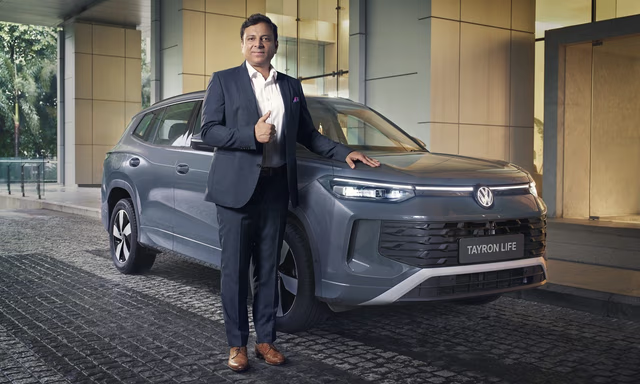 Seshan Vijayraghvan | Jul 10, 2026Volkswagen Tayron Life 5-Seater SUV Launched At Rs. 41.99 LakhThe Tayron Life trim will share most of its features and attributes with the three-row Tayron R-Line, but in a more lucrative package.1 min read
 car&bike Team | Jul 10, 2026Mercedes-AMG E53 PHEV India Launch On July 23The AMG E53 is solely offered as a plug-in hybrid, combining a 3.0-litre inline six engine with an electric motor.2 mins read
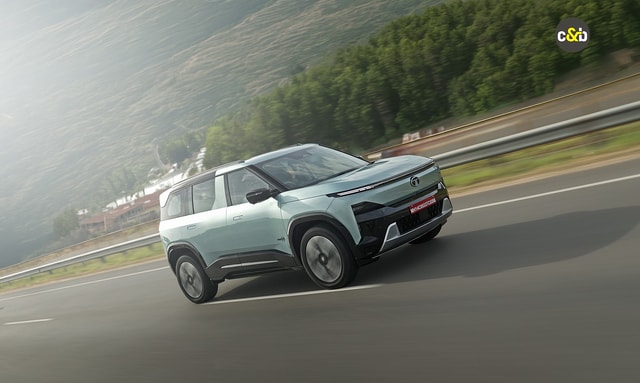 Bilal Firfiray | Jul 12, 2026Tata Sierra EV Review: Reborn In The Electric AgeThe Tata Sierra EV isn’t drastically different from its ICE counterpart when it comes to design. But being the seventh electric offering from the Indian brand, it has gotten a few things right, and very few things wrong. But is it a compelling package to buy?5 mins read
 Seshan Vijayraghvan | Jul 7, 2026Tata Altroz Petrol DCA Long-Term Review: Intercity & Highway Driving ReportWe tested the Tata Altroz Petro DCA’s highway manners, intercity performance, and real-world fuel efficiency.1 min read
 Seshan Vijayraghvan | Jun 29, 2026Renault Kiger vs Toyota Urban Cruiser Taisor: Which Underdog Deserves Your Money?Both the Kiger and the Taisor promise strong performance, solid features, comfortable cabins and everyday usability, all without breaking the bank. But which of these underrated subcompact SUVs deserves your money? Let's find out.1 min read
 Seshan Vijayraghvan | Jun 29, 2026Skoda Kodiaq RS Review: The Best Kodiaq Yet?The Skoda Kodiaq RS is finally here, and it's every bit as exciting as I expected. But was it worth the wait?7 mins read
 Bilal Firfiray | Jun 28, 2026BMW X6 M60i Review: It’s Back And HOW!The BMW X6 M60i blends a 530bhp twin-turbo V8, with its unmistakable coupe-SUV styling. There’s plenty of character, but is it worth your money?6 mins read