
McLaren Introduces Its Latest Track Weapon – The 750S
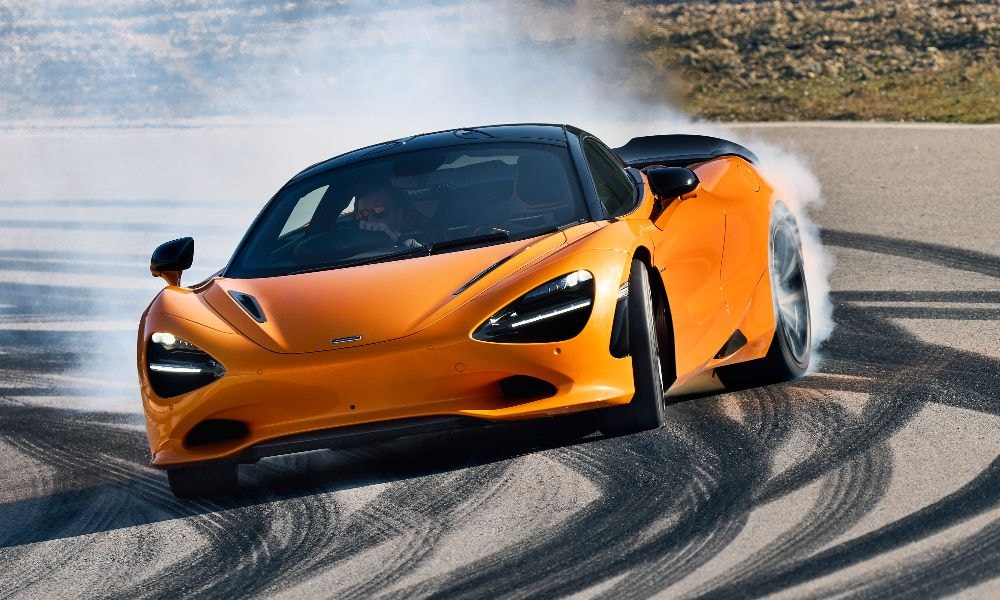
- The 750S is showcased in a coupe and spider body style
- Retains the same 4.0-litre twin-turbocharged V8 that was found in the 720S
- The 750S weighs in at just 1277 kilograms (for the coupe)
No, we aren’t trying to deceive you by posting the images of the 720S. What you are seeing, in fact, is the brand-new McLaren 750S that the British supercar maker introduced earlier today. Now at first glance, you might miss all the updates on the supercar, but we haven’t got you covered. Let us dive into the details of what is new about the track weapon from the stables of McLaren.

The McLaren 750S Spider and the Coupe
Starting with that glorious 4.0-litre twin-turbocharged V8 motor, the engineers have tinkered with the engine, which now produces 740bhp and 800Nm of torque, 30bhp and 30Nm more than the predecessor. Power is still sent to the rear wheels via a 7-speed dual-clutch automatic transmission, but the final-drive ratios have been reduced to improve top-end performance. All this means that the 750S can go from 0 to 100 kmph in 2.8 seconds and do 0-200 kmph in 7.2 seconds (7.3 seconds for the Spider).

McLaren states that over 30 per cent of the 750S is entirely new
The British supercar maker states that around 30 per cent of the components on the 750S are entirely new or changed from the 720S, which include some massive weight-savings measures. The 750S coupe is claimed to weigh up to 29 kilograms less than its predecessor, with the significant weight reduction measures being the new standard carbon-fibre racing seats, which save nearly 17.5 kilograms. Additionally, customers can opt for even lighter carbon bucket seats, as found in the McLaren Senna. The inheritance from the Senna carries on the 750S, which includes a 15.4-inch carbon-ceramic rotors with monobloc (a.k.a. one-piece) front callipers intended to significantly resist fade and wear. Even without the upgrade, a new brake booster and vacuum pump are said to provide a more consistent braking feel.

The exhaust takes inspiration from the McLaren P1
Further weight reductions have taken place; 20.7 kilograms, to be exact, is what the engineers have extracted from the 750S. The forged wheels offered as standard save 13.7 kilograms, 1.8 kilograms are shaved by the new column-mounted digital instrument cluster, the windshield is 1.6 kilograms, and the revised suspension components reduce nearly 1.9 kilograms of the 750S. This makes the supercar McLaren’s lightest and most powerful series-production vehicle, with a segment-leading power-to-weight ratio of 587PS-per-tonne with a dry weight of just 1277kg (for the coupe). The Spider, on the other hand, is only 49 kilograms heavier than the coupe.

There are a few distinctive styling cues that the 750S has to differentiate itself from the 720S
Visually, it’s evident that the design of the 750S is heavily governed by aerodynamics. In front, the nose of the 2024 McLaren 750S shows off an extended splitter, and the eye-socket intakes are narrower than on the 720S. Both front and rear bumpers, as are the rear wheel arch vents and sill air intakes, are new. At the back, the carbon fibre active rear wing is larger and sits on a lengthened rear deck that channels air to the wing. With hydraulic actuation, the wing deploys within coupe-specific parameters in one of three main positions: Driver Downforce, DRS (for drag reduction in straight-line acceleration), and High-Speed Braking to improve stability and reduce stopping distance. A central exhaust outlet is prominently placed high up on the dramatic rear.
Related News


Latest Cars


Upcoming Cars


Latest News


 Bilal Firfiray | Oct 14, 2026BMW Concept 7 Protection Unveiled For Those Who Want To Be Discreetly ProtectedIts armoured, of course, but this study showcases how it can be inconspicuous at the same time.1 min read
 car&bike Team | Oct 13, 2026e-Sprinto G1 Electric Scooter Launched; Prices Start At Rs. 89,999e-Sprinto has so far been operating in the B2B electric scooter segment and has three manufacturing facilities with an annual production capacity of 1.5 lakh units.1 min read
 Jaiveer Mehra | Oct 13, 2026MG Hector Tomahawk EV Receives Over 10,000 Bookings Within Two MonthsJSW MG Motor India Sales Head says the Tomahawk EV and PHEV have both seen strong initial demand in the market.1 min read
 car&bike Team | Oct 13, 2026BMW M2 xDrive Turbo Edition India Launch Soon, Bookings OpenInspired by the 1973 BMW 2002 Turbo, the M2 xDrive Turbo Edition gets hand-painted Motorsport stripes.2 mins read
 Sarthak Mahajan | Oct 13, 2026Hyundai Bayon vs Hyundai Venue: Specifications ComparedThe Hyundai Bayon has been officially unveiled and aims to fill the gap between the Hyundai Venue and the Hyundai Creta.3 mins read
 car&bike Team | Oct 13, 2026Jeep Wrangler Whitecap Edition Priced At Rs 73.55 Lakh, Sold OutThe Wrangler Whitecap Edition wears a green-and-white shade, and all 25 units in India have been sold.1 min read