
McLaren Reveals The Artura Hybrid Supercar


After months of teasing the car, McLaren has finally revealed the Artura Hybrid supercar. It is McLaren's first series-production High-Performance Hybrid supercar and is underpinned by the company's philosophy of super-lightweight engineering. All-new from the ground up, the Artura presented McLaren engineers and designers with new opportunities to innovate, chief among these being how to preserve McLaren's super-lightweight engineering philosophy when adding hybrid powertrain elements including an E-motor and battery pack.
The Artura marks the debut of the new McLaren Carbon Lightweight Architecture (MCLA) - through the uniquely compact HPH powertrain system to the weight of cabling used in the electrical systems (where a 10 per cent reduction was achieved), resulted in the Artura having a lightest dry weight of 1,395kg. The total weight of hybrid components is just 130kg (which includes an 88kg battery pack and 15.4kg E-motor), resulting in a DIN kerbweight of 1,498kg which is on par with comparable supercars that do not have hybrid powertrains, giving the Artura a super-lightweight advantage.

The McLaren Artura has the lightest dry weight of 1,395kg
At the heart of the Artura's powertrain is McLaren's all-new, 2,993cc twin-turbocharged V6 petrol engine. With a power output of 577 bhp - nearly 197 bhp per litre - and 585Nm of torque, the dry-sump aluminium engine is compact and lightweight; at just 160kg it weighs 50kg less than a McLaren V8 and is significantly shorter, enhancing packaging efficiency.
The 120 degree v-angle of the engine, which allows the turbochargers to be positioned within the 'hot vee', delivers further advantages in packaging as well as contributing to a lower centre of gravity. The 120 degree layout increases engine performance by reducing the pressure losses through the exhaust system and allows for a stiffer crankshaft that enables a rev limit of 8,500rpm, maximising performance and driver engagement.

Inside with the cockpit centred around the driver, the driving mode selection - which retains separate Powertrain and Handling controls - has been moved to the instrument binnacle
Working in harmony with the new V6 is the Artura's compact axial flux E-motor, located within the transmission bell housing. Smaller and more power-dense than a conventional radial flux E-motor, it is capable of generating 94bhp and 225Nm and boasts a power density per kilo 33 per cent greater than the system used in the McLaren P1.
The Artura can go from 0-100 kmph in just 3 seconds, 0-200 kmph tales 8.3 seconds while the 300 kmph mark is achieved in 21.5 seconds. Top speed is limited to 330kmph. The dual propulsion systems are integrated via an engine disconnect clutch, driving an all-new, twin-clutch transmission, which has been developed specifically for the Artura.
The E-motor is powered by a battery pack comprising five lithium-ion modules, offering a usable energy capacity of 7.4kWh and a pure EV range of 30km. The battery is refrigerant cooled using cooling rails, and the assembly - including a power distribution unit which transfers battery power from the rear of the vehicle to the ancillaries in the front - is mounted on a structural carbon fibre floor.
The Artura is designed with full Plug-in Hybrid (PHEV) capability and can be charged to an 80% charge level in just 2.5 hours with a standard EVSE cable. The batteries can also harvest power from the combustion engine during driving, tailored to the driving mode selected.

The Artura is designed with full Plug-in Hybrid (PHEV) capability and can be charged to an 80% charge level in just 2.5 hours with a standard EVSE cable.
The Artura gets advanced driver-assistance systems (ADAS) including Intelligent Adaptive Cruise Control, Lane-Departure Warning, Auto High-Beam Assist and Road-Sign Recognition as well as Over-The-Air (OTA) software updates.
On the design front, the Artura gets a low-nose, cab-forward, high-tail stance and the drama underlined by the signature McLaren dihedral doors - which open closer to the body and house mirrors that fold in more tightly - and further enhanced by the short wheelbase and low stance.

The Artura gets the signature McLaren dihedral doors
Inside with the cockpit centred around the driver, the driving mode selection - which retains separate Powertrain and Handling controls - has been moved to the instrument binnacle, which is in turn mounted to the steering column and adjusts with the steering wheel to further enhance driving ergonomics. Consequently, the steering wheel is kept clear of unnecessary switches, however, the driver is still able to adjust driving modes without taking their hands away from the wheel.
Related News


Latest Cars


Upcoming Cars


Latest News


 Jaiveer Mehra | Jul 18, 2026Ferrari Amalfi Spider Launched In India At Rs 4.60 CroreDrop-top variant of Ferrari’s entry 2+ Grand Tourer costs a little more than Rs 50 lakh more than the Coupe.2 mins read
 car&bike Team | Jul 17, 2026New CAFE 3 Draft Brings Revised Fuel Consumption Variables, Reduced Derogation Factor For Strong Hybrid & MoreThe latest CAFE 3 draft also opens the door for technologies such as engine start/stop, TPMS & 12/48V mild-hybrid tech to factored into fuel consumption.3 mins read
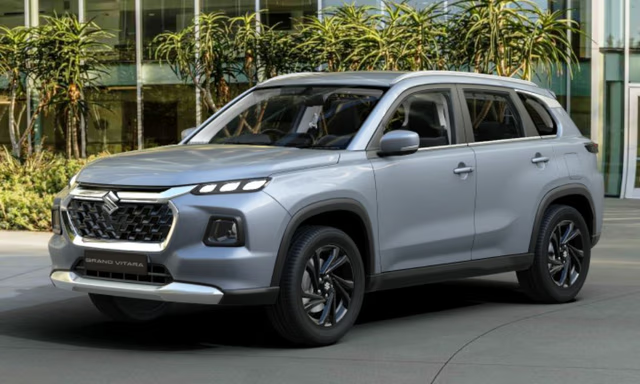 car&bike Team | Jul 17, 2026Consumer Court Orders Maruti Suzuki To Replace Grand Vitara Over E20-Related Damages; Carmaker To Escalate Matters In Higher CourtThe complainant had filed a complaint citing multiple cases of the vehicle developing technical issues due to repeated contamination in the fuel tank.1 min read
 car&bike Team | Jul 16, 2026Studds Trooper Trail Flip-Up Helmet Launched in India at Rs 2,125Studds has expanded its Trooper helmet range with the new Trail edition, featuring fresh graphics and a new colour-shifting paint option.1 min read
 car&bike Team | Jul 16, 20262027 Suzuki Hayabusa Receives Three New ColoursApart from the new liveries, the 2027 Hayabusa retains the same powertrain, electronics, and hardware.1 min read
 car&bike Team | Jul 16, 2026Hero MotoCorp Enters Germany, Expands European Presence to Five MarketsHero MotoCorp has officially entered the German market, strengthening its European presence with the launch of the Euro 5+ compliant XPulse 200 4V range.1 min read
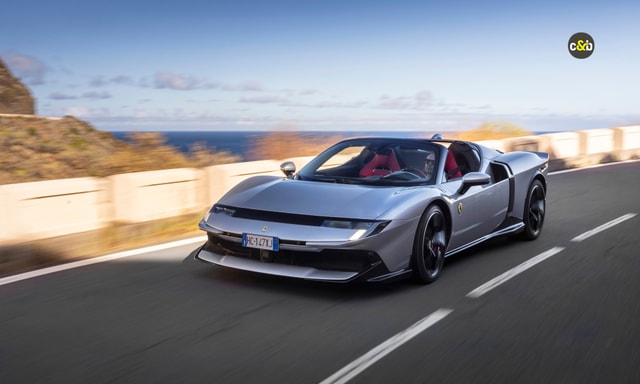 Shams Raza Naqvi | Jul 15, 2026Ferrari 849 Testarossa Spider Driven: Rs. 11.25 Crore Meets 1,000 bhpWe got behind the wheel of the most powerful convertible from Ferrari. What makes the 849 Testarossa Spider Special? We tell you.1 min read
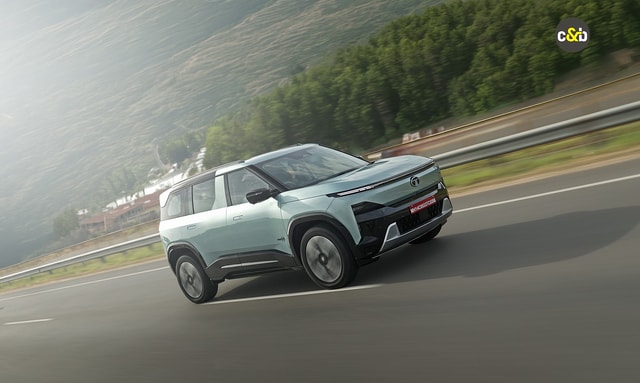 Bilal Firfiray | Jul 12, 2026Tata Sierra EV Review: Reborn In The Electric AgeThe Tata Sierra EV isn’t drastically different from its ICE counterpart when it comes to design. But being the seventh electric offering from the Indian brand, it has gotten a few things right, and very few things wrong. But is it a compelling package to buy?5 mins read
 Jafar Rizvi | Jul 13, 2026TVS Orbiter Long-Term Review (Report 1): Settling In Takes TimeFirst impressions weren't the strongest, but the Orbiter has made a mark in its first month in the car&bike garage.5 mins read
 Seshan Vijayraghvan | Jul 7, 2026Tata Altroz Petrol DCA Long-Term Review: Intercity & Highway Driving ReportWe tested the Tata Altroz Petro DCA’s highway manners, intercity performance, and real-world fuel efficiency.1 min read
 Seshan Vijayraghvan | Jun 29, 2026Renault Kiger vs Toyota Urban Cruiser Taisor: Which Underdog Deserves Your Money?Both the Kiger and the Taisor promise strong performance, solid features, comfortable cabins and everyday usability, all without breaking the bank. But which of these underrated subcompact SUVs deserves your money? Let's find out.1 min read