
Chassis Number Explained: What VIN Numbers Reveal About a Car
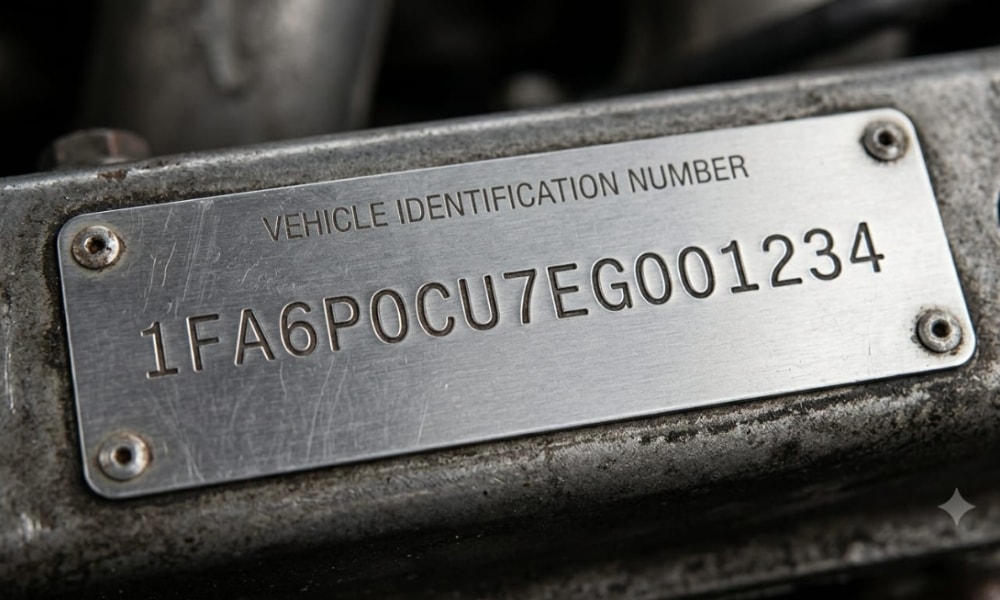
- VIN generally features 17 characters, some may contain 19
- First 9 digits relay details on country, manufacturer and vehicle
- Characters 12 to 17 are unit-specific unique serial number
VIN or Vehicle Identification Number is a unique 17-digit alphanumeric code mandatorily assigned to each car that rolls out onto public roads. The VIN can be considered a type of Aadhaar number but for vehicles manufactured the world over, and is a key component of all vehicles - after all, the vehicle Registration Certificate is issued based on the car’s VIN. The RC may have your name on but it’s the VIN that identifies that specific vehicle as yours. And a VIN is more than just a grouping of random alphabets and numbers; it tells an important back story of the vehicle you own - ranging from make, model, body style, engine, transmission, year and month of manufacture and more.
Where To Find The VIN?
Typically, the VIN number is visible on a stamped plate mounted to the inside of the B-pillar when you open the driver's side door. Other locations also include within the engine bay on a plaque on the firewall or tucked away behind the windshield at the base of the A-pillar.
Why Is The VIN Important?
A VIN is important as it can tell you a lot about the vehicle’s history. While not all manufacturers follow the same alphanumeric code, knowing what to look for can tell you the month and year of manufacturing, which plant the vehicle came from and details in relation to the powertrain. It also helps link you to your vehicle’s ownership after all government records carry the car’s VIN as the Chassis Number on your car’s RC. Even vehicle insurance requires submission of your VIN. It’s what identifies the car as yours.
In the second-hand market, the VIN can also be used to help track the vehicle’s service history, authenticity and even if it was ever a part of a recall.
What Do The Codes Mean?
While different manufacturers may follow slightly different orientations, the VIN generally comprises of five components - Manufacturer Identifier, Vehicle Descriptor, Model Year, Manufacturing Plant and unit-specific Serial Number.
- Manufacturer Identifier
Generally comprising the first three characters of the VIN, the alphanumeric or just numeric or just alphabetic characters identify the manufacturer. While the mounted plate itself mentions the manufacturer name in general, the name is also represented in the VIN as the starting three characters. For example, Maruti Suzuki cars start with the VIN MA2, MBJ or MBH or similarly MAT for Tata Motors.
- Vehicle Descriptor
Generally, the fourth through ninth characters, the Vehicle Descriptor characters, tell you more about the model in specific terms, from engine type and transmission type to the body style, model, platform and more.
- Model Year & Manufacturing Plant
The tenth position on the VIN, in many cases, represents the year of manufacture while the eleventh digit represents the manufacturing plant from where the vehicle rolled out. This might not, however, always be the case. In some models, such as some Audis and VWs, it's the sixth or fifth and sixth characters that depict the year.
- Serial Number
The last six digits, 12 to 17, represent a unique serial number assigned to each vehicle unit rolling out of a company’s plant. It helps ensure that no two units ever have the same VIN.
My Car’s VIN Is 19 Digits, Is It Correct?
Yes, in some cases, manufacturers do assign a 19-digit VIN to vehicles. These can be found in many Hyundai and Kia models where the last two characters denote the month and year of manufacturing. Similarly, some Maruti cars also come with a 19-digit VIN. The 18th and 19th characters always represent the month and year of manufacturing

Jaiveer has been in the field of automotive journalism for 10 years now, with experience in writing for web and magazines. While primarily focused on writing news and a few features over the years, he can’t resist the chance to get behind the wheel. He's got a keen interest in reading and the occasional flair for writing fiction and love to engage in discussions around cars. His dream is to drive some of the best cars on the road and one day hopes to make it a reality.
Read all latest news and reviews from Jaiveer Mehra →


Latest Cars


Upcoming Cars


Latest News


 car&bike Team | Oct 8, 2026Honda Elevate Facelift Colour Options RevealedThe facelifted Honda Elevate gets a new Nordic Forest Pearl colour, three dual-tone options and an all-black version.2 mins read
 Sarthak Mahajan | Oct 8, 2026Limited Edition Mini Cooper Oxford India Launch Soon; Bookings OpenBased on the standard Mini Cooper S, the Oxford Edition pays tribute to the iconic hatchback's birthplace.1 min read
 Jaiveer Mehra | Oct 8, 2026BMW iX4 Electric Is First 'Neue Klasse' SUV-Coupe With Up To 828 KM RangeCoupe sibling to the iX3 Neue Klasse, the iX4 arrives in two variants offering over 800 km of range and up to 603 bhp on tap.3 mins read
 Sarthak Mahajan | Oct 8, 2026Buddh International Circuit Set To Host First FIA-Level Car Race In 13 YearsIndian Racing Festival F4 Championship to take place at MIC, BIC and Navi Mumbai Street Circuit.1 min read
 car&bike Team | Oct 8, 2026Triumph Bonneville T40, Bonneville T4 Bookings Open In IndiaCustomers can now book the new Triumph Bonneville T40 as well as Bonneville T4 through Triumph India’s website by paying a token amount of Rs. 4,999.1 min read
 car&bike Team | Oct 7, 20262026 MG Hector Storm Series Launched At Rs 20 LakhThe MG Hector Blackstorm and Snowstorm editions get cosmetic changes and an all-black interior over their standard counterpart.2 mins read
 Bilal Firfiray | Oct 8, 2026Tata Aeris Review: New And Improved, But Is It Good Enough?Tata has replaced the Tigor with the new Aeris and improved it in every aspect. We drove the CNG AMT and Petrol MT derivatives to find out how much it improved over its predecessor.4 mins read
 Seshan Vijayraghvan | Oct 4, 20262026 Skoda Slavia Facelift Review: Upgrades That Matter And A Better AutomaticThe new Skoda Slavia brings a handful of visual and mechanical changes, most notably a new 8-speed automatic for the volume-selling 1.0-litre TSI variants.5 mins read
 Bilal Firfiray | Oct 3, 2026Kia Sorento Review: Is Bigger Always Better?The Kia Sorento has arrived to our shores at the right time. But does it have what it takes to take the market by a storm?7 mins read
 Abhishek Nigam | Oct 2, 2026MINI Countryman C Review: Has MINI Finally Grown Up Without Losing Its Personality?The new Countryman C is bigger, more practical and packed with technology, but its quirky appeal comes with a few compromises.1 min read
 Preetam Bora | Oct 3, 2026ViaTerra Spencer Riding Jacket Review: The Ideal Jacket For Indian Summers?The ViaTerra Spencer mesh riding jacket makes a strong case as a well-built, street-focussed riding jacket, combining good airflow with Level 2 protection and a snug, secure fit. Is it perfect? Read on.6 mins read