
How To Prepare Your Car Before Selling It To Get Maximum Resale Value


- Fix visible problems before buyers use them to negotiate
- Keep service records, RC, insurance and other documents ready
- Clean the car properly, but avoid expensive cosmetic upgrades before selling
You do not need to spend heavily on a car just because you are about to sell it. The goal is to make the car look cared for, remove obvious problems and give the buyer confidence in its history. Used-car buyers commonly check the vehicle's condition, service history, accident records, ownership details and documentation before making a decision.
That means the best preparation is usually not about making the car look brand new. It is about removing easy reasons for a buyer to negotiate aggressively.
Also Read: Why Has Your Car's Mileage Suddenly Dropped? 6 Everyday Reasons to Check
1. Get the Car Thoroughly Cleaned

Start with the simplest thing a potential buyer will notice: the car's appearance. Wash the exterior properly, clean the windows, vacuum the cabin and remove stains, rubbish and unnecessary items from the boot and storage areas. A clean interior and exterior make it easier for a buyer to see the actual condition of the car instead of focusing on years of accumulated dirt.
Pay particular attention to the driver's seat, steering wheel, dashboard, floor mats and door panels. These are the areas that show everyday use most clearly. If the car smells strongly of food, cigarettes, pets or moisture, address the source rather than simply covering it with a strong air freshener.
2. Fix Small Problems That Buyers Will Notice
Walk around the car as if you were buying it yourself. Check for broken trim, loose panels, damaged lights, worn wipers, cracked mirrors, non-working buttons and other inexpensive issues that make the car look neglected. Small problems can become useful bargaining points when a buyer is already looking for reasons to lower the offer.
Do not automatically repair every scratch or dent. Minor cosmetic marks are normal on a used car, and spending a large amount on repainting does not guarantee that you will recover that money in the sale price. Focus first on problems that are cheap to fix and affect how well the car presents itself.
3. Get the Mechanical Basics Checked
A buyer is more likely to question the price if the car makes unusual noises, pulls to one side, has warning lights or feels poorly maintained during a test drive. Before listing the car, get the basics checked and address genuine mechanical problems where the repair makes financial sense. Used-car inspection guidance commonly focuses on areas such as the engine, brakes, steering, electrical systems and other signs of mechanical condition.
You do not need to rebuild a perfectly functional engine just because you are selling the car. However, fixing a known issue can prevent the buyer from discovering it first and using it to negotiate a much larger deduction.
4. Check the Tyres and Brakes

Tyres are one of the easiest things for a buyer to inspect. Look at the tread, check for uneven wear and make sure the tyre pressures are correct before showing the car. If the tyres are severely worn or damaged, replacing them may make sense, but do not spend heavily on premium tyres purely to improve the resale price.
Do the same with the brakes. If there is obvious vibration, noise or poor braking performance, get the system checked before putting the car on the market. A buyer who notices a safety-related problem has a much stronger reason to negotiate than someone who simply finds a few scratches.
Also Read: 10 CNG Cars With Good Mileage & Performance: Dzire, Fronx, Brezza & More
5. Organise Your Service History
This can be one of the most useful things you prepare before selling. Collect your service invoices, job cards and maintenance records in one place. A documented history gives a potential buyer a clearer picture of how the car has been maintained and can help verify the mileage and work carried out over the years.
If you have serviced the car regularly but cannot find the paperwork, check whether the workshop or service centre can provide copies of older records. A neat service history is much easier for a buyer to trust than a simple verbal claim that the car was always maintained.
6. Be Ready With the Important Documents
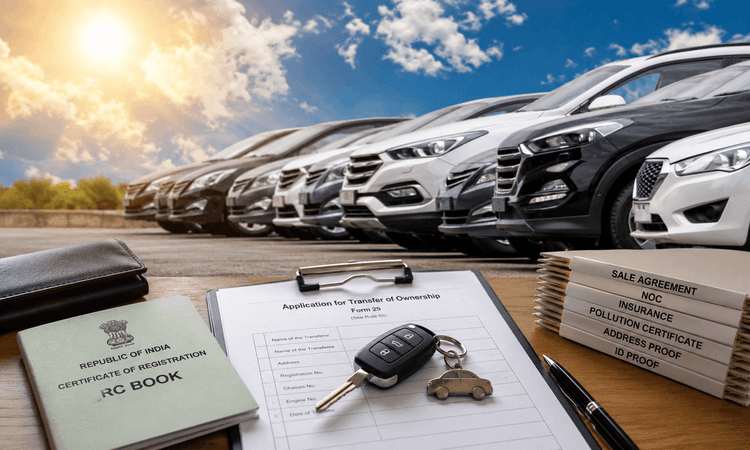
Before you advertise the car, make sure your documents are in order. The RC, insurance and applicable pollution certificate should be readily available, along with the service records and other relevant paperwork.
If there is an active loan or hypothecation on the vehicle, sort out the relevant paperwork before the sale becomes urgent. A buyer who is ready to pay but discovers that the ownership documents need additional work may simply move on to another car.
7. Do Not Roll Back the Odometer

Mileage is an important part of a used-car evaluation, but a lower number is not automatically more valuable if the history does not support it. Buyers are increasingly advised to compare the odometer reading with service records and other available records to check whether the mileage is consistent.
Instead of worrying about making the number look better, make sure the number is genuine and supported by your records. A consistent history gives the buyer something concrete to assess.
Also Read: Luxury Estate Cars in India: From Audi RS6 Avant to BMW M5 Touring
8. Take Good Photos
Once the car is clean, take clear photographs in daylight. Show the exterior from different angles, the interior, dashboard, seats, tyres, boot and any important accessories. Do not hide scratches or damaged areas because the buyer will eventually see them anyway.
Good photos also help you attract buyers who are actually interested in the car's condition. A dark photograph of a dirty car can make a well-maintained vehicle look worse than it really is.
At a glance
| Problem | What to do before selling |
| Dirty exterior | Wash and properly clean the car |
| Dirty interior | Vacuum, clean surfaces and remove stains |
| Worn wipers | Replace if they are visibly damaged |
| Broken lights | Fix them before the inspection |
| Warning light | Diagnose the actual problem |
| Worn tyres | Replace only if genuinely necessary |
| Minor scratches | Repair if inexpensive and worthwhile |
| Major accident damage | Disclose it and keep the repair records |
| Missing service records | Try to recover records from the workshop |
| Expired documents | Renew the applicable documents before sale |
Should You Spend Money on the Car Before Selling?
Only when the spending solves a problem that could reduce buyer confidence. A basic service, proper cleaning, fixing a broken light or replacing a damaged wiper can be sensible. Spending heavily on accessories, expensive detailing, premium tyres or unnecessary mechanical work simply because you want the car to look more valuable may not give you the same amount back in the final sale price.
Think of it as preparation rather than renovation. You are trying to remove reasons for a buyer to reduce the offer, not turn an older car into a new one.
Your Final Pre-Sale Checklist
Before handing the car to a buyer, run through this list:
- Wash and clean the entire car.
- Remove personal belongings.
- Fix cheap, obvious problems.
- Check tyres, brakes and lights.
- Address warning lights and genuine mechanical faults.
- Organise service records and repair bills.
- Keep RC, insurance and applicable certificates ready.
- Disclose significant accident repairs.
- Confirm the odometer reading matches the available history.
- Take clear photographs in good daylight.
How Do You Get the Maximum Resale Value?
The best way to protect your resale value is not to spend the most money before selling. It is to make the car look cared for, fix problems that buyers can immediately identify and give them enough documentation to trust what you are telling them. A clean car with consistent records and no obvious unresolved problems is much easier to evaluate than one that looks neglected or comes with a vague history.
Prepare the car for inspection, not just for photographs. When the buyer finds fewer reasons to question the car, you have fewer reasons to defend the asking price. The easiest resale money to protect is the money you don't give away during negotiation.
Related News

Latest Cars


Upcoming Cars


Latest News


 car&bike Team | Nov 22, 2026Tata Punch vs Maruti Fronx vs Hyundai Exter: Which Small SUV Makes More Sense?Tata Punch, Hyundai Exter or Maruti Fronx – three small SUVs, three different strengths, but only one makes the most sense for your money.6 mins read
 Sarthak Mahajan | Nov 22, 2026Maruti Suzuki Announces Price Hike Of 0.31% From November 22The price increase will apply to select models, with the exact models and revised prices yet to be announced.1 min read
 Sarthak Mahajan | Nov 22, 2026Ferrari Reveals 296 Challenge Stradale And 296 Challenge Evo At Ferrari Finali MondialiThe 296 Challenge Evo is an updated race car that will compete in the Ferrari Challenge from the 2027 season; meanwhile, the 296 Challenge Stradale stands as a road-legal alternative.1 min read
 car&bike Team | Nov 21, 2026BYD Ti7 Banned In Europe Over Resemblance To Land Rover DefenderA Dutch court has blocked the BYD Ti7 from being sold or manufactured in the EU after finding that its design infringes JLR's registered Defender design rights.1 min read
 car&bike Team | Nov 21, 2026Upcoming River Electric Scooter Spied TestingCodenamed RX02, the upcoming River product appears to be smaller than the existing Indie electric scooter.2 mins read
 car&bike Team | Nov 21, 2026Hyundai Neira Electric MPV Interior RevealedThe cabin of the Neira mimics that of the Carens Clavis EV, on which it is based.2 mins read