
A Secret Weapon For Self-Driving Car Startups: Humans

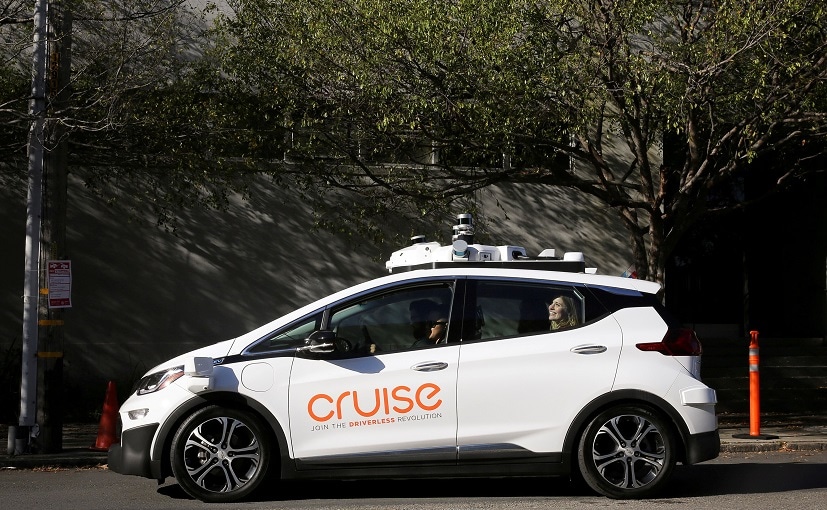
-Self-driving startups like Cruise and Pony.ai have begun testing their driverless cars in some parts of California in the past year, with an additional feature: Human operators.
While there is no driver behind the wheel, the passenger seat is occupied by a safety operator who "has a red button that can stop the vehicle just in case anything happens," Pony.ai CEO James Peng told Reuters.
The operator will be removed next year when Pony.ai, whose investors include Toyota Motor Corp, plans to deploy its driverless ride-hailing vehicles in certain areas of California. Still, a remote operator will monitor vehicles and provide guidance when the vehicles run into trouble, Peng said.
Alphabet Inc's Waymo keeps personnel wearing fluorescent yellow vests at the ready to provide roadside assistance for its automated minivans in Phoenix, according to videos and to one of its avid riders, Joel Johnson, who has witnessed this.
Cruise, majority-owned by General Motors Co, started operating five driverless vehicles in San Francisco at night in October 2020 with a human in the front seat. The minder has "the ability to stop the vehicle at any point during the ride," a Cruise spokesman said.
"Cruise views the development of self-driving vehicles as not only a tech race, but also a trust race," the spokesman added. "Given that, we keep humans in the loop in testing driverless vehicles not only as a means of safe development, but also, beyond that, in order to build trust with the public."
South Korea's automotive giant Hyundai Motor Group has invested in remote operation startup Ottopia, which will provide remote assistance for the robotaxi fleets by Hyundai's self-driving car joint venture, Motional.
The continued human presence in what are supposed to be software-driven, automated vehicles underscores the challenges facing the automated vehicle industry, which has consumed billions of dollars in investor capital over the past decade.
With no end in sight to the technical and regulatory obstacles to free-range, driverless robotaxis, some self-driving companies are accepting the need for human minders and scaling down their ambitions so they can start generating revenue in the near future, according to interviews with investors and startup executives.
Even Tesla Inc , which recently launched a new test version of what it calls “Full Self-Driving" software https://www.reuters.com/technology/musks-ai-day-confronts-tough-questions-about-teslas-technology-2021-08-18, said in a message to owners that drivers should "be prepared to act immediately, especially around blind corners, crossing intersections, and in narrow driving situations.” U.S. safety regulators have opened a formal investigation of the automaker's Autopilot driver assistance system following a series of fatal accidents
Waymo has been developing self-driving technology for more than a decade, and launched the first commercial robotaxis in Phoenix https://www.reuters.com/article/us-waymo-autonomous-phoenix/waymo-opens-driverless-robo-taxi-service-to-the-public-in-phoenix-idUSKBN26T2Y3 in 2018. But the successor to the pioneering Google self-driving car project still keeps humans in the loop.
Waymo told Reuters it runs four teams monitoring and assisting the fleet. Duties range from responding to riders' questions to providing, remotely, a "second pair of eyes" in tricky situations such as road closures. One of its teams provides roadside assistance to respond to collisions and other incidents.
The teams "work together to orchestrate the operation of our fully autonomous fleet throughout the day," Nathaniel Fairfield, a software engineer at Waymo, said in a statement to Reuters.
Waymo does not operate vehicles by remote control, he said.
"We don't use remote takeover, or 'joysticking,' because we don't think remote humans actually add safety," he said, citing potential wireless connection problems.
Waymo has applied for a permit to start commercial autonomous vehicle operations in San Francisco with safety drivers initially. The company relies on an army of vehicle operators to ramp up testing in the dense and complex city environment.
A former Waymo operator who participated in San Francisco testing this year said he had to "disengage" and intervene roughly 30 times a day in cases including the car failing to stop fast enough for red lights or vehicles in front that abruptly slow down or stop.
"You are on your toes... There are times where (you think) 'Oh, I did not predict this behavior at all.' 'This behavior doesn't usually happen,'" said the experienced safety operator, who spoke on condition of anonymity due to confidentiality concerns.
Waymo publicly reported 21 disengagements over 628,838.5 miles (1.01 million km) of driving in 2020.
Regulators are also keeping humans involved with automated vehicles. California laws "call for a two-way communication link that allows the manufacturer to continuously monitor the (driverless) vehicle's location/status," the California Department of Motor Vehicles said in a statement to Reuters.
Other robotaxi companies are using remote operation as a way to get vehicles on the road.
In Las Vegas, startup Halo allows customers to summon a driverless car, which is driven by a remote human operator over fast, fifth-generation wireless networks operated by T-Mobile US Inc.
"Just a few years back, remote human assistance was a dirty little secret in this space," said Elliot Katz, co-founder of teleoperation firm Phantom Auto. "Virtually no one talked about it publicly because there was still this facade that these vehicles were just going to be able to drive autonomously, everywhere they need to go and do everything that a human driver would do."
He added: "Everyone now knows that's not going to be the case."
Related News


Latest Cars


Upcoming Cars


Latest News


 car&bike Team | Jul 1, 2026BYD eMax 7 Comfort Launched At Rs 27.90 LakhNew mid variant slots in between the Premium and Superior trim and comes with the 71.8 kWh battery.1 min read
 car&bike Team | Jul 1, 2026BYD Cars Prices Hiked By Up To Rs 1 LakhBYD India has revised prices across select variants in its electric passenger vehicle line-up, with increases ranging from Rs 50,000 to Rs 1 lakh.1 min read
 Jaiveer Mehra | Jul 1, 2026Fifth-Gen BMW X5 Debuts With ICE, Hybrid, EV & FCEV PowertrainsNew X5 adopts the ‘Neue Klasse’ design from the smaller X3 while offering a wide range of powertrain options.1 min read
 Jafar Rizvi | Jul 1, 2026Lamborghini Urus SE Performante Revealed As Brand’s Most Powerful SUV YetPacking 801 bhp and a 0-100 kmph time of 3.3 seconds, it is the quickest and most powerful Urus to date.3 mins read
 car&bike Team | Jul 1, 2026Ather 450X Overtones Series Launched; Gets Faster Charging & New ColoursThe 450X Overtones series features three new colours, a new 900W charger as well as the updated Atherstack 7 software platform, which unlocks new features.1 min read
 car&bike Team | Jul 1, 2026VIDA Reveals New Brand Logo, Enters Asia Book of RecordsHero MotoCorp's EV arm, VIDA, has introduced a redesigned logo that reflects its expanding electric mobility ambitions.1 min read
 Seshan Vijayraghvan | Jun 29, 2026Renault Kiger vs Toyota Urban Cruiser Taisor: Which Underdog Deserves Your Money?Both the Kiger and the Taisor promise strong performance, solid features, comfortable cabins and everyday usability, all without breaking the bank. But which of these underrated subcompact SUVs deserves your money? Let's find out.1 min read
 Seshan Vijayraghvan | Jun 29, 2026Skoda Kodiaq RS Review: The Best Kodiaq Yet?The Skoda Kodiaq RS is finally here, and it's every bit as exciting as I expected. But was it worth the wait?7 mins read
 Bilal Firfiray | Jun 28, 2026BMW X6 M60i Review: It’s Back And HOW!The BMW X6 M60i blends a 530bhp twin-turbo V8, with its unmistakable coupe-SUV styling. There’s plenty of character, but is it worth your money?6 mins read
 Janak Sorap | Jun 25, 2026350cc Bajaj Dominar 400 Review: Same Character, Lower PriceA slightly lower displacement engine, a significantly lower price tag and nearly the same performance — the Bajaj Dominar 400 aims to be smarter rather than faster.6 mins read
 Preetam Bora | Jun 25, 20262026 Bajaj Pulsar NS400Z First Ride Review: Smaller Engine, But Should You Buy It?The Bajaj Pulsar NS400Z won our Two-Wheeler Upgrade of the Year. Then new tax slabs happened. Smaller engine, same badge – but does it still deliver?6 mins read