
Electric Scooters, Bikes Due For Substantial Price Hike From June 1 With Reduction In FAME-II Subsidy Imminent

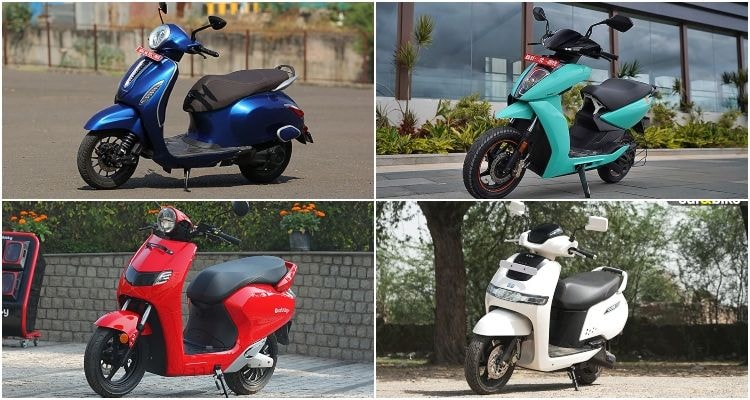
- FAME-II subsidy for electric two-wheelers to be revised to Rs 10,000 per kWh of battery capacity.
- Total subsidy will now be capped at 15 per cent of the vehicle’s ex-factory price, as opposed to 40 per cent at present.
- Prices of electric scooters will be directly impacted as a result, and may rise by anywhere between Rs 15,000 to Rs 30,000.
Following encouraging growth over the course of the last 18 months, India’s electric two-wheeler (E2W) industry is now facing its tallest hurdle yet, with a substantial price hike in the offing. The amount originally allocated by the government for E2Ws, under the Faster Adoption and Manufacturing of Hybrid and Electric Vehicles (FAME-II) scheme, which was fixed at Rs 2,000 crore, has been exhausted. In order to ensure subsidy support isn’t withdrawn entirely (and abruptly) in a way that hurts the industry, the heavy industries ministry has decided to allocate an additional Rs 1,500 crore to E2Ws from the unutilised funds allocated for electric three- and four-wheelers under the scheme, but the subsidy structure has been revised, which will lead to a substantial increase in E2W prices from June 1, 2023.
Also Read: Electric Two-Wheeler Sales In April 2023: Overall Sales Dip Sharply, But Ola Sales Soar
Electric two-wheelers with a large battery pack will witness the sharpest reduction in subsidy.
Sources confirmed to carandbike that in a meeting held with 24 manufacturers, the heavy industries ministry revealed the subsidy payout will now be revised to Rs 10,000 per kWh of battery capacity, instead of the Rs 15,000 per kWh offered up until now. More importantly, though, the total subsidy will be limited to 15 per cent of the E2W’s ex-factory cost (which cannot exceed Rs 1.50 lakh), compared to the 40 per cent limit in place at present. This will spell a subsidy reduction of over 60 per cent for several manufacturers operating at the premium end of the market.
Also Read: FAME-II Controversy: Hero Electric Receives Notice For Subsidy Recovery
For perspective, range-topping models from manufacturers such as Ola Electric, Ather Energy, Tork Motors and Hero MotoCorp (Vida), which, up until now, qualified for an incentive of as high as Rs 60,000 thanks to their large battery packs, will now be eligible for a maximum incentive of Rs 22,500 – less than half of what was offered so far. Scooters with a smaller battery, such as the Bounce Infinity E1, will witness a comparatively lower reduction in subsidy amount.
Also Read: Hero MotoCorp To Reimburse Vida V1 Buyers For Chargers; Slashes E-Scooter Prices
For the Ather 450X (which qualified for an incentive of up to Rs 55,000 so far), the subsidy will drop by approximately Rs 32,500. The reduction in subsidies for Ola’s S1 and S1 Pro will be Rs 22,000 and Rs 37,000, respectively. Tork’s Kratos R, too, will witness a subsidy reduction of Rs 37,500, with the Hero Vida V1’s incentives slashed by Rs 28,500 to Rs 37,500. Models equipped with comparatively smaller batteries, such as the TVS iQube and Bajaj Chetak, will see their subsidies drop by Rs 28,500 and Rs 22,500, respectively.
Also Read: TVS To Refund iQube Customers Who Paid Over Rs 1.50 Lakh For The E-Scooter
It remains unclear if manufacturers will pass on the entirety of the reduction in subsidies, in the form of an immediate price hike, to customers. However, with input costs only having risen over the last 24 months and battery prices not having softened, most manufacturers – especially start-ups – will inevitably be forced to pass on a substantial part of the vehicle’s price that is no longer covered by incentives to the end buyer, which could be anywhere between Rs 15,000 to Rs 30,000, depending on the model and manufacturer. Top variants of premium electric two-wheelers could end up exceeding the Rs 1.80-1.90 lakh mark, if brands pass on the full brunt of the subsidy reduction. This is expected to reflect in electric two-wheeler sales across the country, which are expected to slow down in the coming months as a result.
Also Read: Ather Energy To Refund Charger Cost For E-Scooters Purchased Till April 12, 2023
Prices of electric two-wheelers are set to rise by a substantial margin from June 1, 2023.
“Most E2W firms are already doing all they can to become profitable. They will struggle to cushion this blow for the buyer, as doing so will significantly delay their internal targets to break-even. However, passing on the full increase in price to the customer could deal a hammer blow to sales in the short-term, which will have a detrimental effect on every E2W manufacturer’s plans”, said a senior industry official, requesting anonymity.
carandbike understands manufacturers were given the option to continue claiming subsidies under the present framework. However, at the current rate of sales, the additional Rs 1,500 crore allocated for two-wheelers would be exhausted by August, after which there would be no more incentives left to claim.
Instead of having to deal with a complete withdrawal of subsidies, manufacturers instead asked the authorities to revise the subsidy structure, which will help prolong support till around February-March 2024. Notably, the FAME-II scheme is scheduled to end on March 31, 2024, and there is no word on whether the scheme will be extended at all.
Related News


Latest Cars


Upcoming Cars


Latest News


 Amaan Ahmed | Jul 3, 2026Keeway Hypevolt-R Launched In India At Rs 1.99 Lakh: 5 kWh Battery, 14-Inch Wheels, ABS And MoreKeeway's first electric scooter for India also packs a rear camera and blind spot detection; undercuts the TVS X and is priced nearly on par with Ather's 450 Apex.2 mins read
 car&bike Team | Jul 2, 2026Maruti Suzuki Inaugurates New Kharkhoda Plant; Production Capacity To Reach 10 Lakh Cars A YearMaruti Suzuki has inaugurated its new Kharkhoda manufacturing facility in Haryana, which starts with an annual capacity of 5 lakh vehicles and is spread across 800 acres.1 min read
 car&bike Team | Jul 2, 2026Yezdi Scrambler To Be Available On Amazon From July 4The Yezdi Scrambler will go on sale on Amazon as part of the e-commerce giant's Prime Day 2026.2 mins read
 Jaiveer Mehra | Jul 2, 2026Hyundai Creta Electric Launched With Battery-As-A-Service; Prices Start At Rs 10.99 lakhThe battery rental price starts at Rs 3.9 per km.2 mins read
 car&bike Team | Jul 2, 2026Revolt RVX Launched in India at ₹1.30 Lakh; Replaces the RV400The new Revolt RVX comes with a more powerful mid-drive motor, a claimed 160 km IDC range, fast charging, and a host of connected features at an introductory price of Rs. 1.30 lakh, ex-showroom.3 mins read
 Jaiveer Mehra | Jul 2, 2026All-New BMW iX5 Debuts With 141 kWh Battery, 800+ km RangeFirst generation of the all-electric iX5 is expected to replace the current BMW iX, with global sales commencing in 2027.1 min read
 Seshan Vijayraghvan | Jun 29, 2026Renault Kiger vs Toyota Urban Cruiser Taisor: Which Underdog Deserves Your Money?Both the Kiger and the Taisor promise strong performance, solid features, comfortable cabins and everyday usability, all without breaking the bank. But which of these underrated subcompact SUVs deserves your money? Let's find out.1 min read
 Seshan Vijayraghvan | Jun 29, 2026Skoda Kodiaq RS Review: The Best Kodiaq Yet?The Skoda Kodiaq RS is finally here, and it's every bit as exciting as I expected. But was it worth the wait?7 mins read
 Bilal Firfiray | Jun 28, 2026BMW X6 M60i Review: It’s Back And HOW!The BMW X6 M60i blends a 530bhp twin-turbo V8, with its unmistakable coupe-SUV styling. There’s plenty of character, but is it worth your money?6 mins read
 Janak Sorap | Jun 25, 2026350cc Bajaj Dominar 400 Review: Same Character, Lower PriceA slightly lower displacement engine, a significantly lower price tag and nearly the same performance — the Bajaj Dominar 400 aims to be smarter rather than faster.6 mins read
 Preetam Bora | Jun 25, 20262026 Bajaj Pulsar NS400Z First Ride Review: Smaller Engine, But Should You Buy It?The Bajaj Pulsar NS400Z won our Two-Wheeler Upgrade of the Year. Then new tax slabs happened. Smaller engine, same badge – but does it still deliver?6 mins read