
GM Extends EV Bolt Production Halt To Mid-October


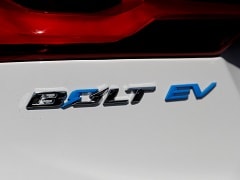
General Motors Co said on Thursday it will extend a shutdown of a Michigan assembly plant to mid-October following a new recall of its Chevrolet Bolt electric vehicles over battery issues after 12 reported fires. The largest U.S. automaker said the extension of the production halt at its Orion Assembly plant will go through at least Oct. 15. GM also said it was cutting production at six other North American assembly plants because of the ongoing semiconductor chips shortage.
GM said it will not resume Bolt production or sales until it is satisfied that the recall remedy will address the fire risk issue. It said Thursday it had reports of 12 fires and three injuries.
GM shares were largely unchanged in late trading.
Also Read: General Motors' China Joint Venture Develops Own Auto Chips

GM said it will not resume Bolt production or sales until it is satisfied that the recall remedy will address the fire risk issue
GM in August widened its recall of the Bolt to more than 140,000 vehicles to replace battery modules, at a cost now estimated at $1.8 billion. The automaker said it would seek reimbursement from battery supplier LG.
It is not clear how long it will take GM to obtain replacement battery modules for recalled vehicles and whether it will have diagnostic software that will allow it to certify some modules do not need replacing.
GM said the additional three-week production halt at its Bolt plant comes as it continues "to work with our supplier to update manufacturing processes."
Earlier this month GM was forced to halt production at most North American assembly plants temporarily because of the chips shortage.
The new production cuts include a Lansing, Michigan, plant that builds the Chevrolet Traverse and the Buick Enclave.
GM is also cutting production of SUVs like the Chevrolet Equinox, Blazer and GMC Terrain at plants in Mexico and Canada. It will also make further production cuts at Michigan and Kansas plants that make Chevrolet Camaro and Malibu cars.

GM will also make further production cuts at Michigan and Kansas plants
Also Read: General Motors Invests In Oculii, Radar Software Maker For Self-Driving Cars
Separately, Chrysler-parent Stellantis NV Thursday said it will extend production halts at its Belvidere, Illinois and Windsor, Ontario assembly plants by one week through Oct. 1 because of the chip shortage.
The Commerce Department said on Wednesday it plans a Sept. 23 White House meeting with automakers and others "to discuss the ongoing global chip shortage, the impact the Delta variant has had on global semiconductor supply chains and the industry's progress toward improving transparency."
Related News
Latest Cars


Upcoming Cars


Latest News


 Jaiveer Mehra | Nov 19, 2026New Temerario Spyder Is Lamborghini’s First Retractable Hard-Top ConvertibleUnlike many contemporary hard-top convertibles, the Temerario Spyder stows its roof vertically behind the seats rather than horizontally.1 min read
 car&bike Team | Nov 19, 2026Denza Bao 5 Tows Boeing 747 Aircraft On Two WheelsDenza's Bao 5 SUV has pulled a 180-tonne Boeing 747 from its standard plug-in hybrid powertrain.1 min read
 Sarthak Mahajan | Nov 19, 2026MoRTH Revises PUC Rules: Three-Month Validity For BS-III & Older Vehicles, Six Months For BS-IVFor BS-VI non-transport vehicles, PUC will be valid for three years for vehicles up to six years old & one year for vehicles up to 10 years old.2 mins read
 car&bike Team | Nov 19, 2026GTA 6 In India: Scorpio-Ns, Thar ROXXs, Traffic Jams And MoreImagine Jason and Lucia trying to outrun the police when a wedding procession brings the entire road to a standstill.1 min read
 car&bike Team | Nov 19, 2026BMW R 12 G/S Launched In India At Rs 25.40 LakhThe R 12 G/S takes inspiration from the R 80 G/S from the 1980s.2 mins read
 car&bike Team | Nov 19, 2026Torsion Beam Vs Multi-Link Suspension: What's The Difference?Torsion beam suspension is simpler, lighter and more affordable, while multi-link suspension gives each rear wheel more freedom to move. But which one offers better comfort and handling on Indian roads?1 min read