
Maruti 800 37th Anniversary: 7 Facts About The Car


- The Maruti 800 was India's first front wheel drive car to go on sale
- Waiting period for the Maruti 800 extended for years back in the 1980s
- The Maruti 800 was discontinued in 2014, replaced by the Alto 800
The Maruti 800 is an icon in every sense and holds a special place in India's automotive history. The model was a game-changer that brought the era of Japanese four-wheeled mobility to the masses in the country. On December 14, 2020, the Maruti 800 celebrates its 37th anniversary, and while it may not be on sale anymore, the car continues to be deeply a part of our collective conscience, not to forget it's still not too hard to spot one on the road. As we celebrate 37 years of the iconic 800, here are seven facts that you need to know about India's People's Car.
Also Read: The Iconic Maruti 800 Turns 35
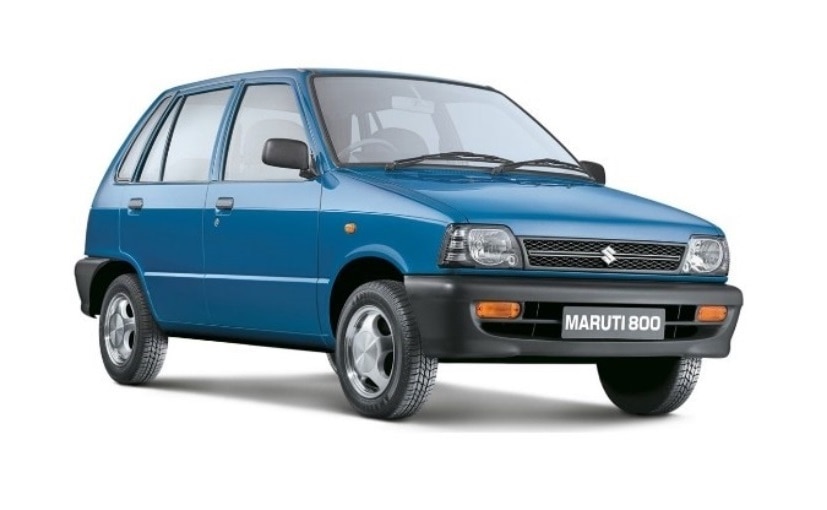
The Maruti 800 was technologically advanced than its rivals at the time and also India's first front-wheel-drive car
1. The Maruti 800 was India's first front-wheel-drive car
The very first-generation Maruti 800 was a big deal and a major departure from the popular Premier Padmini and the Hindustan Ambassador that were the more accessible cars available in 1983. It was also the first vehicle to get a front-wheel-drive set-up in the country and was also more technologically advanced than its rivals at the time. The Maruti 800 aimed to bridge the gap between the old and new bringing in far better reliability and a more frugal engine as well. Maruti claimed fuel efficiency of 25.95 kmpl on the 800 at the time of launch in 1983. T

The Maruti 800 SS80 was based on the Suzuki Fronte, while the second-gen Alto based bodyshell was introduced in 1986
2. The Maruti 800 started life as the Suzuki Fronte SS80
The original 800 was based on the Suzuki Fronte SS80, which was also the codename for the model in India. A more modernised version with an aerodynamic bodyshell of the second-generation Alto (SB308) was introduced in 1986. The first batch of the 800 was imported as a Completely Knocked Down (CKD) kit, while the model was completely localised and built here for domestic and export markets.
3. The first Maruti 800 was priced at Rs. 47,500
The Maruti 800 was pitched as the 'People's Car' for India and was introduced at an accessible price of Rs. 47,500 (ex-showroom). A more premium variant with air-conditioning was introduced in 1984 that was priced around Rs. 70,000. About 15 per cent of the total cars produced were converted into the Deluxe variant with the HVAC unit. In contrast, the Ambassador and Padmini both were priced around Rs. 70,000 (ex-showroom) mark. The aggressive pricing and easy ownership costs also made India's middle-class sit up and take notice and flock to showrooms. However, purchasing an 800 wasn't as easy as it seemed.
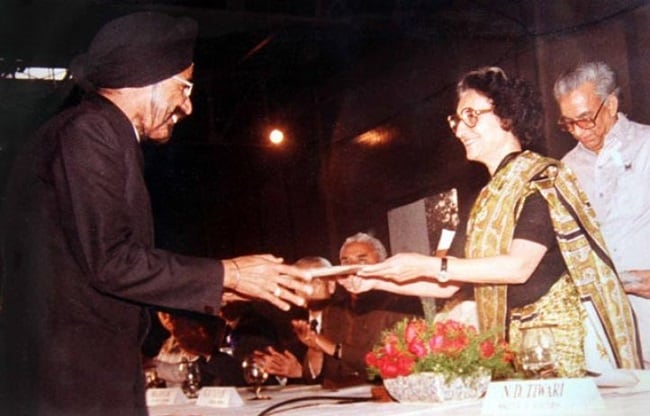
The then Prime Minister of India Indira Gandhi had handed over the keys to Harpal Singh, the very first owner of the Maruti 800 in the country
4. The waiting period stretched for years
Unlike the easy accessibility today that we have for buying cars, you couldn't just drive a Maruti 800 out of a showroom back in the 1980-1990s. At the time of its announcement, about 1.2 lakh people booked the car for a token amount of Rs. 10,000. The initial models were allotted to customers based on a lottery system and the waiting period stretched by months and sometimes years together before you were finally handed over one. Customers were willing to pay extra to get an allotment. In fact, the first car was awarded to Harpal Singh and the keys were famously handed over to the owner by India's Prime Minister Indira Gandhi at the time. Interestingly, Mr. Singh owned the car throughout his lifetime.
Also Read: India's First Maruti 800 Should Be A National Treasure, Says Owner's Family

The original Maruti 800 SS80 (left) with its successor, the SB308
5. Over 2.7 million Maruti 800s were sold in its lifetime
The first-gen 800 was codenamed the SS80 and was built with an initial investment of Rs. 269 crore. The Maruti Udyog facility had assembled about 70 cars at the time of launch and could roll out one car in 800 minutes. The plant had a production capacity of 20,000 cars by 1984 which further increased to 40,000 units by 1988. In just two years of the Maruti 800's launch, the Indian passenger car market doubled in volumes from 40,000 cars sold in a year to about 1 lakh units sold per annum. By 1997, eight out of ten top-selling cars in India was a Maruti.

Maruti 800 remains a pop culture icon and was the defacto first car for an entire generation
6. Was sold in West Europe as a Maruti to bypass quota for Japanese cars
Maruti began exports of the 800 in 1987 and the first set of cars were shipped to neighbouring countries, followed by a batch of 500 cars to Hungary. The India-made car was later introduced in the then Czechoslovakia and Yugoslavia followed by other European markets soon after. After tasting success in these markets, Maruti decided to go for the more developed markets like France and the Netherlands in 1989 and 1990 respectively, followed by England, Italy, and Malta. In fact, the cars sold here were specifically badged as 'Maruti' to bypass the quota limit levied on Japanese cars. All badges and references to Suzuki were removed, right down to the owner's manual to meet the same. The Maruti 800 received seatbelts for the first time in 1987 to meet the export requirements, and also the company's first catalytic converter to comply with European emission norms.
Also Read: From the Maruti 800 to the BMW i8: A Journey Of Auto Passion For Sachin Tendulkar

A Firebrick Red Maruti 800 rolled out after final checks on January 18th, 2014, after 31 years of production while sales stopped in February that year
7. Maruti pulled the plug on the 800 in February 2014
By 2014, Maruti Suzuki was an auto giant and leader in the world's third-largest auto market. It had gone far beyond selling the 800. Meanwhile, the Maruti 800 was finding it difficult to keep up with changing customer preferences. That, along with low volumes and the upgrade to BS4 emission regulations meant that meant we finally saw the automaker pull the plug on the much-loved product. The final Maruti 800 rolled off the assembly line in February 2014 for a customer in Chandigarh, bringing an end to a glorious era in Indian automobile history.
Related News



Latest Cars


Upcoming Cars


Latest News


 Jaiveer Mehra | Jul 18, 2026Volvo EX90 India Launch On August 19Volvo’s all-electric flagship will go up against the likes of the BMW iX and Mercedes-Benz EQS.1 min read
 Jaiveer Mehra | Jul 18, 2026Ferrari Amalfi Spider Launched In India At Rs 4.60 CroreDrop-top variant of Ferrari’s entry 2+ Grand Tourer costs a little more than Rs 50 lakh more than the Coupe.1 min read
 car&bike Team | Jul 17, 2026New CAFE 3 Draft Brings Revised Fuel Consumption Variables, Reduced Derogation Factor For Strong Hybrid & MoreThe latest CAFE 3 draft also opens the door for technologies such as engine start/stop, TPMS & 12/48V mild-hybrid tech to factored into fuel consumption.3 mins read
 car&bike Team | Jul 17, 2026Consumer Court Orders Maruti Suzuki To Replace Grand Vitara Over E20-Related Damages; Carmaker To Escalate Matters In Higher CourtThe complainant had filed a complaint citing multiple cases of the vehicle developing technical issues due to repeated contamination in the fuel tank.1 min read
 car&bike Team | Jul 16, 2026Studds Trooper Trail Flip-Up Helmet Launched in India at Rs 2,125Studds has expanded its Trooper helmet range with the new Trail edition, featuring fresh graphics and a new colour-shifting paint option.1 min read
 car&bike Team | Jul 16, 20262027 Suzuki Hayabusa Receives Three New ColoursApart from the new liveries, the 2027 Hayabusa retains the same powertrain, electronics, and hardware.1 min read
 Shams Raza Naqvi | Jul 15, 2026Ferrari 849 Testarossa Spider Driven: Rs. 11.25 Crore Meets 1,000 bhpWe got behind the wheel of the most powerful convertible from Ferrari. What makes the 849 Testarossa Spider Special? We tell you.1 min read
 Bilal Firfiray | Jul 12, 2026Tata Sierra EV Review: Reborn In The Electric AgeThe Tata Sierra EV isn’t drastically different from its ICE counterpart when it comes to design. But being the seventh electric offering from the Indian brand, it has gotten a few things right, and very few things wrong. But is it a compelling package to buy?5 mins read
 Jafar Rizvi | Jul 13, 2026TVS Orbiter Long-Term Review (Report 1): Settling In Takes TimeFirst impressions weren't the strongest, but the Orbiter has made a mark in its first month in the car&bike garage.5 mins read
 Seshan Vijayraghvan | Jul 7, 2026Tata Altroz Petrol DCA Long-Term Review: Intercity & Highway Driving ReportWe tested the Tata Altroz Petro DCA’s highway manners, intercity performance, and real-world fuel efficiency.1 min read
 Seshan Vijayraghvan | Jun 29, 2026Renault Kiger vs Toyota Urban Cruiser Taisor: Which Underdog Deserves Your Money?Both the Kiger and the Taisor promise strong performance, solid features, comfortable cabins and everyday usability, all without breaking the bank. But which of these underrated subcompact SUVs deserves your money? Let's find out.1 min read