
MoRTH Issues New Guidelines for Road Signages on Highways and Expressways

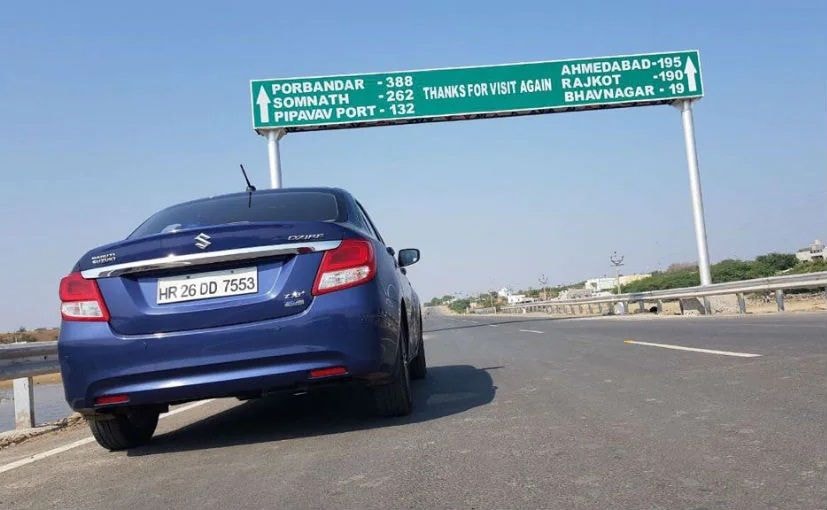
- The new guidelines by MoRTH prioritize enhanced visibility and readability of road signages through strategic placement.
- High-speed corridors will have vehicle category-wise and speed-wise lane dedicated information signs at intervals of 20 km.
- The implementation of these guidelines will initially focus on upcoming Highways, Expressways, and greenfield corridors, as well as Highways with high traffic volume.
The Ministry of Road Transport & Highways (MoRTH) has recently issued new guidelines for the provision of signages on Expressways and National Highways and have been passed under the approval of the Union Minister for Road Transportation and Highways, Shri Nitin Gadkari. MoRTH conducted a review of the provision of signages, taking into account relevant Indian Road Congress (IRC) codes and guidelines.
Also Read: 5 Essential Car Driving Tips For The Monsoon Season
One of the primary focuses of the new guidelines is to prioritize enhanced visibility and readability of road signages. This will be achieved through strategic placement at appropriate heights and distances, utilizing large lettering, symbols, and short legends to facilitate quick comprehension by drivers, even in adverse weather conditions.
Also Read: 5 Essential Items To Carry In Your Car During the Monsoon Season
To cater to a diverse group of road users, including those with limited literacy, the guidelines advocate the use of pictorial depictions alongside text to convey essential messages effectively. Recognizing India's linguistic diversity, the guidelines endorse a multilingual approach on road signages, encompassing both English and regional languages. This is expected to facilitate effective communication with diverse road users and promote better understanding and adherence to traffic regulations.
The new guidelines also place special emphasis on promoting better lane discipline to minimize traffic congestion. The implementation of these guidelines will be carried out in a phased manner. Initially, all upcoming Highways, Expressways, and greenfield corridors will follow the new standards. Additionally, Highways experiencing high traffic volume, with more than 20,000 Passenger Car Units (PCUs), will be prioritized for the implementation of the enhanced signage.
Also Read: Monsoon Getaways: Top 15 Places To Visit During Monsoon
As per the official communication from the ministry following are some of the new guidelines issued by MoRTH: -
- The speed limit sign Board should be repeated every 5 km alternately on the shoulder side and median side.
- Vehicle Category wise and speed-wise lane dedicated information signs are to be installed on high-speed corridors at an interval of 20 kms as an overhead gantry.
- If the height of the superstructure over bridges/underpass structures exceeds 5.5 meters, no board is required, but if it is less than 5.5 meters, then a height limit signboard of the appropriate limit is to be provided.
- Rumble Strip: The sign should be posted at a minimum distance of 50 to 60 meters in advance of the rumble strips provided on the road to control and reduce the speed.
- Reassurance Sign: This sign is installed to reassure a driver of a vehicle that the desired direction is being followed.
- To be provided after 150-200 meters of entry slip and repeated after every 10 km.
- The distance of location mentioned on the signboard should be the distance of the railway station of that location from the board
- Every alternate or 20th km reassurance sign shall be in English and the Regional/local language where applicable
- Welcome and Thank-You Gantry: Welcome and Thank You sign boards should be installed in the first and last package to ensure the driver about the start of the expressway.
- Advance Direction Sign: Advance Direction signs shall be used for grade-separated Entry and Exit to the expressways. These signs should be placed normally at 500 meters, 1 km and 2 km in advance of the exit.
- Rest and Service Area Sign Board: It is necessary to alert the driver about the existence of wayside amenities by providing a cantilever gantry-type sign board 5 km ahead with a repeater sign at 2 km, 1 km and 500 meters ahead. Also, the Rest and Service Area sign board 1 km before the wayside amenity should be in Hindi and at 2 km before the wayside amenity, it should be in regional language.
- Emergency Helpline Number: The Emergency Helpline number "1033" should be provided at every 5 km interval
- Route Marker: Route Marker signs should be provided at every 5 km interval.
- Sign Board along Cross-Road: The signs should be placed normally at 500 m, 1 km and 2 km in advance of the entry to the Expressway, showing the major town/city that can be accessed via Expressway.
Written by: - Ronit Agarwal
Related News


Latest Cars


Upcoming Cars


Latest News


 Sarthak Mahajan | Aug 27, 2026Tata Motors Passenger Vehicles Reveals New ‘Tata.Cars’ Brand IdentityLegal name continues to remain Tata Motors Passenger Vehicles Ltd.1 min read
 Sarthak Mahajan | Aug 27, 2026Yamaha YZF-R2: In PicturesYamaha Motor India has launched the YZF-R2 at Rs 2.30 lakh, positioned above the Yamaha R15 V4.2 mins read
 Sarthak Mahajan | Aug 27, 2026Gabriel India To Acquire 30% Stake In HL Klemove India Private Limited For ADASGabriel India will acquire a 30 per cent less one share stake in HL Klemove India for US$98.44 million (approximately ₹935 crore).1 min read
 Jafar Rizvi | Aug 27, 2026Yamaha YZF-R2 vs Yamaha R15: Differences ExplainedThe R2 and R15 look nearly identical but there are several differences between the two.5 mins read
 Jaiveer Mehra | Aug 27, 20262027 Renault Kwid Makes Global Debut With Updated Looks, New TechExterior styling changes aside, the biggest updates arrive in the form of a new 7.0-inch digital instrument cluster and a large 10.1-inch touchscreen.1 min read
 Sarthak Mahajan | Aug 27, 2026Range Rover Sport Twenty Edition Launched at Rs 1.90 CroreThe brand celebrates 20 years of Range Rover Sport production with the special Twenty Edition.1 min read
 Preetam Bora | Aug 25, 20262026 Hero Xoom 160 Review: Maxi-mum Potential!With styling and proportions that goes into actual maxi-scooter territory, a liquid-cooled engine and large 14-inch wheels, the Hero Xoom 160 holds a lot of promise. But should you buy it?9 mins read
 Seshan Vijayraghvan | Aug 19, 20262026 BMW X1 Long-Wheelbase Review: Is This The X1 To Buy?Along with the extra rear legroom, the new BMW X1 LWB offers more features, more safety tech, and a more powerful petrol engine. But do these updates actually make it a better SUV?1 min read
 Janak Sorap | Aug 17, 2026Bajaj Pulsar N160 SS First Ride Review: The Most Tech-Loaded Pulsar Yet?The Bajaj Pulsar N160 SS brings more power, new-age electronics and sharper styling to the familiar 160cc Pulsar formula.5 mins read
 Jaiveer Mehra | Aug 16, 2026Honda Amaze CVT Long Term First Report: 1800 Km InThe Amaze is the first sedan to join our long term feet in a year, and while on paper it lacks some of the features offered in its rivals, there’s plenty of promise in the package.1 min read
 Preetam Bora | Aug 12, 2026Royal Enfield Himalayan 440 Custom Review: Beating RE to the PunchDelhi-based custom motorcycle shop TNT Motorcycles introduces packages to convert existing Himalayan 411 adventure bikes to Himalayan 440. Is it worth the expense?8 mins read