
Xiaomi SU7 First Look: From Smartphones To EVs, Xiaomi's 1st Car Arrives In India


- A 4-door, five-seater C-segment sedan with 700km+ range
- Looks premium inside out with some unique features
- Currently only on sale in China for Rs 25-35 lakh
We Indians associate Xiaomi with mostly smartphones. It is quite likely that many of you are reading this story on a Mi or Redmi device. But in China, Xiaomi is a technology giant that makes everything from smartphones to smartwatches, from vacuum cleaners to air fryers and even hair dryers. When it first announced its intent to make an EV, its market value tanked. This is not surprising given the complex nature of the automotive business and its total lack of experience. But, surprisingly, three years later it actually announced being ready with it. With deliveries starting in China earlier this week, they were once sitting on an 80,000-strong order bank. Of course, production is yet to ramp up. They have delivered 27,000 units so far and hope to cross the 1 lakh mark by this year's end. Must be doing something right for China. Let’s see if the premise of SU7 can hold true for India too.
Also read: Xiaomi Targets Nurburgring EV Lap Record With 1500+ BHP SU7 Ultra
Dimensions, Design & Chassis
The Xiaomi SU7 (pronounced ess-you-seven) is an all-electric, four-door performance sedan. It is a C-segment car so it competes with the likes of Skoda Octavia or the recently-launched BYD Seal. The car is nearly 5 metres long. The wheelbase alone is 3000mm which is actually more than even a Toyota Innova Crysta’s. The minimum ground clearance is a low 124mm but it can be raised by over 50mm thanks to the air suspension. One of its biggest flexes in terms of space is the luggage carrying capacity. It has a healthy 517-litre rear trunk plus a decent 105-litre storage under the bonnet. This ‘frunk’ has to be one of the biggest we have seen.
Also read: Xiaomi SU7 Electric Sedan Showcased In India At Tech Giant's 10th Anniversary Event
The SU7 definitely looks premium. The front features teardrop headlights with a complex LED lighting elements, muscular front wheel arches with 21-inch wheels, a sloping silhouette with a wide “halo” taillamp design on the rear hatch. There are complex and movable aero bits too such as active air intakes in the front bumper and an electronically operated rear wing spoiler.
The chassis has been developed in-house and is claimed to be tough yet lightweight with the use of steel and aluminium. It uses double wishbone suspension at the front and five-link independent suspension at the rear. Most of its electrical system uses Silicon Carbide which has near 100% efficiency. This is a skateboard design platform so the battery is part of the chassis and not an add-on. This helps with structural integrity as well. The battery itself has been sourced from Chinese company CATL. Xiaomi claims that it has also managed a 50:50 weight distribution between the front and rear axles for this car. The SU7 is rated 5 stars in regional crash test rating.
Also read: Xiaomi SU7 vs BYD Seal vs Tesla Model 3: Battery, Range, Dimensions Compared
The geeky details apart, If you too find it pleasing to the eye then it is probably because SU7 designers stuck to the textbook golden ratio rule to get the proportions right. You can clearly see the “design inspiration” from Tesla and Porsche but it definitely doesn’t look like a cheap imitation.
Range & Charging
Back home the SU7 is available in 3 variants and cliched as it sounds they are named SU7, SU7 Pro and SU7 Max, just like smartphones. There is a significant difference in battery packs, performance and driving range between them.
The standard SU7 gets a 73.6kWh battery pack for a 700km claimed range. This variant uses a LFP battery and has a single motor. The Pro gets a 94.3kWh battery with an 830km range. The Max gets a 800km range with the biggest battery of 101kWh. This is NMC type. The latter has dual motors, and is tuned to go faster hence the slight drop in overall range.
Also read: Xiaomi's First Electric SUV Spotted Testing; Expected To Debut In 2025
There are two high-voltage platforms to choose from – 400 or 800 volts. Xiaomi claims the 400V can offer 138km range in just 5 minutes of charging while 15 minutes can offer 350km. 5 minutes of charging the 800V version gives 220km range while 15 minutes can give as high as 510km.
Sounds too good to be true? Well, the fine print is that these times are possible when charging at the company’s own Super Charging network which features 600kW chargers. In India, most fast chargers are 25-30kW still. Xiaomi also offers 7kW and 11kW home chargers and in an emergency the SU7 can also be plugged into a regular 2.8kW internal home power socket or a 3.5 kW external one.
Engine & Performance
In the standard and Pro versions, the single-motor SU7 makes 295bhp and 400Nm of torque. The SU7 Max showcased here has a dual motor setup that develops a combined 664bhp and 838Nm of torque. This max power comes in boost mode which can be operated with a physical switch on the steering wheel. Xiaomi claims a 0-100kph time of just 2.78s for SU7 Max, helped by its surreal 0.195 coefficient of drag which is extremely low. The SU7 can do 0-200kph in 10.67s which is better than the 0-100kph time of almost 80% of cars on Indian roads. It has a claimed top speed of 265kph. The standard version can clock 0-100 in 5.28s while the Pro does it in 5.7. Both have a top speed of 210kph.
It, of course, has disc brakes all around - Brembo units in the Max variant. The brakes can bring the car from 100kph to a standstill in 33.3 metres, which is decent on paper. The actual deceleration nature will best be known after driving.
Cabin & Features
The car gets an unconventional key card for access via a reader on the B-pillar on the driver's side. The SU7 has a spacious cabin thanks to its healthy wheelbase and clever use of space. It is a proper five-seater. It comes with four interior colour options. In the front, the elegantly laid out cabin features a massive 16.1-inch, 3K touchscreen. While it looks like one of those rotating screens we have seen on BYD cars, this is not. Most of the car functions need to be done via this screen. This particular model only had Chinese language interface so we cannot comment on how intuitive it is. But it seemed fast and colourful. There are some basic toggle switches on the centre console and the two drive buttons – again inspired by Gḙrman car makers - on the flat-bottomed steering wheel. The wheel is good to grip but looks a bit plasticky.
There are three interesting bits from the driver’s perspective. First is a rotating instrument cluster that greets when you sit in the car. Second, there is a massive 56-inch heads-up display. Together these give the driver all the information needed. Third is that the driver, and even the co-driver’s, headrests have integrated speakers to take private calls so that it doesn’t interfere with the 25-speaker music system in the car.
Ambient lighting can also be synchronized with the music. The seats have multilayer cushioning and come with nappa leather finish. This top spec also had Alcantara at places such as roof trim.
All seats are ventilated and come with active cushioning on the side to hold the occupants in place. There are multiple storage places including a glove box big enough to hold a small laptop and small umbrella holders in the front doors. Fast wireless charging pads for smartphones are standard, obviously. Also standard are 7 airbags.
The rear seat is plush and well-bolstered. Three can sit abreast easily. Legroom and headroom seem fine for an average 5’8” adult. The floor is a bit high though so not enough under thigh support. There are ventilated seats at the rear too but it needs to be operated from the front if no optional screens are fitted at the back.
A nice feature for rear passengers is a refrigerator that can both cool and heat. It is cleverly packaged under the front centre armrest and can slide open at the rear. Easy to do that when the centre seat is not occupied. The floor at the rear is flat though so no problem with foot room in case the seat is occupied.
The SU7 can be fitted with two Xiaomi tablets or iPads on the backrest of the front seats. So these and all the three screens at the front – instrument cluster, main infotainment touchscreen and HUD - can be synced. There is a panoramic fixed glass roof. It isn’t photochromic but has a tint. Not sure how comfortable that will be in Indian summers.
The SU7 doors are frameless in true GT style. Also like ultra-luxury cars, they are soft touch and can be opened from the inside by the touch of a button.
ADAS
Coming from a tech company, not surprisingly, a Xiaomi SU7 has the distinction of having Level 2 ADAS in its debut avatar. It has 11 cameras all around with 16 driver assist features as standard across the range. These are available in two packages – Pilot Pro and Pilot Max. The latter has an additional radar at the rear and a larger, faster processor. The car gets pre-set modes for ADAS as well – City Pilot Assist, Highway Pilot Assist and Valet Parking (self-parking). Each is useful in the kind of traffic environment as their names suggest.
Verdict
SU7 is made at the Beijing-based conglomerate’s eco-friendly facility that generates its own power via solar energy and is able to treat both exhaust and wastewater emissions to near zero. This maybe the first car by them but not the first mobility solution as it has already been selling electric scooters along with home appliances. These have been very popular in Europe.
According to its makers, the SU7 is supposed to be a piece of the company's "Human x Car x Home" philosophy. The vehicle is supposed to bridge the gap between personal transportation, smart home, and owners' digital world. By this interconnectivity, Xiaomi hopes it can redefine the way we interact with technology and create a more integrated, user-centric experience for car owners.
Here is a fun fact. India was the first country outside of China where Xiaomi started selling smartphones less than a decade ago. Coincidentally, the SU7 is currently only being sold in China too. So, will India be the first country outside of China to get it?
It may not be so simple now given the complexities of the car business and also the different geo-political situation today, compared to 2016/17. And with growing demand in China for the SU7, it may be sensible for them to focus on their domestic market for the next 2-3 years. Xiaomi started selling its phones in India only after it was clear that it could also make them in India. So, that alone could be the trigger for this car to be sold here as well. It already seems like great value for money, on paper atleast because SU7 starts at an equivalent of Rs 25.4 lakh for the standard variant going up to Rs 28.9 lakh for the Pro and Rs 35.25 lakh for the Max back in China. Even if they import it, you can roughly double the price and it will be slightly more than say a BYD Seal. To add to this, the car is packed with some really unique features both for passengers and the driver, and goes phenomenally quick. The design may be “inspired” but it clearly looks the part. Good enough to not ignore it in case it does come to India.





Latest News


 Seshan Vijayraghvan | Jul 29, 2026Kia Sorento India Arrival Confirmed With New Teaser: Launch This Festive SeasonThe Kia Sorento has already been spotted testing in India, and it's expected to arrive this festive season.1 min read
 car&bike Team | Jul 29, 2026Tata Punch EV Facelift Gets 5 Stars From Bharat NCAPThe electric micro SUV scored 31.09 out of 32 for Adult Occupant Protection and 45 out of 49 for Child Occupant Protection.2 mins read
 Jaiveer Mehra | Jul 29, 2026Audi’s GLS-Rivalling Q9 SUV Unveiled With 6- And 8-Cylinder EnginesAudi’s first full-size SUV packs in the latest tech and will go on sale with either petrol or diesel engine options depending on the market.1 min read
 car&bike Team | Jul 29, 2026Ather Begins Pothole Alerts Rollout For Gen 2 Electric ScootersThrough the dashboard, the new feature notifies riders about poor road conditions in advance.1 min read
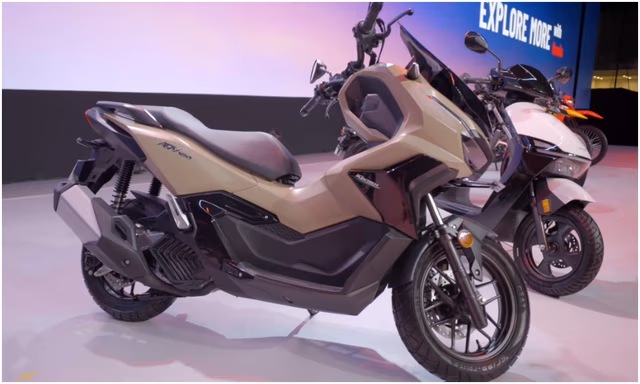 Amaan Ahmed | Jul 29, 2026Honda ADV 160 Coming To Both RedWing And BigWing DealershipsDespite being a premium product, Honda's biggest scooter for India till date will also be sold via its more widespread RedWing network, confirmed HMSI sales director Mutsuo Usui.3 mins read
 car&bike Team | Jul 29, 2026New Toyota Hilux: Variants, Features, Prices ExplainedThe 2026 Hilux is offered in two trim levels: GX and VX, and in both 4x2 and 4x4 configurations. Here is what each variant has to offer.3 mins read
 Jaiveer Mehra | Jul 27, 20262026 Maruti Suzuki Brezza Facelift Review: Bestseller Joins The Turbo ClubWhile Maruti’s facelifts have always tended to bring subtle updates over the outgoing models, the latest Brezza brings some heavy updates under the skin, including a new 6-speed manual gearbox and, for the first time, a turbocharged petrol engine option.1 min read
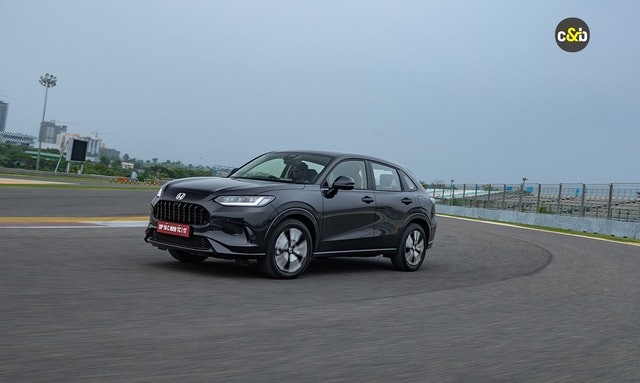 Bilal Firfiray | Jul 24, 2026Honda ZR-V Review: Who Is It For?Honda has brought the new ZR-V to India as their current flagship offering. It’s a CBU, it’s a hybrid, and it’s here for a limited few. Who is it for though?1 min read
 Girish Karkera | Jul 29, 2026Mercedes-AMG E53 4MATIC+ PHEV First Drive Review: Just What The Doctor OrderedThere are luxury cars and there are high-performance cars. But what if you want both for the price of one? Mercedes-Benz has a recommendation that promises to tread a fine line between the two – the second generation E53 with a twist.7 mins read
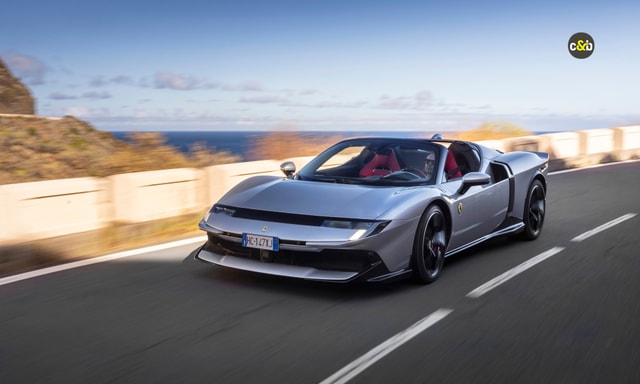 Shams Raza Naqvi | Jul 15, 2026Ferrari 849 Testarossa Spider Driven: Rs. 11.25 Crore Meets 1,000 bhpWe got behind the wheel of the most powerful convertible from Ferrari. What makes the 849 Testarossa Spider Special? We tell you.1 min read
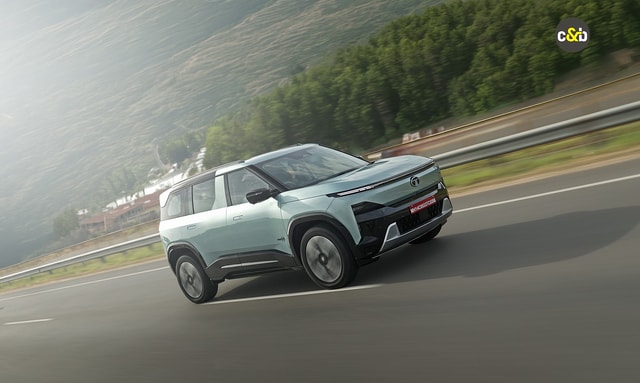 Bilal Firfiray | Jul 12, 2026Tata Sierra EV Review: Reborn In The Electric AgeThe Tata Sierra EV isn’t drastically different from its ICE counterpart when it comes to design. But being the seventh electric offering from the Indian brand, it has gotten a few things right, and very few things wrong. But is it a compelling package to buy?5 mins read