
Shenzhen Accelerates China's Driverless Car Dreams By David Kirton


On a busy downtown street three delivery bikes suddenly dart over the pedestrian crossing ahead of the car. On the car's dashboard they look like small 3D blue blocks from a 1990s video game.
The steering wheel turns itself a notch and the vehicle slows to a gentle halt, while the safety driver looks on from the passenger seat.
The vehicle is one of a hundred sensor-laden robotaxis belonging to start up DeepRoute.ai cruising the dense central Futian business district in China's southern tech hub Shenzhen, giving 50,000 trial rides to passengers in the last year.
While the United States is regarded as taking an early lead in testing autonomous vehicle (AV) technology, in Shenzhen the industry appears to be changing gears, with trial robotaxis fast becoming a common sight.
Baidu Inc's Apollo unit, Toyota Motor Corp-backed Pony, Nissan-backed Weride, Alibaba-backed Auto X and Deeproute have all been running trials navigating the city's difficult environment, with frequent jaywalkers and ubiquitous e-scooters.
Shenzhen, a city of 18 million, has now brought in China's clearest AV regulations. From Monday registered AVs will be allowed to operate without a driver in the driving seat across a broad swath of the city, but a driver must still be present in the vehicle.
So far, Chinese cities have allowed robotaxis to operate on a more limited basis with permission of local authorities, but Shenzhen's regulations for the first time provide a crucial framework for liability in the event of an accident.
If the AV has a driver behind the wheel, the driver will be liable in an accident. If the car is completely driverless, the owner of the vehicle will be responsible. If a defect causes an accident, the car owner can seek compensation from the manufacturer.
"If you want more cars, eventually there will be accidents, so these regulations are very important for mass deployment," said Maxwell Zhou, DeepRoute's CEO, speaking at the company's offices in a tech park near the Hong Kong border.
"This is not true driverless but it's a big milestone."
GEAR SHIFT
So far the United States has raced ahead in AV trials, with California greenlighting public-road tests from 2014, allowing Alphabet Inc's Waymo LLC, Cruise and Tesla to rack up millions of miles in road testing.
But China has its foot on the accelerator, with Beijing making AV a key area in its latest five year plan. Shenzhen wants its smart vehicle industry to reach revenues of 200 billion yuan by 2025.
In May last year Cruise Chief Executive Dan Amann warned President Joe Biden that U.S. safety regulations risked the country's AV industry falling behind China, with the latter's "top down, centrally directed approach".
Deeproute aims to have 1,000 robotaxis with safety drivers on Shenzhen's roads in the next few years, when more detailed regulations are expected.
But in a city with a state-owned fleet of 22,000 electric taxis from Shenzhen-based BYD, where a 20-km (12-mile) trip costs about 60 yuan ($9), production costs for AVs will need to come down before robotaxis are commercially viable, Zhou said.
Deeproute and other robotaxi companies are banking on mass production to lower costs and gather data. Deeproute sells its driving solutions to carmarkers for around $3,000.
Zhou looks to Shenzhen's DJI Technology Co as a role model, with the company utilising lower hardware costs and integrated supply chains to make it the dominant player in the commercial drone space worldwide.
On July 21 Baidu announced a new AV with a detachable steering wheel it will use for robotaxis next year, at 250,000 yuan a unit, almost half the price of its previous generation.
"We are moving towards a future where taking a robotaxi will be half the cost of taking a taxi today," Baidu's chief executive Robin Li said at the Baidu World conference.
FROGS IN A WELL
Shenzhen's supply chain and lower costs give it a major production advantage over Silicon Valley, but AV solution maker David Chang does not want to be constrained to one market.
"In Shenzhen the capital cost is one third to California, because we have the battery suppliers, we have the sensors, we have most of the integration," said the CEO and founder of Shenzhen-based Whale Dynamic.
"But the revenue is one twelfth to California, so it might not be a fancy business to do," he said.
Deeproute, Weride and Pony.ai also have offices in Silicon Valley, with R&D teams and testing in both locations.
"We don't want to shrink ourselves into a well and fight with other frogs. We want to jump out of that well," said Chang.
($1 = 6.7433 Chinese yuan renminbi)
Related News


Latest Cars


Upcoming Cars


Latest News


 car&bike Team | Aug 5, 2026River Mobility Raises $120 Million, Plots Manufacturing ExpansionThe funding round saw participation from existing investors, including Yamaha Motor Corporation, among others.2 mins read
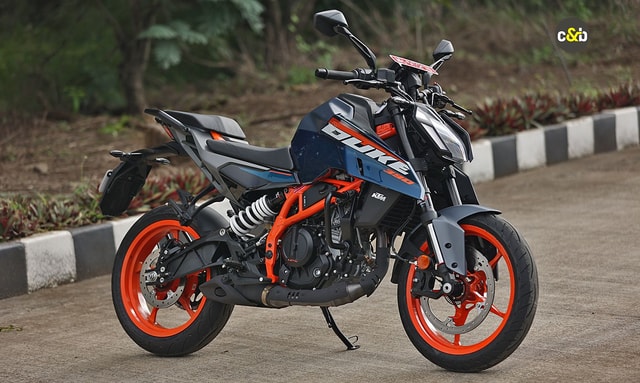 car&bike Team | Aug 5, 2026KTM 390 Duke Prices Hiked By Up To Rs 7,000390 Duke R is dearer by Rs 6,000; standard 390 Duke up by Rs 7,000.1 min read
 Seshan Vijayraghvan | Aug 5, 2026BMW X1 Long Wheelbase Teased; India Launch On August 21The BMW X1 LWB will be launched in India on August 21, 20261 min read
 Amaan Ahmed | Aug 5, 2026Ather Konarc Is The Name Of Production-Spec EL01 E-ScooterThe Konarc will be the most affordable Ather model yet, and also the first Ather to feature a 14-inch front wheel.1 min read
 Jaiveer Mehra | Aug 5, 2026Range Rover SV Ultra Launched At Rs 3.80 CroreRange-topping Range Rover brings JLR’s new SV Electrostatic sound system to India.1 min read
 car&bike Team | Aug 5, 2026Supreme Court Mandates Extension Of Third-Party Insurance For New Cars And Two-WheelersThird-party insurance for newly registered cars has been extended to four years, while new two-wheelers will now require six years of coverage.1 min read
 Bilal Firfiray | Aug 1, 2026Toyota Hilux Review: The InvincibleMarking it as the ninth generation, the Hilux comes with a major cosmetic overhaul. But is it still relevant enough for the current times or is it getting too long in the tooth?5 mins read
 Bilal Firfiray | Jul 30, 2026Kia Syros EV Review: Best EV To Buy Under Rs 20 Lakh?The Kia Syros EV comes into the game with a modern design, spacious cabin, strong performance, decent range and an aggressive pricing. But could it become the new benchmark under Rs 20 lakh?5 mins read
 Jaiveer Mehra | Jul 27, 20262026 Maruti Suzuki Brezza Facelift Review: Bestseller Joins The Turbo ClubWhile Maruti’s facelifts have always tended to bring subtle updates over the outgoing models, the latest Brezza brings some heavy updates under the skin, including a new 6-speed manual gearbox and, for the first time, a turbocharged petrol engine option.1 min read
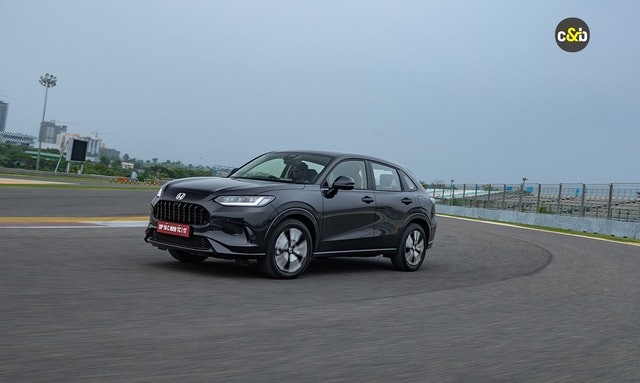 Bilal Firfiray | Jul 24, 2026Honda ZR-V Review: Who Is It For?Honda has brought the new ZR-V to India as their current flagship offering. It’s a CBU, it’s a hybrid, and it’s here for a limited few. Who is it for though?1 min read
 Girish Karkera | Jul 29, 2026Mercedes-AMG E53 4MATIC+ PHEV First Drive Review: Just What The Doctor OrderedThere are luxury cars and there are high-performance cars. But what if you want both for the price of one? Mercedes-Benz has a recommendation that promises to tread a fine line between the two – the second generation E53 with a twist.7 mins read