
Royal Enfield Bear 650 Review: Is It The Best RE 650?

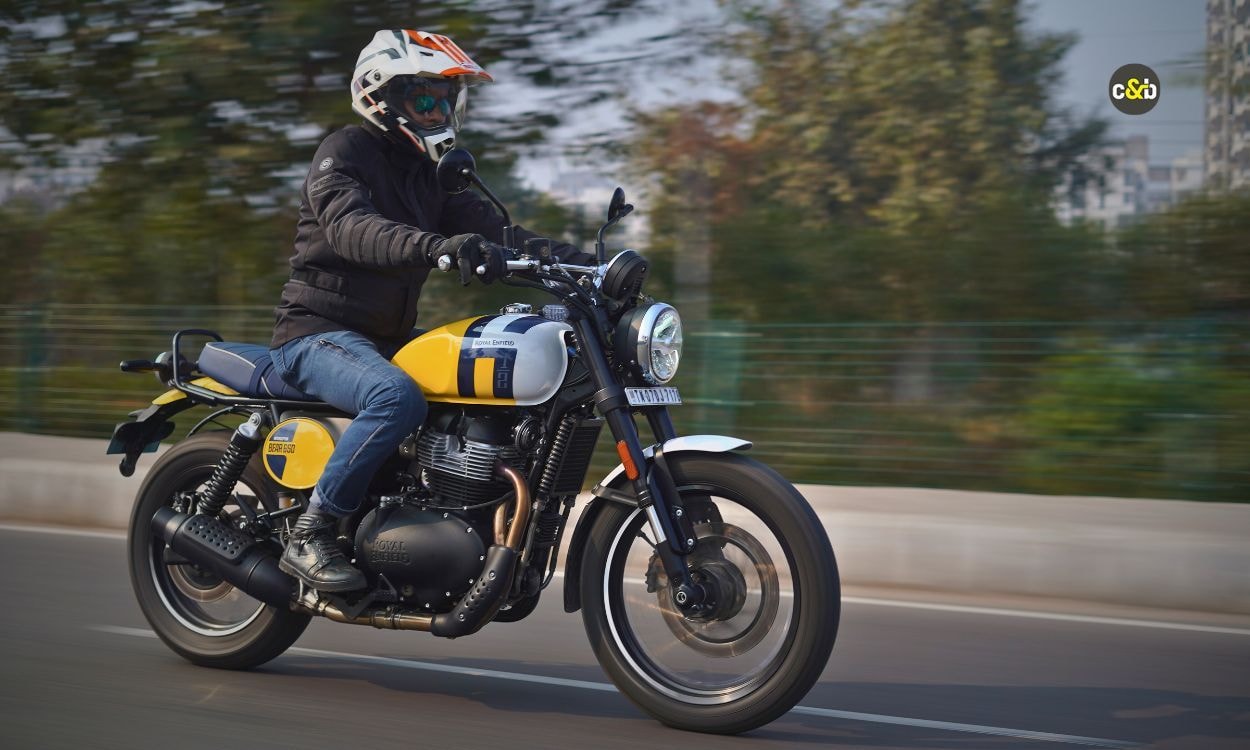
- RE Bear 650 is a "scrambler" based on Interceptor 650
- 648 cc, parallel-twin makes same 47 bhp, but 56.5 Nm
- 216 kg kerb weight, increased suspension travel
Photography: Arvind Salhan
The Royal Enfield Bear 650 (also called the Royal Enfield Interceptor Bear 650) extends Royal Enfield’s 650 Twins platform with a fifth model. The Bear 650 may be based on the standard Interceptor 650 but has quite a few changes to give it fresh appeal and justify the new name and “scrambler” positioning. It gets a different wheel sizes, dual-purpose tyres, slightly longer travel suspension, different ergonomics, a reinforced frame and a bump in torque from the 648 cc parallel-twin engine.
Also Read: RE Bear 650 Differences Explained With Interceptor 650
Introduction: Royal Enfield Interceptor Bear 650
Royal Enfield describes the Bear 650 as a “street scrambler,” underscoring its tarmac-oriented personality. With additional suspension travel, more ground clearance and dual-purpose tyres, is the Bear 650 competent enough when the tarmac ends? And with bright colours and a desirable design, is it worth considering from amongst its stable mates? We spent a few days with the new Bear 650 to get a sense of what it offers, and if it manages to impress with all-round capability.
Also Read: Top 5 Highlights Of Royal Enfield Bear 650
The concept of a scrambler motorcycle, when the scrambler rage started in the 1960s and ‘70s, was to take a production roadster, strip it down and make it lighter for off-road work. But nowadays, from almost every other manufacturer, you get a scrambler straight from the factory, homologated for road use. That’s the same case with the Royal Enfield Interceptor Bear 650. In the end it's a factory scrambler, mainly designed for tarmac use, but also for some green laning, or “soft roading,” if you will, rather than all-out off-road capability. Or is it?
Design & Features
Even at first glance, there’s no doubt that the Bear 650 is a good-looking motorcycle. It’s desirable, and although being based on the Interceptor 650, it has managed to infuse fresh appeal in this scrambler version. With bright colours, a wide braced handlebar, and flat, ribbed seat, there’s no mistaking the scrambler-inspired design DNA.
The exhaust is now a two-into-one system – which has resulted in slightly more torque from the parallel-twin engine. But more on that later.
The exhaust design has one advantage though. Unlike the twin exhausts of the Interceptor 650 which kind of jut out, and you need to be a bit careful in tight spaces, the Bear 650’s side-mounted tucked in exhaust has kind of negated that disadvantage.
The Bear 650 is a striking motorcycle and is the first Royal Enfield 650 to get all-LED lighting and is feature-rich as well. It gets the TFT instrument console from the Himalayan 450, with full Google map navigation, but what you don’t get is spoked wheels with tubeless tyres, or even the option of alloys with tubeless tyres.
Dimensions & Ergonomics
The Bear 650 looks like a substantial motorcycle, and that’s because it’s actually bigger than the Interceptor 650. The Bear 650’s swingarm is longer by 60 mm, and the frame has been reinforced as well, at the headstock and the subframe. It also has a bigger 19-inch front wheel giving it a taller stance and the wheels (with a 17-inch rear wheel) come shod with block pattern MRF Nylorex tyres. The Interceptor 650 comes with 18-inch wheels, front and rear, but also gets optional alloy wheels with tubeless tyres.
The Bear 650 also gets longer travel suspension, with its 43 mm Showa upside down front fork offering 130 mm stroke, compared to just 115 mm fork stroke of the Interceptor 650. Rear suspension is also different with 110 mm travel, while the Interceptor 650 gets 88 mm of travel. With the bigger front wheel and longer travel suspension, ground clearance has also gone up to 184 mm, but it’s also become taller, with saddle height going up to 830 mm.
For my 5’9” frame, it’s not much of a bother, but for anyone who’s possibly 5’6” or shorter, the tall seat height could be an issue. In terms of ergonomics, the flat braced handlebar offers a slight reach forward for the rider – not as upright as you would think, but not uncomfortable as well.
Engine & Performance
Thumb the starter and the 650 Twin fires up with a reassuring rumble – meaty, throaty and with pops and crackles when you give some revs. The free flowing two-into one exhaust system has contributed to more torque from the 648 cc, eight-valve, SOHC, parallel-twin engine. The engine makes the same 47 bhp, but peak torque has increased to 56.5 Nm and the hike in torque is across the rev range.
How different it is can only be ascertained riding both bikes back-to-back (the Interceptor 650 and the Bear 650), but the Bear 650’s engine certainly has an urgency and grunt which is immediately likeable, shifting through the slick six-speed gearbox. The engine is responsive and will propel you to illegal speeds in no time, despite the Bear 650’s girth and weight, and what is quite nice is the raspy exhaust note, which certainly complements the Bear 650’s personality and character.
Ride Quality & Dynamics
The MRF Nylorex tyres offer decent grip on tarmac, even when leaned over. And as far as handling is concerned, the Bear 650 is impressive, and high-speed stability is also pretty good. If the Interceptor 650 offers a soft and wavy ride which isn’t so confidence inspiring at high speeds, the Bear 650 offers sure-footed and planted dynamics.
But it’s the suspension set-up, which is a bit of a letdown, particularly when going over broken patches. The stiff ride quality will make you want the least imperfect road surfaces, and in our conditions, where potholes and broken surfaces are everywhere, the Bear 650’s chink in the armour is this – stiff and bouncy ride quality.
And when you do venture out off-road, the tyres offer decent performance, for some sideways fun! But again, the suspension set-up lets down the Bear 650’s capabilities. Even with the smallest of jumps, the Bear 650’s front fork bottoms out, and the rear feels bouncy and inconsistent, which doesn’t quite give you the confidence to push it for some scrambling fun.
In the end, the Bear 650 can take on mild off-road duties, but the stiff suspension is not ideal, and it’s best suited for smooth surfaces, on tarmac, for the occasional Sunday morning blast, or a ride around your neighbourhood twisties.
Price & Variants
In all, the Bear 650 is offered in five colour options – Wild Honey (our test unit), Boardwalk White, Petrol Green, Golden Shadow and a special colour edition called Two Four Nine, paying homage to the motorcycle racing No. 249, a Royal Enfield scrambler piloted by 16-year-old Eddie Mulder in the 1960s who went on to win the Big Bear Desert Race in California. Prices range from Rs. 3.39 lakh (Ex-showroom), going up to Rs. 3.59 lakh (Ex-showroom), depending on the colour option you will choose, and translating to around Rs. 40,000 more than the Interceptor 650.
Verdict
The Royal Enfield Bear 650 looks fantastic, sounds great and has a peach of an engine, with a wide spread of torque across the rev range, which will put a smile on your face every time you open the throttle. It is what the Interceptor 650 could have been, but an off-road ready scrambler it is not. It’s best enjoyed on a smooth paved road, where you can have a blast, that is until you hit some broken patches or speedbreakers.
Barring the stiff ride quality and the size and weight, the Bear 650 has a certain endearing quality to it which is difficult to ignore. If those shortcomings could have been addressed, it could have been the Royal Enfield 650 to go for, no two ways about it. Even then, take a test ride, the Bear 650 could end up charming you, and it could be the street scrambler that you always wanted.
Royal Enfield Bear 650 Review: Photo Gallery:
Latest Cars


Upcoming Cars


Latest News


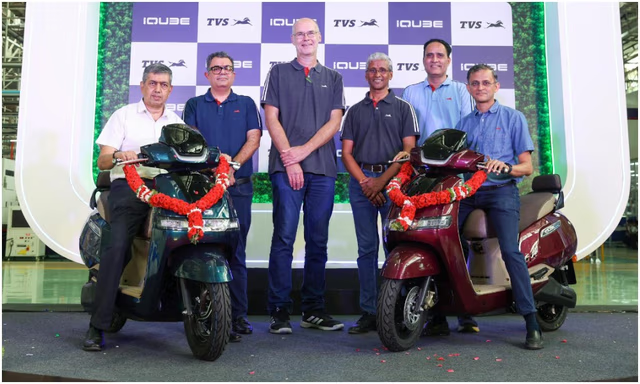 car&bike Team | Jun 25, 2026TVS iQube Electric Scooter Crosses 10 Lakh Units Production MilestoneIntroduced in 2020, the iQube is TVS' first high-speed, long-range electric scooter, which has soared to the top of sales charts in recent years.1 min read
 car&bike Team | Jun 24, 2026Kawasaki KLX230 Gets Dearer For MY2027; Price Increased By Rs 35,000The MY2027 Kawasaki KLX230 arrives with a significant price hike, but no mechanical or cosmetic changes over the outgoing model.1 min read
 Seshan Vijayraghvan | Jun 24, 2026Renault Kiger Variants Updated; New Evolution+ Trim Brings Auto AC, Wireless Smartphone Connectivity For Rs. 6.99 LakhIn addition to the new Evolution+ trim, Renault has also made the turbo petrol engine more accessible with the launch of Techno MT Turbo at Rs. 7.89 lakh.1 min read
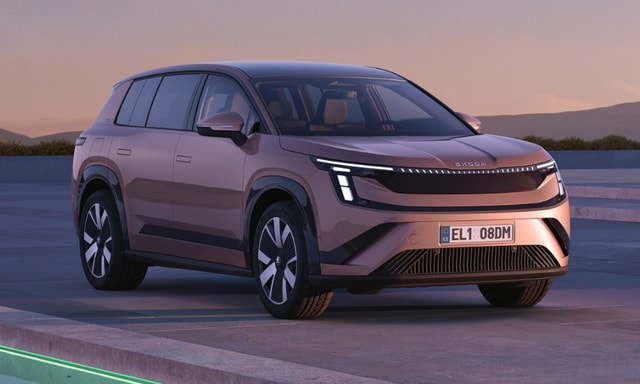 Jaiveer Mehra | Jun 24, 2026Skoda Peaq Electric SUV Revealed: Skoda’s Largest SUV Seats 7, Offers 640 km RangeThe Peaq measures nearly 4.9 metres long and is offered in five- and seven-seater configurations and with rear and all-wheel drive options.1 min read
 car&bike Team | Jun 23, 2026Hero MotoSports Completes 10 Years; Signs 18-Year-Old For Dakar ProgrammeHero MotoCorp marked 10 years of its global rally-raid programme and announced a Dakar talent programme, signing on 18-year-old supercross sensation Shlok Ghorpade.1 min read
 car&bike Team | Jun 23, 2026Citroen Aircross Comfort Edition Launched; Prices Start At Rs. 9.09 LakhThe Citroen Aircross Comfort Edition will be offered in three variants - You, Plus, Plus Turbo 7S - and they are priced between Rs. 9.09 lakh and Rs. 11.99 lakh (ex-showroom).2 mins read
 Janak Sorap | Jun 25, 2026350cc Bajaj Dominar 400 Review: Same Character, Lower PriceA slightly lower displacement engine, a significantly lower price tag and nearly the same performance — the Bajaj Dominar 400 aims to be smarter rather than faster.6 mins read
 Preetam Bora | Jun 25, 20262026 Bajaj Pulsar NS400Z First Ride Review: Smaller Engine, But Should You Buy It?The Bajaj Pulsar NS400Z won our Two-Wheeler Upgrade of the Year. Then new tax slabs happened. Smaller engine, same badge – but does it still deliver?6 mins read
 Preetam Bora | Jun 25, 2026Triumph Tracker 400 First Ride Review: What's It Really Like?The Triumph Tracker 400 is here, now with a downsized 349 cc engine. We spent a couple of hours with it to share our first impressions. Is it worth your attention?1 min read
 Preetam Bora | Jun 15, 20262026 Yezdi Scrambler Review: The Update That Changes EverythingThe Yezdi Scrambler gets a comprehensive update with an updated engine, revised chassis, reduced weight and proper features list. Does it deliver? Here’s our take.10 mins read
 Preetam Bora | Jun 10, 20262026 BMW F 450 GS Review: A True GS - But Should You Buy It?The GS badge on a BMW means something and always has. Can the new made-in-India BMW F 450 GS truly live up to that legacy? We spent a few days getting familiar with the F 450 GS to see if it’s worth a buy.12 mins read