
Automakers Need More Time To Meet U.S. Minerals Requirements For EVs - Execs

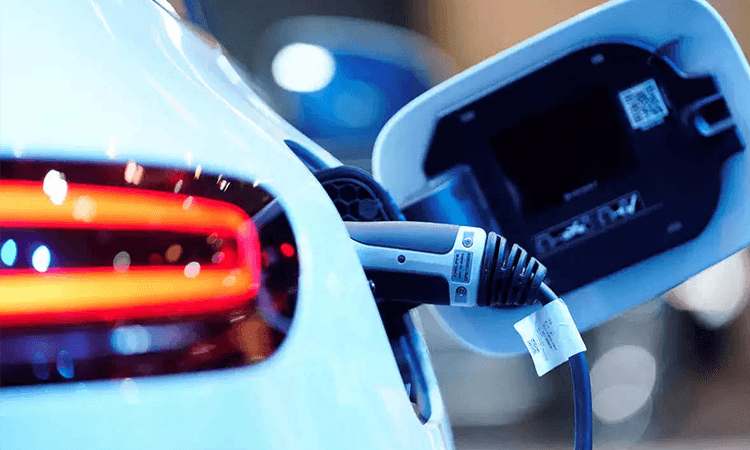
U.S. legislators need to give automakers operating in the United States more time to achieve the required sourcing levels of battery minerals used in electric vehicles to qualify for federal tax incentives, several industry executives said on Wednesday.
The Inflation Reduction Act, as currently written, requires automakers to have 50% of critical minerals used in EV batteries come from North America or U.S. allies by 2024, rising to 80% by the end of 2026. Volkswagen Americas Chief Executive Pablo Di Si said the industry cannot move that fast.
"All of us source from different parts of the world and changing these long-term contracts, you don't do that from one day to the next. We have 10, 15, 20-year commitments," Di Si said at the Reuters Events auto conference in Detroit.
U.S. lawmakers need to create a more phased-in process that goes out to 2030 instead, he and Hyundai Motor Co Chief Operating Officer Jose Munoz said at the Reuters event.
"When we saw the IRA, we were not happy," Munoz said in a separate interview, referring to the new law.
"We believe it's unfair," he added, pointing out that none of the South Korean automaker's EVs qualify for the credit.
Hyundai will break ground next week on a $5.5 billion EV plant in Georgia that will create thousands of jobs. Munoz said U.S. legislators should offer companies investing in the United States some type of waiver or a longer transition period.
Automakers are trying to figure out how their vehicles will meet the new law's requirements to qualify for EV tax credits.
Signed into law in August by U.S. President Joe Biden, the IRA contains incentives designed to help meet his administration's goals of halving U.S. carbon emissions by 2030 and getting to net-zero emissions by 2050.
Under the $430 billion law, rules governing the current $7,500 EV tax credit aimed at persuading consumers to buy the vehicles will be replaced by incentives designed to bring more battery and EV manufacturing into the United States. The domestic content requirements will ratchet up over the next six years.
New restrictions on battery sourcing and critical minerals, along with price caps and income caps, take effect on Jan. 1, which will potentially make all current EVs ineligible for the full $7,500 credit.
Details of the act are still being ironed out and the U.S. Treasury is currently taking comments on how to implement the rules around the EV tax credits.
"I don't think that you can transform the mineral production and extraction within the next two to three years," Di Si said on Wednesday in Detroit. "You cannot change the sources from Congo, China and other places within two to three years."
VW America's chief purchasing officer, Inga von Seelen, said on Tuesday at the Reuters conference that the German automaker has to source battery materials from where they are available.
VW has a supply agreement for batteries from an SK Innovation plant in the U.S. state of Georgia and in August struck a battery materials cooperation agreement with mineral-rich Canada in a move to secure access to lithium, nickel and cobalt.
AFFORDABILITY
In South Carolina on Wednesday to announce a $1.7 billion investment to build EVs in the United States, BMW CEO Oliver Zipse was also critical of the new law, telling Reuters no region can be independent especially for raw materials for EVs.
The U.S. "should have a regulation that is not completely unrealistic." He also warned the new law could inhibit investments.
At least one legislator was receptive to that argument. U.S. Senator Lindsey Graham, a South Carolina Republican, said at Wednesday's BMW event that the United States cannot make EV batteries solely from U.S. minerals and components.
On the other hand, Steve Carlisle, president of General Motors Co's North American operations, said the U.S. automaker should be able to meet the new law's requirements.
"We're pretty well positioned," he said at the Reuters conference, citing the Detroit automaker's four U.S. battery plants the company has announced and its raw materials supply deals. "All in, it's very beneficial to help promote (EV) adoption."
Stellantis North American Chief Operating officer Mark Stewart on Tuesday at the Reuters conference said the automaker's purchasing teams are working to meet the new law's requirements.
"We have ... very active conversations to secure capacity around the world, in the free trade zones, to make sure we're covered all the way through 2030," he said.
Stewart added it is crucial to offer vehicles that most people can afford.
"At the end of the day, if we can't make this transition to what consumers can afford, the industry's going to collapse on itself," he said. "We have to find a way to bring affordable tech into the equation."
Related News


Latest Cars


Upcoming Cars


Latest News


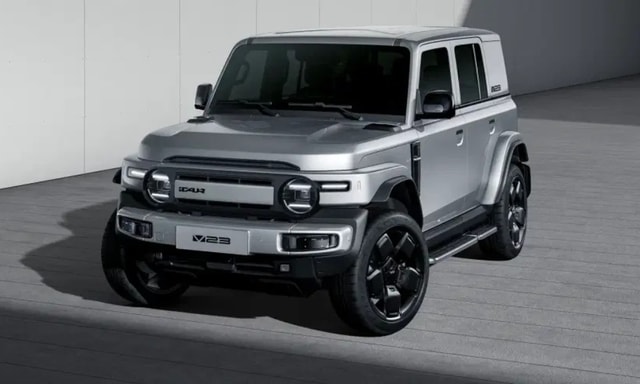 car&bike Team | Jul 30, 2026JSW Motor To Offer AWD Option on Chery iCar V23-Based SUVTest mules of the electric SUV have been spotted testing in India on multiple occasions.1 min read
 car&bike Team | Jul 30, 2026All-New 2026 Bajaj Pulsar Launching SoonBajaj Auto is getting ready to launch the next-generation Pulsar across segments, and the first one is likely to be the new Pulsar 150 or an updated Pulsar N160.1 min read
 Seshan Vijayraghvan | Jul 29, 2026Kia Sorento India Arrival Confirmed With New Teaser: Launch This Festive SeasonThe Kia Sorento has already been spotted testing in India, and it's expected to arrive this festive season.1 min read
 car&bike Team | Jul 29, 2026Tata Punch EV Facelift Gets 5 Stars From Bharat NCAPThe electric micro SUV scored 31.09 out of 32 for Adult Occupant Protection and 45 out of 49 for Child Occupant Protection.2 mins read
 Jaiveer Mehra | Jul 29, 2026Audi’s GLS-Rivalling Q9 SUV Unveiled With 6- And 8-Cylinder EnginesAudi’s first full-size SUV packs in the latest tech and will go on sale with either petrol or diesel engine options depending on the market.1 min read
 car&bike Team | Jul 29, 2026Ather Begins Pothole Alerts Rollout For Gen 2 Electric ScootersThrough the dashboard, the new feature notifies riders about poor road conditions in advance.1 min read
 Bilal Firfiray | Jul 30, 2026Kia Syros EV Review: Best EV To Buy Under Rs 20 Lakh?The Kia Syros EV comes into the game with a modern design, spacious cabin, strong performance, decent range and an aggressive pricing. But could it become the new benchmark under Rs 20 lakh?5 mins read
 Jaiveer Mehra | Jul 27, 20262026 Maruti Suzuki Brezza Facelift Review: Bestseller Joins The Turbo ClubWhile Maruti’s facelifts have always tended to bring subtle updates over the outgoing models, the latest Brezza brings some heavy updates under the skin, including a new 6-speed manual gearbox and, for the first time, a turbocharged petrol engine option.1 min read
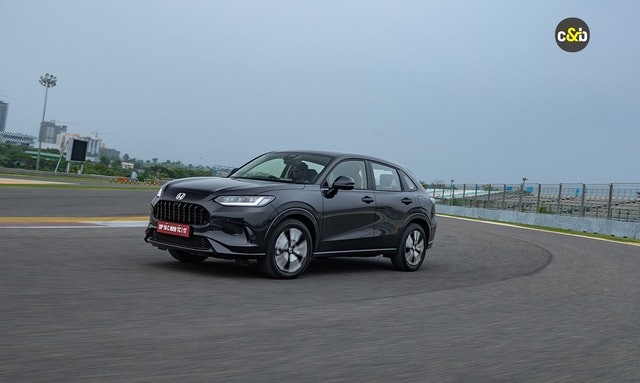 Bilal Firfiray | Jul 24, 2026Honda ZR-V Review: Who Is It For?Honda has brought the new ZR-V to India as their current flagship offering. It’s a CBU, it’s a hybrid, and it’s here for a limited few. Who is it for though?1 min read
 Girish Karkera | Jul 29, 2026Mercedes-AMG E53 4MATIC+ PHEV First Drive Review: Just What The Doctor OrderedThere are luxury cars and there are high-performance cars. But what if you want both for the price of one? Mercedes-Benz has a recommendation that promises to tread a fine line between the two – the second generation E53 with a twist.7 mins read
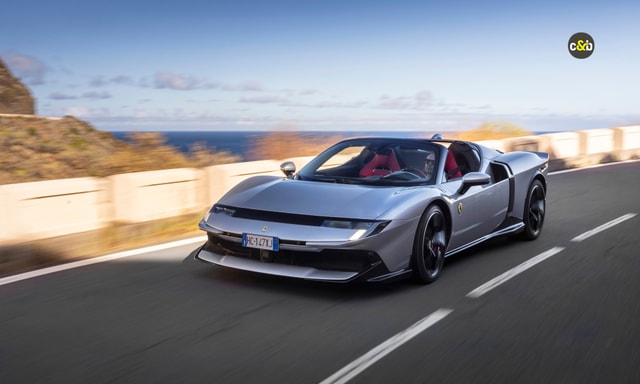 Shams Raza Naqvi | Jul 15, 2026Ferrari 849 Testarossa Spider Driven: Rs. 11.25 Crore Meets 1,000 bhpWe got behind the wheel of the most powerful convertible from Ferrari. What makes the 849 Testarossa Spider Special? We tell you.1 min read