
India Targets Major Global Firms For Local Battery Manufacturing: Report


India plans to pitch to companies such as Tesla Inc, Samsung and LG Energy to encourage them to invest in manufacturing batteries locally, as it looks to establish a domestic supply chain for clean transport, two government sources told Reuters.
India will host five roadshows starting next month in countries including the United States, Germany, France, South Korea and Japan to convince battery makers to set up local production, one of the officials said.
Tesla, LG Energy and Samsung are among those who will be invited to attend, although a delegate list has not yet been confirmed. Other companies targeted include Northvolt, Panasonic and Toshiba, the official said.

India sees clean auto technology as central to its strategy to cut pollution in major cities and reduce oil dependence
The move is part of a broader $2.4 billion incentive program to boost battery manufacturing for which the government has begun inviting investment proposals from companies.
While domestic players like Reliance Industries, Adani Group and Tata Group have shown interest, there has been little enthusiasm from global ones so far, the official said.
Some global companies are hesitant to come in without a local partner as it requires large investment and India still ranks poorly on contract enforcement, he added.
Others are choosing to invest in bigger markets like the United States and Europe where demand for batteries is higher.
"Getting global companies into India will signal seriousness and they will also bring in good technology, quality and safety standards," the person said.
India's plans come as nations prepare to meet in Glasgow next week for the United Nations Climate Change Conference (COP26). India sees clean auto technology as central to its strategy to cut pollution in major cities and reduce oil dependence, while also meeting its emissions targets.
To qualify for the incentives, companies must set up a minimum of 5 Gwh of storage capacity and meet certain local content conditions.
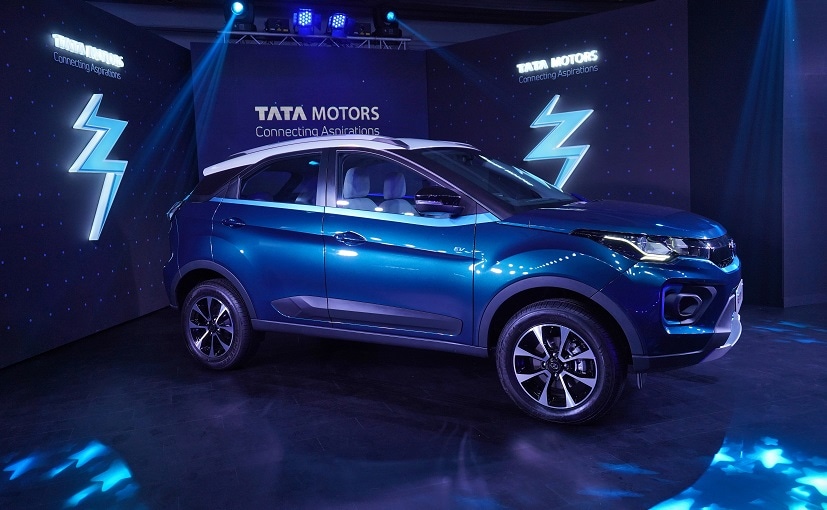
Electric vehicles (EVs) currently make up a fraction of total sales in India mainly due to their high price as the batteries are imported. But growth is picking up as the government offers incentives to automakers as well as EV buyers.
The South Asian country intends electric cars to make up 30% of total private car sales by 2030 and for electric motorcycles and scooters to make up 40% of total sales.
This is expected to drive demand for batteries that currently contribute about 35% to 40% of the total vehicle cost, but can be lowered with local production.
Under the terms of the $2.4 billion program, India wants to establish a total of 50 gigawatt hours (Gwh) of battery storage capacity over five years which it expects will attract direct investment of about $6 billion.
To qualify for the incentives, companies must set up a minimum of 5 Gwh of storage capacity and meet certain local content conditions. This would require a minimum investment of more than $850 million, the official said.


Latest News


 car&bike Team | Jul 1, 2026BYD eMax 7 Comfort Launched At Rs 27.90 LakhNew mid variant slots in between the Premium and Superior trim and comes with the 71.8 kWh battery.1 min read
 car&bike Team | Jul 1, 2026BYD Cars Prices Hiked By Up To Rs 1 LakhBYD India has revised prices across select variants in its electric passenger vehicle line-up, with increases ranging from Rs 50,000 to Rs 1 lakh.1 min read
 Jaiveer Mehra | Jul 1, 2026Fifth-Gen BMW X5 Debuts With ICE, Hybrid, EV & FCEV PowertrainsNew X5 adopts the ‘Neue Klasse’ design from the smaller X3 while offering a wide range of powertrain options.1 min read
 Jafar Rizvi | Jul 1, 2026Lamborghini Urus SE Performante Revealed As Brand’s Most Powerful SUV YetPacking 801 bhp and a 0-100 kmph time of 3.3 seconds, it is the quickest and most powerful Urus to date.3 mins read
 car&bike Team | Jul 1, 2026Ather 450X Overtones Series Launched; Gets Faster Charging & New ColoursThe 450X Overtones series features three new colours, a new 900W charger as well as the updated Atherstack 7 software platform, which unlocks new features.1 min read
 car&bike Team | Jul 1, 2026VIDA Reveals New Brand Logo, Enters Asia Book of RecordsHero MotoCorp's EV arm, VIDA, has introduced a redesigned logo that reflects its expanding electric mobility ambitions.1 min read
 Seshan Vijayraghvan | Jun 29, 2026Renault Kiger vs Toyota Urban Cruiser Taisor: Which Underdog Deserves Your Money?Both the Kiger and the Taisor promise strong performance, solid features, comfortable cabins and everyday usability, all without breaking the bank. But which of these underrated subcompact SUVs deserves your money? Let's find out.1 min read
 Seshan Vijayraghvan | Jun 29, 2026Skoda Kodiaq RS Review: The Best Kodiaq Yet?The Skoda Kodiaq RS is finally here, and it's every bit as exciting as I expected. But was it worth the wait?7 mins read
 Bilal Firfiray | Jun 28, 2026BMW X6 M60i Review: It’s Back And HOW!The BMW X6 M60i blends a 530bhp twin-turbo V8, with its unmistakable coupe-SUV styling. There’s plenty of character, but is it worth your money?6 mins read
 Janak Sorap | Jun 25, 2026350cc Bajaj Dominar 400 Review: Same Character, Lower PriceA slightly lower displacement engine, a significantly lower price tag and nearly the same performance — the Bajaj Dominar 400 aims to be smarter rather than faster.6 mins read
 Preetam Bora | Jun 25, 20262026 Bajaj Pulsar NS400Z First Ride Review: Smaller Engine, But Should You Buy It?The Bajaj Pulsar NS400Z won our Two-Wheeler Upgrade of the Year. Then new tax slabs happened. Smaller engine, same badge – but does it still deliver?6 mins read