
Investors Go Back To Basics With Simpler Self-Driving Vehicles

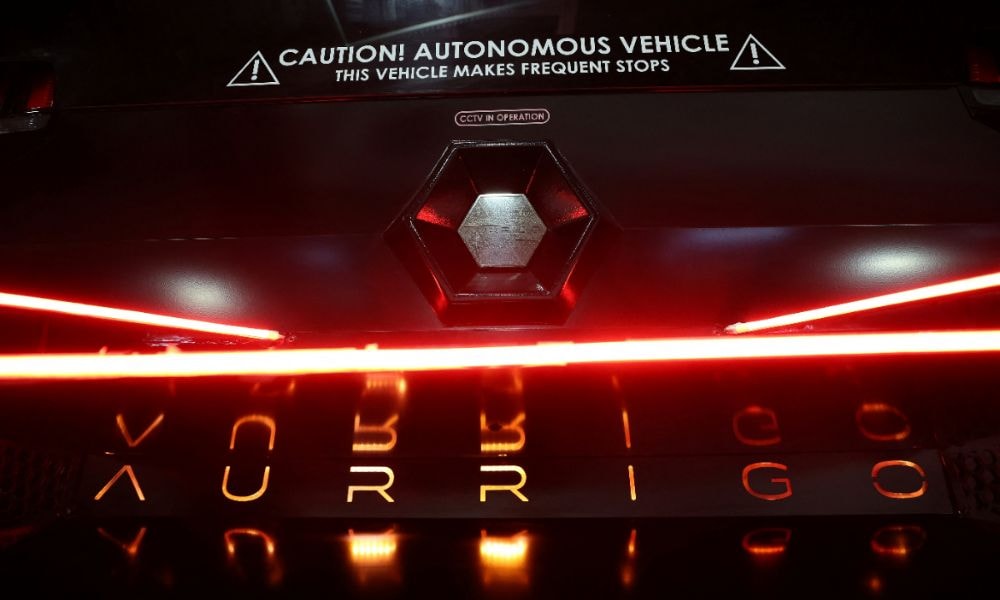
Developing fully autonomous vehicles (AVs) that can go everywhere has proven harder and more expensive than expected, but investors are continuing to fund startups that target simpler self-driving vehicle solutions far removed from pedestrians and other vehicles operated by unpredictable humans.
British AV software company Oxbotica, Sweden's Einride, America's Outrider and British supplier Aurrigo International Plc are among a number of companies drawing investor interest with more focused approaches, aimed at smaller, simpler customer segments - from mining vehicles to tractors or forklifts.
After watching robotaxi firms spend billions on technology that could still be many years away, investors are looking for startups that burn less cash and are preferably already generating revenue, said Kasper Sage, managing partner at BMW's venture capital fund BMW iVentures, which led autonomous forklift company Fox Robotics' $20 million funding round in October.
"Full autonomy in every kind of environment is still years, if not decades out," Sage said. "You need to have a business case that works and you need to make the problem smaller."
Earlier promises made by robotaxi companies of operating fleets of vehicles by the early 2020s have fallen well short. When Ford Motor Co and Volkswagen AG pulled the plug on self-driving unit Argo AI in November, Ford CEO Jim Farley said a profitable robotaxi business was still many years away. Ford rival General Motors Co burned through nearly $2 billion last year at its robotaxi unit Cruise and said it anticipates spending even more in 2023.
The problem is that making robot cars that can drive more safely than people is immensely tough. This is because AV systems still lack humans' ability to predict and assess risk quickly, especially when encountering unexpected incidents.
When it became clear that the era of robotaxis was still distant, investors in 2021 shifted instead to self-driving truck companies that promised a faster route to market by hauling freight autonomously - arguing it would be easier to develop AVs to operate on highways at high speed without pedestrians.
But those startups have also struggled to deliver because a robot driving fast still cannot match the human brain.
AV truck technology firm Aurora, for instance, has a market value of $2 billion, a fraction of the $12.5 billion when it went public in 2021 via a special-purpose acquisition company (SPAC).
KEEPING IT SIMPLE
Faced with the long-term conundrum that people and robots do not mix well, investors have gone back to basics, targeting less-complex, less cash-intensive forms of autonomy with a clearer path to payback, operating at lower speeds with little to no traffic.
BMW iVentures has also invested in AV truck technology firm Kodiak Robotics, which managing partner Sage said has adopted a simpler approach to areas like mapping.
In October, Kodiak won a $50 million contract to develop AVs for the U.S. Army.
"It helps that we're not spending a ton of money, like some folks have," said Kodiak CEO Don Burnette.
Overall venture investment in AV companies in the fourth quarter plunged 47% to $1.4 billion from a year earlier, according to PitchBook senior analyst Jonathan Geurkink.
But $500 million of that went to AV electric truck firm Einride, which is working towards running self-driving trucks on public roads but has focused first on less-crowded private roads at logistics and manufacturing hubs of customers like GE Appliances, a unit of Chinese home appliance maker Haier.
"The shift in investment ... toward off-road/more structured environments is a very real one given the lack of progress in passenger AVs (and) the high capital requirements involved," said Asad Hussain, research partner at private equity firm Mobility Impact Partners.
'SOMEWHERE, NOT EVERYWHERE'
Last month, British AV software startup Oxbotica announced $140 million in funding to roll out more products, starting with AVs operating in mines and remote areas.
"We're really focused on 'somewhere' autonomy rather than 'everywhere' autonomy because that's where the value is today," Oxbotica CEO Gavin Jackson said.
Jamie Vollbracht, founding partner of Kiko Ventures, IP Group Plc's $450 million clean-tech investment platform, said mining companies can lose millions of dollars per hour in remote areas if they cannot get a human driver into a truck, placing them among a growing number of viable markets for AVs. Kiko was Oxbotica's first institutional investor.
"There has been a major underestimation of the scale of those early (AV) applications," Vollbracht said.
U.S. startup Outrider in January announced $73 million in funding to scale up its self-driving trucks that currently operate at low speeds in customers' distribution yards.
Construction and agricultural equipment - used off-road in low-traffic environments - has been another growth area for AV startups. They are operating alongside traditional heavy equipment makers like Caterpillar Inc, Deere & Co and CNH Industrial NV, which have also invested in AV technology.
Like Oxbotica, Apex.AI designs AV software for use in a variety of vehicles for "a number of non-automotive and trucking customers (with) a wide range of applications," said CEO Jan Becker.
U.S. agricultural equipment maker AGCO Corp, for instance, is using the Palo Alto, California-based startup's software for an experimental automated electric planter.
Deere has already acquired a number of AV-related businesses as it moves towards autonomy, including self-driving tractor firm Bear Flag Robotics for $250 million in 2021.
San Francisco-based Trucks Venture Capital had invested in Bear Flag before its sale and managing partner Reilly Brennan said the firm is "actively looking for another autonomous ag (startup)."
Trucks Venture Capital has also invested in Teleo, a maker of semi-autonomous retrofits for heavy construction and mining equipment that announced $12 million in funding last June.
Teleo's system allows a human operator to control multiple slow-moving AVs remotely and to take over only in situations that the software cannot handle. CEO Vinay Shet said combining the best of AV software and the human brain allowed Teleo to "build a real product that we can take to market today and not wait for another decade or two."
(Reporting By Nick Carey in Coventry, England, and Paul Lienert in Detroit, Editing by Ben Klayman and Matthew Lewis)
Related News


Latest Cars


Upcoming Cars


Latest News


 Jaiveer Mehra | Jul 28, 2026New Toyota Hilux Launched in India At Rs 31.99 LakhNinth-gen Hilux gets a notable redesign over its predecessor, though it retains the familiar 2.8-litre diesel engine option.2 mins read
 Jaiveer Mehra | Jul 28, 2026Avore EX Electric Motorcycle Launched In India At Rs 1.25 LakhEV start-up is offering its debut electric motorcycle in three variants - EX1, EX2 and EX2 S.2 mins read
 car&bike Team | Jul 28, 2026Honda XR 300L & Honda XR300 Rally: What We Know So FarBoth the XR300L and XR300 Rally are based on the same platform and will be part of Honda’s new made in India line-up with prices and full specifications to be announced soon.5 mins read
 car&bike Team | Jul 28, 2026Mahindra Scorpio-N Facelift Interior Spied Undisguised Ahead Of DebutWhile a lot of the switchgear is carried over from the current SUV, the facelifted SUV gets a redesigned centre console with a larger touchscreen and a new digital instrument cluster.1 min read
 Bilal Firfiray | Jul 28, 2026Skoda Slavia Facelift India Debut On 18th August; New Gearbox With Cosmetic ChangesSkoda Slavia facelift will be launched in India on August 18 with newer styling cues, additional features and an expected 8-speed automatic gearbox for the 1.0 TSI engine.1 min read
 car&bike Team | Jul 27, 2026Honda CB500: What We Know So Far – Price, Launch Date, SpecsThe Honda CB500 is expected to be launched just before the festive season this year, possibly around September 2026 with prices beginning at around Rs. 3 lakh (Ex-showroom).4 mins read
 Jaiveer Mehra | Jul 27, 20262026 Maruti Suzuki Brezza Facelift Review: Bestseller Joins The Turbo ClubWhile Maruti’s facelifts have always tended to bring subtle updates over the outgoing models, the latest Brezza brings some heavy updates under the skin, including a new 6-speed manual gearbox and, for the first time, a turbocharged petrol engine option.1 min read
 Bilal Firfiray | Jul 24, 2026Honda ZR-V Review: Who Is It For?Honda has brought the new ZR-V to India as their current flagship offering. It’s a CBU, it’s a hybrid, and it’s here for a limited few. Who is it for though?1 min read
 Girish Karkera | Jul 29, 2026Mercedes-AMG E53 4MATIC+ PHEV First Drive Review: Just What The Doctor OrderedThere are luxury cars and there are high-performance cars. But what if you want both for the price of one? Mercedes-Benz has a recommendation that promises to tread a fine line between the two – the second generation E53 with a twist.7 mins read
 Shams Raza Naqvi | Jul 15, 2026Ferrari 849 Testarossa Spider Driven: Rs. 11.25 Crore Meets 1,000 bhpWe got behind the wheel of the most powerful convertible from Ferrari. What makes the 849 Testarossa Spider Special? We tell you.1 min read
 Bilal Firfiray | Jul 12, 2026Tata Sierra EV Review: Reborn In The Electric AgeThe Tata Sierra EV isn’t drastically different from its ICE counterpart when it comes to design. But being the seventh electric offering from the Indian brand, it has gotten a few things right, and very few things wrong. But is it a compelling package to buy?5 mins read