
This Decade's Oil Boom Is Moving Offshore - Way Offshore

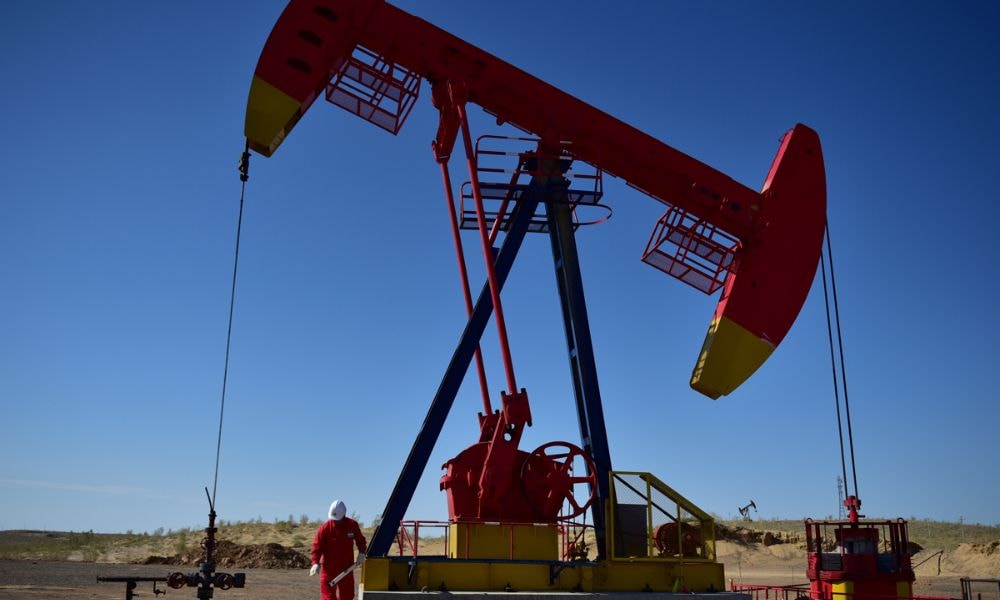
Global oil companies are pumping billions of dollars into offshore drilling, reversing a long decline in spending on the decades-long projects including some in the remote iceberg waters far off Canada's Atlantic coast.
Surging oil prices are encouraging the investments, along with Europe's mounting energy demand as the Ukraine-Russia war drags on.
Offshore production sites are more expensive to build than onshore shale, the last decade's investment darling. But once they are up and running, they can turn profits at lower prices than other forms of production, according to consultancy Rystad Energy.
They are also designed to pump oil for decades, a counterintuitive move that could increase financial risk for the projects as the world pushes for net-zero greenhouse gas emissions by 2050 to slow climate change.
Offshore projects generate fewer emissions per barrel than other forms of oil production due to their massive scale, but they would still increase global air pollution. Environmental groups warn that spills far offshore are hard to clean up.
One of the most remote developments is near Canada, where Norway's Equinor ASA is close to a final decision on its Bay du Nord project 500 kilometers (311 miles) offshore of Newfoundland and Labrador.
The site is so far from shore that it falls in international waters, requiring Canada to pay United Nations royalties. It would be a global first, according to Energy Regulation Quarterly, illustrating how far producers are willing to go for oil supplies that could last up to three decades.
'LAST ONES STANDING'
Canada has set a goal of lowering its emissions by 40% to 45% by 2030 from 2005 levels, but Ottawa approved Equinor's C$16 billion ($12.37 billion) Bay du Nord in April anyway, saying it raised no significant environmental issues.
Ottawa could approve more such projects as long as they produce low emissions, have best-in-class technology and can become net-zero by 2050, said Jonathan Wilkinson, Canada’s natural resources minister. Bay du Nord is expected to produce below 8 kilograms per barrel of carbon dioxide, Equinor estimates, less than half the international average.
"Those facilities that are producing oil and gas with zero or near-zero production emissions are going to be the last ones standing," Wilkinson said.
Bay du Nord, which could first produce oil by decade's end, might be the first of several massive Newfoundland offshore projects. OilCo, a Newfoundland government corporation, has identified 20 prospective projects with 1 billion barrels in reserves each, CEO Jim Keating said.
Such projects come with challenges not seen onshore.
The Bay du Nord floating production storage and offloading unit would measure more than a city block, producing crude in icy waters known for waves up to 15 metres high in winter, according to Equinor. Icebergs drift across the area between March and July, and two species of endangered sea turtles inhabit its waters.
"Canada already has profitable producing fields far from the coast with similar weather," Wood Mackenzie upstream analyst Marcelo de Assis said, noting that the project's water depth of 650 to 1,170 metres is much less than wells elsewhere at 3,000 metres.
Bay du Nord would be so far from shore that helicopters flying in workers for three-week shifts might carry only eight people, half the usual number, to account for extra fuel, according to Rob Strong, a longtime Newfoundland oil industry consultant.
Despite the high upfront construction cost, projects like Bay du Nord interest companies because the 500 million barrels of recoverable reserves would be enough to last 20 years.
Equinor declined to provide a production cost estimate, though it said that major projects coming by the end of 2030 will, on average, break even with oil below $35 per barrel.
Producing offshore projects average a break-even price of $18.10 per barrel of oil equivalent, compared with $28.20 per barrel for onshore, according to Rystad.
Other companies bought into offshore Canadian projects this spring. BP PLC purchased a Bay du Nord stake and Cenovus Energy restarted a stalled project.
Global offshore investment should rise 27% from 2021 levels to $173 billion in 2024, reversing a decade of decline and growing slightly faster than onshore investment, Rystad estimates.
"I've been up and down like a yo-yo," said Strong, who has been called the "grandfather of the Newfoundland offshore oil industry." He added: "Two years ago I was at the depths of depression. Today, I'm very optimistic."
The profitability of offshore projects depends on future oil demand, and forecasts vary widely. The International Energy Agency (IEA) in 2021 advised against new fossil fuel projects for the world to reach net-zero emissions by 2050 if global transportation is fully supplied by electric vehicles and renewable fuels by mid-century, oil demand would drop 75% to about 25 million barrels per day, IEA said.
Bay du Nord could become a stranded asset before the end of its lifetime if oil demand peaks between 2025 and 2030 and the world's crude needs are supplied by lower-cost regions like the Middle East, said Jean-Francois Mercure, an associate professor in climate change policy with the University of Exeter, England.
"Financial risk will be very high," Mercure said.
However, Wood Mackenzie estimates oil demand is only likely to halve even in its most ambitious 2050 energy transition scenario - and could even rise.
'PRECIOUS AND FRAGILE'
Producing offshore emits less carbon per barrel than onshore as projects' massive scale and new technology make it easier to curb flaring and methane emissions and recycle heat.
Offshore projects still carry huge environmental risks, said Gretchen Fitzgerald, Sierra Club's Atlantic director. After a spill, Equinor would be unlikely to contain oil due to intense wave action and instead use chemicals to disperse it. Such an approach may harm northern bottlenose whales and deep sea corals, she said.
"Because it's so far offshore, it's hard for people to imagine what the environment is like. But it's pretty precious and fragile," Fitzgerald said.
Equinor will only approve projects if "convinced they are safe and environmentally responsible," spokesperson Ola Morten Aanestad said, adding it has long experience in harsh environments.
Other European oil majors are setting similar goals. Both Shell PLC and BP plan to reduce crude output over time but say they will keep investing heavily offshore. Each is adding a new Gulf of Mexico platform this year.
"We believe that hydrocarbons will be part of the energy mix for many decades to come," said Shell's executive-vice president for global deepwater, Paul Goodfellow.
Offshore accounts for about one-third of world oil output, but that could increase in coming years.
"The energy transition should take some 25, 30 years, WoodMac's Assis said. "It will be difficult to eliminate oil. Europe's energy crisis is a reminder of that."
($1 = 1.2935 Canadian dollars)
Related News


Latest Cars


Upcoming Cars


Latest News


 Jaiveer Mehra | Jul 28, 2026New Toyota Hilux Launched in India At Rs 31.99 LakhNinth-gen Hilux gets a notable redesign over its predecessor, though it retains the familiar 2.8-litre diesel engine option.2 mins read
 Jaiveer Mehra | Jul 28, 2026Avore EX Electric Motorcycle Launched In India At Rs 1.25 LakhEV start-up is offering its debut electric motorcycle in three variants - EX1, EX2 and EX2 S.2 mins read
 car&bike Team | Jul 28, 2026Honda XR 300L & Honda XR300 Rally: What We Know So FarBoth the XR300L and XR300 Rally are based on the same platform and will be part of Honda’s new made in India line-up with prices and full specifications to be announced soon.5 mins read
 car&bike Team | Jul 28, 2026Mahindra Scorpio-N Facelift Interior Spied Undisguised Ahead Of DebutWhile a lot of the switchgear is carried over from the current SUV, the facelifted SUV gets a redesigned centre console with a larger touchscreen and a new digital instrument cluster.1 min read
 Bilal Firfiray | Jul 28, 2026Skoda Slavia Facelift India Debut On 18th August; New Gearbox With Cosmetic ChangesSkoda Slavia facelift will be launched in India on August 18 with newer styling cues, additional features and an expected 8-speed automatic gearbox for the 1.0 TSI engine.1 min read
 car&bike Team | Jul 27, 2026Honda CB500: What We Know So Far – Price, Launch Date, SpecsThe Honda CB500 is expected to be launched just before the festive season this year, possibly around September 2026 with prices beginning at around Rs. 3 lakh (Ex-showroom).4 mins read
 Jaiveer Mehra | Jul 27, 20262026 Maruti Suzuki Brezza Facelift Review: Bestseller Joins The Turbo ClubWhile Maruti’s facelifts have always tended to bring subtle updates over the outgoing models, the latest Brezza brings some heavy updates under the skin, including a new 6-speed manual gearbox and, for the first time, a turbocharged petrol engine option.1 min read
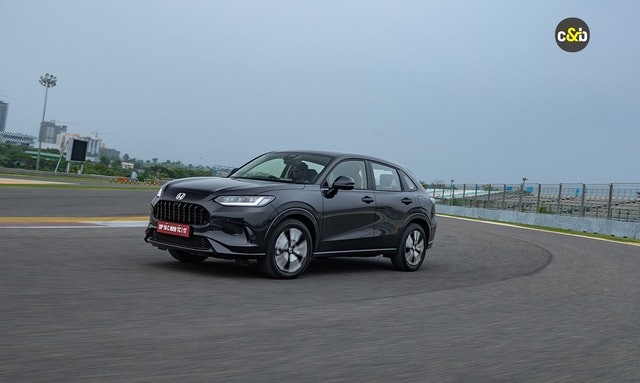 Bilal Firfiray | Jul 24, 2026Honda ZR-V Review: Who Is It For?Honda has brought the new ZR-V to India as their current flagship offering. It’s a CBU, it’s a hybrid, and it’s here for a limited few. Who is it for though?1 min read
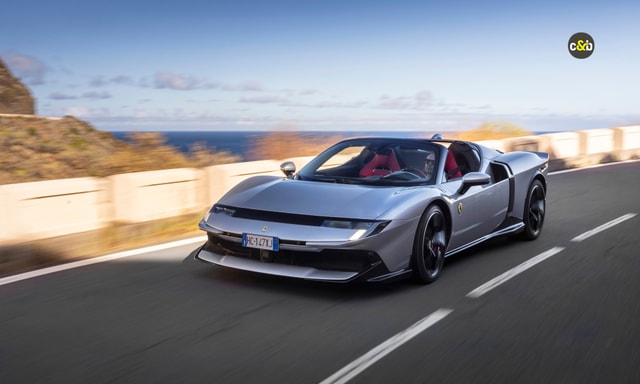 Shams Raza Naqvi | Jul 15, 2026Ferrari 849 Testarossa Spider Driven: Rs. 11.25 Crore Meets 1,000 bhpWe got behind the wheel of the most powerful convertible from Ferrari. What makes the 849 Testarossa Spider Special? We tell you.1 min read
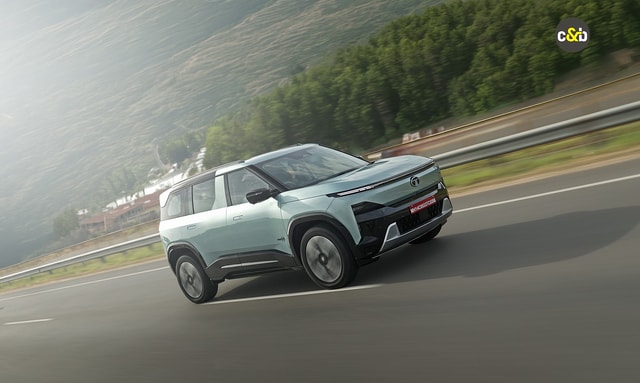 Bilal Firfiray | Jul 12, 2026Tata Sierra EV Review: Reborn In The Electric AgeThe Tata Sierra EV isn’t drastically different from its ICE counterpart when it comes to design. But being the seventh electric offering from the Indian brand, it has gotten a few things right, and very few things wrong. But is it a compelling package to buy?5 mins read
 Jafar Rizvi | Jul 13, 2026TVS Orbiter Long-Term Review (Report 1): Settling In Takes TimeFirst impressions weren't the strongest, but the Orbiter has made a mark in its first month in the car&bike garage.5 mins read