
Automated Fitness Testing Stations (ATS) Explained: How Vehicle Fitness Checks Work in India

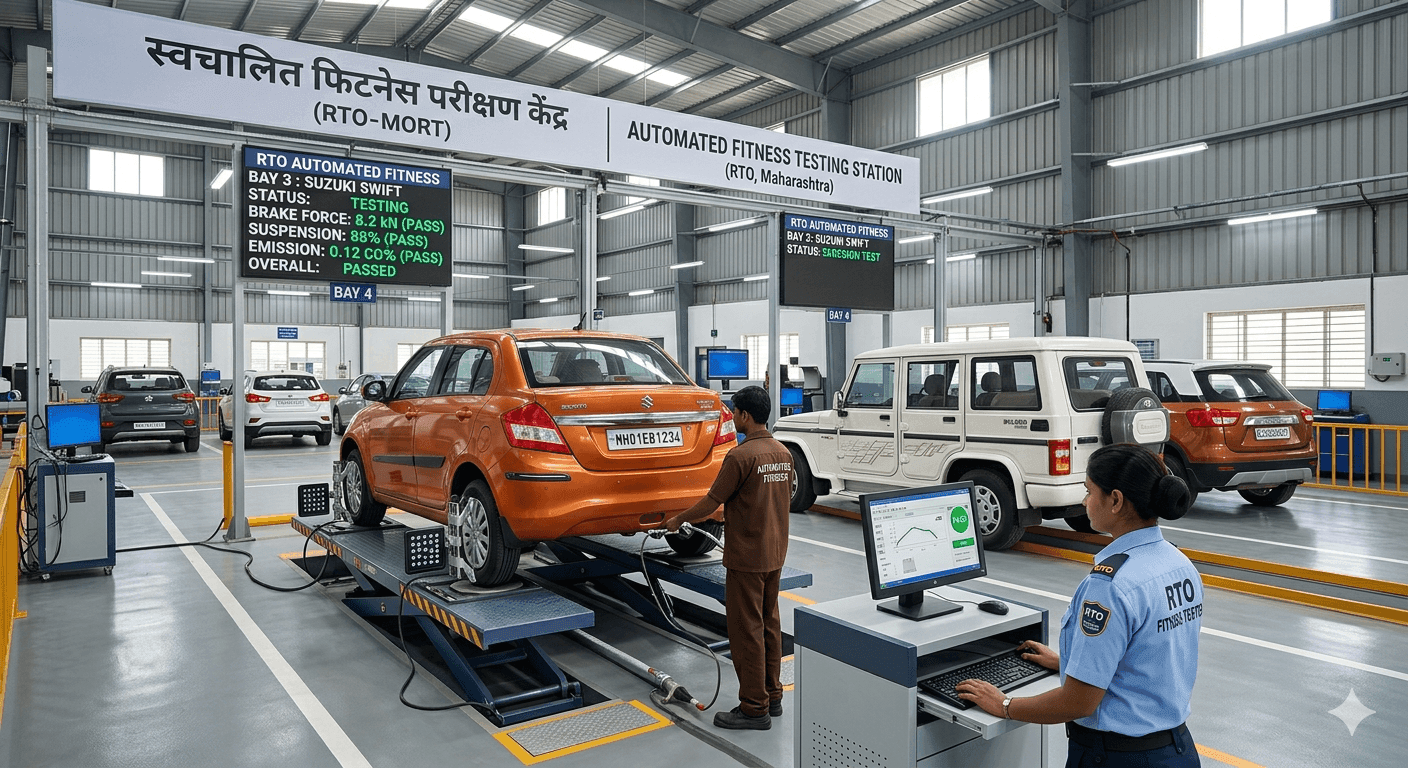
For many years, vehicle fitness inspections in India were largely carried out through manual checks. While that system worked, inspections could sometimes vary from one testing centre to another. That is starting to change. As fitness testing becomes more automated, commercial vehicle owners are finding that passing an inspection depends more on the actual condition of the vehicle and less on a visual assessment.
At the same time, transport departments are increasingly moving towards digital records and machine-based testing. For vehicle owners, this makes fitness certificates more important than ever. A failed inspection can delay certificate renewals, keep a commercial vehicle off the road temporarily, and lead to additional repair and retesting costs.
ATS vs Traditional Fitness Testing: What Has Changed?
The biggest change is the increased reliance on objective machine-generated data.
| Aspect | Traditional Inspection | ATS Inspection |
| Testing Method | Primarily manual | Machine-based |
| Data Recording | Paper-based in many cases | Fully digital |
| Human Intervention | Higher | Limited |
| Result Consistency | Can vary | More standardised |
| Record Keeping | Manual records | Digital records |
| Transparency | Dependent on the inspection process | Higher through automated systems |
The aim is to create a more uniform testing environment across different regions and vehicle categories.
Which Vehicles Need ATS Fitness Testing?
Currently, Automated Testing Station (ATS) fitness testing is mandatory for transport and commercial vehicles that require a valid fitness certificate. This includes:
- Trucks
- Buses
- School buses
- Taxis
- Goods carriers
- Other transport vehicles
For transport vehicles, fitness testing is generally required after the initial registration period and must be renewed periodically as prescribed under applicable regulations. Private vehicles follow a different schedule. A private vehicle does not require fitness testing during its initial registration period of 15 years. However, once the vehicle completes 15 years from the date of registration, obtaining a fitness certificate becomes mandatory for registration renewal.
After the first renewal, fitness testing is typically required every five years to continue operating the vehicle legally. As vehicle inspection systems continue to modernise, Automated Testing Stations are expected to play an increasingly important role in conducting these fitness assessments.
How Does the ATS Testing Process Work?
A vehicle moves through multiple inspection stages, with each station evaluating a specific aspect of safety and performance.
Vehicle Registration and Pre-Inspection Check
Before testing begins, the vehicle owner must present the required documents and complete the registration process at the Automated Testing Station (ATS). Basic vehicle details are verified and linked to the digital inspection system.
Typically, the process may require:
- Vehicle Registration Certificate (RC)
- Valid insurance certificate
- Pollution Under Control (PUC) certificate, where applicable
- Government-issued identification of the vehicle owner or authorised representative
Once the documentation is verified, the vehicle is assigned to the inspection lane and prepared for automated testing. The testing process is designed to minimise manual intervention and ensure consistent evaluation standards.
Vehicle Identification
The process begins with registration verification and digital vehicle identification. Cameras and software systems record vehicle details before testing starts.
Brake Testing
The vehicle is driven onto roller-based equipment that measures braking efficiency.
The system evaluates:
- Braking force
- Brake balance
- Parking brake performance
Since braking performance directly affects road safety, this remains one of the most important parts of the inspection.
Suspension and Side-Slip Testing
Specialised equipment checks suspension effectiveness and wheel alignment.
This helps detect:
- Suspension wear
- Steering defects
- Alignment issues
- Stability-related concerns
Headlamp Testing
Machines verify whether headlights are correctly aligned and produce adequate illumination. Poor headlamp alignment can reduce visibility and increase glare for other road users.
Emission Testing
The vehicle's exhaust emissions are measured to ensure compliance with applicable pollution standards. Excessive smoke or emissions may indicate engine wear, fuel system problems, or malfunctioning emission-control components.
Underbody Inspection
Underbody inspection systems capture digital images of the vehicle's underside and structural components. These images are reviewed as part of the inspection process to identify issues such as:
- Corrosion
- Chassis damage
- Fluid leaks
- Structural defects
Digital imaging improves documentation and consistency while supporting a more transparent inspection process.
The Most Common Reasons Vehicles Fail ATS Tests
Many failures occur because of maintenance issues that have been developing for months.
Some of the most common reasons include:
- Worn or ineffective brakes
- Excessive exhaust emissions
- Damaged suspension components
- Faulty headlights or indicators
- Steering system defects
- Tyres below the permissible tread limits
- Structural damage or corrosion
- Fluid leaks from critical systems
Regular preventive maintenance can significantly improve the chances of passing the inspection on the first attempt.
What Happens If a Vehicle Fails the Test?
A failed ATS inspection does not automatically mean the vehicle must be scrapped. The testing station generates a report identifying the defects responsible for the failure, allowing the owner to complete repairs and return for a retest after depositing the appropriate fee for re-testing. However, if a vehicle continues to fail fitness requirements despite corrective action, additional regulatory consequences may apply under applicable vehicle fitness and end-of-life vehicle regulations.
A failed fitness test can also create operational challenges, especially for commercial vehicles that depend on a valid fitness certificate to remain legally operational. Delays in obtaining fitness certification can affect transport schedules, permits, and business operations, making timely repairs important.
How Much Does ATS Testing Cost?
ATS testing fees vary depending on the type and category of vehicle being inspected. The applicable charges are generally as follows:
| Vehicle Category | Automated Testing Fee* |
| Two-wheelers | Rs. 400 |
| Light Motor Vehicles (cars, vans, small commercial vehicles) | Rs. 600 |
| Medium and Heavy Commercial Vehicles (trucks, buses, etc.) | RS. 1,000 |
*Indicative fees for automated fitness testing. Additional charges may apply for fitness certificate issuance, retesting, or state-specific requirements.
Factors that influence the total cost include:
- Vehicle category
- Vehicle size and weight
- State-specific regulations
- Retest requirements
Heavy commercial vehicles generally attract higher testing fees than smaller transport vehicles because of the additional inspection requirements. Vehicle owners should check the latest state transport department guidelines or the relevant transport authority portal for the most up-to-date fee structure.
How to Prepare Your Vehicle Before an ATS Inspection
A little preparation can help avoid unnecessary failures and retesting costs. Before visiting an ATS centre:
- Check tyre condition and tread depth
- Ensure all lights are functioning properly
- Service the braking system if required
- Address excessive smoke or emission issues
- Inspect suspension and steering components
- Fix any fluid leaks
- Ensure vehicle documents are up to date
A pre-inspection service can often identify issues that may otherwise result in a failed test.
The Future of Vehicle Fitness Testing
India's commercial vehicle fleet continues to grow, and maintaining consistent safety standards across millions of vehicles is becoming increasingly important. Automated Fitness Testing Stations represent a significant shift towards technology-driven vehicle inspections. By combining digital records, machine-based testing, and standardised procedures, ATS aims to make vehicle fitness certification more transparent, reliable, and objective.
As automated inspections become more widespread, maintaining a genuinely roadworthy vehicle will become essential for staying compliant, operational, and safe on India's roads.
Related News


Latest Cars


Upcoming Cars


Latest News


 car&bike Team | Aug 1, 2026Maruti Suzuki Sells More Than 2 Lakh Vehicles In July, Sets New Domestic RecordThe brand sold a total of 2,41,421 units last month which also included exports of 30,056 cars1 min read
 car&bike Team | Aug 1, 2026India-UK FTA: Aston Martin Announces Revised PricesAlong with the revised pricing, the British marque has refreshed its lineup by replacing the Vantage, DB12 and DBX with more powerful 'S' derivatives.4 mins read
 car&bike Team | Aug 1, 2026BMW 7 Series, i7 Facelift Bookings Open In India Ahead Of LaunchThe facelifted models were unveiled globally in April 2026 and are set to arrive in India.3 mins read
 car&bike Team | Aug 1, 2026Auto Sales July 2026: Growth For Tata, Mahindra And Hyundai; Nissan Jumps 218%July 2026 turned out to be a strong month for several carmakers in India. Tata Motors, Mahindra, Hyundai, MG Motor and Nissan all reported healthy year-on-year growth, with new model launches, exports and growing EV demand.4 mins read
 car&bike Team | Jul 31, 2026Hero Vida VX2 Now Available With Fixed 3.1 kWh Battery, Priced At Rs 1.13 LakhUnlike the existing removable-battery variants, the new VX2 variant comes with a fixed battery and direct-plug charging.1 min read
 car&bike Team | Jul 31, 2026Honda Cars India Appoints Toshiyuki Yanagisawa As New President And CEOYanagisawa replaces Takashi Nakajima, who is set to move to Honda's regional headquarters after completing his stint in India.1 min read
 Bilal Firfiray | Aug 1, 2026Toyota Hilux Review: The InvincibleMarking it as the ninth generation, the Hilux comes with a major cosmetic overhaul. But is it still relevant enough for the current times or is it getting too long in the tooth?5 mins read
 Bilal Firfiray | Jul 30, 2026Kia Syros EV Review: Best EV To Buy Under Rs 20 Lakh?The Kia Syros EV comes into the game with a modern design, spacious cabin, strong performance, decent range and an aggressive pricing. But could it become the new benchmark under Rs 20 lakh?5 mins read
 Jaiveer Mehra | Jul 27, 20262026 Maruti Suzuki Brezza Facelift Review: Bestseller Joins The Turbo ClubWhile Maruti’s facelifts have always tended to bring subtle updates over the outgoing models, the latest Brezza brings some heavy updates under the skin, including a new 6-speed manual gearbox and, for the first time, a turbocharged petrol engine option.1 min read
 Bilal Firfiray | Jul 24, 2026Honda ZR-V Review: Who Is It For?Honda has brought the new ZR-V to India as their current flagship offering. It’s a CBU, it’s a hybrid, and it’s here for a limited few. Who is it for though?1 min read
 Girish Karkera | Jul 29, 2026Mercedes-AMG E53 4MATIC+ PHEV First Drive Review: Just What The Doctor OrderedThere are luxury cars and there are high-performance cars. But what if you want both for the price of one? Mercedes-Benz has a recommendation that promises to tread a fine line between the two – the second generation E53 with a twist.7 mins read