
Mahindra Signs Supply Agreement To Source Volkswagen’s Unified Cell, MEB Components For INGLO EVs

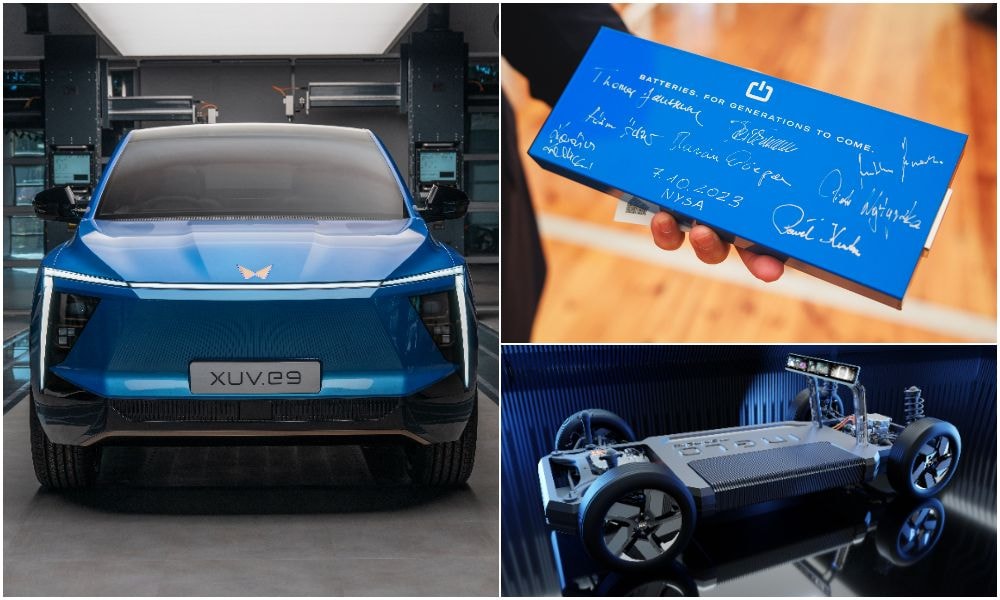
- Mahindra and Volkswagen sign supply agreement for MEB components, unified cell.
- First INGLO-based Mahindra EV set to arrive in December 2024.
- Unified cell design will slash battery costs by as much as 50 per cent, as per VW.
Taking another concrete step towards formalising their partnership for the Indian market, Volkswagen and Mahindra have finalised a supply agreement that will see Mahindra source key vehicle components from Volkswagen, and more importantly, Volkswagen’s unified cells, for its upcoming INGLO series of electric vehicles (EVs). Initiated with a partnering agreement and term sheet in 2022, the collaboration between Volkswagen and Mahindra is expanding with the signing of this agreement, and both companies have confirmed they continue to evaluate other fronts for collaboration.
Also Read: Mahindra XUV300 Available With Discounts Of Up To Rs 1.28 Lakh
The carmakers have previously said they will evaluate the feasibility of co-developing EVs for India and other emerging markets, in addition to exploring possibilities on the battery cell localisation and EV charging infrastructure fronts.
The first EV based on Mahindra's born-electric INGLO architecture will arrive in December 2024.
The supply agreement spans multiple years, and Mahindra will source cells totalling over 50 GWh over the duration of this agreement. Mahindra intends to roll out the first EV based on its ‘born-electric’ INGLO architecture in December 2024. INGLO-based SUVs will be sold under two distinct sub-brands – XUV and BE – and will incorporate Volkswagen's modular electric drive matrix (MEB) platform components, comprising the electric powertrain, battery system, and battery cells. Volkswagen will provide components for as many as one million Mahindra EVs, a target projected to be achieved by the close of this decade.
Also Read: Mahindra XUV700 MX Automatic Set For Launch
With this, Mahindra will become the first non-VW Group auto company to use Volkswagen's unified cell concept. Volkswagen's unified cell essentially standardises battery modules across various vehicle platforms. This standardisation not only simplifies manufacturing processes but also allows for greater flexibility and scalability in production.
VW's unified prismatic cell will slash battery costs by half.
According to VW, this concept – which employs a prismatic cell – will slash battery costs by as much as 50 per cent. The standardised design, which will be used in up to 80 per cent of all VW Group EVs by 2030, is also said to improve efficiency in assembly, cutting production times. The unified cell is also said to be scalable and chemistry-agnostic, and is also well-suited to solid-state tech, which Volkswagen anticipates will be ready for production vehicles by the middle of this decade.
Related News


Latest Cars


Upcoming Cars


Latest News


 car&bike Team | Aug 1, 2026Maruti Suzuki Sells More Than 2 Lakh Vehicles In July, Sets New Domestic RecordThe brand sold a total of 2,41,421 units last month which also included exports of 30,056 cars1 min read
 car&bike Team | Aug 1, 2026India-UK FTA: Aston Martin Announces Revised PricesAlong with the revised pricing, the British marque has refreshed its lineup by replacing the Vantage, DB12 and DBX with more powerful 'S' derivatives.4 mins read
 car&bike Team | Aug 1, 2026BMW 7 Series, i7 Facelift Bookings Open In India Ahead Of LaunchThe facelifted models were unveiled globally in April 2026 and are set to arrive in India.3 mins read
 car&bike Team | Aug 1, 2026Auto Sales July 2026: Growth For Tata, Mahindra And Hyundai; Nissan Jumps 218%July 2026 turned out to be a strong month for several carmakers in India. Tata Motors, Mahindra, Hyundai, MG Motor and Nissan all reported healthy year-on-year growth, with new model launches, exports and growing EV demand.4 mins read
 car&bike Team | Jul 31, 2026Hero Vida VX2 Now Available With Fixed 3.1 kWh Battery, Priced At Rs 1.13 LakhUnlike the existing removable-battery variants, the new VX2 variant comes with a fixed battery and direct-plug charging.1 min read
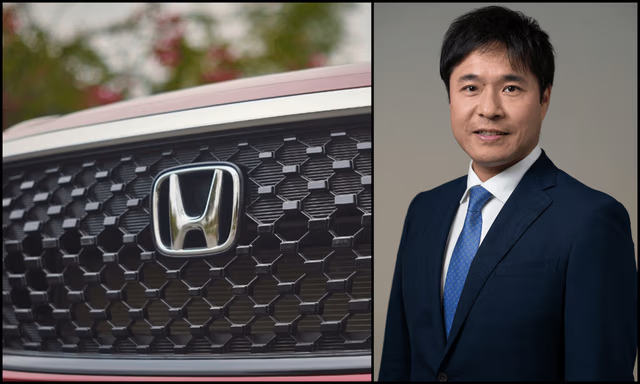 car&bike Team | Jul 31, 2026Honda Cars India Appoints Toshiyuki Yanagisawa As New President And CEOYanagisawa replaces Takashi Nakajima, who is set to move to Honda's regional headquarters after completing his stint in India.1 min read
 Bilal Firfiray | Aug 1, 2026Toyota Hilux Review: The InvincibleMarking it as the ninth generation, the Hilux comes with a major cosmetic overhaul. But is it still relevant enough for the current times or is it getting too long in the tooth?5 mins read
 Bilal Firfiray | Jul 30, 2026Kia Syros EV Review: Best EV To Buy Under Rs 20 Lakh?The Kia Syros EV comes into the game with a modern design, spacious cabin, strong performance, decent range and an aggressive pricing. But could it become the new benchmark under Rs 20 lakh?5 mins read
 Jaiveer Mehra | Jul 27, 20262026 Maruti Suzuki Brezza Facelift Review: Bestseller Joins The Turbo ClubWhile Maruti’s facelifts have always tended to bring subtle updates over the outgoing models, the latest Brezza brings some heavy updates under the skin, including a new 6-speed manual gearbox and, for the first time, a turbocharged petrol engine option.1 min read
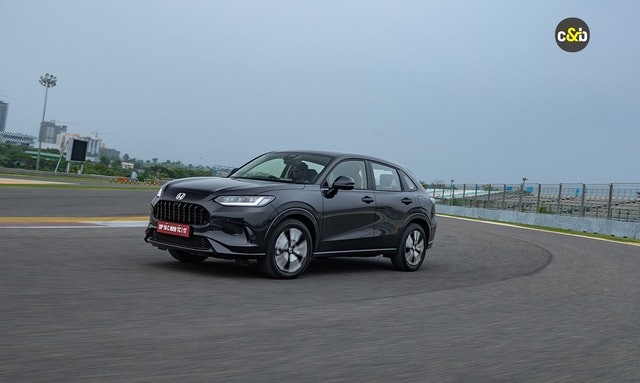 Bilal Firfiray | Jul 24, 2026Honda ZR-V Review: Who Is It For?Honda has brought the new ZR-V to India as their current flagship offering. It’s a CBU, it’s a hybrid, and it’s here for a limited few. Who is it for though?1 min read
 Girish Karkera | Jul 29, 2026Mercedes-AMG E53 4MATIC+ PHEV First Drive Review: Just What The Doctor OrderedThere are luxury cars and there are high-performance cars. But what if you want both for the price of one? Mercedes-Benz has a recommendation that promises to tread a fine line between the two – the second generation E53 with a twist.7 mins read