
Musk Touts Approval Of New York-Washington 'Hyperloop'

car&bike Team
1 min read
Jul 21, 2017, 04:51 PM
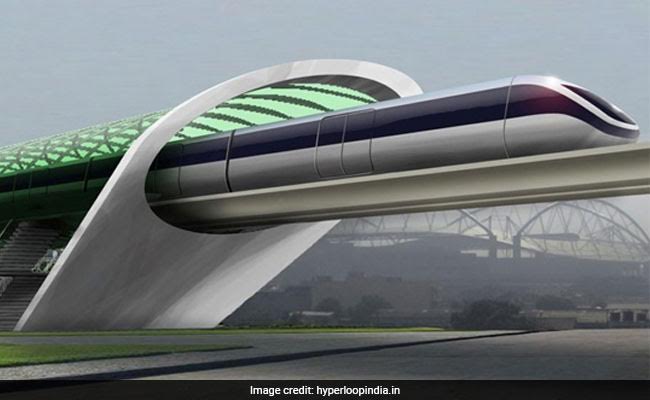
Tech entrepreneur Elon Musk on Thursday said he had received "verbal" approval to start building an ultra-high-speed underground transport system linking New York and Washington that would cut travel time between the cities to about half an hour. He offered no details on what entity had greenlighted the project that could result in the world's longest tunnel.
Musk, the chief executive of electric car maker Tesla Inc and rocket company SpaceX, is seeking to revolutionize transportation by sending passengers and cargo packed into pods through an intercity system of giant vacuum tubes known as the "hyperloop."
Officials in Washington and New York said they had not approved any project, and under federal rules Musk would need extensive environmental and building permits to mount such an ambitious project.
Musk recently started an enterprise called the Boring Company to build transport tunnels for the system, which he says would be far faster than current high-speed trains and use electromagnetic propulsion. In tweets on Thursday Musk said he had "just received verbal government approval for the Boring Company to build an underground NY-Phil-Balt-DC hyperloop. NY-DC in 29 mins."
Amtrak's high-speed Acela train currently takes nearly three hours to cover the roughly 220 miles (355 km) between the two cities, assuming no delays. Asked for details on who had offered approval, the Boring Company said in a statement it expected "to secure the formal approvals necessary to break ground later this year."
Musk also tweeted that a first set of tunnels would be to "alleviate greater LA (Los Angeles) urban congestion," adding that the company would also "probably" do a loop from Los Angeles to San Francisco, and another in Texas.
"City center to city center in each case, with up to a dozen or more entry/exit elevators in each city," he wrote. Musk acknowledged there was still a "lot of work" to do before formal approval was granted, but said he was optimistic. Signaling that Musk's tweets may be premature, the press secretary for New York City Mayor Bill de Blasio tweeted a reply: "This is news to City Hall."
Musk said in a later tweet that supporters should lobby government officials. "If you want this to happen fast, please let your local & federal elected representatives know. Makes a big difference if they hear from you," he wrote. Last month, Musk tweeted that he had "promising conversations" about a tunnel network with Los Angeles Mayor Eric Garcetti.
By traveling in vacuum tubes on magnetic cushions, hyperloop trains would avoid being slowed down by air pressure or the friction of wheels on rails, making them faster and cheaper to operate, supporters say. A number of startups have begun to develop the technology, despite concerns about the cost and practicality.
On its website, the Boring Company says some tunneling projects today cost as much as $1 billion per mile but its goal is to lower costs by a factor of 10 or more.
In 2013, Musk said a hyperloop covering the roughly 400 miles (640 km) between Los Angeles and San Francisco would cost less than $6 billion and take seven to 10 years to build.
President Donald Trump in March met with Musk, who raised the Boring Company idea then, White House officials said. Musk also talked about his plans to launch a mission to Mars.
White House National Economic Council Director Gary Cohn in April praised the idea of Musk using tunnels to speed rail transit on the densely populated east coast of the United States and also to cut traffic congestion in Los Angeles.
In a statement, the White House said it had had "promising conversations to date" with Musk and was committed to "transformative infrastructure projects."
Musk, the chief executive of electric car maker Tesla Inc and rocket company SpaceX, is seeking to revolutionize transportation by sending passengers and cargo packed into pods through an intercity system of giant vacuum tubes known as the "hyperloop."
Officials in Washington and New York said they had not approved any project, and under federal rules Musk would need extensive environmental and building permits to mount such an ambitious project.
Musk recently started an enterprise called the Boring Company to build transport tunnels for the system, which he says would be far faster than current high-speed trains and use electromagnetic propulsion. In tweets on Thursday Musk said he had "just received verbal government approval for the Boring Company to build an underground NY-Phil-Balt-DC hyperloop. NY-DC in 29 mins."
Amtrak's high-speed Acela train currently takes nearly three hours to cover the roughly 220 miles (355 km) between the two cities, assuming no delays. Asked for details on who had offered approval, the Boring Company said in a statement it expected "to secure the formal approvals necessary to break ground later this year."
Musk also tweeted that a first set of tunnels would be to "alleviate greater LA (Los Angeles) urban congestion," adding that the company would also "probably" do a loop from Los Angeles to San Francisco, and another in Texas.
"City center to city center in each case, with up to a dozen or more entry/exit elevators in each city," he wrote. Musk acknowledged there was still a "lot of work" to do before formal approval was granted, but said he was optimistic. Signaling that Musk's tweets may be premature, the press secretary for New York City Mayor Bill de Blasio tweeted a reply: "This is news to City Hall."
Musk said in a later tweet that supporters should lobby government officials. "If you want this to happen fast, please let your local & federal elected representatives know. Makes a big difference if they hear from you," he wrote. Last month, Musk tweeted that he had "promising conversations" about a tunnel network with Los Angeles Mayor Eric Garcetti.
By traveling in vacuum tubes on magnetic cushions, hyperloop trains would avoid being slowed down by air pressure or the friction of wheels on rails, making them faster and cheaper to operate, supporters say. A number of startups have begun to develop the technology, despite concerns about the cost and practicality.
On its website, the Boring Company says some tunneling projects today cost as much as $1 billion per mile but its goal is to lower costs by a factor of 10 or more.
In 2013, Musk said a hyperloop covering the roughly 400 miles (640 km) between Los Angeles and San Francisco would cost less than $6 billion and take seven to 10 years to build.
President Donald Trump in March met with Musk, who raised the Boring Company idea then, White House officials said. Musk also talked about his plans to launch a mission to Mars.
White House National Economic Council Director Gary Cohn in April praised the idea of Musk using tunnels to speed rail transit on the densely populated east coast of the United States and also to cut traffic congestion in Los Angeles.
In a statement, the White House said it had had "promising conversations to date" with Musk and was committed to "transformative infrastructure projects."
© Thomson Reuters 2017
(This story has not been edited by NDTV staff and is auto-generated from a syndicated feed.)




Latest News


 Jaiveer Mehra | Jul 18, 2026Ferrari Amalfi Spider Launched In India At Rs 4.60 CroreDrop-top variant of Ferrari’s entry 2+ Grand Tourer costs a little more than Rs 50 lakh more than the Coupe.2 mins read
 car&bike Team | Jul 17, 2026New CAFE 3 Draft Brings Revised Fuel Consumption Variables, Reduced Derogation Factor For Strong Hybrid & MoreThe latest CAFE 3 draft also opens the door for technologies such as engine start/stop, TPMS & 12/48V mild-hybrid tech to factored into fuel consumption.3 mins read
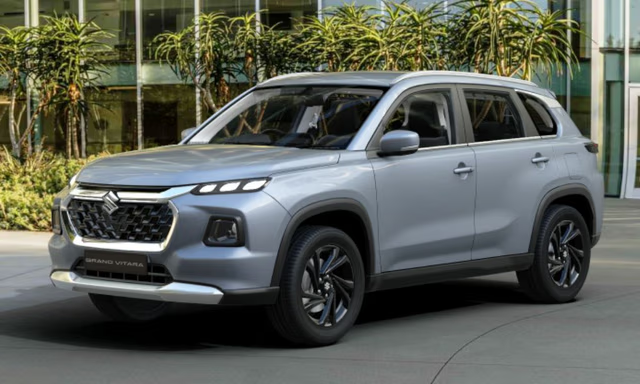 car&bike Team | Jul 17, 2026Consumer Court Orders Maruti Suzuki To Replace Grand Vitara Over E20-Related Damages; Carmaker To Escalate Matters In Higher CourtThe complainant had filed a complaint citing multiple cases of the vehicle developing technical issues due to repeated contamination in the fuel tank.1 min read
 car&bike Team | Jul 16, 2026Studds Trooper Trail Flip-Up Helmet Launched in India at Rs 2,125Studds has expanded its Trooper helmet range with the new Trail edition, featuring fresh graphics and a new colour-shifting paint option.1 min read
 car&bike Team | Jul 16, 20262027 Suzuki Hayabusa Receives Three New ColoursApart from the new liveries, the 2027 Hayabusa retains the same powertrain, electronics, and hardware.1 min read
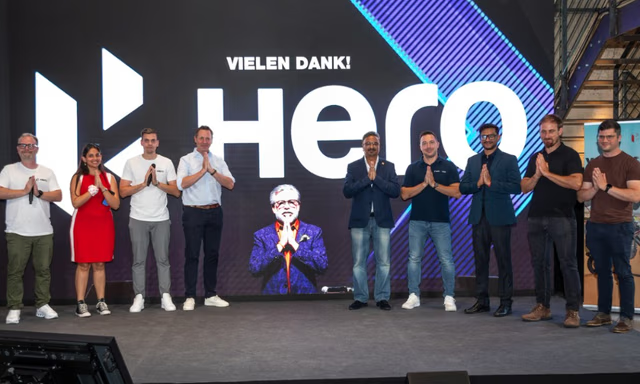 car&bike Team | Jul 16, 2026Hero MotoCorp Enters Germany, Expands European Presence to Five MarketsHero MotoCorp has officially entered the German market, strengthening its European presence with the launch of the Euro 5+ compliant XPulse 200 4V range.1 min read
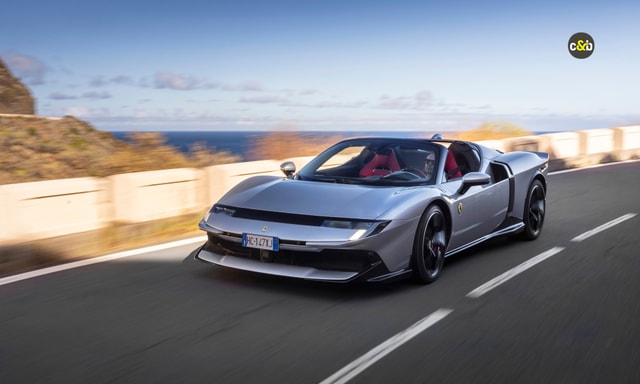 Shams Raza Naqvi | Jul 15, 2026Ferrari 849 Testarossa Spider Driven: Rs. 11.25 Crore Meets 1,000 bhpWe got behind the wheel of the most powerful convertible from Ferrari. What makes the 849 Testarossa Spider Special? We tell you.1 min read
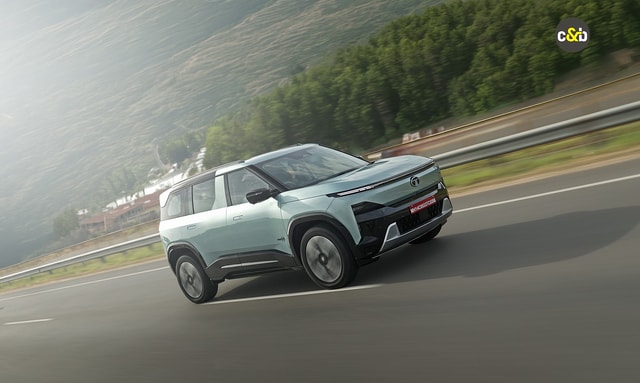 Bilal Firfiray | Jul 12, 2026Tata Sierra EV Review: Reborn In The Electric AgeThe Tata Sierra EV isn’t drastically different from its ICE counterpart when it comes to design. But being the seventh electric offering from the Indian brand, it has gotten a few things right, and very few things wrong. But is it a compelling package to buy?5 mins read
 Jafar Rizvi | Jul 13, 2026TVS Orbiter Long-Term Review (Report 1): Settling In Takes TimeFirst impressions weren't the strongest, but the Orbiter has made a mark in its first month in the car&bike garage.5 mins read
 Seshan Vijayraghvan | Jul 7, 2026Tata Altroz Petrol DCA Long-Term Review: Intercity & Highway Driving ReportWe tested the Tata Altroz Petro DCA’s highway manners, intercity performance, and real-world fuel efficiency.1 min read
 Seshan Vijayraghvan | Jun 29, 2026Renault Kiger vs Toyota Urban Cruiser Taisor: Which Underdog Deserves Your Money?Both the Kiger and the Taisor promise strong performance, solid features, comfortable cabins and everyday usability, all without breaking the bank. But which of these underrated subcompact SUVs deserves your money? Let's find out.1 min read