
Toyota Doubles Down On Its Hybrid Bet In India

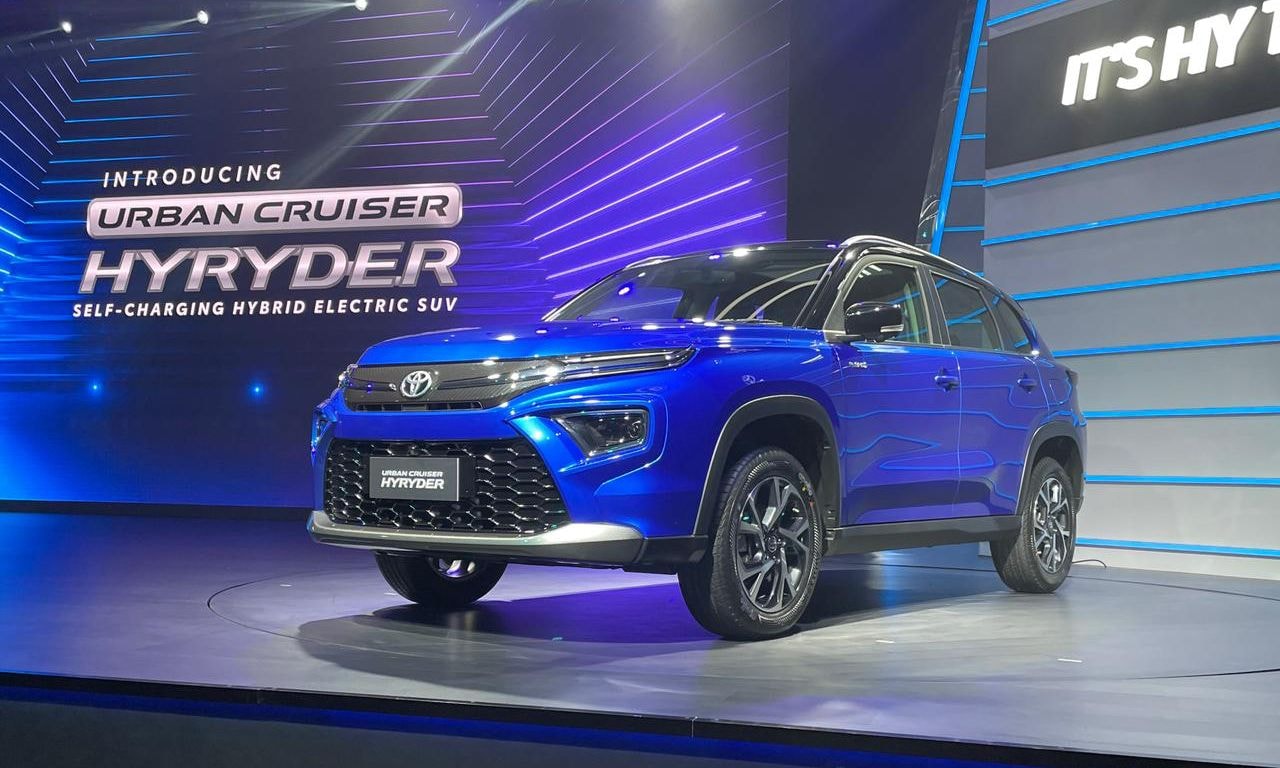
Renowned for its pioneering Prius, the Japanese carmaker has struggled to sell large numbers of its hybrid Camry sedan since its Indian debut in 2013, partly due to a sticker price of more than eight times the annual income of a middle-class family. This time, Toyota is determined to do it differently with lower-cost hybrids, said four company and industry executives and suppliers who provided previously unreported details about the carmaker's sourcing, production and pricing strategy.
Central to the strategy is a drive to cut the cost of full hybrid powertrains by making them in India, where the automaker's factories are running well below capacity, and to source key materials within the country. Toyota Motor is also leveraging its cooperation with partner Suzuki Motor, majority owner of India's biggest carmaker Maruti, to benefit from its low-cost engineering know-how and mild hybrid technology.
Maruti Suzuki's Grand Vitara has the same underpinnings as the Toyota Urban Cruiser Hyryder, and both the cars were jointly developed by the Japanese manufacturers.
"The hybrid bet is a turning point. It will be a litmus test for Toyota's future and success in India," one person with direct knowledge of Toyota's plans told Reuters.
A full hybrid can be driven for stretches on electric power whereas mild hybrid technology only supplements the combustion engine to help cut emissions. However, mild hybrids have smaller batteries and cost far less. Toyota's Indian strategy is at odds with global rivals Volkswagen, General Motors and India's Tata Motors, which are rushing to roll out pure electric vehicles (EVs), and comes in the face of criticism from investors for sticking with fossil-fuel hybrids.
Hybrids are generally cheaper than EVs as they typically have smaller batteries and are not reliant on charging stations, important factors in markets such as India where customers are price sensitive and charging infrastructure can be patchy. Toyota declined to share details about cost savings, future product launches, car pricing strategies or production plans for full or mild hybrid models in India. The world's biggest automaker told Reuters it wanted more first-time buyers in India to own full hybrids as a first step towards mass electrification, and that it would continue to increase local sourcing and production to be competitive.
Learning To Love Mild
Toyota's first new hybrid to hit India's roads will be the Urban Cruiser Hyryder, a compact sports-utility vehicle (SUV) which two people with knowledge of the plan said is likely to be priced around $25,000 (Approx Rs. 20 lakhs) - less than half the price of the Camry. That would pit it against popular midsize combustion-engine SUVs made by Hyundai Motor and Kia Motor in a fast-growing segment that makes up 18% of car sales in India, the world's fourth-biggest auto market. The full hybrid Hyryder, however, will be 31% more fuel efficient than the Hyundai and Kia diesel models, offering an economy of 28 km per litre (65 miles per gallon), a key metric for Indian buyers.
The Urban Cruiser Hyryder is expected to cost around Rs. 20 lakh.
To bring down the cost of the Hyryder, which will be sold by Toyota and Suzuki, it will use a hybrid system originally developed for subcompact cars, or one size smaller, according to a Toyota engineer familiar with hybrid technology. By combining the hybrid system with a low-cost chassis and some upper body parts from Suzuki, the end result is an SUV on a par with or slightly cheaper than the Prius sedan, which starts at $25,000 in the United States.
"The high-cost complexity of hybrids is hard to overcome, but it's a good start," the Toyota source, who was not involved in the Hyryder's development, said.
Savings have also come from working with Suzuki on designing and developing the SUV, as well as leveraging the scale and pricing power with suppliers of Maruti, which produced eight of the 10 best-selling models in India in 2021. Even so, there is a cost differential of $3,400 (Approx Rs. 2.75 lakh) between Toyota's full hybrid and its comparable gasoline car in India, said another source, higher than the typical differential of about $2,000 (Approx Rs. 1.60 lakh) for Toyota in most countries.
To boost sales in India's price-sensitive market, Toyota will also sell Hyryders with a mild hybrid powertrain supplied by Suzuki, a significant departure for Toyota which has long championed full hybrids. The shift is a recognition that Toyota has been unable to bring down the cost of full hybrids to the point where they can always compete on price in markets such as India, the people familiar with Toyota's planning said.
It also shows how Toyota is altering its strategy for different markets, depending on what buyers want and are willing to pay. "As we come down the price points ... we hope to increase our numbers as well as our market share," Vikram Kirloskar, vice chairman of Toyota Kirloskar Motor, the Japanese company's Indian unit, told Reuters. Toyota's next hybrid for India will be a multi-purpose vehicle, or people-carrier, expected later this year or early in 2023, two sources said.
Building In Bidadi
Another factor affecting the Hyryder's price is taxation. India levies taxes of 43% on hybrids - on a par with gasoline or diesel SUVs and far higher than the 5% tax on EVs. Toyota is lobbying to get the taxes reduced, sources said. The company said it wants New Delhi to provide support, including taxation, to all green technologies that help India achieve its goal of reducing fossil fuel and carbon emissions. So far, the government has not shown any interest in extending its fiscal support beyond EVs.
Making hybrid powertrains in India aligns Toyota with Prime Minister Narendra Modi's drive to boost local manufacturing, especially at a time when major car companies such as Ford Motor have left the country. It also comes as India tightens fuel efficiency and emission targets for carmakers. Selling hybrids will help Toyota meet its regulatory requirements as credits they earn will go towards offsetting the production of fossil-fuel vehicles.
At the Toyota Kirloskar Auto Parts factory in Bidadi, an industrial town near Bengaluru in southern India, the Japanese automaker's new Indian strategy is already in motion. A joint venture between Toyota, its parts affiliate Aisin Seiki Co and India's Kirloskar Systems, the plant is manufacturing E-Drives for the Toyota Hybrid System. The E-Drive ensures seamless switching between the engine and electric motor, and shifting the manufacture of one of the hybrid system's four key components to India is a major move. Toyota sees the Bidadi factory as a starting point for building a local supply chain for the EVs it will eventually bring to India. "We now have the core technology, whether it's an electric vehicle or a hybrid," Kirloskar said.
‘It’s a Huge Bet'
The plant can make 135,000 E-Drives a year on one assembly line and could raise that to over 400,000 by adding two more. About 55% of raw materials by value for the E-Drives come from India, two sources said. Capital equipment, such as tools and dies, are also made there, though rare earth magnets for the motors and some other components are imported. The cost savings on the made-in-India E-Drives are expected to be in the "double-digits" in percentage terms compared with imported systems, one source said. Toyota will also export them back to Japan for hybrid cars built there, as well as to countries in Southeast Asia.
"India is one of the lowest cost bases for these parts. We are competitive on this," Kirloskar said, adding that he expected about 40% to 50% to be exported, though that could change depending on local demand.
Of the three other main hybrid components, Toyota already makes engines in India but the 1.8 kilowatt-hour (kWh) lithium-ion batteries and power control units will be imported for now. Toyota is making the Hyryder at its under-used and revamped plant in Bidadi, which has an annual capacity of 200,000 cars. More than 50% of Hyryder pre-orders are for the full hybrid, though people aware of Toyota's production plans say this could settle at 30% to 40% with the cheaper, mild hybrid becoming more popular in India - where most cars sell for under $15,000.
"Once numbers pick up, the cost will come to a point where hybrids will become mainstream. This will lay the ground for an eventual switch to fully electric or fuel cell vehicles," said one person familiar with Toyota's plans. "It's a huge bet but we know electrification is the future."
Related News


Latest Cars


Upcoming Cars


Latest News


 car&bike Team | Jul 27, 2026Honda CB500: What We Know So Far – Price, Launch Date, SpecsThe Honda CB500 is expected to be launched just before the festive season this year, possibly around September 2026 with prices beginning at around Rs. 3 lakh (Ex-showroom).4 mins read
 Amaan Ahmed | Jul 27, 2026EXCLUSIVE: River Indie Rival Incoming? E3 Trion Electric Scooter Spied Ahead Of August 6 DebutMaiden scooter from E3 Electric.AI employs 14-inch wheels and a hub motor; new startup spearheaded by former TVS executive.2 mins read
 Seshan Vijayraghvan | Jul 27, 2026Maruti Suzuki Brezza Variant-Wise Prices Revealed: Tops Out At Rs. 13.55 LakhThe 2026 Maruti Suzuki Brezza is offered in four key variants – LXI, VXI, ZXI and ZXI+, and based on powertrain and transmission choices, there are 13 different iterations to choose from.2 mins read
 Bilal Firfiray | Jul 27, 2026BMW X5 And iX5 Long Wheelbase Unveiled With Extra Rear Leg RoomBMW has taken the wraps off the long-wheelbase body style of the new-gen X5, and its all-electric iX5 avatar is exclusively for the Chinese market. Both are Neue Klasse with up to 1,000km of claimed range.2 mins read
 car&bike Team | Jul 25, 2026Jeep Meridian 85th Anniversary Edition Launched At Rs 36.05 LakhLimited to 85 units, the special edition gets cosmetic changes and also features the CARA AI voice assistant.1 min read
 car&bike Team | Jul 25, 2026River Indie Electric Scooter Crosses 50,000 Units Production MilestoneThe milestone comes less than three years after the first unit rolled out of the company's Hoskote manufacturing facility.2 mins read
 Jaiveer Mehra | Jul 27, 20262026 Maruti Suzuki Brezza Facelift Review: Bestseller Joins The Turbo ClubWhile Maruti’s facelifts have always tended to bring subtle updates over the outgoing models, the latest Brezza brings some heavy updates under the skin, including a new 6-speed manual gearbox and, for the first time, a turbocharged petrol engine option.1 min read
 Bilal Firfiray | Jul 24, 2026Honda ZR-V Review: Who Is It For?Honda has brought the new ZR-V to India as their current flagship offering. It’s a CBU, it’s a hybrid, and it’s here for a limited few. Who is it for though?1 min read
 Shams Raza Naqvi | Jul 15, 2026Ferrari 849 Testarossa Spider Driven: Rs. 11.25 Crore Meets 1,000 bhpWe got behind the wheel of the most powerful convertible from Ferrari. What makes the 849 Testarossa Spider Special? We tell you.1 min read
 Bilal Firfiray | Jul 12, 2026Tata Sierra EV Review: Reborn In The Electric AgeThe Tata Sierra EV isn’t drastically different from its ICE counterpart when it comes to design. But being the seventh electric offering from the Indian brand, it has gotten a few things right, and very few things wrong. But is it a compelling package to buy?5 mins read
 Jafar Rizvi | Jul 13, 2026TVS Orbiter Long-Term Review (Report 1): Settling In Takes TimeFirst impressions weren't the strongest, but the Orbiter has made a mark in its first month in the car&bike garage.5 mins read