
Honda WR-V First Drive Review
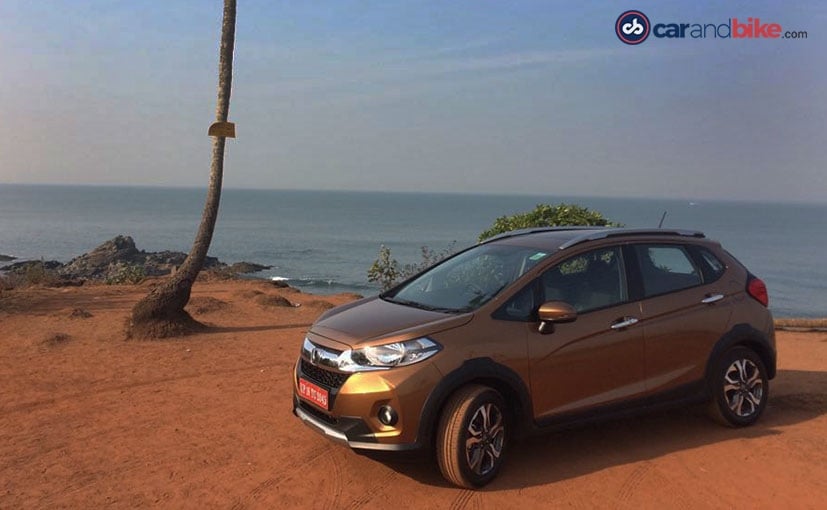
- The Honda WR-V slots between the Jazz and the BR-V
- It gets a 1.2 litre petrol and a 1.5 litre diesel engine
- ABS and airbags are standard across all variants
Honda Car India describes the WR-V, its newest car, in the country, as a 'Sporty Lifestyle Vehicle' and nowhere does it say that it's a crossover or an SUV. So, that decision has been left to us. For starters, the WR-V is sub-4 metres, but still is 4 mm longer than the Jazz. That might not be much, visually speaking; but on paper, yes it's longer. There are a few changes, on the design front too, but the deep character line, on the side is no different, than the one on the Jazz. Honda WR-V has been launched in India at a starting price of Rs. 7.75 lakh (ex-showroom, Delhi)
It's the front, where all the changes in design have been made. In profile, it shares fenders and the doors with the Jazz, but features body cladding, for a beefier look. It also comes with LED daylight running lights (DRLs) which will be standard on the car. The rear too has been heavily differentiated from the Jazz, by a different tailgate and bumper.
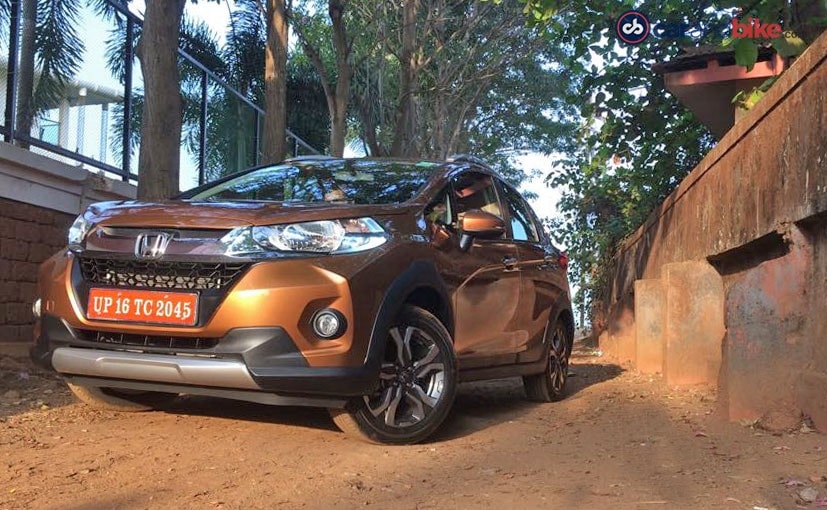
Overall then, the Honda WR-V is more of a crossover vehicle than an SUV. The WR-V is based on the Jazz hatchback, but there's a lot that has improved. For starters, high-tensile steel has been added, in the middle of the body, to enhance collision force absorption. The thickness of the front suspension mounting has been increased and the new rear bumper beam too reduces crash damage, at the rear. The folks at Honda Car India said that the WR-V performed very well, in occupant safety, in the crash tests conducted internally. We therefore asked whether it complies with the safety norms that'll come into force, in India, soon and the company stated that considering there are no guidelines in place yet, for India, it will not comment on it. All it said was that structural rigidity has been improved.
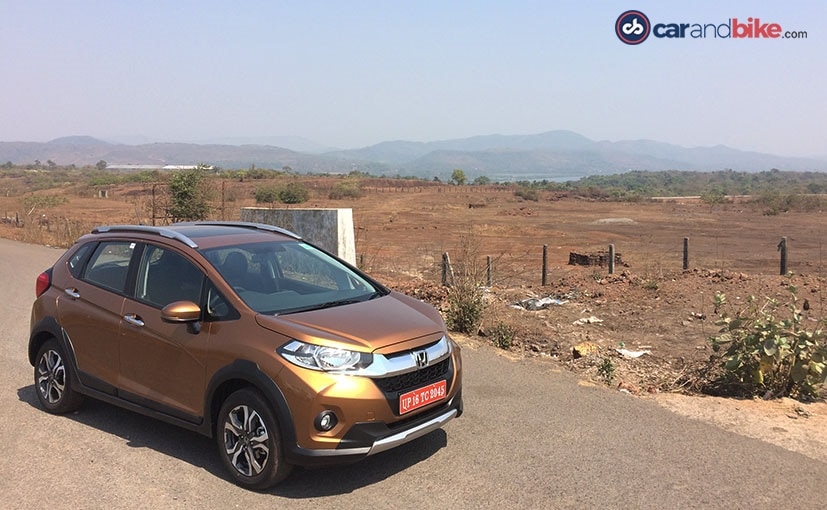 (2017 Honda WR-V)
The reinforcement of high-tensile steel makes the WR-V 50 kg heavier than the Jazz, but that's not the only department in which it surpasses the Jazz. It's longer (by 4mm), taller (by 51mm), wider (by 40mm) than the Jazz and there's more space between the wheels too (25 mm more). But, of course you want the figures of the ground clearance and that stands at 188mm, as compared to 165mm on the Jazz, so there's an improvement on that front too.
Now, we'd first seen the car in November 2016, when it was unveiled at the Sao Paulo Motor Show; so obviously you'd think that the car would be launched there first. Well, no, the global launch of the car will happen in India and ours is the first country to be the first in both producing the car and launching it and that's quite a big deal. It's also been designed and developed by Honda's R&D team, in India, while inputs were taken from the company's global R&D team too.
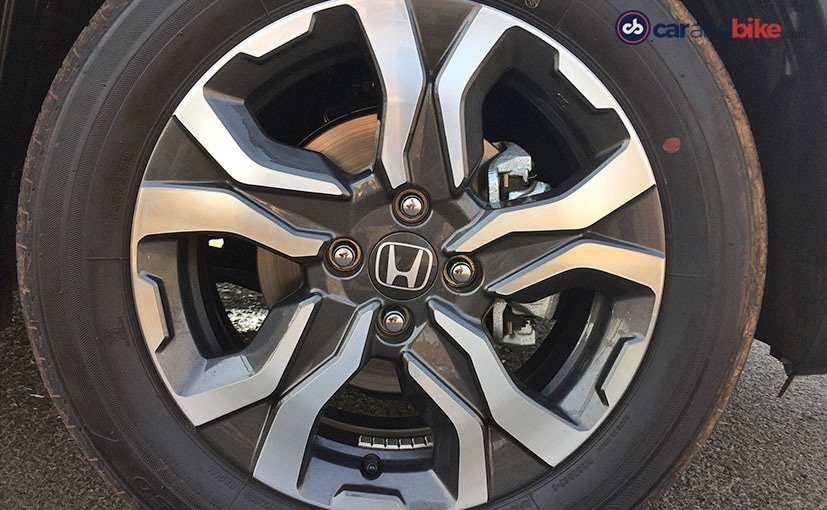 (2017 Honda WR-V 16-inch diamond-cut alloy wheel)
It's the India team that suggested that the WR-V needed chunkier tyres, to help in bringing out that stance and that's why you see 16-inch wheels, on the crossover. The 190/60 R16s look good on the car and while this does bring us to the question of ride quality, let me tell you that the suspension has been tuned,keeping a lot of things in mind - the increased ground clearance, wheelbase and tyre size. The rigidity in the lower arm and knuckle has been improved and even when you go through a bad patch of road, it doesn't rattle you. The car is stable and extremely comfortable. You aren't knocked around in the car and the ride too isn't firm. Honda has got the suspension set up brilliantly accurate, as it's not too firm and neither is it too soft and so it soaks in the deep potholes any roads have to offer, in a true crossover style.
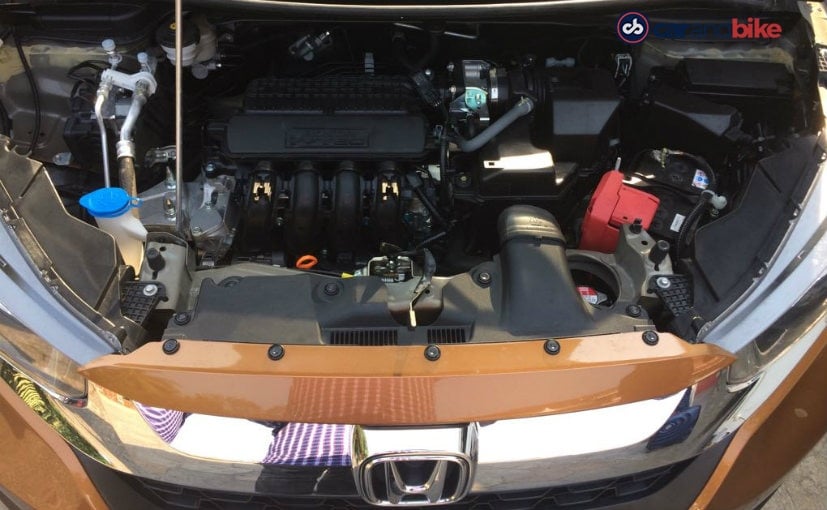
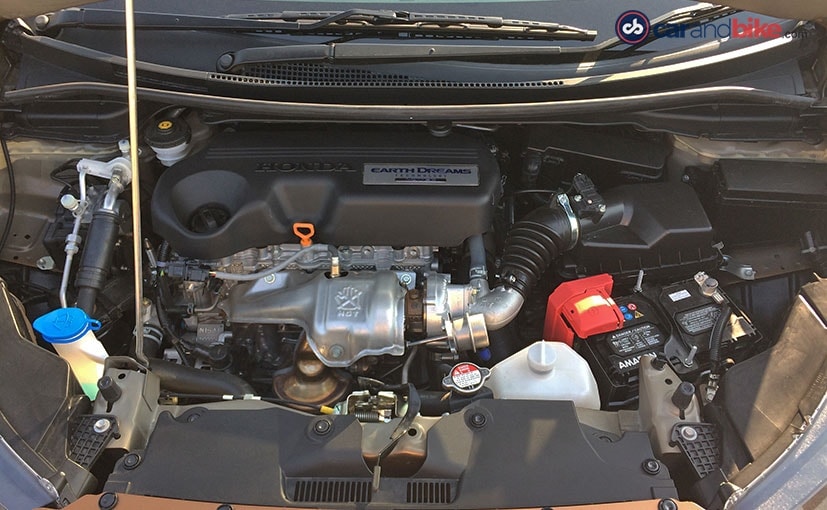 (Honda WR-V gets a 1.5-litre diesel engine and a 1.2-litre petrol engine)
On the engines front, the Honda WR-V is offered in both petrol and diesel and this came as no surprise really. We drove the diesel first and the 1.5 litre mill produces the same amount of power as well as torque, as in the Jazz. So there's 99 bhp on offer and a pulling power of 200 Nm. Start the engine and it's very apparent that it's a diesel and it's quite vociferous, in acknowledging that. As the revs build, the decibel inches a notch higher and we sure wish there was more insulation, to keep the engine noise out of the cabin. Honda says that it has tuned the gear ratios on this one and it has, for more efficiency. As a result, the WR-V puts out 25.5 Kmpl and that's pretty good considering that the EcoSport diesel returns 22.27 Kmpl and the Vitara Brezza 24.3 Kmpl.
But this affects the way you drive. The gears need to be changed more frequently and the power delivery from the transmission to the wheels accounts for a slight delay and hence a lag. Though the torque figure is a respective 200 Nm, you have to be above the 2200 rpm mark, till you actually see it kick in. We noticed this, when we were climbing some steep slopes. On flat surfaces, like the national highways or the city roads, we encountered, there was no complaining, but the delay in power delivery is extremely evident and you can't help but feel disappointed, considering that on paper it's the most powerful diesel crossover, in the country.
| Honda WR-V Engines | 1.2-litre Petrol | 1.5-litre Diesel |
|---|---|---|
| Displacement | 1,199cc | 1,498cc |
| Max Power | 88.8 bhp@6,000rpm | 98.63 bhp@3,600rpm |
| Max Torque | 110 Nm@4,800rpm | 200 Nm@1,750rpm |
| Transmission | 5-speed manual | 6-speed manual |
| Claimed Efficiency | 17.5 kmpl | 25.5 kmpl |
| ABS/Airbags | STD | STD |
The 1.2 litre petrol is also the same engine, as on the Jazz, and produces 89 bhp. It's at its chirpiest at low speeds and works beautifully well, at the lower end of the power band. The power delivery falls flat, as you go higher up the powerband and this means that you have to downshift to boost your power and move ahead. Now, you might think, this will constitute your changinggears from time to time and that's no worry because the clutch is light and you don't feel the strain. The petrol WR-V gets a five-speed manual transmission, which is smooth to operate, but the gearshift is small and hence difficult to grip. We asked about the CVT, but there's none planned yet.
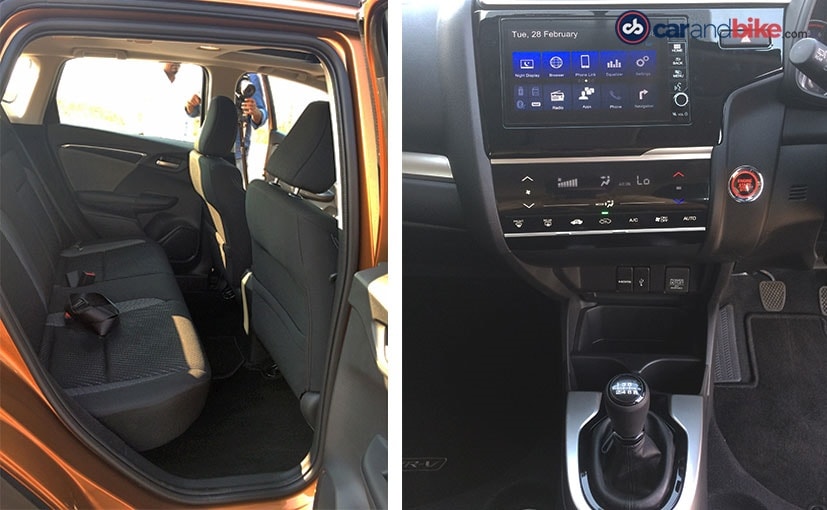 (2017 Honda WR-V interior)
The cabin is a spacious one and it's something that I won't complain about. There's ample leg, knee and head room and even the back seats are extremely comfortable. If I would want to nit-pick, I would say the foam on the seats was a bit on the softer side and since it's roomy, it could have also done with AC vents, at the rear. It feels roomier also because of the big glass area, it has. Two small quarter glasses, one on the C-Pillar and the other on the A, make for not only good visibility, but also a sense of roominess, for the driver and passengers. The feature list too is a comprehensive one and well we expected that from the WR-V, given that the facelift, of the City, received a whole bunch of them.
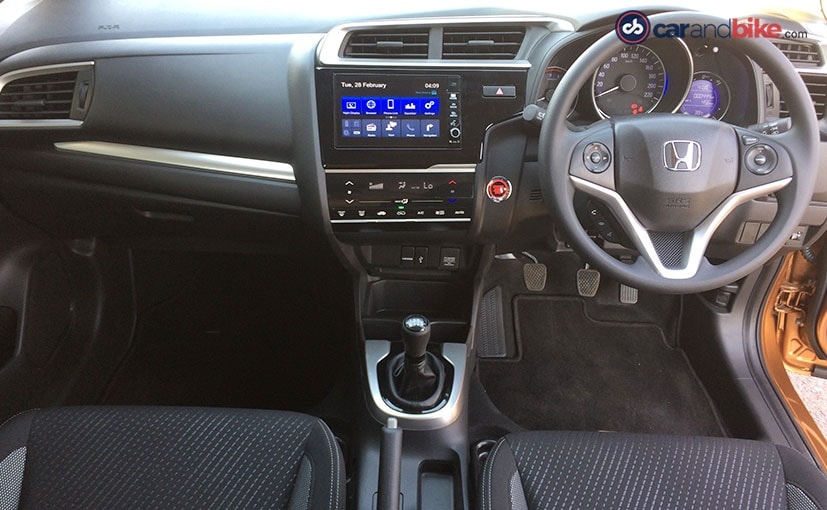 (2017 Honda WR-V dashboard)
The features on the top-end VX variant, that we drove, include a sunroof (which is a segment first), a 7 inch touchscreen infotainment system or as Honda calls it Digipad (the same as on the City), which has everything from navigation, to Wi Fi support for Internet (which is optional), to 1.5 GB internal memory. There's also Bluetooth, 2 USB slots, 1 HDMI in-slot and Mirror Link for smartphone connectivity. Other features include a reverse camera, with a multi-view layout - for wide, normal and top views. The diesel model gets some more features and this includes a start/stop button, smartkey entry and cruise control; these features go missing in the petrol variant. So there's a lot packed into it and we can say that about safety features as well. ABS with EBD and Dual airbags will come as part of standard equipment, which is a big thumbs-up, for Honda.
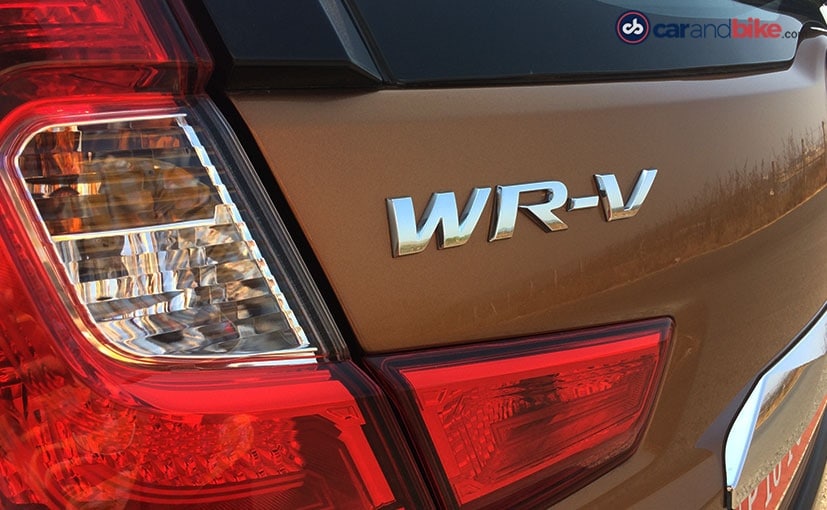 (2017 Honda WR-V Rear badge)
The WR-V then ticks all the right boxes, when it comes to feature lists and we can't wait to know what the company will offer in the base variant, when it is launched. The price then is of utmost importance; and, from where we stand, these features come at a price. The WR-V slots right between the BR-V and the Jazz, and is actually the more expensive one among its rivals. The petrol variant starts at Rs. 7.75 lakh and goes all the way up to Rs. 8.99 lakh while the diesel starts at Rs. 8.79 lakh and goes all the way up to Rs. 9.99 lakh (all prices ex-showroom Delhi). We wait to see how consumers respond to this pricing.
Honda WR-V Prices in India:
| Variants | Petrol | Diesel |
| S MT | Rs. 7,75,000 | Rs. 8,79,000 |
| VX MT | Rs. 8,99,000 | Rs. 9,99,000 |

Ameya chose cars over Shakespeare and has been in love with the Porsche 917, ever since he first laid his eyes on it. Cars are not just a mode of transport for him, but a passion, as can be seen in the way he talks about them. He believes - respect your car and the feeling will be reciprocated. He enjoys driving, which is probably a given, but its a stress buster, which is why he enjoys his job even more.
Read all latest news and reviews from Ameya Naik →


Latest News


 Sarthak Mahajan | Oct 4, 2026New Mahindra Thar Electric Spied Testing; Draws Inspiration From Vision TA Mahindra SUV has been spied testing on public roads, and it is speculated that it could be the upcoming Thar Electric.2 mins read
 car&bike Team | Oct 3, 2026Honda Elevate Facelift Teased Ahead Of October 6 LaunchThe Elevate facelift is expected get a slightly tweaked exterior and more changes inside.1 min read
 car&bike Team | Oct 3, 20262027 Kawasaki Ninja 650 Revealed; Gets Hardware UpgradesThe 2027 Ninja 650 gets a new Showa inverted fork, radial-mount brakes and more torque, along with updated TFT connectivity.2 mins read
 car&bike Team | Oct 3, 2026Auto Sales September 2026: Maruti Leads As Kia, Tata, Mahindra Post Strong GrowthMaruti Suzuki led September sales with over 2.36 lakh units, while Tata, Mahindra, Hyundai and Kia also posted growth, with Tata recording its highest-ever quarterly sales in Q2 FY27.3 mins read
 Amaan Ahmed | Oct 2, 2026BMW F 450 R: Five Important Questions AnsweredReplacing the G 310 R as BMW's entry-level naked motorcycle is the just-unveiled F 450 R, and here are answers to five pressing questions about it.1 min read
 car&bike Team | Oct 2, 2026Honda Rebel 500 Recalled In India To Address Potential Steering IssueLess than 100 units of the motorcycle manufactured in 2025 that were sold in India are affected by this global recall.1 min read
 Seshan Vijayraghvan | Oct 4, 20262026 Skoda Slavia Facelift Review: Upgrades That Matter And A Better AutomaticThe new Skoda Slavia brings a handful of visual and mechanical changes, most notably a new 8-speed automatic for the volume-selling 1.0-litre TSI variants.5 mins read
 Bilal Firfiray | Oct 3, 2026Kia Sorento Review: Is Bigger Always Better?The Kia Sorento has arrived to our shores at the right time. But does it have what it takes to take the market by a storm?7 mins read
 Abhishek Nigam | Oct 2, 2026MINI Countryman C Review: Has MINI Finally Grown Up Without Losing Its Personality?The new Countryman C is bigger, more practical and packed with technology, but its quirky appeal comes with a few compromises.1 min read
 Preetam Bora | Oct 3, 2026ViaTerra Spencer Riding Jacket Review: The Ideal Jacket For Indian Summers?The ViaTerra Spencer mesh riding jacket makes a strong case as a well-built, street-focussed riding jacket, combining good airflow with Level 2 protection and a snug, secure fit. Is it perfect? Read on.6 mins read
 Janak Sorap | Oct 1, 2026Yamaha YZF-R2 Track Review: New TerritoryYamaha's all-new YZF-R2 brings 200cc performance, lightweight construction and R-series DNA to a new generation of riders, but its true track potential is held back by one crucial component.1 min read