
Dual-Channel ABS vs Single-Channel ABS: Is the Safety Upgrade Worth It?

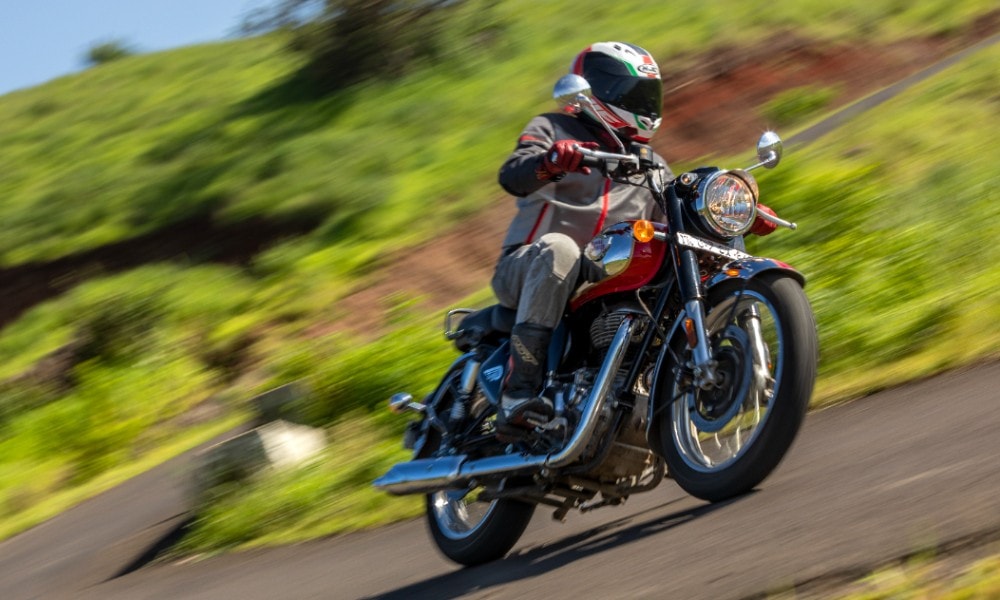
- Single-Channel ABS works only on the front wheel
- Dual-Channel ABS prevents both front and rear wheels from locking
- The extra cost is totally worth it, since it offers better safety
When you're buying a new motorcycle, you'll often notice two variants of the same bike. One comes with Single-Channel ABS, while the other gets Dual-Channel ABS and costs a little more. For many buyers, the obvious question is whether paying extra actually makes a difference. The short answer is yes.
Both systems are much safer than having no ABS at all, but Dual-Channel ABS offers an extra layer of protection that can make a real difference during emergency braking, especially on wet roads and even in the city, or at any speed.
What is ABS?
ABS stands for Anti-lock Braking System. Many two-wheeler accidents happen because of wheel lock up and skidding. When you have to brake suddenly and very hard, there's a chance the wheels can lock up and start sliding instead of rolling. Once that happens, the bike becomes much harder to control. This happens due to one or both wheels locking up under hard braking and making the bike skid, possibly resulting in a crash.
ABS prevents this by automatically reducing and restoring brake pressure several times every second, allowing the wheels to keep rolling while you slow down. Once the system prevents wheel lock-up (in one or both wheels), it prevents the bike from skidding even under hard braking. The result is better stability and more control during sudden braking.
What is Single-Channel ABS?
Single-Channel ABS only works on the front wheel. If the front tyre is about to lock up during hard braking, the system quickly adjusts the braking force to keep it rotating. This helps the rider maintain steering control and reduces the chances of the front wheel locking up and sliding.
However, the rear wheel doesn't get any ABS protection. If you press the rear brake too hard, the rear wheel can still lock up and skid. For everyday city riding, this is still a significant improvement over bikes without ABS. Many commuters still depend on the rear brake a lot for stopping power.
The ideal scenario is to practice braking with both brakes, considering the front brake offers the maximum stopping power. Single-channel ABS (on the front wheel) can still help prevent a crash in case of an emergency. However, this system still leaves the rear wheel prone to wheel lock-up and skidding and may result in the bike going out of control and potentially end up in a crash.
What is Dual-Channel ABS?
Dual-Channel ABS works on both wheels. The system continuously monitors the front and rear tyres and adjusts braking pressure independently whenever either wheel is about to lock up.
This means both wheels remain under control during hard braking, giving the rider much better stability and confidence. Whether you're braking suddenly on a wet road or avoiding an unexpected obstacle, both wheels continue rolling instead of sliding.
The Biggest Difference During Emergency Braking
The difference becomes obvious when you need to stop in a hurry. With Single-Channel ABS, the front wheel stays under control, but the rear wheel can still lock up if too much rear brake is applied. A locked rear wheel may skid sideways, especially on loose gravel, wet roads or painted road markings. This could potentially result in the rider losing control of the bike altogether and end up in a crash.
With Dual-Channel ABS, both wheels remain under control, making the bike feel much more stable during panic braking. So, in case of an emergency, when you do have to brake hard, dual-channel ABS can make all the difference between the rear wheel locking up and skidding, potentially resulting in a crash, or you being able to keep the bike upright and avoid a crash.
Single-Channel ABS vs Dual-Channel ABS
Here's a quick look at how Single-Channel ABS and Dual-Channel ABS differ in everyday riding.
| Feature | Single-Channel ABS | Dual-Channel ABS |
| Front wheel ABS operation | Yes | Yes |
| Rear wheel ABS operation | No | Yes |
| Better control during panic braking | Good | Excellent |
| Wet road performance | Better than no ABS, but more chances of rear wheel skidding | Much safer |
| Highway riding | Just adequate; better choose dual-channel ABS | Highly recommended |
| Overall safety | Good | Very Good |
Is the Extra Cost Worth Paying?
In most cases, the price difference between the two variants is around Rs. 5,000 to Rs. 8,000. That may seem like a lot while buying the motorcycle, but spread over several years of ownership, it's a relatively small amount for a feature you hope you'll never need.
Even a minor skid can damage fairings, brake levers, mirrors or the fuel tank, and repairs can easily cost more than the initial price difference. More importantly, better braking control can help you avoid an accident altogether. For most buyers, Dual-Channel ABS is money well spent.
When is Single-Channel ABS Enough?
Single-Channel ABS can still be a sensible choice if:
- You're buying a budget commuter motorcycle.
- Your budget is tight and the price difference matters.
- Your normal riding speed is below 45 kmph
- You don’t ride on rainy days or during monsoon
- You don’t ride on surfaces with low traction (gravel, sandy trails, etc)
Single-channel ABS still provides valuable protection by preventing the front wheel from locking.
When Should You Choose Dual-Channel ABS?
If any of these apply to you, Dual-Channel ABS is the better option:
- You use your bike in the city with mixed traffic on your commute
- You commute during the monsoon.
- You often ride with a pillion.
- You enjoy weekend rides.
- You're buying a 200 cc or larger motorcycle.
- You simply want the highest level of braking safety.
The faster and heavier the motorcycle, the more useful Dual-Channel ABS becomes.
Does Dual-Channel ABS Reduce Braking Distance?
Not always. On a clean, dry road, an experienced rider may achieve a similar stopping distance with either system.
The real advantage of Dual-Channel ABS is that it helps the motorcycle stay stable while braking. Instead of trying to control a bike which has the rear wheel locking or sliding, you can focus on avoiding the obstacle ahead. That's exactly what makes it safer in real-world riding conditions.
Which ABS System Should You Choose?
If your budget allows it, Dual-Channel ABS is absolutely worth the upgrade.
Single-Channel ABS is still far better than having no ABS at all and works well for everyday commuting. But if you don’t want to compromise on safety, dual-channel ABS should be the default choice if it’s available in the motorcycle you choose to buy.
Dual-Channel ABS simply offers noticeably better control when you need it the most. When it comes to motorcycle safety, it's always better to have protection on both wheels than just one.




Latest News


 Carandbike Team | Jul 3, 2026Tata Sierra ICE vs EV: What Are The Differences & Similarities?If you are looking to compare the Tata Sierra ICE and the newly launched Sierra EV in terms of design, features, powertrains, safety, pricing and key differences, look no further, as here’s everything you need to know about the two.1 min read
 car&bike Team | Jul 3, 2026Renault Kwid Prices Slashed: Fully-Loaded Climber MT Now Costs Rs 5 LakhRenault has updated the Kwid with a simpler two-variant line-up, revised prices and subtle styling tweaks.1 min read
 Amaan Ahmed | Jul 3, 2026Keeway Hypevolt-R Launched In India At Rs 1.99 Lakh: 5 kWh Battery, 14-Inch Wheels, ABS And MoreKeeway's first electric scooter for India also packs a rear camera and blind spot detection; undercuts the TVS X and is priced nearly on par with Ather's 450 Apex.2 mins read
 car&bike Team | Jul 2, 2026Maruti Suzuki Inaugurates New Kharkhoda Plant; Production Capacity To Reach 10 Lakh Cars A YearMaruti Suzuki has inaugurated its new Kharkhoda manufacturing facility in Haryana, which starts with an annual capacity of 5 lakh vehicles and is spread across 800 acres.1 min read
 car&bike Team | Jul 2, 2026Yezdi Scrambler To Be Available On Amazon From July 4The Yezdi Scrambler will go on sale on Amazon as part of the e-commerce giant's Prime Day 2026.2 mins read
 Jaiveer Mehra | Jul 2, 2026Hyundai Creta Electric Launched With Battery-As-A-Service; Prices Start At Rs 10.99 lakhThe battery rental price starts at Rs 3.9 per km.2 mins read
 Seshan Vijayraghvan | Jun 29, 2026Renault Kiger vs Toyota Urban Cruiser Taisor: Which Underdog Deserves Your Money?Both the Kiger and the Taisor promise strong performance, solid features, comfortable cabins and everyday usability, all without breaking the bank. But which of these underrated subcompact SUVs deserves your money? Let's find out.1 min read
 Seshan Vijayraghvan | Jun 29, 2026Skoda Kodiaq RS Review: The Best Kodiaq Yet?The Skoda Kodiaq RS is finally here, and it's every bit as exciting as I expected. But was it worth the wait?7 mins read
 Bilal Firfiray | Jun 28, 2026BMW X6 M60i Review: It’s Back And HOW!The BMW X6 M60i blends a 530bhp twin-turbo V8, with its unmistakable coupe-SUV styling. There’s plenty of character, but is it worth your money?6 mins read
 Janak Sorap | Jun 25, 2026350cc Bajaj Dominar 400 Review: Same Character, Lower PriceA slightly lower displacement engine, a significantly lower price tag and nearly the same performance — the Bajaj Dominar 400 aims to be smarter rather than faster.6 mins read
 Preetam Bora | Jun 25, 20262026 Bajaj Pulsar NS400Z First Ride Review: Smaller Engine, But Should You Buy It?The Bajaj Pulsar NS400Z won our Two-Wheeler Upgrade of the Year. Then new tax slabs happened. Smaller engine, same badge – but does it still deliver?6 mins read