
E20 Fuel Compatibility Explained: What Happens If You Use Ethanol-Blended Petrol in Older Cars?

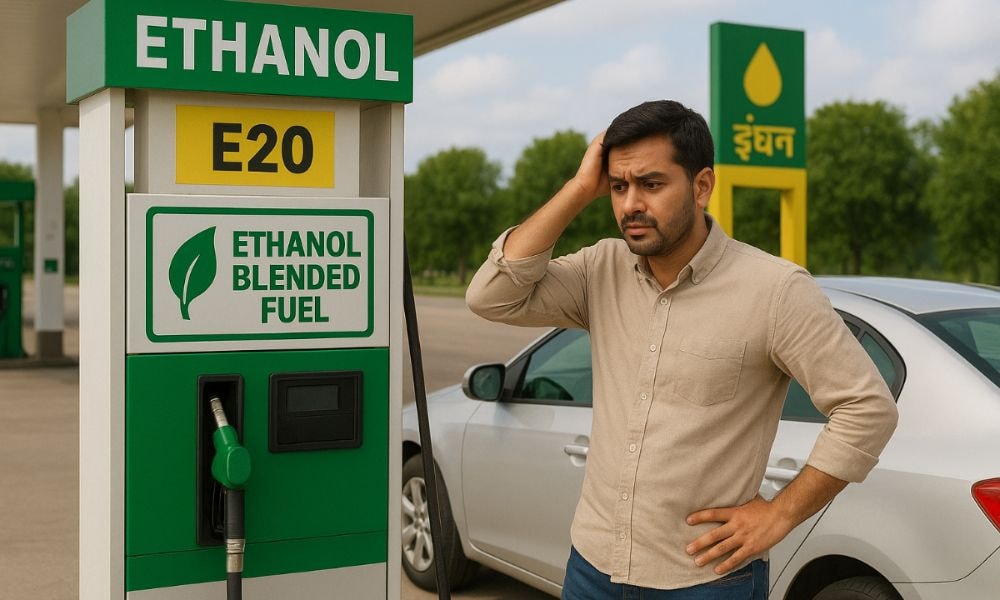
- E20 fuel contains 20% ethanol blended with petrol
- Older cars may experience mileage drops and faster fuel-system wear over time
- BS6 Phase 2 cars are factory-designed to handle E20 fuel properly
You might not have replaced your car in the last few years, but the fuel that powers it has changed a lot. E20 petrol, which is a mixture of 20% ethanol and 80% petrol, has been gaining popularity in India. The move comes as part of the government's overall strategy to cut crude oil imports and promote ethanol production.
This change is relatively straightforward for newer vehicles, particularly those that meet BS6 Phase 2 standards and were introduced after April 2023. For older petrol vehicles, however, it is a little more complex, particularly for vehicles produced prior to the introduction of E20 compatibility. No, your engine will not suddenly go out of order after one tank of E20. However, older fuel systems, rubber seals, injectors and even fuel efficiency can be impacted over time.
The idea behind E20 is to cut down on the import of oil in India and also to cut down on emissions
What Exactly is E20 Fuel?
In simple words, E20 is a fuel that contains 20% ethanol and 80% petrol.
Ethanol is an alcohol-based biofuel, mainly derived from sugarcane and agricultural sources. The idea behind E20 is to cut down on the import of oil in India and also to cut down on emissions.
The challenge is that ethanol has a very different chemical composition from normal petrol and many of the older engines were designed for lower blends such as E5 or E10.
Why Older Cars Are More Vulnerable to E20
Ethanol Absorbs Moisture Faster
Ethanol's most notable characteristic is its ability to absorb moisture from the air. Moisture absorption can increase over time in humid Indian conditions, particularly when a car is parked for extended periods of time with fuel inside the fuel tank. This can cause a phenomenon known as phase separation, which causes the water-ethanol blend to separate within the fuel tank. This combination can gradually deteriorate metal fuel lines, fuel injector parts and older steel fuel tanks.
Also Read: Royal Enfield Is Testing E85-Ready Classic 350 - Spy Photos
Moisture absorption can increase over time if a car is parked for extended periods of time with fuel
Older Rubber Components Wear Faster
Today's E20-compatible vehicles are equipped with upgraded fuel hoses, seals and gaskets that are engineered to withstand the increased ethanol concentration. Older vehicles, especially those from 2010 to early 2023, are more likely to be built with older rubber compounds and plastics that were designed for lower ethanol blends.
Exposure to E20 on a regular basis can lead to:
- Rubber hoses to harden or crack
- Fuel seals to weaken
- Minor vacuum leaks
- Faster fuel-pump wear
This typically occurs over months or years, not in a single day.
Fuel Injectors Can Get Clogged
Earlier fuel systems also use ethanol as a cleaning solvent. While this may sound good at first, it can release years of build-up of dirt, rust particles and fuel deposits from inside older tanks and pipelines. This debris is then free to circulate in the fuel system and can clog fuel filters or fuel injectors.
Owners sometimes notice:
- Jerky acceleration
- Rough idling
- Harder cold starts
- Reduced throttle response
This is typically observed after using E20 fuel in older cars over repeated cycles.
Older ECUs calibrated for E5 or E10 blends often compensate by injecting slightly more fuel to maintain performance and combustion balance
Why Many Owners Are Reporting Lower Mileage
This is currently one of the biggest real-world complaints surrounding E20 fuel. Ethanol has a lower energy density than standard petrol. Older ECUs calibrated for E5 or E10 blends often compensate by injecting slightly more fuel to maintain performance and combustion balance.
Consequently, numerous owners are reporting:
- Around 8-15% lower mileage in city driving
- Slightly reduced fuel range per tank
- More noticeable drops during bumper-to-bumper traffic usage
The effect depends on the vehicle, driving habits, traffic and engine tuning.
Which Cars Are Safest With E20?
Here is a quick look at how different generation cars react to E20 fuel.
| Vehicle Type | E20 Compatibility |
| Post-April 2023 BS6 Phase 2 cars | Fully E20 compatible |
| 2012–2023 petrol cars | Generally manageable, but may see long-term wear |
| Pre-2012 petrol cars | Higher risk of corrosion and fuel-system issues |
Interestingly, some manufacturers like Honda had already engineered several Indian petrol models for higher ethanol compatibility much earlier than others.
How Owners Can Protect Older Cars Better
Owners of older vehicles - carbureted and vintage vehicles, should take extra precautions
If you're driving an older petrol vehicle, using E20 occasionally is not the end of the world. The bigger issue is prolonged exposure without proper maintenance.
A few safer practices include:
- Avoid leaving fuel sitting unused for long periods
- Replace fuel filters more frequently
- Use trusted fuel stations consistently
- Service injectors periodically if performance drops appear
- Keep the fuel tank reasonably filled during long parking periods to reduce moisture build-up
Owners of older vehicles, particularly carbureted cars and vintage vehicles, should take extra precautions as older fuel systems are much more susceptible to corrosion caused by ethanol.
What Older Car Owners Should Really Take Away From the E20 Shift
E20 fuel is now becoming the new normal in India, and the transition is unlikely to reverse. The change is relatively easy for newer BS6 Phase 2 cars, as they were designed specifically for higher ethanol blends.
For older cars, though, the effects are more gradual than dramatic. The engine may still run fine, but over time, the engine may wear out more quickly in older fuel systems and it can also impact mileage and drivability over time.
That does not automatically make older petrol cars unusable. It simply means owners now need to be slightly more aware of fuel-system maintenance than they did before the E20 transition began.
Related News


Latest Cars


Upcoming Cars


Latest News


 car&bike Team | Jul 17, 2026New CAFE 3 Draft Brings Revised Fuel Consumption Variables, Reduced Derogation Factor For Strong Hybrid & MoreThe latest CAFE 3 draft also opens the door for technologies such as engine start/stop, TPMS & 12/48V mild-hybrid tech to factored into fuel consumption.3 mins read
 car&bike Team | Jul 17, 2026Consumer Court Orders Maruti Suzuki To Replace Grand Vitara Over E20-Related Damages; Carmaker To Escalate Matters In Higher CourtThe complainant had filed a complaint citing multiple cases of the vehicle developing technical issues due to repeated contamination in the fuel tank.1 min read
 car&bike Team | Jul 16, 2026Studds Trooper Trail Flip-Up Helmet Launched in India at Rs 2,125Studds has expanded its Trooper helmet range with the new Trail edition, featuring fresh graphics and a new colour-shifting paint option.1 min read
 car&bike Team | Jul 16, 20262027 Suzuki Hayabusa Receives Three New ColoursApart from the new liveries, the 2027 Hayabusa retains the same powertrain, electronics, and hardware.1 min read
 car&bike Team | Jul 16, 2026Hero MotoCorp Enters Germany, Expands European Presence to Five MarketsHero MotoCorp has officially entered the German market, strengthening its European presence with the launch of the Euro 5+ compliant XPulse 200 4V range.1 min read
 Jaiveer Mehra | Jul 16, 2026New Kia Syros EV Variants ExplainedThe all-electric derivative of the Syros subcompact SUV will go on sale with two battery options and in five trim levels.3 mins read
 Shams Raza Naqvi | Jul 15, 2026Ferrari 849 Testarossa Spider Driven: Rs. 11.25 Crore Meets 1,000 bhpWe got behind the wheel of the most powerful convertible from Ferrari. What makes the 849 Testarossa Spider Special? We tell you.1 min read
 Bilal Firfiray | Jul 12, 2026Tata Sierra EV Review: Reborn In The Electric AgeThe Tata Sierra EV isn’t drastically different from its ICE counterpart when it comes to design. But being the seventh electric offering from the Indian brand, it has gotten a few things right, and very few things wrong. But is it a compelling package to buy?5 mins read
 Jafar Rizvi | Jul 13, 2026TVS Orbiter Long-Term Review (Report 1): Settling In Takes TimeFirst impressions weren't the strongest, but the Orbiter has made a mark in its first month in the car&bike garage.5 mins read
 Seshan Vijayraghvan | Jul 7, 2026Tata Altroz Petrol DCA Long-Term Review: Intercity & Highway Driving ReportWe tested the Tata Altroz Petro DCA’s highway manners, intercity performance, and real-world fuel efficiency.1 min read
 Seshan Vijayraghvan | Jun 29, 2026Renault Kiger vs Toyota Urban Cruiser Taisor: Which Underdog Deserves Your Money?Both the Kiger and the Taisor promise strong performance, solid features, comfortable cabins and everyday usability, all without breaking the bank. But which of these underrated subcompact SUVs deserves your money? Let's find out.1 min read