
Extended Car Warranties Explained: When They Make Sense and When They Don't

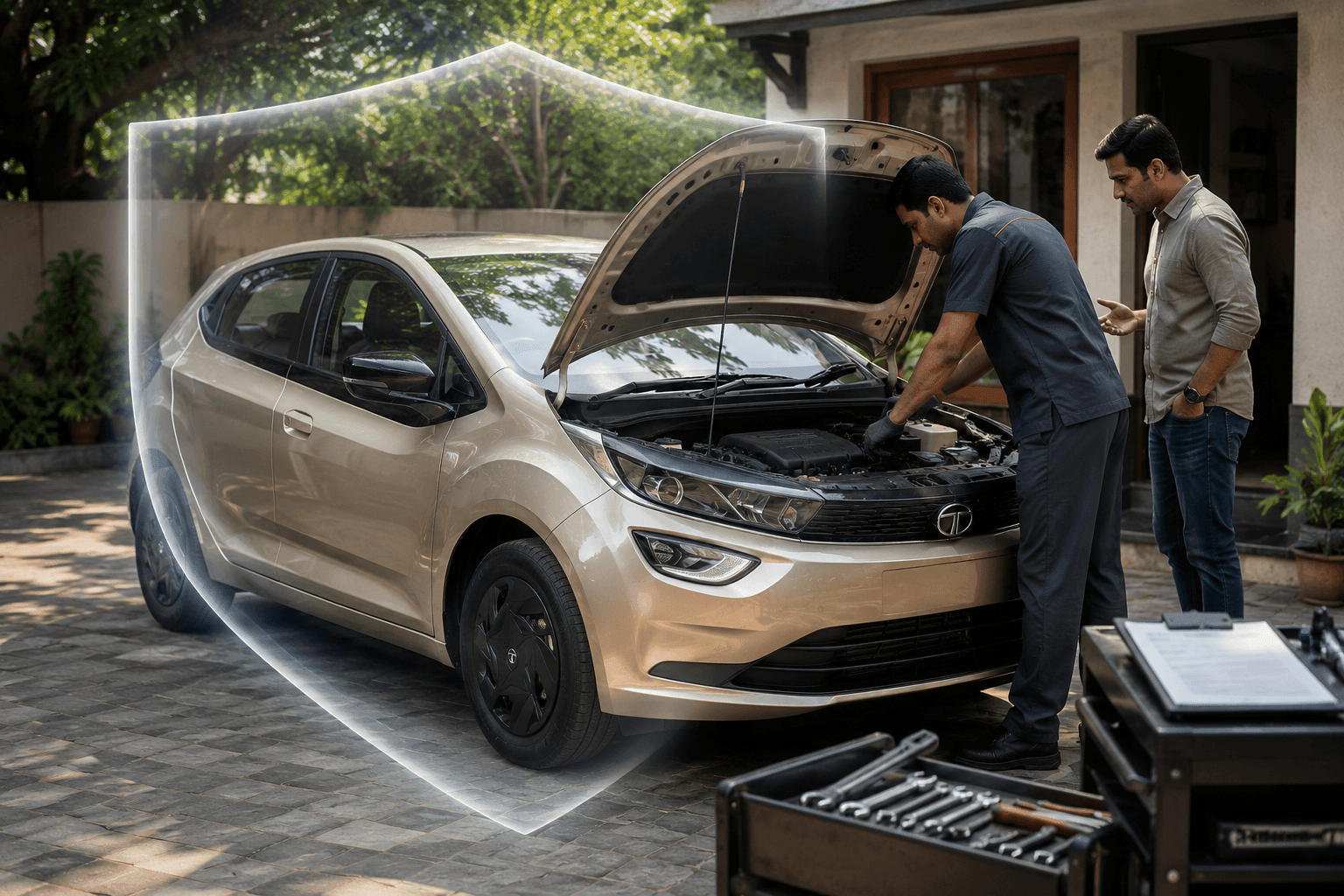
- Extended car warranties usually cover more than the standard three years
- Standard warranties cover factory infotainment systems without any extra terms
- Extended warranties are ideal for car owners who want to keep their vehicles long-term
Deciding whether to pay for an extended car warranty or pass it up is a common dilemma many vehicle owners in India face. Dealerships often offer these packages as absolute necessities that will keep your car financially secured over the years. However, it’s quite important to look past the sales pitch and weigh the long-term reliability of your vehicle against the policy's overall cost. And by breaking down these real-world benefits and hidden conditions, you can confidently decide if this additional investment will be beneficial or unnecessary for your car.
The Reality Behind Extended Car Warranties
Buying a new car means making a financial commitment, and the paperwork process in 2026 compels the buyer most of the time to pick up an extended warranty. But rather than paying up front without any consideration, one should assess future repair costs versus upfront premium charges first. Whether these optional packages will financially help you out later, or will rather become an unnecessary drain on your bank balance, this guide aims to explain when you should get an extended car warranty and when you should avoid it.
What Exactly Are Extended Car Warranties?
Most cars sold in India today are offered a standard manufacturer warranty covering manufacturing defects for a set period, which is often three years or 1,00,000 kilometres. An extended warranty essentially kicks in the moment the car runs out of this standard factory coverage period. It promises to fix or replace specific mechanical and electrical components if they fail prematurely during your ownership.
However, one should remember that extended car warranties do not offer financial protection against standard wear and tear. If your clutch plate burns out in heavy traffic or your brake pads wear thin, you will still have to pay the bill from your own pocket. The coverage is usually for major, expensive components like the engine block, the gearbox, the steering rack, and factory-fitted infotainment screens.
Manufacturer Backed Versus Third-Party Warranty Providers
Usually, we get two types of extended car warranties in India. One comes directly from the manufacturer, and it's sold through their official network. The second type of extended warranty is from third-party providers.
Remarkably, manufacturer-backed plans are often considered safer and more reliable. The reason is that these policies have it written in fine print that authorised service centres will be responsible for all repairs, and you will be given genuine, original spare parts for your vehicle. The amount of time to claim a warranty is also relatively very short, since the dealership handles all the required paperwork directly with the car manufacturer. Such is not often the case with third-party warranty providers.
When Buying an Extra Car Warranty Makes Sense
Depending on the situation, an extended car warranty may be beneficial for your car, while sometimes it may not mean much. Here are some instances when they usually do.
You Plan to Keep the Car for Over Five Years
If you want to rely on your car for seven or 10 years, the chances of mechanical failure naturally increase. Modern vehicles use sophisticated technologies like Level 2 ADAS, turbochargers, and complex dual-clutch automatic gearboxes. Repairing or replacing these faulty modules while out of warranty will easily run into lakhs of rupees. In such cases, the extended plan sorts things out.
You Have Exceptionally High Daily Usage
If you travel long distances often, you will burn through the standard warranty mileage limit much faster than the average driver. Drivers clocking over 20,000 kilometres a year should strongly consider a high-mileage extended warranty protecting their cars, so that the powertrain can be easily replaced or repaired if it suffers from premature failure.
When You Should Skip on an Extended Car Warranty
However, even though warranty providers present convincing arguments at the dealership desk, sometimes, buying extra coverage is not necessary at all.
You Upgrade Your Vehicles Frequently
If you trade in your vehicle every three to four years, an extended warranty offers zero value. You will be selling the car just as the standard factory warranty ends. In such situations, some dealers argue that a transferable extended warranty boosts resale value. But in reality, the slight bump in the used car price does not match the initial high cost of the warranty itself.
You Are Buying a Proven, Reliable Model
Some cars run on heavily tested platforms with naturally aspirated engines. These mechanical setups are robust and relatively cheap to fix. If a basic sub-four-metre hatchback delivering 20 kmpl is driven entirely in dense city traffic, the mechanical stress rarely ever reaches the redline. So, paying Rs. 20,000 for an extended warranty makes little sense.
We have outlined in the table below when you should go for an extended car warranty and when you should avoid one.
| Decision Factor | When It Makes Sense | When It Does Not Make Sense |
| Transmission Type | Complex automatics, where a failure requires you to change the transmission completely. | Standard manual gearboxes or basic Automated Manual Transmissions (AMTs) that are cheap to repair. |
| Powertrain Tech | Turbocharged petrol/diesel engines or hybrid systems with many high-pressure components. | Naturally aspirated, four-cylinder petrol engines built on long-running, highly optimised platforms. |
| Electronics & Features | Vehicles with Level 2 ADAS radars, digital cockpits, air suspension, or extensive connected-car modules. | Base or mid-spec variants featuring minimal electronic components and analogue instrument clusters. |
| Brand Reputation | Brands with historically high spare part costs or premium/luxury marques. | Mass-market manufacturers with deep localisation, widespread parts availability, and low service costs. |
| Financial Strategy | Risk-averse buyers who want fixed upfront costs over the volatility of large out-of-pocket repair bills. | Vehicle owners who prefer to self-insure by maintaining a dedicated emergency fund. |
| Vehicle History | Buying a certified pre-owned car where the manufacturer permits extending the original coverage. | Purchasing an older used car where only restrictive, third-party warranty policies are available. |
Decoding the Fine Print and Exclusions in Car Warranties
The biggest frustration buyers face is realising that the paperwork does not cover their specific vehicle problem. Therefore, one should read the exclusion list carefully before signing for either a standard car warranty or an extended alternative.
| Component Category | Standard Warranty | Extended Warranty |
| Engine block and internals | Fully Covered | Fully Covered |
| Gearbox and 4x2 / 4x4 drivetrains | Fully Covered | Fully Covered |
| Factory infotainment systems | Fully Covered | Conditionally Covered |
| Brake pads, clutch plates, wiper blades | Not Covered (Wear & Tear) | Not Covered |
| Battery and vehicle tyres | Pro-rata basis (Limited) | Not Covered |
| Routine service costs and fluids | Customer Paid | Customer Paid |
Deciding Between Standard & Extended Car Warranty
Treat an extended warranty as a practical tool for financial predictability. It changes the unknown risk of a massive future repair bill into a known, fixed cost today. If you have a modern, safe vehicle packed with high-end digital features and plan to keep it for as long as possible, securing extended coverage is highly practical. The premium paid upfront will effectively protect you against the constant inflation in spare part prices. But if your usage is purely urban and minimal, or if you prefer keeping things mechanically simple with a proven car, you can safely pass on the dealership offer.
Related News


Latest Cars


Upcoming Cars


Latest News


 Sarthak Mahajan | Sep 19, 2026Kia Carens CNG vs Maruti Suzuki Ertiga CNG: Fuel Tank Size, Power Outputs ComparedKia has launched the Carens with a factory-fitted CNG kit, with prices starting at Rs 12.12 lakh (ex-showroom).1 min read
 Shams Raza Naqvi | Sep 18, 2026Kia Carens CNG, Carens Clavis CNG Launched In India: Prices Start At Rs. 12.12 LakhWhile the Carens CNG has been introduced in a single variant, the Clavis CNG will have two variants.2 mins read
 Girish Karkera | Sep 18, 2026Maruti Suzuki Swift, Dzire and Baleno CNG AMT Launched: Check Mileage, PricesAutomated manual gearbox option makes the petrol-CNG hybrid a viable option for everyday city use for Swift, Dzire and Baleno models4 mins read
 car&bike Team | Sep 18, 20262026 TVS Apache RTR 200 4V: Top 5 UpdatesThe TVS Apache RTR 200 4V has been introduced in a new top-end variant which gets a lot of new features, including preload adjustable front suspension. Here’s a look at what’s new on the top-spec Apache RTR 200 4V.1 min read
 Jaiveer Mehra | Sep 18, 20262027 Mahindra Thar 3-Door Facelift Teased Ahead Of LaunchSecond update in two years to bring additional cosmetic changes and more features.1 min read
 Amaan Ahmed | Sep 18, 2026Tata Sierra Legend Series Launched At Rs 11.99 Lakh; Adds More Features To Entry And Mid TrimsA slew of features, previously limited to the top-spec Sierra, have been introduced on the Smart+, Pure, Pure+ and Adventure+ variants of the SUV.3 mins read
 Bilal Firfiray | Sep 19, 2026MG Hector Tomahawk EV Review: Play It SafeMG’s new electric SUV has one of the coolest names ever, and the coolest temperament amongst its peers. But is it worth buying?7 mins read
 Preetam Bora | Sep 16, 2026Royal Enfield Himalayan 440 Review: Better Than the 450?The new Himalayan 440 with an upsized engine and gearbox has certainly improved as a touring machine and at an extremely attractive price of Rs. 2.29 Lakh. Is it the better Himalayan to choose for many riders?9 mins read
 Seshan Vijayraghvan | Sep 15, 2026BMW i5 LWB Review: Not The M60, This Is The Proper Electric 5 SeriesThe BMW i5 LWB takes the electric 5 Series formula and puts a stronger focus on rear-seat comfort and long-distance luxury. With a 669 km claimed range, 268 bhp and a more relaxed character, is this the i5 that makes the most sense for India?7 mins read
 Preetam Bora | Sep 14, 2026Ladakh Uncharted: Himalayan Basecamp Off-Road Ride ExperienceA day-long off-road excursion from Royal Enfield’s Himalayan Basecamp event in Ladakh, the Ladakh Uncharted ride by Alpinestars was all about re-discovery!6 mins read
 Janak Sorap | Sep 12, 2026New Bajaj Pulsar 125 First Ride Review: More Tech, Less Weight, Same Pulsar DNAThe new Bajaj Pulsar 125 retains the familiar Pulsar identity but gets a new engine, lighter construction, more features and a sharper riding experience.5 mins read