
What Happens If You Continuously Drive With Low Tyre Pressure?

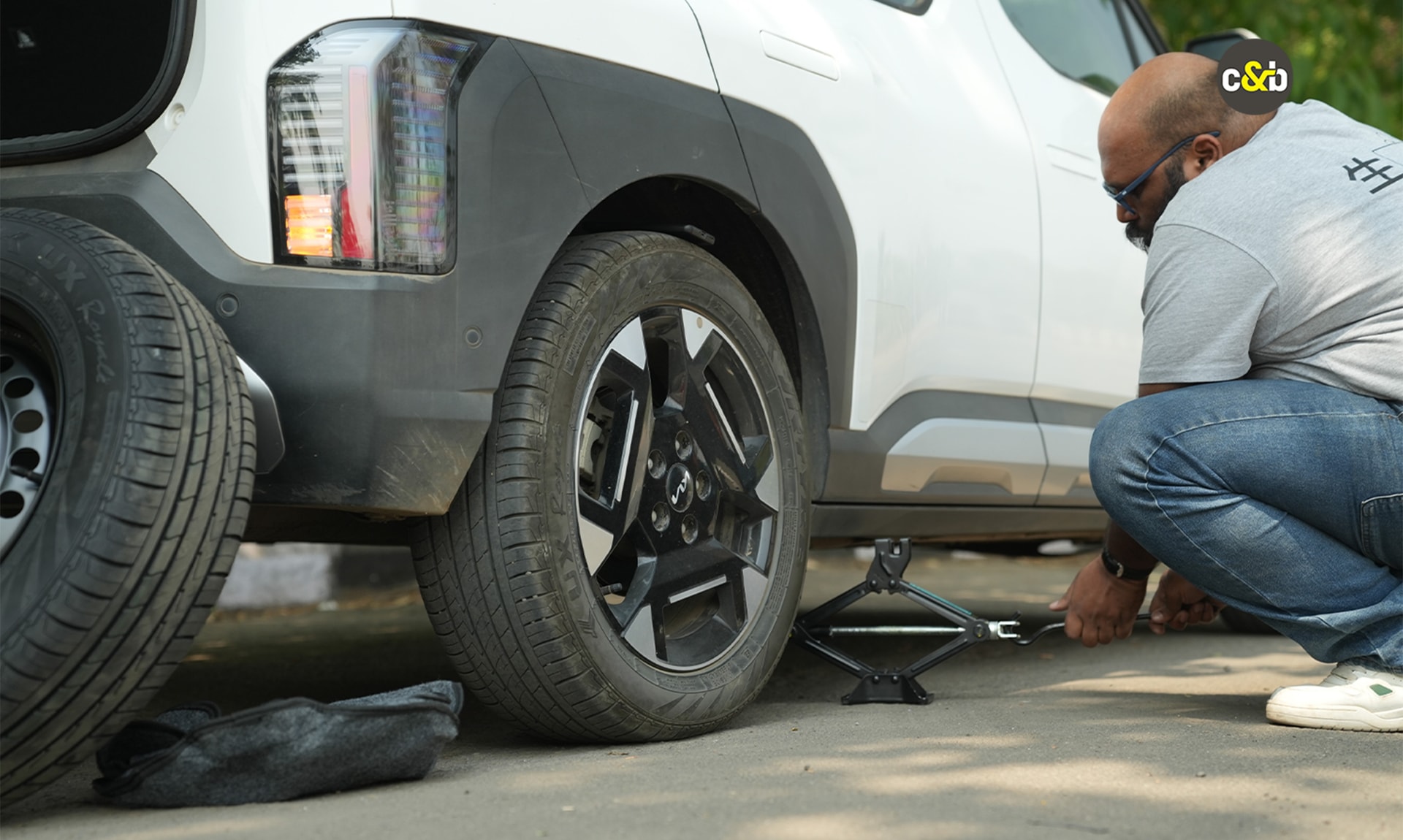
- Low tyre pressure increases fuel consumption and accelerates tyre wear
- Underinflated tyres generate excessive heat, increasing the risk of tyre failure
- Poor handling, longer braking distances, and suspension stress can make driving less safe
A tyre does not have to look visibly flat to be underinflated. In fact, a tyre that is just 4-5 PSI below the recommended pressure can already begin affecting how your vehicle behaves on the road. This is particularly important in India. High summer temperatures, rough roads, deep potholes, and heavy monsoons put additional stress on tyres, making proper tyre pressure one of the simplest yet most overlooked aspects of vehicle maintenance.
Also Read: Opinion: Why A Spare Wheel Must Be Standard, And Not An Option, In India
So, what exactly happens if you keep driving with low tyre pressure?
Why Low Tyre Pressure Is More Serious Than It Looks
Tyres are designed to distribute the weight of the vehicle evenly across the road surface. When the pressure drops, more of the tyre touches the road than intended.
This creates three immediate issues:
- Higher rolling resistance
- Excessive heat build-up
- Uneven tyre wear
The longer the tyre runs under these conditions, the more stress is placed on its internal structure.
Your Fuel Bills Start Increasing
One of the first consequences of low tyre pressure is reduced fuel efficiency.
Underinflated tyres require more energy to rotate because they create greater rolling resistance. The engine therefore has to work harder to move the vehicle forward.
Many tyre manufacturers estimate that driving with tyres that are several PSI below the recommended pressure can reduce fuel economy considerably, while severely underinflated tyres can increase fuel consumption even further.
Also Read: Common Reasons Modern Cars Trigger Check Engine Lights In India
For drivers covering long distances every month, this can quietly add thousands of rupees to annual fuel expenses.
Your Tyres Wear Out Much Faster
Low tyre pressure changes how the tread contacts the road.
Instead of wearing evenly, the outer edges of the tyre carry more of the vehicle's weight. Over time, both shoulders begin wearing much faster than the centre.
This means:
- Reduced tyre life
- Poor wet-weather grip
- Earlier tyre replacement costs
A set of tyres that could have lasted 45,000-50,000 km may need replacement significantly sooner if they are regularly driven underinflated.
Heat Build-Up Can Lead to a Blowout
This is arguably the biggest safety risk.
As an underinflated tyre rotates, its sidewalls flex far more than they are designed to. This repeated bending generates excessive heat inside the tyre.
On long highway journeys during Indian summers, road temperatures can become extremely high. Combined with low tyre pressure, this heat can weaken the tyre's internal construction and, in severe cases, result in a sudden tyre failure or blowout.
This is one reason tyre-related breakdowns tend to increase during hot-weather highway travel.
Braking Distances Become Longer
Tyres play a crucial role in how effectively a vehicle stops. When tyre pressure is low, the tyre deforms more during braking, reducing stability and grip.
This can result in:
- Longer stopping distances
- Reduced emergency braking performance
- Less predictable vehicle behaviour
During the monsoon, the situation can become even more dangerous because underinflated tyres struggle to clear water effectively.
Also Read: Top 5 Used Cars That Are Still Worth Buying
Handling Starts Feeling Different
Many drivers describe a car with low tyre pressure as feeling "off" without immediately knowing why.
You may notice:
- Slower steering response
- Increased body movement during turns
- Reduced highway stability
- A heavier steering feel
Motorcycles are particularly sensitive to low tyre pressure, with handling and cornering confidence often deteriorating quite quickly.
Signs That Your Tyres Are Running Low on Pressure
Before any warning light comes on, your vehicle may already be showing subtle signs of low tyre pressure.
You may notice:
- The steering feels heavier than usual.
- The vehicle feels sluggish while changing direction.
- Fuel efficiency suddenly drops.
- The car seems to pull slightly to one side.
- The tyres appear flatter at the bottom.
- A Tyre Pressure Monitoring System (TPMS) warning light appears.
Ignoring these signs for too long can gradually lead to more serious and expensive problems.
Can Low Tyre Pressure Damage Alloy Wheels?
Yes, it can.
When tyre pressure is low, there is less air inside the tyre to absorb impacts from potholes and sharp road imperfections.
This increases the likelihood of:
- Bent alloy wheels
- Sidewall cuts
- Tyre pinch damage
- Wheel balancing issues
Given the condition of many Indian roads, continuously driving with low tyre pressure can become an expensive mistake.
Suspension Components Also Suffer
Tyres are the first line of defence against road imperfections.
When they are underinflated, impacts are not absorbed as effectively, and additional stress can be transferred to:
- Suspension bushings
- Steering components
- Wheel bearings
- Suspension joints
Over time, this can contribute to higher maintenance costs.
Why Indian Summers and Monsoons Make It Worse
Tyres naturally lose pressure over time, but India's climate often accelerates the problem.
Summer highway temperatures increase heat build-up inside the tyre, while monsoon conditions demand maximum grip and effective water evacuation.
Poor roads and frequent potholes can also cause sudden pressure loss or damage that drivers may not immediately notice.
This is why tyre pressure checks are especially important before:
- Long highway journeys
- Monsoon travel
- Summer road trips
How Far Can You Drive With Low Tyre Pressure?
The answer depends on how low the pressure actually is.
If the tyre is only 2-3 PSI below the recommended level, driving a short distance to a fuel station is usually not a major concern.
However:
- 5-8 PSI below the recommendation should be corrected as soon as possible.
- More than 20% below specification can significantly affect safety.
- A visibly underinflated tyre should ideally be reinflated before continuing the journey.
Continuing to drive for extended periods on low tyre pressure simply increases the risk of damage and tyre failure.
How Much Pressure Loss Is Normal?
Many drivers are surprised to learn that tyres naturally lose a small amount of pressure over time.
Most tyres can lose around 1-2 PSI every month due to natural air permeation. Seasonal temperature changes can also cause tyre pressure to fluctuate.
That is why checking tyre pressure only when a warning light appears is usually not enough.
Simple Habits That Can Prevent Problems
Keeping tyres properly inflated requires very little effort.
A few simple habits can make a significant difference:
- Check tyre pressure once every month.
- Always check pressure when tyres are cold.
- Inspect tyres before long trips.
- Check the spare tyre regularly.
- Keep a portable inflator or pressure gauge in the vehicle.
Even cars equipped with TPMS benefit from periodic manual checks.
A Few PSI Can Cost You Plenty
Driving continuously with low tyre pressure does much more than make the tyres look slightly flat. It increases fuel consumption, accelerates tyre wear, affects braking and handling, and can even raise the risk of a dangerous tyre failure.
Tyres are the only part of your vehicle that remains in constant contact with the road. Spending a few minutes checking tyre pressure every month is one of the easiest ways to improve safety, reduce ownership costs, and get the maximum life out of your tyres.
Related News


Latest Cars


Upcoming Cars


Latest News


 Jaiveer Mehra | Aug 23, 20262027 Renault Kwid Spied Ahead Of Global DebutNew update to the internal combustion Kwid brings styling tweaks and a Kwid E-Tech-inspired cabin.1 min read
 car&bike Team | Aug 22, 2026Volkswagen Tukan Pickup Truck Unveiled In BrazilThe Tukan is the first VW pickup to sit on the MQB platform.1 min read
 Jafar Rizvi | Aug 22, 2026Skoda Kylaq Sportline vs Kylaq Prestige: Differences ExplainedThe Kylaq Sportline sits below the Prestige in the line-up and costs Rs 43,000 less, but the price difference isn't just about the badge. The Sportline gets a darker exterior and interior treatment, while the Prestige packs a few more features.3 mins read
 Jafar Rizvi | Aug 22, 2026BMW X1 LWB vs X1: What's Different?The BMW X1 LWB stretches the standard SUV by 116mm and adds 108mm to the wheelbase. Let’s take a look at all that is different.2 mins read
 Preetam Bora | Aug 22, 2026Opinion: Hero’s Premium Challenge Isn’t Products, It’s PerceptionIn a market increasingly driven by aspiration, identity and experience, Hero MotoCorp needs to build not just better premium motorcycles, but a stronger premium brand around them.1 min read
 Abhishek Nigam | Aug 21, 2026Kawasaki Corleo Hydrogen-Powered Horse Reveals New DetailsKawasaki’s futuristic four-legged mobility concept uses rider movement, hydrogen power and multiple riding modes to navigate challenging terrain.1 min read
 Seshan Vijayraghvan | Aug 19, 20262026 BMW X1 Long-Wheelbase Review: Is This The X1 To Buy?Along with the extra rear legroom, the new BMW X1 LWB offers more features, more safety tech, and a more powerful petrol engine. But do these updates actually make it a better SUV?1 min read
 Janak Sorap | Aug 17, 2026Bajaj Pulsar N160 SS First Ride Review: The Most Tech-Loaded Pulsar Yet?The Bajaj Pulsar N160 SS brings more power, new-age electronics and sharper styling to the familiar 160cc Pulsar formula.5 mins read
 Jaiveer Mehra | Aug 16, 2026Honda Amaze CVT Long Term First Report: 1800 Km InThe Amaze is the first sedan to join our long term feet in a year, and while on paper it lacks some of the features offered in its rivals, there’s plenty of promise in the package.1 min read
 Preetam Bora | Aug 12, 2026Royal Enfield Himalayan 440 Custom Review: Beating RE to the PunchDelhi-based custom motorcycle shop TNT Motorcycles introduces packages to convert existing Himalayan 411 adventure bikes to Himalayan 440. Is it worth the expense?8 mins read
 Seshan Vijayraghvan | Aug 11, 20262026 Nissan Tekton 700 km Review: Can It Conquer The Himalayas?We drove the newly launched Nissan Tekton from Chandigarh all the way up to Leh, covering over 700 km with the new SUV. From exploring the Tekton’s capabilities in the Himalayas to setting an India Book Record, here’s how the trip unfolded.8 mins read