
How Chennai's Heat, Traffic, and Coastal Climate Shape Your Used Car Purchase

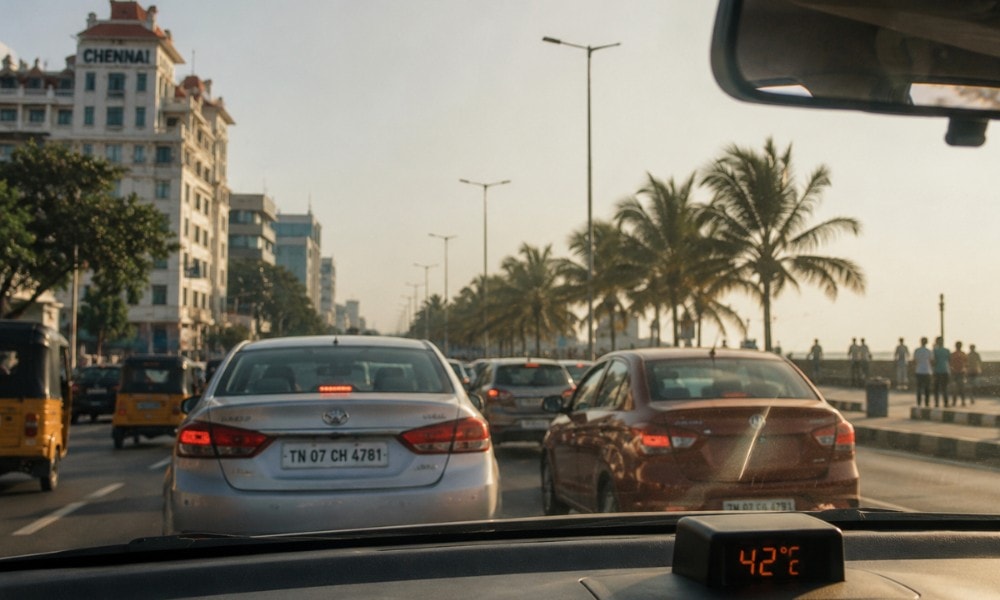
Chennai throws a unique set of challenges at any vehicle. The combination of searing summers, bumper-to-bumper traffic on arterial roads like Anna Salai and OMR, and salt-laden coastal air means a car that looks perfect on paper might be quietly deteriorating underneath. Here's what actually happens to cars that spend their lives in this city. And how to use that knowledge before you sign anything.
What coastal air does to metal and wiring
Chennai sits right on the Bay of Bengal. That proximity creates a persistent salt-moisture combination that accelerates corrosion in ways most inland buyers never consider.
The underbody takes the first hit. Brake lines, fuel lines, and suspension bolts develop rust that looks cosmetic initially but weakens structural integrity over time. It has been commonly seen that buyers skip the underbody check and end up replacing entire exhaust assemblies within six months. If you are browsing second hand cars in Chennai, understanding how the city's environment punishes specific components can save you from an expensive mistake within months of buying.
The part nobody warns you about? Electrical corrosion. Salt air creeps into wire harness connectors, fuse boxes, and earthing points. Intermittent electrical faults, flickering dashboard lights, and sluggish power window motors tell the whole story. When inspecting a car, pop the bonnet and examine the battery terminals plus nearby connectors. Green or white powdery deposits mean the coastal climate has been working its magic. A paint thickness gauge will reveal whether panels have been repainted to hide bubbling rust - common on cars older than five years in this region.
Check the door sills and wheel arches. These are the first areas where rust blooms because they trap moisture and road spray. Run your fingers along the inner edges. Any roughness or flaking under rubber seals means trouble ahead.
How 45-degree summers punish cooling systems and interiors
Chennai's peak summer temperatures regularly push past 42 degrees, with road surface heat adding another thermal stress layer. For used cars, this means cooling systems have worked overtime for years.
Radiator hoses harden and crack. Thermostat valves stick. Coolant loses protective properties faster than service schedules anticipate.
What to check: squeeze upper and lower radiator hoses. They should feel firm but pliable. Rock-hard or spongy means they're overdue for replacement. Look at the coolant reservoir - dark brown or murky coolant suggests the previous owner skipped flush intervals, accelerating internal engine block corrosion.
Interiors take a beating, too. Dashboard plastics warp and crack from prolonged UV exposure, especially on cars parked outdoors without sun film. Leather seats dry out, fabric seats fade unevenly, and adhesive holding the headliner fabric gives way. These aren't just cosmetic issues. Replacing a sagging headliner costs between Rs 3,000 and Rs 8,000, depending on the car. A cracked dashboard on certain models? Nearly impossible to source affordably.
Why stop-and-go traffic matters more than odometer readings
That odometer showing 40,000 kilometres might seem low. Chennai traffic context changes everything.
A car driven primarily on Velachery Main Road or through Tambaram during peak hours accumulates wear that the odometer doesn't reflect. Clutch plates on manual cars wear faster in constant first-and second-gear crawling. Automatic transmissions run hotter because torque converters work harder at low speeds without adequate airflow.
The trick? Check the clutch bite point on any manual car. If it engages very high near the top of pedal travel, the clutch disc is worn thin. On automatics, feel for any shudder or hesitation during low-speed gear changes. Transmission fluid colour matters here - pull the dipstick and look for bright red or light pink (healthy) versus dark brown or burnt-smelling fluid that signals overheated internals.
Brakes suffer disproportionately, too. Frequent braking in slow traffic means disc and pad replacement cycles shorten considerably. Ask for the last brake service record. Or inspect pad thickness visually through wheel spokes.
Picking the right car for Chennai conditions
Certain configurations handle Chennai better than others. Cars with factory-applied underbody coating, galvanised body panels, and automatic climate control tend to age more gracefully here.
Petrol engines generally cope better with short urban commutes than diesel units, which can develop carbon buildup in the diesel particulate filter during prolonged low-speed running.
When searching for used cars, focus on service history completeness over price alone. A well-maintained car with higher kilometres is almost always a better buy than a low-mileage car with gaps in its records. Chennai's climate doesn't forgive neglected maintenance. The repair bills eventually surface, whether you check for them or not.
Take your time. Inspect with intent. Let the city's conditions guide your questions. The car that survives Chennai well is built to last.


Latest News


 car&bike Team | Jul 13, 2026Hero MotoCorp Flags CAFE Norm Risks for Two-Wheelers Ahead of New Fuel Efficiency RulesHero MotoCorp says the proposed expansion of Corporate Average Fuel Economy (CAFE) norms to two-wheelers will improve fuel efficiency but could also bring significant cost and compliance challenges for manufacturers.1 min read
 car&bike Team | Jul 13, 2026Hero MotoCorp To Launch New 150-350 cc Premium MotorcyclesTo capitalise on market trends and growth in the sub-350 cc premium motorcycle segment, Hero MotoCorp says it will launch new products under both Hero and Harley-Davidson brands.3 mins read
 car&bike Team | Jul 13, 2026Ignyte Launches New Carbon Fibre Series Helmets In India; Prices Start From Rs 14,999New helmet series features a carbon fibre composite shell & kevlar reinforcement and meets ISI & DOT standards.1 min read
 car&bike Team | Jul 11, 2026Nissan Tekton Tekna+ vs Kia Seltos GTX (O): Top Spec Variants ComparedThe Nissan Tekton has entered one of India's most competitive SUV segments, taking on the Kia Seltos head-on. Here's how the two range-topping variants compare across dimensions, features, safety, powertrains and pricing.4 mins read
 car&bike Team | Jul 11, 2026Kia Syros EV Spied Undisguised Ahead Of India LaunchFresh spy images have revealed the Kia Syros EV without any camouflage, offering the clearest look yet at its production-ready design.2 mins read
 car&bike Team | Jul 11, 2026Hero Vida VX2 Plus With 4.4 kWh Battery Launched At Rs 1.44 LakhHero MotoCorp has expanded the Vida VX2 lineup with a new 4.4 kWh battery option.2 mins read
 Bilal Firfiray | Jul 12, 2026Tata Sierra EV Review: Reborn In The Electric AgeThe Tata Sierra EV isn’t drastically different from its ICE counterpart when it comes to design. But being the seventh electric offering from the Indian brand, it has gotten a few things right, and very few things wrong. But is it a compelling package to buy?5 mins read
 Jafar Rizvi | Jul 13, 2026TVS Orbiter Long-Term Review (Report 1): Settling In Takes TimeFirst impressions weren't the strongest, but the Orbiter has made a mark in its first month in the car&bike garage.5 mins read
 Seshan Vijayraghvan | Jul 7, 2026Tata Altroz Petrol DCA Long-Term Review: Intercity & Highway Driving ReportWe tested the Tata Altroz Petro DCA’s highway manners, intercity performance, and real-world fuel efficiency.1 min read
 Seshan Vijayraghvan | Jun 29, 2026Renault Kiger vs Toyota Urban Cruiser Taisor: Which Underdog Deserves Your Money?Both the Kiger and the Taisor promise strong performance, solid features, comfortable cabins and everyday usability, all without breaking the bank. But which of these underrated subcompact SUVs deserves your money? Let's find out.1 min read
 Seshan Vijayraghvan | Jun 29, 2026Skoda Kodiaq RS Review: The Best Kodiaq Yet?The Skoda Kodiaq RS is finally here, and it's every bit as exciting as I expected. But was it worth the wait?7 mins read