
Turbo-Petrol vs Naturally Aspirated Engines: Which Feels Better in Real Driving?

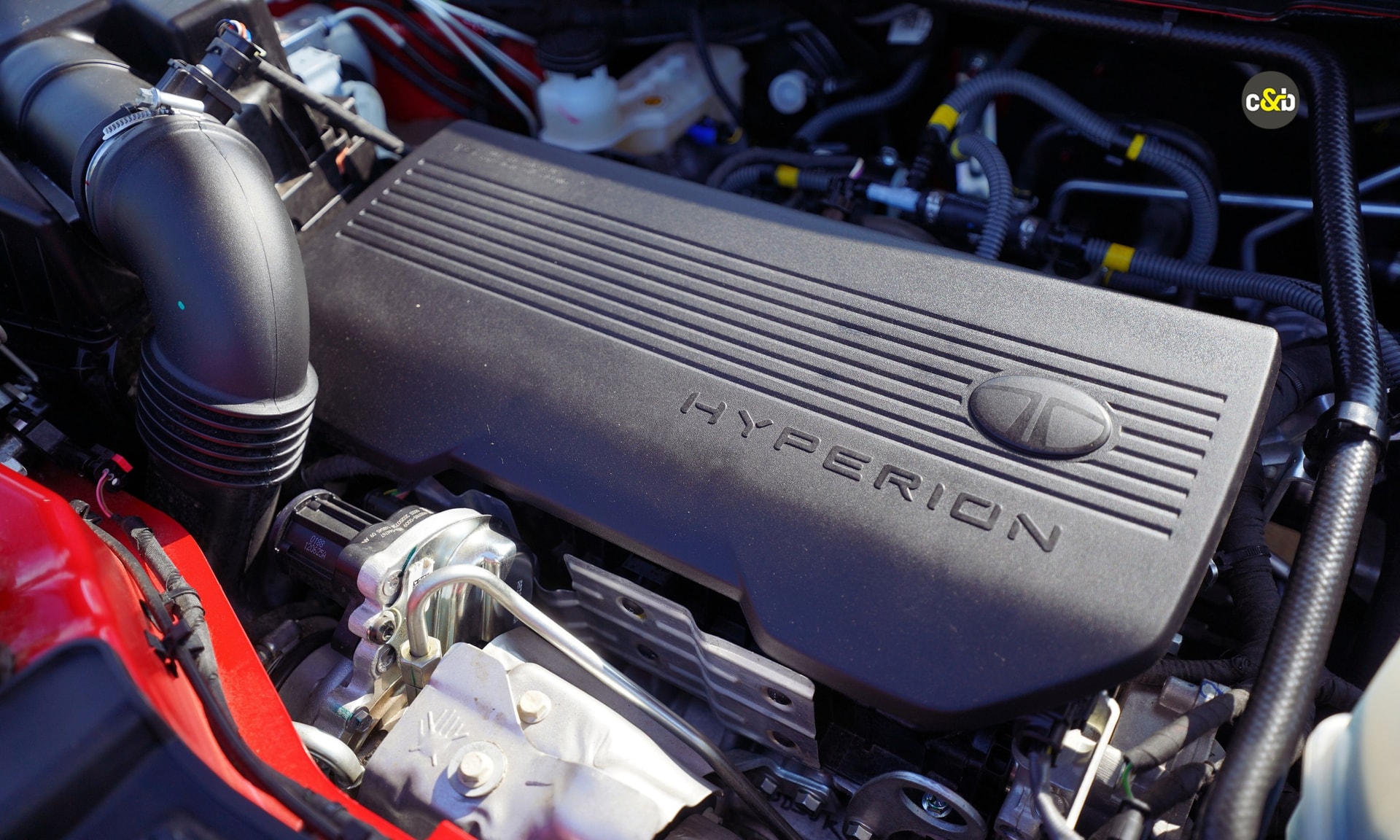
Over the past decade, tightening emission norms and more stringent Corporate Average Fuel Efficiency regulations have pushed the advent of small-displacement turbocharged petrol engines. Turbochargers have become increasingly used on small-displacement engines to help reduce emissions in vehicles while still deploying more than ample power that would otherwise have needed larger displacements.
In India, while the budget end of the mass market still holds firm on natural aspiration, an increasing number of mass market vehicles - particularly in the Rs 10 lakh and up bracket - have adopted the technology, offering over 100 bhp from units that seldom displace more than 1200 cc in subcompact models and over 140 bhp in units displacing up to 1.5 litres.
So, which is the better fit for you?
Power & Torque Delivery: Linear vs Peaky
There is a distinct difference in the way the two units make their power. Naturally aspirated units linearly make power - often delivering peak power and torque in the upper reaches of the RPM gauge. The linear power delivery often means smoother acceleration off the line, though in small displacement engines nowadays, you can at times feel an initial hesitance while taking off as more manufacturers prioritise fuel economy, thus reducing power in the bottom end.
Turbo-petrol engines allow manufacturers to offer more power without needing to increase engine displacement.
The turbo-petrol follows a slightly different principle. It uses forced induction to introduce more air into the combustion chamber to generate a stronger, leaner burn, allowing the engine to produce more power without burning additional fuel. The downside to this is the turbocharger itself, which in a majority of cases relies on exhaust gas to spin the turbine to suck in and compress air. This means that the engine exhaust needs to flow at a certain rate for the turbocharger to successfully spool, which leads to a delay in accessing peak torque delivery that is often referred to as turbo-lag - in simple terms, the engine’s pick-up feels weak when moving from a standstill.
Naturally aspirated engines are less complex and are best known for their more linear power delivery.
The turbo-lag in most modern engines has been whittled down as much as possible, though on occasion you will still feel a slight kick as the turbo fully spools up. This, at times, can make the drive experience slightly more jerky than in a naturally aspirated engine. On the plus side, the turbo-petrol engine does not need to be worked as hard as a naturally aspirated unit, with peak torque becoming available as soon as the turbo spools fully.
Performance: Turbo Means Greater Torque At Lower RPMs, Quicker Acceleration
The turbo-petrol is hands down the stronger performer, often by a notable margin over its naturally aspirated counterpart. The use of forced induction - now paired with gasoline direct injection technology in a lot of cases - eeks out as much power as possible from each combustion cycle. This reflects in the numbers.
Turbo petrol units have the advantage in performance owing to higher power and torque outputs; peak torque also kicks in at lower rpms as compared to naturally aspirated units.
For example, the Hyundai Creta in its turbo-petrol spec features a 1.5-litre engine that develops a peak 158 bhp at 5,500 rpm with peak torque of 253 Nm kicking in as low as 1,500 rpm and peaking at 3,500 rpm. In comparison, its naturally aspirated compatriot also displaces 1.5 litres but makes a lower 113 bhp at 6,300 rpm and 144 Nm at a high 4,500 rpm.
On paper, this translates to about a 1-second difference in 0-100 kmph acceleration, though the Creta turbo is likely to jump off the line a lot quicker than its naturally aspirated twin owing to more torque lower down.
The NA petrol comes into its own if what you are looking for is an unhurried driving experience. The more linear power and torque delivery means that the driving experience is smooth, though you need to carefully modulate the accelerator and gears for brisk acceleration.
Fuel Economy: Turbos Can Be a Double-Edged Sword
On paper, the turbo-petrol often comes across as the more efficient engine compared to its naturally aspirated compatriot, though real-world usage can change that. The on-again-off-again turbo-spool in stop-and-go traffic can have a more adverse effect on a turbo-petrol car’s mileage than a naturally aspirated vehicle owing to the need to constantly try and get the car into boost to get a move on. This leads to a drop in mileage in the city, which can often be higher than in an NA vehicle.
Linear power delivery in NA petrols often means better mileage in city traffic; turbo-petrols are better out on highways
On the highway, the turbo-petrol can have the advantage over the NA unit, as often high speeds can be managed at comparatively lower rpms and gear shifts also may not be required as often. This means a smoother drive, which can help improve efficiency.
Naturally aspirated engines need to be worked a little more intensively on the highway, often requiring dropping a gear or two for a speedy overtake or building up speed again after slowing down. That said, once cruising, NA units can be very frugal too.
Which Feels Better in Real-World Use?
Well, that depends on the use case. Out on the highway, a turbo-petrol really makes sense. There’s ample torque on tap across a wide band of RPMs, and the forced induction can really help boost mileage over long distances. Additionally, you may not need to shift gears frequently as long as you stay in the meat of the engine’s powerband.
A naturally aspirated petrol unit comes into its own in the city, where its linear power delivery means a smoother driving experience in stop-and-go traffic and better control of the fuel burn.
So in the end, picking the right engine is all about the use case and personal preference. If you want strong performance and are willing to put up with turbo lag in city traffic, then pick a turbo-petrol. If you want something smooth in the city and can be pushed hard to make the most of engine RPMs on the highway, then the NA petrol can be your pick.
Related News


Latest Cars


Upcoming Cars


Latest News


 car&bike Team | Sep 17, 2026Triumph Speed 400 And Tracker 400 Prices Cut By Up To Rs 7,000Triumph has revised prices of the Speed 400 and Tracker 400 receiving cuts of up to Rs 7,000, while the Scrambler 400 X gets a new colour option.1 min read
 car&bike Team | Sep 17, 2026Kia Carens Clavis Line-Up Expanded With More Accessible Automatic VariantsThe HTE (O) and HTE (EX) variants of the Kia Carens Clavis will now come with a turbo DCT setup, while the former will also offer a diesel automatic version.2 mins read
 car&bike Team | Sep 17, 2026Petrol Dealers Call For Rs 5 MDR Charge Exemption On UPI Payments; Will Consider Going Cash-Only For Payments Over Rs 2,000Dealers say that the Rs 5 charge on UPI payments of over Rs 2,000 will eat into their earnings.1 min read
 car&bike Team | Sep 17, 2026Royal Enfield Flying Flea C6 Gets New Parachute White ColourRoyal Enfield’s electric motorcycle brand Flying Flea has added a new Parachute White colour to the C6, giving the electric motorcycle a third colour option in India.1 min read
 car&bike Team | Sep 17, 2026MG M9, Cyberster Now Offered With BaaS: Prices Start At Rs 69.99 LakhOpting for the BaaS scheme enables buyers to save up to Rs 10 lakh on the upfront costs.1 min read
 car&bike Team | Sep 17, 2026TVS Apache Range Updated With New Variants And Features Ahead Of Festive SeasonTVS Motor has updated its Apache range with new safety and connectivity features for the RTR 160, RTR 160 4V and RTR 200 4V, while the flagship 310s get new Black Diamond editions.2 mins read
 Preetam Bora | Sep 16, 2026Royal Enfield Himalayan 440 Review: Better Than the 450?The new Himalayan 440 with an upsized engine and gearbox has certainly improved as a touring machine and at an extremely attractive price of Rs. 2.29 Lakh. Is it the better Himalayan to choose for many riders?9 mins read
 Seshan Vijayraghvan | Sep 15, 2026BMW i5 LWB Review: Not The M60, This Is The Proper Electric 5 SeriesThe BMW i5 LWB takes the electric 5 Series formula and puts a stronger focus on rear-seat comfort and long-distance luxury. With a 669 km claimed range, 268 bhp and a more relaxed character, is this the i5 that makes the most sense for India?7 mins read
 Preetam Bora | Sep 14, 2026Ladakh Uncharted: Himalayan Basecamp Off-Road Ride ExperienceA day-long off-road excursion from Royal Enfield’s Himalayan Basecamp event in Ladakh, the Ladakh Uncharted ride by Alpinestars was all about re-discovery!6 mins read
 Janak Sorap | Sep 12, 2026New Bajaj Pulsar 125 First Ride Review: More Tech, Less Weight, Same Pulsar DNAThe new Bajaj Pulsar 125 retains the familiar Pulsar identity but gets a new engine, lighter construction, more features and a sharper riding experience.5 mins read
 Bilal Firfiray | Sep 10, 2026Mahindra XEV 9S Review: 3 Reasons To Buy It, And 3 Reasons To AvoidEveryone keeps telling me that the Mahindra XEV 9S is not the electric XUV 7XO. I disagree.1 min read