
3-Cylinder Vs 4-Cylinder Engines: Mileage, Performance And Vibration

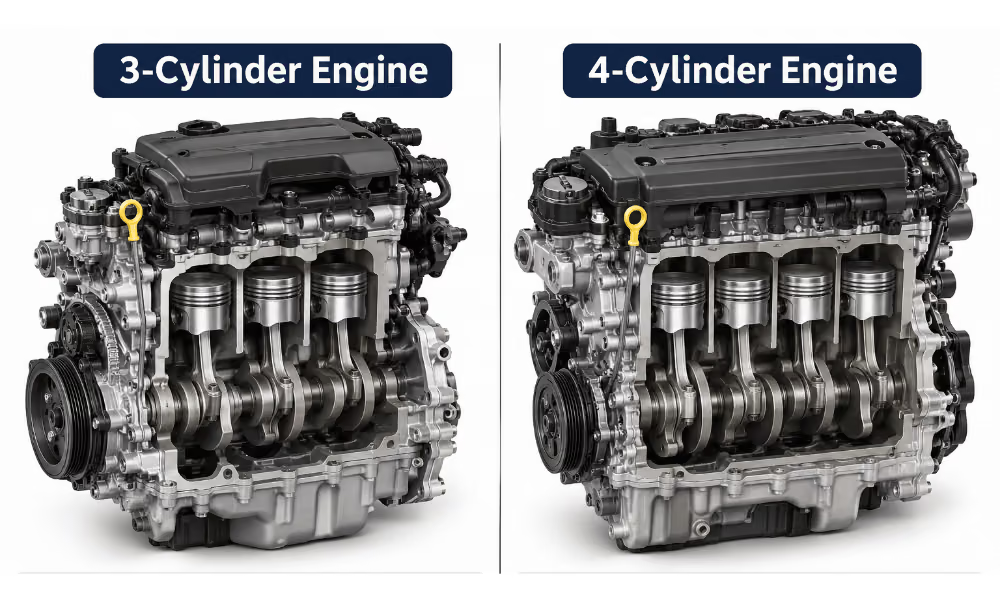
- 3-cylinder engines are compact and can deliver good fuel efficiency.
- 4-cylinder engines generally have less vibration and feel smoother.
- Mileage and performance depend on engine tuning, not just the number of cylinders.
If you have been following new car launches, you may have noticed a change in some familiar petrol engines. The Maruti Suzuki Swift moved from a 4-cylinder to a 3-cylinder engine in 2024. The Baleno and Toyota Glanza have followed the same route with their 2026 updates.
This raises a fair question: why are carmakers moving towards 3-cylinder engines, and does that mean buyers are getting less? The answer is not as simple as one engine being better than the other. Both have their advantages, and the difference becomes clearer when you look at mileage, performance and cabin comfort.
What Is the Difference Between a 3-Cylinder and 4-Cylinder Engine?
The difference is the number of cylinders inside the engine. Each cylinder contains a piston that moves up and down to produce power.
A 3-cylinder engine has three pistons working together, while a 4-cylinder engine has four. In simple terms, the engine uses these pistons to burn fuel and generate the power needed to move the car.

You will find both types in India's family car market. The Maruti Suzuki Swift, Baleno and Toyota Glanza now use 1.2-litre 3-cylinder petrol engines. The Tata Tiago also uses a 3-cylinder petrol engine.
On the other hand, the Hyundai Exter uses a 1.2-litre 4-cylinder petrol engine. The Maruti Suzuki Grand Vitara also uses a 4-cylinder petrol engine in its 1.5-litre variants.
One thing to remember is that cylinder count does not tell you how powerful or fuel-efficient an engine will be. Engine capacity, tuning, turbocharging, vehicle weight and gearbox choice also play a role.
3-Cylinder vs 4-Cylinder Engines: Mileage
Fuel efficiency is one of the main reasons carmakers use 3-cylinder engines. With one fewer cylinder, an engine can have fewer moving parts and lower internal friction. This can help reduce fuel consumption, particularly in smaller cars.
However, a 3-cylinder engine does not guarantee better mileage. Its efficiency depends on how the engine is designed and tuned, along with the weight of the car and the way it is driven.

A good example is the 2026 Maruti Suzuki Baleno. Its new 1.2-litre 3-cylinder engine has a claimed mileage of 23.80 kmpl for the manual and 24.77 kmpl for the AMT. The earlier 4-cylinder version offered 22.35 kmpl and 22.94 kmpl, respectively.
That is an improvement on paper, although the new engine also has slightly lower power. It shows how manufacturers can use a smaller, lighter engine design to improve fuel efficiency without making the car unsuitable for everyday use.
A 4-cylinder engine can still be very efficient. The Hyundai Exter and other small cars with 4-cylinder engines are good examples of how engine tuning and vehicle weight matter as much as cylinder count.
Which is better for mileage? A 3-cylinder engine has the potential to deliver better fuel efficiency, but compare the claimed mileage of the exact car variants you are considering. Real-world mileage will also depend on traffic, driving style and maintenance.
3-Cylinder vs 4-Cylinder Engines: Performance
The number of cylinders does not directly decide how powerful an engine is. What matters is how much power and torque it produces, and how it delivers that output.
A naturally aspirated 3-cylinder engine can feel responsive at city speeds, but it may not feel as relaxed when you accelerate hard or carry a full load. Some manufacturers use turbochargers to help smaller 3-cylinder engines produce more power and torque.
A 4-cylinder engine generally delivers power in a smoother manner. This can make it feel more relaxed during acceleration and highway cruising, depending on the engine's tuning and capacity.
For instance, the 1.2-litre 3-cylinder engine in the new Baleno produces 83 PS and 112.4 Nm of torque. The earlier 4-cylinder version produced around 90 PS and 113 Nm. The newer engine focuses more on fuel efficiency, while the older one offered slightly higher peak power.
This does not mean every 3-cylinder engine is underpowered or every 4-cylinder engine is quick. A turbocharged 3-cylinder engine can produce more power than a larger naturally aspirated 4-cylinder engine.
Which is better for performance? A 4-cylinder engine is often the smoother choice for relaxed driving, but look at the power and torque figures before judging performance. If you frequently drive on highways or carry passengers and luggage, take the car for a test drive with those conditions in mind.
3-Cylinder vs 4-Cylinder Engines: Vibration and Refinement
This is where most drivers are likely to notice a difference.
A 3-cylinder engine has an uneven balance of moving parts. Its firing events are spaced 240 degrees apart, compared with 180 degrees in a 4-cylinder engine. This can create more vibration, particularly when the engine is idling or running at low speeds.
You may notice a slight shake through the steering wheel, pedals or cabin when the car is stationary. Some 3-cylinder engines can also sound a little rougher when accelerating hard.
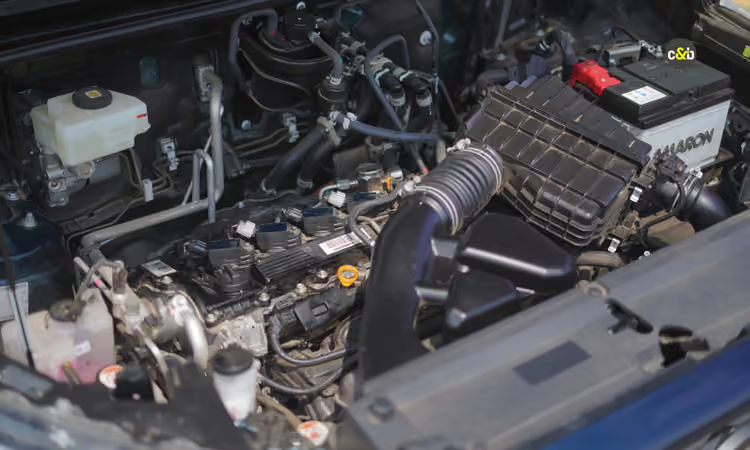
A 4-cylinder engine generally runs more smoothly because its firing sequence is more evenly spaced. This helps reduce the vibrations felt inside the cabin, making it a good choice for buyers who value a refined driving experience.
That said, modern 3-cylinder engines are much better than older designs. Manufacturers use engine mounts, balance shafts and other measures to control vibration. In a well-engineered car, the difference may be small once you are driving at normal speeds.
Which is smoother? A 4-cylinder engine generally has the advantage, but do not judge a car by its cylinder count alone. Start the engine, let it idle and take it through slow-moving traffic during your test drive.
3-Cylinder vs 4-Cylinder Engines: Key Differences
The table below shows how 3-cylinder and 4-cylinder engines differ in mileage, performance, refinement and everyday usability.
| Parameter | 3-Cylinder Engine | 4-Cylinder Engine |
| Number of pistons | 3 | 4 |
| Fuel efficiency | Good potential for better mileage | Can also be highly efficient |
| Vibration | Usually more noticeable at idle | Generally smoother |
| Power delivery | Depends on tuning; turbocharging can improve performance | Often delivers smoother power |
| Engine size and weight | Usually more compact and lighter | Usually larger and heavier |
| Maintenance | Not automatically cheaper | Not automatically more expensive |
| Best suited for | Small cars and efficiency-focused engines | Buyers who care about smoothness and refinement |
Which Engine Should You Choose for Your Family Car?
For most family car buyers, the choice comes down to what matters more: fuel efficiency or a smoother engine experience.
A 3-cylinder engine makes sense if you mostly drive in the city, want good fuel efficiency and are considering a small hatchback or compact car. Models such as the Maruti Suzuki Swift, Baleno, Toyota Glanza and Tata Tiago show how this layout is being used in everyday cars.
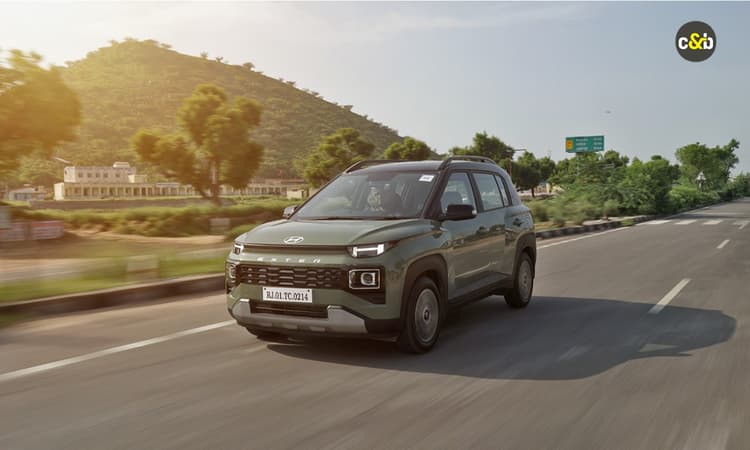
A 4-cylinder engine is worth considering if you are sensitive to engine vibration, spend a lot of time on highways or simply prefer a smoother engine. Cars such as the Hyundai Exter and Maruti Suzuki Grand Vitara offer 4-cylinder petrol options.
Before making a decision, check the power, torque and claimed mileage of the exact variants. More importantly, take both types of cars for a test drive if they are on your shortlist. Pay attention to engine noise at idle, acceleration in lower gears and how the car behaves when the air conditioner is running.
Is a 3-Cylinder Engine Worse Than a 4-Cylinder Engine?
No. A 3-cylinder engine is not automatically inferior to a 4-cylinder engine. It can be lighter, efficient and perfectly capable of handling everyday family use. A 4-cylinder engine generally offers better refinement, but it may not always deliver better mileage or performance.
The best choice depends on the car's overall engineering and your driving needs. If fuel efficiency is your priority, a well-tuned 3-cylinder engine car, for example the Swift and Baleno, can be a sensible option. If you value a smoother and quieter drive, a 4-cylinder engine car such as Hyundai i10 and Honda Amaze may suit you better.
Don't reject a car just because it has three cylinders. Take it for a drive and judge the engine by how it actually feels.
Related News

Popular Maruti Suzuki Models


Latest Cars


Upcoming Cars


Latest News


 Sarthak Mahajan | Nov 22, 2026Ferrari Reveals 296 Challenge Stradale And 296 Challenge Evo At Ferrari Finali MondialiThe 296 Challenge Evo is an updated race car that will compete in the Ferrari Challenge from the 2027 season; meanwhile, the 296 Challenge Stradale stands as a road-legal alternative.1 min read
 car&bike Team | Nov 21, 2026BYD Ti7 Banned In Europe Over Resemblance To Land Rover DefenderA Dutch court has blocked the BYD Ti7 from being sold or manufactured in the EU after finding that its design infringes JLR's registered Defender design rights.1 min read
 car&bike Team | Nov 21, 2026Upcoming River Electric Scooter Spied TestingCodenamed RX02, the upcoming River product appears to be smaller than the existing Indie electric scooter.2 mins read
 car&bike Team | Nov 21, 2026Hyundai Neira Electric MPV Interior RevealedThe cabin of the Neira mimics that of the Carens Clavis EV, on which it is based.2 mins read
 Sarthak Mahajan | Nov 20, 2026Updated Bajaj Pulsar RS200 Launched At Rs 1.98 Lakh; Gets USD Forks And TFT DisplayProduces 25 bhp, up from 24 bhp, marking an increase of 1 bhp over the outgoing model.2 mins read
 Seshan Vijayraghvan | Nov 20, 2026BYD India Crosses 20,000 Sales; Adds 10,000 Customers In The Last Year AloneBYD India has crossed 20,000 customer deliveries, with nearly half of its cumulative sales coming in the last one year. The milestone highlights the brand's growing presence in India's electric passenger vehicle market.1 min read