
Coal-Reliant Poland's e-Car Push Clouded By European Union's Emissions Row


Poland is betting on electric batteries to turbocharge its economy, but its dependency on coal could challenge its strategy as the EU seeks to champion European manufacturers that promote clean energy.
Eastern Europe's biggest economy is already a centre for auto parts makers such as Michelin, Valeo and Denso. As carmakers shift to electric vehicles, spurred by efforts to combat climate change, Warsaw is counting on lithium battery production to carve out a niche in the auto industry's 'green energy' generation manufacturing.
In the first quarter of 2019, Poland was the EU's biggest exporter of lithium ion batteries - with sales of 361 million euros ($400 million) - after luring Asian battery makers led by South Korea's LG Chem.
LG Chem's plant near the city of Wroclaw, which opened last year, is Europe's largest electric vehicle battery factory and is now undergoing a 4.4 billion zloty ($1.1 billion) expansion.
Polish bank Pekao estimates the auto industry last year contributed 145 billion zlotys ($38 billion) to Poland's $542 billion economy, which is set to grow by more than 4% this year.
But the country's twin dependence on Asian investors and coal energy poses risks longer-term as it collides with the European Commission's ambitions to develop home-grown battery makers to take on currently dominant Asian rivals.
"To prevent a technological dependence on our competitors ... Europe has to move fast in the global race," the European Commission, which launched the European Battery Alliance in 2017 to bring players together and build a battery industry, says in a report on its strategy.
Europe's battery market could be worth 250 billion euros by 2025, the report says, and the Commission's objectives include supporting "the sustainability of an EU battery cell manufacturing industry with the lowest environmental footprint possible."
Poland generates 80% of its power from heavily polluting coal. While the ruling nationalist Law and Justice party (PiS) has pledged investment in photovoltaic, offshore wind and nuclear power to cut emissions, it still expects half of the country's electricity to be generated from coal by 2050.
Poland led eastern EU states in blocking an EU move to commit the bloc to net zero emissions by 2050, arguing that post-communist states need more time to make the transition.
"Poland needs to solve this issue because electric battery production should be more or less carbon neutral in the long term," said Stefan Bratzel of the Center of Automotive Management in Germany.
"It makes no sense to produce the battery cell with a rucksack of coal."
TAX BREAKS
For now, Poland's low cost manufacturing base is a bigger factor than its use of fossil fuels in the eyes of many foreign investors, although it faces competition.
China's Contemporary Amperex Technology Ltd (CATL) chose Germany for its first European battery production site, while South Korea's Samsung SDI, Inzi Controls and SK Innovation all plan battery plants in Hungary.
Warsaw's aggressive push gives it an edge over its neighbours though, analysts say, with corporate tax breaks of up to 70% and cash grants on offer.
"Europe can have a strong sector here and of course Poland should be one of the countries where it is stronger," Javier Calleja, chief executive of Poznan-based electric bus maker Solaris Bus & Coach, which was acquired by Spain's CAF Group last year. It plans to expand production to over 500 electric buses in 2020, from around 300 this year.
Next year, China's Zhangijiagan Guotai-Hurang New Chemical Materials and German car giant Mercedes plan to open battery plants in Poland, while European battery material makers Umicore and Johnson Matthey have also announced plans to set up there.
But the country's lead in battery production will be tested as European carmakers enter the sector.
Europe's biggest carmaker Volkswagen plans to open a battery plant in a joint venture with Sweden's Northvolt AB in Salzgitter, Germany next year, while France and Germany have sought EU Commission approval for a battery cell consortium including carmaker PSA, its German subsidiary Opel and French battery maker Saft.
Jobs created by the battery sector have helped push Poland's unemployment rate down to a record low of 5.1%.
LG Chem's Wroclaw plant will employ 6,000 people by 2021, according to the Polish Investment and Trade Agency, and will produce more than half of the South Korean company's global battery output by the end of this year.
But for Poland to maintain its competitive edge in the sector and the economic benefits that come with it, the country will have to adapt as Europe's car industry transforms.
"I don't feel it's either-or," Poland's minister for entrepreneurship and technology, Jadwiga Emilewicz, told Reuters when asked if Poland was too dependent on Asian battery makers.
In the past few years the country has seen a handful of niche domestic companies emerge in the sector, including Recupyl Polska, which recycles Li-ion batteries and uses technology of France's Recupyl, a pioneer in recycling batteries for electric vehicles.
"We've got some advantages in technology especially regarding recycling," Emilewicz said. "The question is whether we are able to create some kind of Polish value in the value chain."
Related News


Latest Cars


Upcoming Cars


Latest News


 Jaiveer Mehra | Jul 28, 2026New Toyota Hilux Launched in India At Rs 31.99 LakhNinth-gen Hilux gets a notable redesign over its predecessor, though it retains the familiar 2.8-litre diesel engine option.2 mins read
 Jaiveer Mehra | Jul 28, 2026Avore EX Electric Motorcycle Launched In India At Rs 1.25 LakhEV start-up is offering its debut electric motorcycle in three variants - EX1, EX2 and EX2 S.2 mins read
 car&bike Team | Jul 28, 2026Honda XR 300L & Honda XR300 Rally: What We Know So FarBoth the XR300L and XR300 Rally are based on the same platform and will be part of Honda’s new made in India line-up with prices and full specifications to be announced soon.5 mins read
 car&bike Team | Jul 28, 2026Mahindra Scorpio-N Facelift Interior Spied Undisguised Ahead Of DebutWhile a lot of the switchgear is carried over from the current SUV, the facelifted SUV gets a redesigned centre console with a larger touchscreen and a new digital instrument cluster.1 min read
 Bilal Firfiray | Jul 28, 2026Skoda Slavia Facelift India Debut On 18th August; New Gearbox With Cosmetic ChangesSkoda Slavia facelift will be launched in India on August 18 with newer styling cues, additional features and an expected 8-speed automatic gearbox for the 1.0 TSI engine.1 min read
 car&bike Team | Jul 27, 2026Honda CB500: What We Know So Far – Price, Launch Date, SpecsThe Honda CB500 is expected to be launched just before the festive season this year, possibly around September 2026 with prices beginning at around Rs. 3 lakh (Ex-showroom).4 mins read
 Jaiveer Mehra | Jul 27, 20262026 Maruti Suzuki Brezza Facelift Review: Bestseller Joins The Turbo ClubWhile Maruti’s facelifts have always tended to bring subtle updates over the outgoing models, the latest Brezza brings some heavy updates under the skin, including a new 6-speed manual gearbox and, for the first time, a turbocharged petrol engine option.1 min read
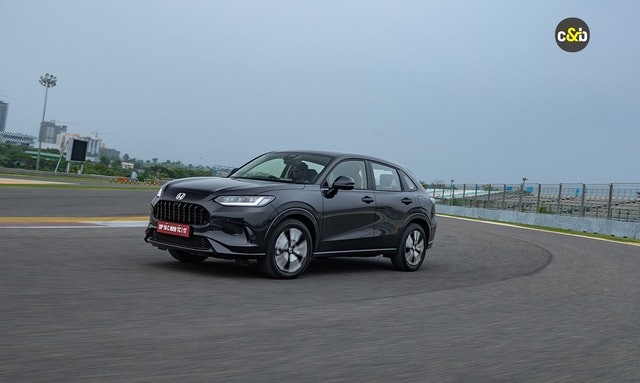 Bilal Firfiray | Jul 24, 2026Honda ZR-V Review: Who Is It For?Honda has brought the new ZR-V to India as their current flagship offering. It’s a CBU, it’s a hybrid, and it’s here for a limited few. Who is it for though?1 min read
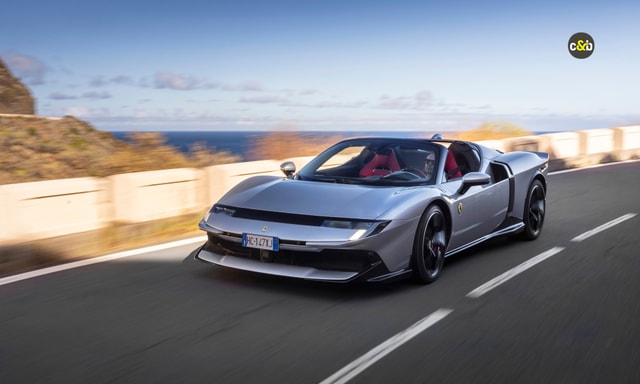 Shams Raza Naqvi | Jul 15, 2026Ferrari 849 Testarossa Spider Driven: Rs. 11.25 Crore Meets 1,000 bhpWe got behind the wheel of the most powerful convertible from Ferrari. What makes the 849 Testarossa Spider Special? We tell you.1 min read
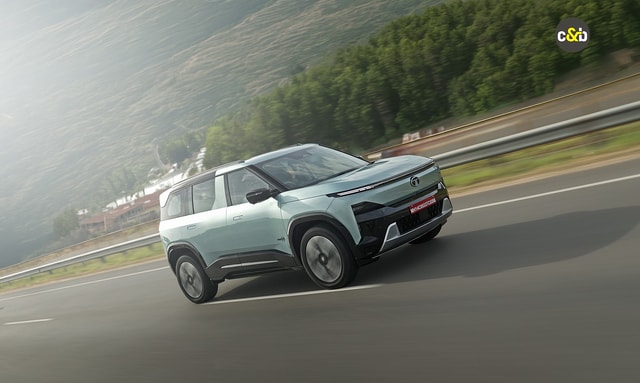 Bilal Firfiray | Jul 12, 2026Tata Sierra EV Review: Reborn In The Electric AgeThe Tata Sierra EV isn’t drastically different from its ICE counterpart when it comes to design. But being the seventh electric offering from the Indian brand, it has gotten a few things right, and very few things wrong. But is it a compelling package to buy?5 mins read
 Jafar Rizvi | Jul 13, 2026TVS Orbiter Long-Term Review (Report 1): Settling In Takes TimeFirst impressions weren't the strongest, but the Orbiter has made a mark in its first month in the car&bike garage.5 mins read