
Electric Two-Wheeler Makers Welcome PLI Scheme For Auto Sector

- The PLI scheme, together with FAME-II will propel the EV industry
- Electric two-wheeler makers are elated with the announcement
- The scheme will help boost the EV industry, as well as auto components
The government of India has cleared a Rs. 26,000 crore production-linked incentive (PLI) scheme for the auto and drone sector. Out of the Rs 26,058 crore, Rs 25,938 crore has been set for the automobile sector and Rs 120 crore for the drones sector, to boost production of drones, electric vehicles and hydrogen fuel vehicles. According to the announcement, automobile companies that will invest Rs. 2,000 crore for four-wheelers, and Rs. 1,000 crore for two-wheelers for 5 years will be eligible for the government's PLI scheme, Minister of Information and Broadcasting of India, Anurag Thakur said.
Also Read: Cabinet Approves Rs. 26,000 Crore Incentive To Boost Clean Fuel Vehicles
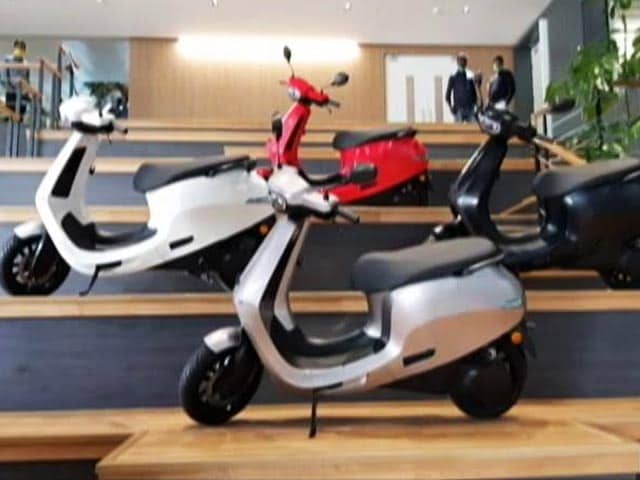
The PLI scheme will benefit existing companies as well as new investors looking to invest in the automobile and auto component manufacturing business. The focus will be clearly on EVs.
The PLI scheme will benefit existing automotive companies, as well as new investors who are currently not in the automobile or auto component manufacturing business. The government, while announcing the scheme, underscored the focus on environmentally cleaner vehicles. The Minister of Information and Broadcasting stresses the importance that the PLI scheme will work together with the FAME II (Faster Adoption and Manufacture of EVs) scheme, to meet all requirements of the electric vehicle ecosystem. Naturally, the reaction from the auto sector, especially those involved in the electric vehicle segment, has been encouraging.

Mainstream manufacturers like TVS Motor Company have plans to extend their EV line-up in the coming years.
"The revised focus of PLI scheme on alternative fuels, electric vehicles and utilisation of advanced technological innovation, will help the industry move faster towards the future technologies. There is a sense of haste in developing these technologies in India and this scheme gives the right impetus to the industry to move rapidly in that direction. Any country which aspires to lead in a particular sector needs government support and this scheme aims to do just that in the future mobility space. The pandemic has taught us the essence of Aatmanirbharta in every aspect possible. Hence, this is a significant push by the government for its workforce, organisations (OEMs), and the consumers to seek competitive, diverse, and climate conscious mobility solutions and a progressive India," said Venu Srinivasan, Chairman, TVS Motor Company.

Naveen Munjal, Managing Director, Hero Electric, has welcomed the PLI scheme, saying that it will push both the EV industry and also encourage adoption of cleaner technology.
Commenting on the announcement, Naveen Munjal, MD, Hero Electric said, "The recent announcements by the Government of India over the last few months have helped propel the EV industry onto its next level. The earlier push through amendments to FAME II and added revisions by various states have been absolute game changers in bringing down the prices of EVs. With this announcement of allocating a total of Rs. 26,000 crore to encourage and push adoption of cleaner mobility and technologies, this sector is poised to grow exponentially from here on. The outlay for OEM makers and other incentives on manufacturing auto components that help making transportation cleaner will encourage investments and further drive localisation. This will further help bring down the cost of manufacturing thereby benefiting the consumer, the industry and the environment. Hero Electric supports the government's initiative and looks forward to leading the new phase of electric mobility in the coming years."

For two-wheeler makers to avail of the PLI scheme, the amount of new investment required will be Rs. 1,000 crore.
"We highly appreciate our government on clearing the PLI scheme for EVs and hydrogen fuel cell vehicles as it will encourage the auto industry to show more effective results. This will act as a catalyst for capacity and infrastructure development in the EV industry and will lead to faster EV adoption in India through high quality products at lower prices for customers. Such initiatives will help in the transitional process of shifting from traditional fossil fuel-based automobile transportation systems to eco-friendly, cleaner, sustainable, and more efficient EV based systems. Looking forward to such initiatives as it will attract more potential investors as well as help to flourish the current industry veterans," said Jeetendra Sharma, MD and Founder, Okinawa Autotech.
The scheme aims to enhance India's manufacturing capabilities and will boost the sunrise industry of Electric Vehicles. The PLI scheme is going to promote our Indian manufacturers to expand their businesses. The push for a clean environment and sustainable mobility will help us to raise our targets by a higher percentage and expand operations in global markets. This move will further make this segment stronger with the utilization of advanced technology and fasten infrastructure," said Yatin Gupte, Chairman and Managing Director, Wardwizard Innovations & Mobility Ltd.

For electric two-wheeler start-ups, the amount of new investment required will be Rs. 1,000 crore to avail of the PLI scheme, and for OEMs, they must have a minimum of Rs. 10,000 crore revenue.
For two-wheeler makers to avail the scheme, the amount of new investment required will be Rs. 1,000 crore. And for automobile original equipment manufacturers (OEMs) to avail the scheme, they must have a minimum of Rs. 10,000 crore in revenue and will have to make new investments of Rs. 2,000 crore in a period of five years to take benefits from the scheme. Auto component makers must have a global net worth of Rs. 1,000 crore and a clear business plan for investment in advanced automotive technologies to be eligible for the scheme. Analysts say, it's a win-win situation and will also help bring down costs.
"Yes, I think in the current market scenario it will largely help the two- and three-wheeler segment including the existing OEM since they are also into manufacturing EVs. The scheme with a focus on OEM and component manufacturers will also benefit the component manufacturers focusing on advanced automotive technology. Apart from encouraging development, this will also help assisting in bringing down cost to be competitive in the global market," said V Sridhar of Grant Thornton.
For now, the PLI scheme seems to be focussed on emerging technologies, more specifically dealing with the EV sector. A total of 22 components have been covered under the auto components PLI scheme, including flex fuel kit, hydrogen fuel cell, hybrid energy storage systems and electric vehicles parts, including charging ports, drive train, electric vacuum pump, and electric compressors.

carandbike is not merely another name in the world of automotive web sites. We bring together the best from the world of both, cars and bikes. New cars, used cars, new bikes, - we endeavour to help you with all of that. Additionally, carandbike also strives to keep its users updated with the latest from the global automotive industry. car price, car reviews, car dealers, new bikes, and everything in between, carandbike is happy to help!
Read all latest news and reviews from car&bike Team →


Related News




Latest Cars


Upcoming Cars


Latest News


 car&bike Team | Oct 5, 2026Mercedes-Maybach S 580 e PHEV Launched In India At Rs 3.35 Crore: 585 BHP Limo Can Cover Up To 98 KM On Electric PowerThe S 580 e is the first plug-in hybrid Maybach to come to India; available only in four-seat First-Class form.3 mins read
 car&bike Team | Oct 5, 2026Mercedes-Benz India Posts Record Third Quarter Sales; Spurred By Growth Across SegmentsThe German luxury car brand has seen its best ever quarterly and year-to-date sales in the Indian market beating previous numbers1 min read
 car&bike Team | Oct 5, 2026Aprilia SXR GT 125 and 175 Launched in India, Starting at ₹1.10 LakhAprilia has rolled out two new urban tourer scooters in India, packing the biggest engine in the segment and large 14-inch wheels.1 min read
 car&bike Team | Oct 5, 2026Ampere Nexus EX+ Launched At Rs 1.30 Lakh; Gets More Powerful MotorAmpere has launched the Nexus EX+ electric scooter with a more powerful 5kW motor, an IP65-rated charger and an optional connected technology package.1 min read
 Sarthak Mahajan | Oct 5, 2026Honda XR 300L, XR 300 Rally Launched In India; Prices Start At Rs 1.83 LakhBookings for both motorcycles are now open, and these will be made-in-India models.2 mins read
 Sarthak Mahajan | Oct 5, 2026Maharashtra Transport Department Announces 13-Day Out-of-State Vehicle Inspection DriveOut-of-state vehicles without a permit or with an expired permit could face heavy financial penalties, immediate detention and compulsory re-registration.2 mins read
 Seshan Vijayraghvan | Oct 4, 20262026 Skoda Slavia Facelift Review: Upgrades That Matter And A Better AutomaticThe new Skoda Slavia brings a handful of visual and mechanical changes, most notably a new 8-speed automatic for the volume-selling 1.0-litre TSI variants.5 mins read
 Bilal Firfiray | Oct 3, 2026Kia Sorento Review: Is Bigger Always Better?The Kia Sorento has arrived to our shores at the right time. But does it have what it takes to take the market by a storm?7 mins read
 Abhishek Nigam | Oct 2, 2026MINI Countryman C Review: Has MINI Finally Grown Up Without Losing Its Personality?The new Countryman C is bigger, more practical and packed with technology, but its quirky appeal comes with a few compromises.1 min read
 Preetam Bora | Oct 3, 2026ViaTerra Spencer Riding Jacket Review: The Ideal Jacket For Indian Summers?The ViaTerra Spencer mesh riding jacket makes a strong case as a well-built, street-focussed riding jacket, combining good airflow with Level 2 protection and a snug, secure fit. Is it perfect? Read on.6 mins read
 Janak Sorap | Oct 1, 2026Yamaha YZF-R2 Track Review: New TerritoryYamaha's all-new YZF-R2 brings 200cc performance, lightweight construction and R-series DNA to a new generation of riders, but its true track potential is held back by one crucial component.7 mins read