
Hyundai Claims Its New Air-Conditioning Technologies Can Help Improve The Air Quality In Vehicles

- After-Blow keeps evaporator dry to suppress mold growth
- Multi-Air Mode disperses air to reduce direct air contact
- Fine Dust Indicator displays air quality information in real time
Hyundai Motor Group has announced the development of three new air-conditioning technologies, which can help improve the quality of air inside vehicles. The South Korean carmaker has been offering cabin air purifiers in several of its group models - like the Hyundai Venue or the Kia Seltos. However, now Hyundai says it is taking things to the next level with these three new air-conditioning technologies, namely - 'After-Blow', 'Multi-Air Mode', and 'Fine Dust Indicator'.
According to Hyundai, the new After-Blow system dries the condensate on the evaporator and suppresses mould growth in the air-conditioning system, which can cause an odour during hot weather. So, once the engine is turned off, After-Blow activates for 10 minutes to dry the evaporator and any condensate leftover in the air passage. The air-conditioning system automatically allows influx of outside air during this time to prevent humidity from building up. Furthermore, it uses an intelligent battery sensor (IBS) to monitor the battery and stops functioning when the battery is low, allaying any concerns about battery discharge.
Also Read: Hyundai Motor Second-Quarter Beats Estimates, But Warns Of Long Road To Market Recovery

In India, the Hyundai Venue and Kia Seltos come with in-car air purifiers
As for the Multi-Air Mode technology, the system disperses air to the newly added multi-air slots in the driver and passenger seats in addition to the normal air vents. The overall wind speed remains the same, but the dispersion of wind reduces direct air contact and softens the air. This mode can be switched on and off based on the preference of the driver.
Also Read: Hyundai Venue With iMT Gearbox Launched; New Sport Trim Introduced With More Features
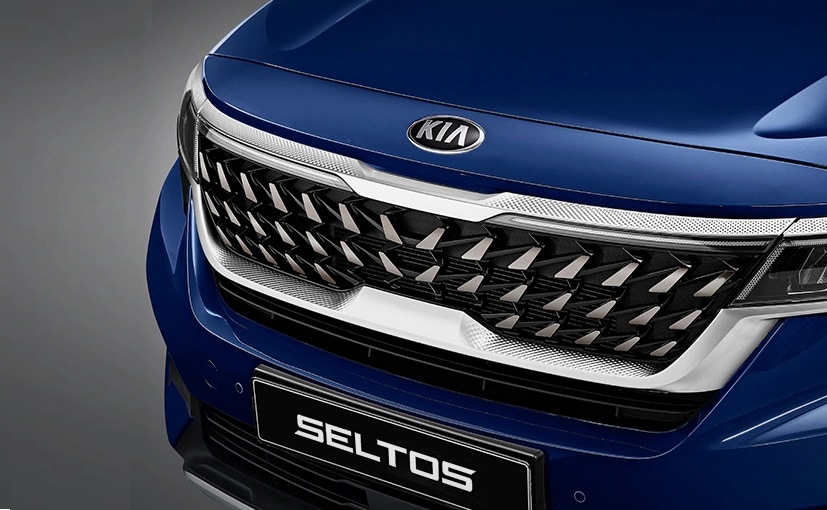
The new air-con technologies will be available in upcoming Hyundai, Kia and Genesis vehicles worldwide in the future
Finally, there is the new Fine Dust Indicator Technology, which according to the company, essentially acts like an air quality index by measuring the air inside the vehicle in real-time and delivers digitised information. The system uses integer numbers and colour coding to displays the pollution level. Based on the concentration of ultrafine particles inside the vehicle it's shown as - Blue (0 to 15 ug/m3), Green (16 to 35 ug/m3), Orange (36 to 75 ug/m3), or Red (76 ug/m3 or higher). If the level of ultrafine particles exceeds 36 ug/m3 while the function is active, the air-cleaning mode will run to purify the air in the vehicle.
The carmaker has said that the technologies will be introduced initially on select models in Korea and expand to upcoming Hyundai, Kia and Genesis vehicles worldwide in the future.
Related News


Popular Hyundai Models


Latest Cars


Upcoming Cars


Latest News


 car&bike Team | Aug 4, 2026India Proposes Mandatory V2V Tech On All New Vehicles From October 2028The 5.875 GHz to 5.925 GHz frequency band has been earmarked for V2V and other Intelligent Transportation System applications.1 min read
 car&bike Team | Aug 4, 2026Govt Moves To Regulate Two-Wheeler Road AmbulancesThe Ministry of Road Transport and Highways has proposed new rules for two-wheeled ambulances, including safety checks, operating limits and more.1 min read
 car&bike Team | Aug 4, 2026Hyundai Creta Electric Now Available With Buyback GuaranteeBuyers can now avail up to 60 per cent assured buyback value for the Hyundai Creta Electric for a period of up to 3 years or 45,000 km.3 mins read
 car&bike Team | Aug 4, 2026Honda Rebel 300 Vs Royal Enfield Meteor 350: Specifications ComparisonHow does the upcoming Honda Rebel 300 compare to its main rival, the Royal Enfield Meteor 350? We compare the specifications of both bikes to see how they compare to each other.1 min read
 car&bike Team | Aug 4, 2026Porsche India Launches Buyback Plans For Cayenne, Macan Electric and TaycanThe offer covers an Assured Buy-Back Guarantee for 36 Months (3 Years) from the date of sale of the car.2 mins read
 car&bike Team | Aug 4, 2026Updated Bajaj Pulsar N160 Spotted on TestBajaj is planning to launch as many as 10 updated models over the next few months and one of them is expected to be the new Pulsar N160, which has been spotted on test.1 min read
 Bilal Firfiray | Aug 1, 2026Toyota Hilux Review: The InvincibleMarking it as the ninth generation, the Hilux comes with a major cosmetic overhaul. But is it still relevant enough for the current times or is it getting too long in the tooth?5 mins read
 Bilal Firfiray | Jul 30, 2026Kia Syros EV Review: Best EV To Buy Under Rs 20 Lakh?The Kia Syros EV comes into the game with a modern design, spacious cabin, strong performance, decent range and an aggressive pricing. But could it become the new benchmark under Rs 20 lakh?5 mins read
 Jaiveer Mehra | Jul 27, 20262026 Maruti Suzuki Brezza Facelift Review: Bestseller Joins The Turbo ClubWhile Maruti’s facelifts have always tended to bring subtle updates over the outgoing models, the latest Brezza brings some heavy updates under the skin, including a new 6-speed manual gearbox and, for the first time, a turbocharged petrol engine option.1 min read
 Bilal Firfiray | Jul 24, 2026Honda ZR-V Review: Who Is It For?Honda has brought the new ZR-V to India as their current flagship offering. It’s a CBU, it’s a hybrid, and it’s here for a limited few. Who is it for though?1 min read
 Girish Karkera | Jul 29, 2026Mercedes-AMG E53 4MATIC+ PHEV First Drive Review: Just What The Doctor OrderedThere are luxury cars and there are high-performance cars. But what if you want both for the price of one? Mercedes-Benz has a recommendation that promises to tread a fine line between the two – the second generation E53 with a twist.7 mins read