
Nissan Likely To Replace Renault In Formula E

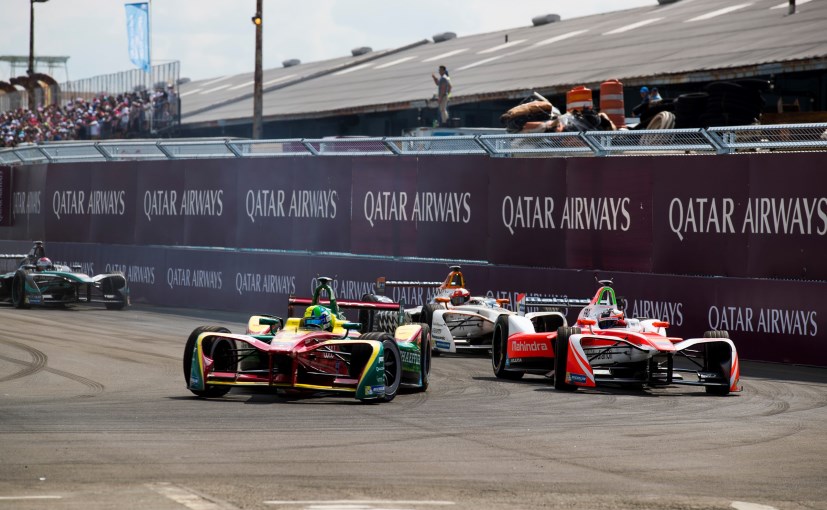
The spotlight on electric cars has clearly got the world talking about the future of mobility and something similar can be said about motorsports as well. While Formula 1 remains one of the most viewed sporting events in the world, its electric equivalent is gaining a lot of ground and with a whole bunch of European manufacturers showing greater interest in the sport, there’s a chance of more coming. While India too is part of the racing series, there are no Japanese car makers who make the cut yet, but that’s about to change.
Motorsport reports that the Renault-Nissan alliance is in discussions on how to best operate the motorsport programmes for the two manufacturers. Renault is already part of the Formula E series and with the e.adams has won 15 races till date and has won all the team championship ever since the season started in 2014. But now, it looks like Renault will take a back seat as multiple sources have confirmed to Motorsport that Nissan’s move to the electric single-seater race has been green-lighted.
Mike Carcamo, the boss of Nissan's global motorsport arm NISMO, visited the Renault e.dams team and the FIA during the Valencia pre-season test last week. Nissan is one of the biggest sellers of electric vehicles in the world and it was recently that the company launched the next generation of its best-selling electric car, the Leaf. Considering the company’s expertise in making electric cars, the transition to Formula E is something that we expected.
However, the news comes at a time when other Japanese carmakers like Honda and Toyota are showing interest in entering the Formula E Racing series. While there is no official confirmation yet, we expect Nissan to make an announcement next year. There’s no chance of it happening sooner though, as Renault e.dams launched its 2017/18 challenger, the Z.E.17, last month and a major rebranding post that is not expected.
Nissan’s last attempt of entering a major international racing championship was plagued with failure which is why the company ended up axing its LMP1 project at the end of 2015. We hope it will be different this time around.
Related News
Popular Renault Models


Latest Cars


Upcoming Cars


Latest News


 car&bike Team | Nov 11, 2026RTI vs Zero Depreciation: Which Car Insurance Cover Pays More?Return to Invoice (RTI) covers the gap between your car's current IDV (Insured Declared Value) and the original invoice value in case of theft or total loss. Zero Depreciation reduces deductions on replaced parts during accident repairs.1 min read
 car&bike Team | Nov 11, 2026Engine Protection vs Zero Depreciation: What's The Difference?Zero Depreciation reduces your share of accident repair costs, while Engine Protection covers certain engine and gearbox damage caused by water ingress or oil leakage.1 min read
 car&bike Team | Nov 11, 20262027 Hyundai Creta Interior Spied For The First TimeThe next-generation Creta's cabin gets a complete overhaul with a larger screen, a new steering wheel and more.2 mins read
 Amaan Ahmed | Nov 11, 2026'Fun' In Focus: How Honda Is Building ADV 160, Rebel 300 At Its Oldest India PlantFrom rolling out the first Activa, Honda's Manesar facility -- which marked its 25th anniversary this year -- is now primed to build the company's most exciting new products in years.1 min read
 car&bike Team | Nov 11, 2026Genesis GV90 SUV Design Patented In IndiaThe Genesis GV90's design has been patented in India just months after its global debut.1 min read
 car&bike Team | Nov 10, 20263.3 kW Vs 7.2 kW Vs 11 kW EV Chargers: Which Do You Need?Choosing a home EV charger depends on your car, daily driving and home power supply. A 3.3 kW charger works for smaller EVs, while 7.2 kW suits most mid-size electric cars. An 11 kW charger is meant for larger EVs that support three-phase charging.1 min read