
Oil Money Is Flooding Into Guyana. Who Will Benefit?

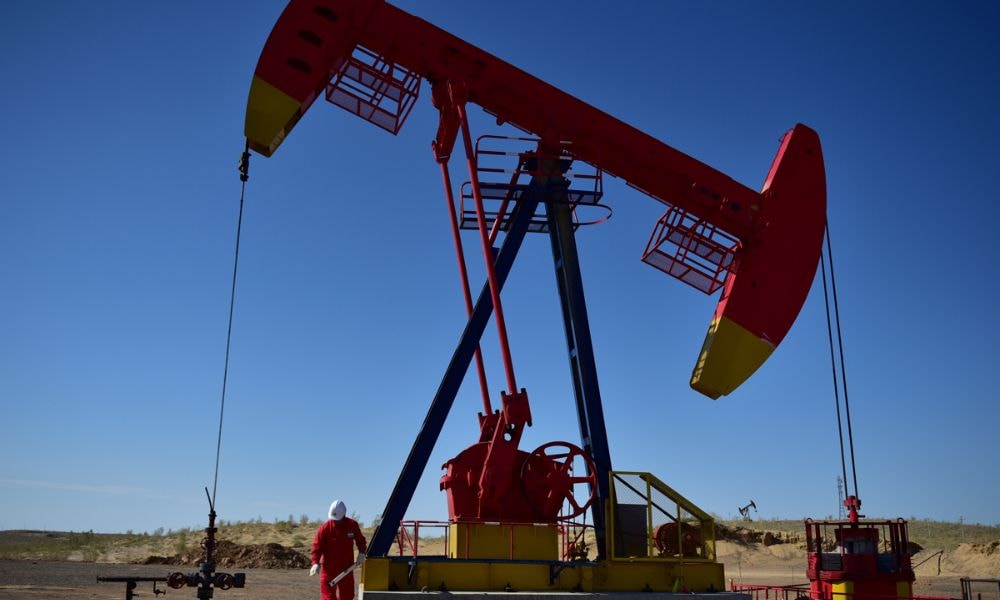
Ever since Exxon Mobil found vast deposits of oil off Guyana's coastline in 2015, government leaders have pledged that black gold would transform the fortunes of one of South America's poorest countries.
This year alone, the economy should grow 48%, the fastest rate on the planet, according to the World Bank.
But managed poorly, development experts and diplomats warn, those funds will stoke Guyana's overheated, race-based politics, while adding the nation to a long list of petrostates whose people have remained poor despite vast resource wealth.
In May, Guyana's government announced it had tapped the sovereign wealth fund that holds the royalties paid by oil producers for the first time. By year-end, drawdowns will exceed $600 million, a figure that will soon balloon into the billions.
By 2027, Exxon and its partners, New York-based Hess and China National Offshore Oil Corp, aim to pump 1.2 million barrels per day from Guyana's seabed, making the country by far the world's largest producer per capita.
"Prepare for a massive influx of government revenue with little expertise on how to handle it," wrote analysts at the U.S. Agency for International Development in a report released earlier this year.
Interviews with more than 30 politicians, entrepreneurs, activists and citizens across the country showed both the buoyant aspirations and profound anxieties of a nation on the cusp of radical transformation.
The current government, supported largely by Guyanese of East Indian descent, says the oil boom will fund broad-based development with a focus on infrastructure and education for the nation's roughly 790,000 residents.
"Our commitment as a government is to ensure that opportunities are real across the country, irrespective of where one lives, irrespective of who someone might have voted for," Guyana's Finance Minister Ashni Singh said in an interview.
But many communities, particularly in areas associated with the Afro-Guyanese opposition, are skeptical. Some complain cash and contracts are already flowing to government supporters and allege the ruling party is installing loyalists to bodies meant to govern the nation's newfound riches – allegations that Guyana's leaders deny.
"What they're seeking to do is use oil for political patronage," said Aubrey Norton, a federal lawmaker and the head of the opposition. "There's no vision."
MAJOR OPPORTUNITY, COMPLEX TIMING
Tucked between Venezuela and Suriname, statecraft has long been volatile in Guyana, due in part to competition between its main ethnic groups.
Descendants of African slaves compose about 30% of the population. Another 40% of Guyanese descend from indentured workers from India. Mixed race and Amerindian peoples largely make up the remainder.
President Irfaan Ali of the largely Indo-Guyanese People's Progressive Party (PPP) assumed power in 2020 following a months-long political standoff after a disputed election.
In the legislature, the PPP is now in a position to make pivotal decisions regarding the nation's future thanks to a razor-thin, two-seat advantage over the opposition, led by a mainly Afro-Guyanese grouping of parties known as A Partnership for National Unity (APNU). In recent months, the two sides have butted heads on every issue from how the government's ballooning accounts should be audited to key appointments.
But perhaps the most central dispute has been fought over how to govern the Natural Resources Fund, the sovereign wealth fund holding Guyana's oil royalties.
Among the opposition's qualms with the current legislation, which came into effect this year, is that they have no right to appoint representatives to its board. That's a major concern in a country with a history of endemic corruption, they say.
The government calls those concerns baseless.
Singh, the finance minister, told Reuters a proposal under the previous APNU government, which was in power from 2015 through 2020, would have centralized power in the hands of the ruling party to an even greater degree.
In any case, he argued, the credentials of the government's board nominees are unimpeachable.
The opposition counters by saying that is beside the point. Regardless of any individual's qualifications, they deserve a seat at the table.
"When everyone is from one side, it sends one message - and that is that the fund will be politicized," said Vincent Adams, a former environmental regulator whose nomination to the board by the opposition was rejected by the government.
FIGHT FOR FUNDS
Beyond the halls of the National Assembly, Afro-Guyanese communities have taken to the streets at times to call out the government for allegedly unfair distribution of resources.
In an interview, the opposition leader Norton argued the government's generous use of cash handouts, often administered by local bureaucrats, promotes corruption and political favoritism.
The government has consistently denied any graft and said handout programs are subject to a federal audit. Outwardly, the government has made a point of adopting inclusive rhetoric.
But the fight for resources is often subtler than a battle over bags of cash.
Under the previous government, many state-owned sugar farms - known locally as estates - were closed or downsized amid flagging productivity. That enraged the Indo-Guyanese community, whose members make up the vast majority of workers on those estates.
Since the government changed hands, the roles have begun to reverse, with many Afro-Guyanese complaining that sugar-growing communities are getting outsized investments, while their own neighborhoods are neglected.
The Uitvlugt Estate west of Georgetown lost hundreds of workers to other industries as the former government refused to adjust salaries, its manager Yudhisthira Mana said.
But in the last year, government investment has flooded back.
"What is happening with sugar now, I have never seen in my lifetime in terms of capital injection," said Mana, a 38-year veteran of the trade. He recounted with a smile a recent visit from President Ali, whose personal residence is nearby.
Fifty miles south, however, in the primarily Afro-Guyanese bauxite-mining town of Linden, much of the population is wary.
The government has made significant investments here, including an aggressive push to pave and resurface the isolated region's undermaintained roadways.
But many residents suspect their region is getting less than they are owed.
"We're in mourning because it seems Linden isn't benefiting like the rest of the country," said Charles Antigua, a retired miner.
Also fueling the sense of inequality is that most of the country's major entrepreneurs are Indo-Guyanese, giving their ranks a massive advantage in cashing in directly from the fast-growing oil sector.
One such businessman, Nazar Mohamed, a port developer, said in an interview that President Ali had asked him if he could add an Afro-Guyanese investor to a planned project near Georgetown, but that few had the funds.
Ali's office did not respond to a request for comment regarding the purported request.
"We did approach several persons," said Mohamed. "But they couldn't even find the money for the studies, much less building the project."
Related News



Latest Cars


Upcoming Cars


Latest News


 car&bike Team | Jul 1, 2026BYD eMax 7 Comfort Launched At Rs 27.90 LakhNew mid variant slots in between the Premium and Superior trim and comes with the 71.8 kWh battery.1 min read
 car&bike Team | Jul 1, 2026BYD Cars Prices Hiked By Up To Rs 1 LakhBYD India has revised prices across select variants in its electric passenger vehicle line-up, with increases ranging from Rs 50,000 to Rs 1 lakh.1 min read
 Jaiveer Mehra | Jul 1, 2026Fifth-Gen BMW X5 Debuts With ICE, Hybrid, EV & FCEV PowertrainsNew X5 adopts the ‘Neue Klasse’ design from the smaller X3 while offering a wide range of powertrain options.1 min read
 Jafar Rizvi | Jul 1, 2026Lamborghini Urus SE Performante Revealed As Brand’s Most Powerful SUV YetPacking 801 bhp and a 0-100 kmph time of 3.3 seconds, it is the quickest and most powerful Urus to date.3 mins read
 car&bike Team | Jul 1, 2026Ather 450X Overtones Series Launched; Gets Faster Charging & New ColoursThe 450X Overtones series features three new colours, a new 900W charger as well as the updated Atherstack 7 software platform, which unlocks new features.1 min read
 car&bike Team | Jul 1, 2026VIDA Reveals New Brand Logo, Enters Asia Book of RecordsHero MotoCorp's EV arm, VIDA, has introduced a redesigned logo that reflects its expanding electric mobility ambitions.1 min read
 Seshan Vijayraghvan | Jun 29, 2026Renault Kiger vs Toyota Urban Cruiser Taisor: Which Underdog Deserves Your Money?Both the Kiger and the Taisor promise strong performance, solid features, comfortable cabins and everyday usability, all without breaking the bank. But which of these underrated subcompact SUVs deserves your money? Let's find out.1 min read
 Seshan Vijayraghvan | Jun 29, 2026Skoda Kodiaq RS Review: The Best Kodiaq Yet?The Skoda Kodiaq RS is finally here, and it's every bit as exciting as I expected. But was it worth the wait?7 mins read
 Bilal Firfiray | Jun 28, 2026BMW X6 M60i Review: It’s Back And HOW!The BMW X6 M60i blends a 530bhp twin-turbo V8, with its unmistakable coupe-SUV styling. There’s plenty of character, but is it worth your money?6 mins read
 Janak Sorap | Jun 25, 2026350cc Bajaj Dominar 400 Review: Same Character, Lower PriceA slightly lower displacement engine, a significantly lower price tag and nearly the same performance — the Bajaj Dominar 400 aims to be smarter rather than faster.6 mins read
 Preetam Bora | Jun 25, 20262026 Bajaj Pulsar NS400Z First Ride Review: Smaller Engine, But Should You Buy It?The Bajaj Pulsar NS400Z won our Two-Wheeler Upgrade of the Year. Then new tax slabs happened. Smaller engine, same badge – but does it still deliver?6 mins read