
How Dashcams Can Protect Indian Drivers From Fraud, False Challans, and Road Disputes

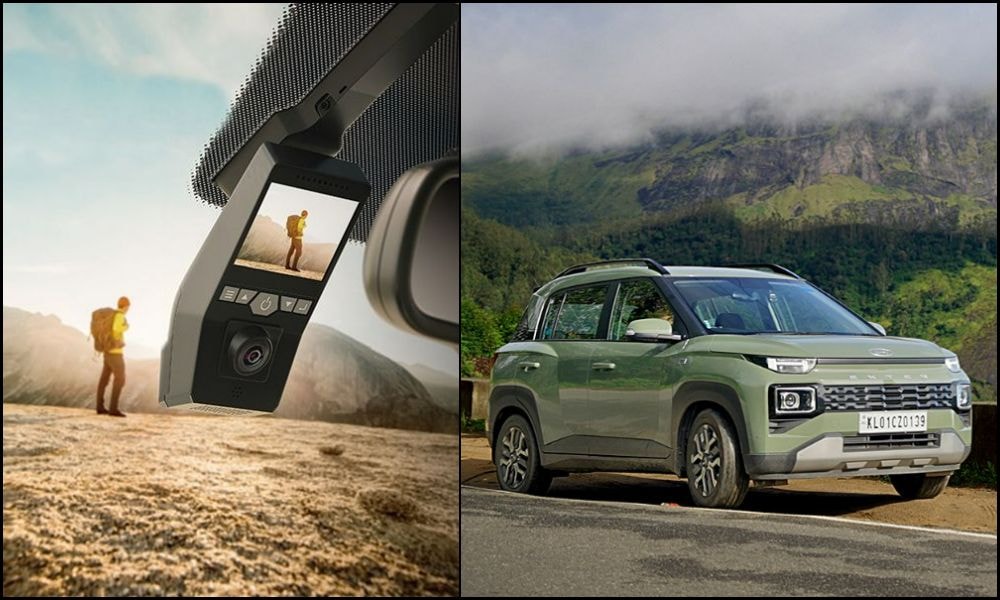
- Dashcams provide crucial evidence during accidents and road disputes
- GPS-enabled footage can help challenge incorrect e-challans
- Parking surveillance and fraud protection are major reasons behind the rising demand
Driving conditions in India have always been unpredictable, but with the rise of automated traffic enforcement systems, staged accident scams, and increasing insurance disputes, dashcams are becoming far more important than before. Today, they are not just recording devices for enthusiasts or content creators. For many owners, they have become an extra layer of protection during daily driving.
Whether it is a disputed traffic incident, a false challan, or damage to a parked vehicle, having video footage often changes how quickly situations get resolved. As a result, dashcams are now becoming one of the fastest-growing car accessories across both budget hatchbacks and premium SUVs.
How Does a Dashcam Work?
A dashcam is a compact camera mounted on the vehicle’s windscreen and/or rear glass that continuously records the road while driving. Most systems store footage on a memory card using loop recording, which automatically overwrites older clips once storage fills up.
However, if the built-in G-sensor detects sudden braking, impact, or collision movement, the footage gets locked automatically so it cannot be deleted accidentally. Many modern dashcams also offer GPS tracking, smartphone connectivity, parking monitoring, and rear-camera recording.
Why Dashcams Are Becoming Essential in India
Here are the reasons why dashcams have become so important in India.
Protection During Road Disputes
Minor accidents and lane-cutting incidents often become arguments about who was at fault. In many situations, especially involving larger vehicles, blame quickly shifts towards the other driver without proper evidence.
Dashcam footage helps establish exactly what happened before the impact, reducing unnecessary roadside disputes and making police reporting much simpler.
Challenging Wrong E-Challans
Automated traffic cameras have expanded rapidly across Indian cities, but they are not always accurate. Incorrect speed readings, wrong number plate recognition, or stop-line detection errors still happen occasionally.
GPS-enabled dashcam footage can help verify your speed, location, and signal status during the incident, which becomes useful while disputing a wrongly issued e-challan.
Parking Surveillance and Theft Attempts
Many modern dashcams now include parking surveillance modes. If the car is hit while parked or someone attempts a break-in, the camera automatically starts recording movement around the vehicle.
This can help identify hit-and-run damage or attempted theft instead of leaving the owner without any proof.
Evidence During Insurance Claims
Insurance disputes become much easier when actual footage exists. Dashcams help establish the sequence of events during an accident, particularly in situations involving sudden braking, unsafe overtaking, or staged collision fraud.
This becomes especially important because some scams involve drivers intentionally creating minor collisions and later blaming the other vehicle for compensation claims.
Useful for Road Trips Too
While safety remains the primary purpose, dashcams also capture scenic drives and memorable journeys automatically. Mountain roads, highway drives, and wildlife sightings can all be recorded without distracting the driver from the road.
Are Dashcams Legal in India?
Yes, dashcams are fully legal for private vehicles in India. There are currently no laws prohibiting their installation as long as the device does not obstruct the driver’s view.
In fact, traffic authorities and insurance companies increasingly accept dashcam footage as supporting evidence during investigations and claim disputes. However, recording near sensitive military or restricted government areas should still be avoided.
What Should Buyers Look For in a Dashcam?
You do not necessarily need the most expensive model, but certain features matter significantly in Indian conditions.
Minimum 1080p Recording
Low-resolution footage often fails to capture number plates clearly, especially at night or in the rain.
Wide Viewing Angle
A field of view around 140 degrees helps capture multiple lanes and surrounding traffic more effectively.
Good Low-Light Performance
Night-time visibility is extremely important because many accidents and disputes happen after dark.
Dual-Channel Recording
Front-and-rear camera setups provide much better coverage, especially during rear-end collisions or parking incidents.
Heat Resistance
Indian summers can expose parked cars to extremely high cabin temperatures. Dashcams using supercapacitors are generally more reliable than lithium-ion battery units in such conditions.
Bottom Line
Dashcams are quickly moving from being optional accessories to practical safety equipment for Indian drivers. In a driving environment where disputes, automated challans, and insurance complications are becoming increasingly common, having your own video evidence can make a major difference. More importantly, a dashcam does not just protect the car. In many situations, it protects the driver from unnecessary legal, financial, and insurance trouble later.
Related News


Latest Cars


Upcoming Cars


Latest News


 car&bike Team | Sep 10, 2026Maruti Suzuki Baleno Facelift Full Prices Revealed: Tops Out At Rs 9.99 LakhPrices start at Rs 5.99 lakh with the Baleno offered in five key trim levels.2 mins read
 car&bike Team | Sep 10, 2026Mercedes-Benz GLC Electric India Launch By End-2026; Bookings Open In OctoberThe GLC Electric will be locally assembled in India.2 mins read
 Sarthak Mahajan | Sep 10, 2026Hyundai Launches Lounge Editions For Alcazar, Creta And Creta ElectricHyundai Motor India has launched the Lounge Edition across the Creta, Alcazar and Creta Electric. Prices start at Rs 19.22 lakh for the Creta Lounge and go up to Rs 25.22 lakh for the Creta Electric. The Alcazar Lounge sits in between, priced at Rs 21.81 lakh.1 min read
 Sarthak Mahajan | Sep 10, 2026Jawa 42 All Stars: In PicturesThe Jawa 42 All Stars will eventually replace the standard Jawa 42 and gets several key changes.1 min read
 Sarthak Mahajan | Sep 9, 2026BGauss C12 MaxR Launched At Rs 1.46 LakhBGauss has launched the C12 MaxR electric scooter with a 3.8 kWh LFP battery that offers a certified range of 178 km.2 mins read
 car&bike Team | Sep 9, 20262026 Jawa All Stars 42: What’s New?The Jawa All Stars 42 is the new and updated Jawa 42 model, and comes with a fair share of updates, including new alloy wheels with fatter tyres, new bodywork and more.3 mins read
 Bilal Firfiray | Sep 10, 2026Mahindra XEV 9S Review: 3 Reasons To Buy It, And 3 Reasons To AvoidEveryone keeps telling me that the Mahindra XEV 9S is not the electric XUV 7XO. I disagree.1 min read
 Shams Raza Naqvi | Sep 8, 20262026 Maruti Suzuki Baleno Review: Heart Matters, Or Does It?The updated Maruti Suzuki Baleno is here and it gets some significant changes some of which have got the opinion divided. We drive it.7 mins read
 Abhishek Nigam | Sep 7, 2026Simple Wave First Ride Review: Space, Pace And More SpaceThe Simple Wave is here to rewrite the rules of the family EV scooter segment. We scoot around to tell you whether it will create waves or not!7 mins read
 Janak Sorap | Sep 4, 20262026 Ducati Monster V2 Review: Raising The BarWith the fifth iteration, the Ducati Monster gets a lighter chassis, a new 890cc V2 engine, sophisticated electronics and tweaks to the suspension, all to make the 2026 version so compelling.7 mins read
 Shams Raza Naqvi | Sep 4, 20262026 Lexus ES 350h And Lexus ES 500e Review: Luxury Meets CapabilityWe got behind the wheels of the new Lexus ES twins which were launched in India earlier this year. Which one suits you more? Lets find out1 min read