
Hydroplaning Explained: Why Cars Lose Control During Heavy Rain

- Hydroplaning happens when tyres can no longer clear water from the road surface
- Worn tyres and higher speeds increase the risk even more
- Knowing how to react can help drivers regain control safely
Most drivers have had that uncomfortable feeling when it's raining and the steering feels lighter than usual. Sometimes the car may feel like it's floating, refusing to respond as expected despite turning the wheel or easing on the brakes.
This phenomenon is known as hydroplaning and is one of the most hazardous conditions a driver can find on a wet road. Contrary to popular opinion, hydroplaning does not just occur on highways or in very deep puddles. It can occur at surprisingly moderate speeds, particularly when tyre condition, water depth and road surface are all against you.
Also Read: Engine Lugging vs High Revving: Which Habit Causes More Long-Term Engine Damage
What Exactly Is Hydroplaning?
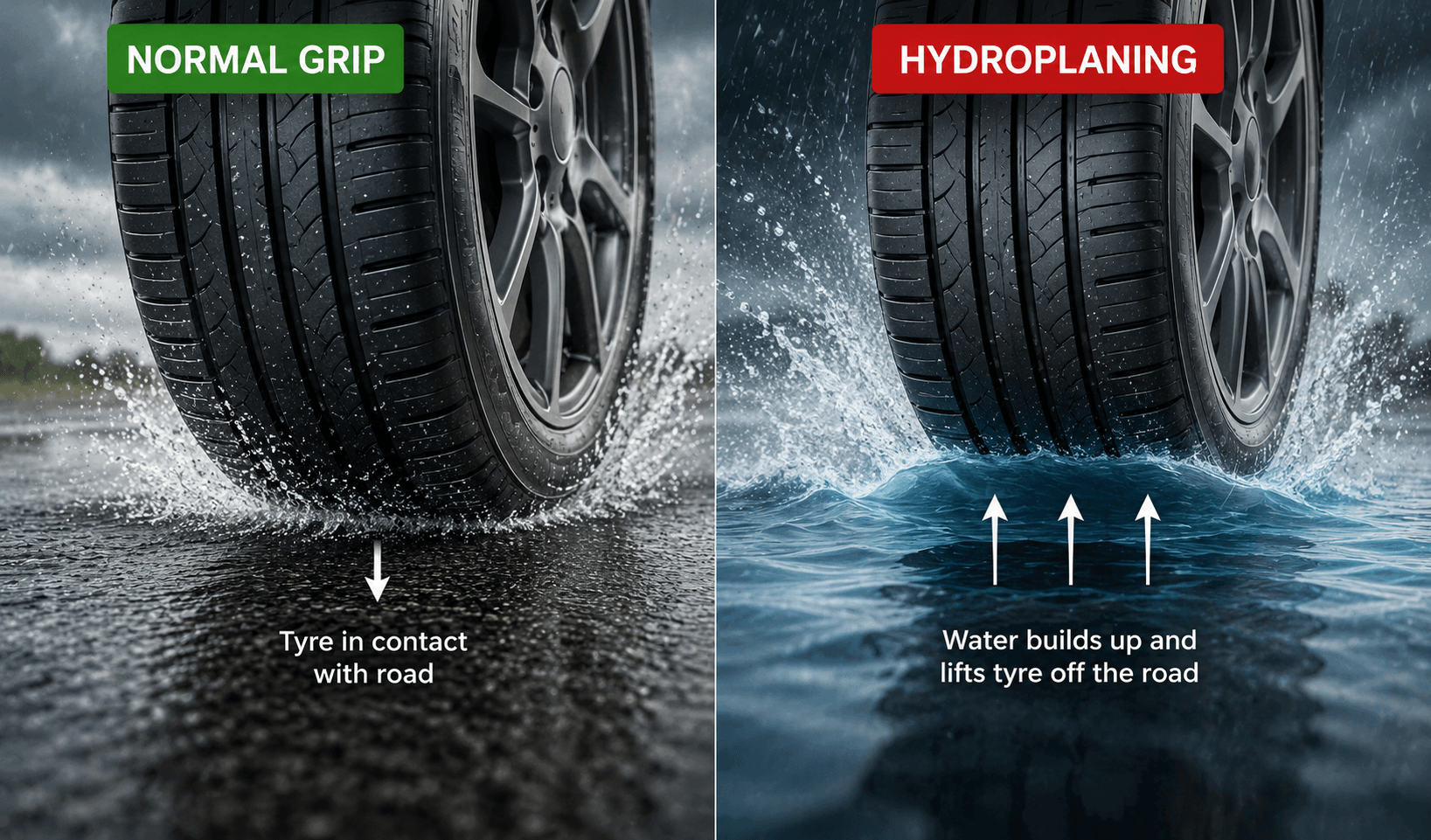
Hydroplaning happens when a layer of water builds up between the tyres and the road surface.
Normally, tyre tread channels push water away and allow the rubber to stay in contact with the tarmac. However, if the tyres encounter more water than they can clear, they begin riding on top of the water instead of the road.
Think of it like a speedboat skimming across a lake. Once the tyre loses direct contact with the road, grip drops dramatically, which means steering, braking, and acceleration become far less effective.
Why Does Hydroplaning Happen?
Hydroplaning usually occurs when several factors come together:
- Heavy rainfall
- Standing water on the road
- Higher driving speeds
- Worn tyre tread
- Incorrect tyre pressure
The faster a vehicle travels, the less time tyres have to disperse water. If enough water builds up beneath the tyre, it can lift the tyre away from the road surface completely.
Also Read: Green Tax in India Explained: Who Pays It and How Much Does It Cost?
Why Tyre Condition Matters So Much
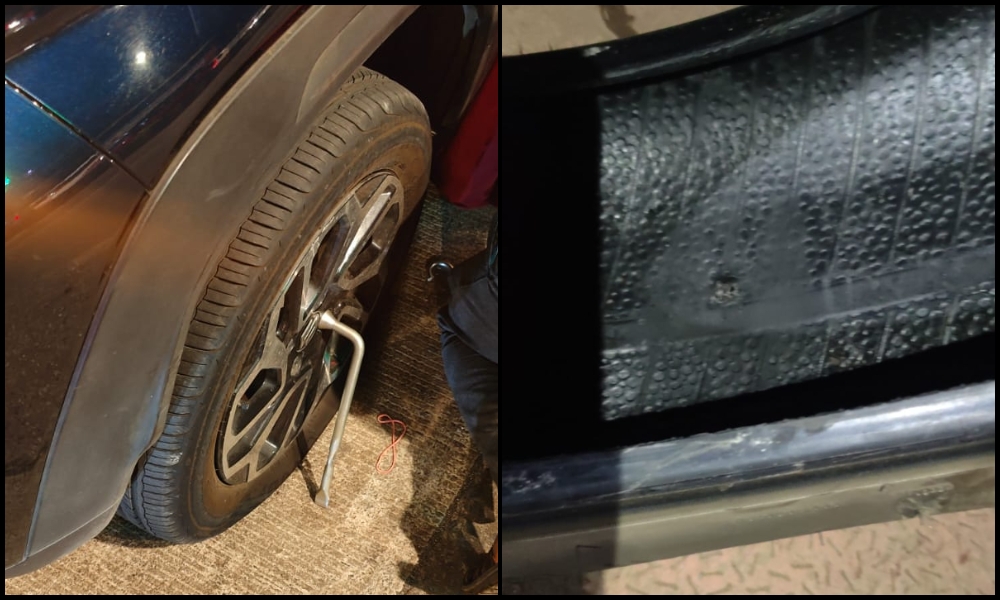
Tyres are your first line of defence against hydroplaning. New tyres have deeper tread grooves that channel water away efficiently. As tyres wear down, their ability to clear water reduces significantly.
| Tyre Condition | Wet Road Performance |
| New tyres | Excellent water evacuation |
| Moderately worn tyres | Reduced wet-weather grip |
| Near legal tread limit | High hydroplaning risk |
| Bald tyres | Extremely dangerous in the rain |
Even if a tyre is still legally usable, reduced tread depth can noticeably affect wet-weather confidence.
Roads Can Be Most Dangerous at the Start of Rain
Many drivers assume the heaviest rain is the most dangerous.
In reality, the first few minutes after rainfall begins can be particularly slippery. Oil residue, dust, rubber particles, and other contaminants that accumulate on the road mix with rainwater to create a slick surface before being washed away.
This is why roads often feel unexpectedly slippery even during a light drizzle after a long dry spell.

Signs That Your Car Is Hydroplaning
Hydroplaning often happens suddenly, but there are a few warning signs:
- Steering feels unusually light
- Engine revs increase unexpectedly
- The vehicle feels like it is floating
- The car does not respond normally to steering inputs
- Braking feels less effective
The moment you notice these symptoms, staying calm becomes extremely important.
What Should You Do If Your Car Starts Hydroplaning?
Many drivers make the situation worse by reacting too aggressively.
Ease Off the Accelerator
Gently lift your foot off the throttle and allow the vehicle to slow down naturally.
Keep the Steering Wheel Steady
Avoid making sudden steering corrections. Large steering inputs can cause the vehicle to become unstable once grip returns.
Avoid Slamming on the Brakes
Hard braking can upset the vehicle further. Modern ABS systems help, but they still need tyre contact with the road to work effectively.
Let the Tyres Regain Grip
As the vehicle slows down, the tyres will eventually cut through the water and reconnect with the road surface. Once grip returns, normal steering and braking response will gradually come back.
Also Read: How Interstate Vehicle Transfers Work In India: NOC, Re-registration And Road Tax Explained
How To Reduce The Risk Of Hydroplaning
While it cannot always be avoided, the risk can be reduced significantly by:
- Maintaining healthy tyre tread depth
- Keeping tyre pressures correct
- Slowing down during heavy rain
- Avoiding standing water where possible
- Replacing worn tyres on time
- Using headlights and maintaining visibility
Small precautions often make the biggest difference during monsoon driving.
Why Understanding Hydroplaning Matters
Hydroplaning is one of those situations where a car can go from feeling perfectly stable to completely disconnected from the road in a matter of seconds. The good news is that it is largely preventable through proper tyre maintenance and sensible wet-weather driving habits.
The next time heavy rain arrives, remember that your tyres are doing far more than simply supporting the vehicle. They are constantly working to keep several tonnes of metal connected to the road, and once that connection disappears, even the most advanced safety systems have very little grip to work with.
Related News


Latest Cars


Upcoming Cars


Latest News


 car&bike Team | Oct 23, 2026Updated Bajaj Pulsar NS200 Launched at Rs. 1.60 Lakh; Gets TFT Display, Ride Modes, Quickshifter & MoreThe Pulsar NS200 now gets an electronic throttle body which enables six ride modes and traction control, as well as a quickshifter and TFT display with Google Maps mirroring.1 min read
 car&bike Team | Oct 23, 20265 Factory CNG Cars With Usable Boot Space: Nexon, i10 Nios, Exter & MoreHere are five of the most sought-after factory-fitted CNG cars available in 2026 that offer genuine, usable boot space.1 min read
 Seshan Vijayraghvan | Oct 23, 2026Ducati Formula 73 Limited Edition Café Racer Launched At Rs. 20 Lakh; All Units Sold OutThe Ducati Formula 73 has launched as the Italian marque celebrates its 100th year, whereas the motorcycle itself pays homage to the 1973 Ducati 750 Super Sport Desmo.1 min read
 Jaiveer Mehra | Oct 23, 2026BYD’s Denza Luxury Brand To Make India Debut On November 13Denza is expected to bring the D9 luxury MPV and the Z9 GT shooting brake to India.1 min read
 Sarthak Mahajan | Oct 23, 2026Ultraviolette X47 Venom: Top HighlightsThe Ultraviolette X47 Venom starts at Rs 2.65 lakh and is offered in four variants.1 min read
 Sarthak Mahajan | Oct 23, 2026MoRTH Proposes Mandatory Automatic Emergency Braking For New Cars From 2030The mandate will apply to new car models from October 1, 2030, and to existing models from October 1, 2032, along with new safety requirements for trucks and driver-assistance systems.1 min read